
When Does a Clock Chime: Practical Timing and Setup Guide for 2026
Learn when does a clock chime, how quarter-hour melodies work, and how night-silence features protect sleep in November 2026.
 By Jeremy Klein
Updated November 5, 2026
Waking up to a harmonious acoustic cadence can bring classic charm to a home, yet understanding the exact schedule of traditional and quartz chimes is essential for maintaining quiet bedrooms. Many homeowners wonder %when does a clock chime%, particularly when balancing decorative wall timepieces against the need for undisturbed nocturnal rest. Unlike standard electronic beepers found on bedside alarm clocks for bedrooms, chiming mechanisms rely on programmed mechanical or electronic cycles that sound at predetermined intervals. The primary acoustic sequence usually activates at the top of every hour, marking the passage of time through ascending melodies and numbered strikes.
Modern quartz replacement movements incorporate specialized triggers to provide classic acoustic announcements while protecting household sleep cycles. A typical movement registers time either exclusively on the hour or in progressive quarter-hour increments, featuring popular melodies such as Westminster or Ave Maria. Understanding when does a clock chime also requires examining integrated night-silencing windows, which automatically mute sound between evening hours and early morning. Calibrating these internal schedules prevents unexpected midnight chimes and ensures harmonious acoustic timekeeping throughout the living space.
| Award | Product | ACR Score About ACR ScoreThe ACR Score is our own rating from 0 to 10, based on performance, design and build, ease of use, and value. It reflects independent research and is never influenced by manufacturers, retailers, or affiliate commissions. Learn more › | |
|---|---|---|---|
| Best Overall |
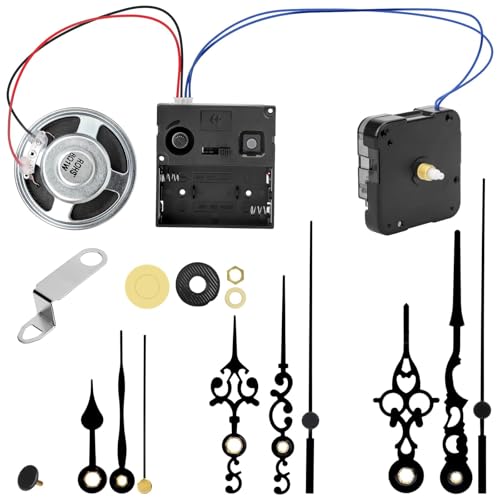 EEEKit Chiming Quartz Clock Movement |
9.1/10 | Buy |
| Best Premium |
 WinTaim 12888 Westminster Chime Pendulum Clock |
8.9/10 | Buy |
| Best Budget |
 EEEKit 0.86-Inch Chiming Clock Movement |
8.6/10 | Buy |
 TIKROUND Westminster Chime Box with Hour Trigger |
8.4/10 | Buy |
EEEKit Chiming Quartz Clock Movement
Designed for thin clock dials, this quartz replacement kit combines a quiet sweep motor with four chime options and an automatic nighttime silent period. It comes with three sets of hands, making it practical for repairing or building decorative wall clocks.
Pros
- Automatic overnight silent mode avoids sleep disruptions
- Rotary knob allows easy volume adjustment
- Four selectable hourly melody and strike settings
- Quiet sweeping quartz motor operates smoothly
Cons
- Short threaded shaft limits use to thin dials
- Aluminum hands bend easily under excessive installation pressure
WinTaim 12888 Westminster Chime Pendulum Clock
The WinTaim 12888 Westminster Chime Pendulum Movement Kit repairs or upgrades chiming home clocks while protecting nighttime sleep with an automatic 9:00 PM to 6:00 AM audio pause. It is a solid choice for clock restorers and homeowners wanting classic hourly chimes without midnight disruptions.
Pros
- Automatic overnight silence prevents chiming between 9:00 PM and 6:00 AM to protect uninterrupted sleep
- Four selectable chime modes give flexibility between full musical melodies and discreet hourly strikes
- Independent battery bays allow the movement to track time even if audio batteries are removed
- Comprehensive kit includes the movement, speaker, pendulum, mounting hardware, and two hand sets
Cons
- Overnight quiet period from 9:00 PM to 6:00 AM is hard-coded and cannot be rescheduled
- Requires three AA batteries that are not included in the package
- Speaker output can sound muffled if placed inside a solid clock cabinet without an acoustic opening
EEEKit 0.86-Inch Chiming Clock Movement
Designed for restoring or building traditional clocks, this quartz replacement pairs four hourly melody options with an automatic nighttime silent period. The package supplies three distinct hand designs, offering a straightforward fix for vintage or custom timepiece projects.
Pros
- Customizable chime with four distinct melody options
- Automatic overnight silent mode preserves nighttime quiet
- Smooth and quiet quartz sweeping movement
- Comes with three interchangeable clock hand styles
Cons
- Pendulum is not included in the package
- Aluminum hands bend easily under excessive installation pressure
TIKROUND Westminster Chime Box with Hour Trigger
The TIKROUND Westminster Chime Box is a compact replacement melody module featuring an automatic nighttime quiet period from 10:00 PM to 5:59 AM. It is a practical, budget-friendly solution for clockmakers and homeowners restoring classic hourly chimes without nighttime sleep disruption.
Pros
- Automatic nighttime silence window from 10:00 PM to 5:59 AM avoids nocturnal sleep interruptions.
- Plays recognizable Westminster chime melody on the hour for traditional acoustic appeal.
- Compact 2.2 x 2.2 x 1.6 inch footprint fits neatly into tight clock cases and craft builds.
- Dedicated SET button allows simple step-by-step hour calibration without complicated programming.
Cons
- Requires precise manual calibration starting from the default 6:00 AM baseline every time the battery is inserted.
- Does not chime during the initial transitional period following time adjustment until the next full hour mark.
- Designed specifically as an internal repair module, requiring integration with compatible clock movements rather than standalone use.

The Mechanics and Timing Cycles of Chiming Clocks
Determining when does a clock chime requires looking at both traditional horological patterns and modern electronic movement programming. Mechanical and quartz movements execute acoustic announcements based on the position of the minute hand and internal indexing cams. While traditional grandfather clocks chime around the clock, contemporary battery-powered units integrate intelligent logic circuits to regulate audio events. Understanding these specific time intervals allows homeowners to appreciate melodious timekeeping without enduring disrupted sleep during the night.
Standard Hourly and Quarter-Hour Chime Schedules
Chiming clocks operate on fixed temporal patterns designed to indicate the passage of time without requiring the listener to look at the dial. The most basic arrangement is the hourly strike, which sounds a single bell or tone pattern at the arrival of every new hour. More elaborate models incorporate musical preludes such as the Westminster, Ave Maria, or Whittington melodies right before the hour strike. In full-feature mechanisms like the 12888 Westminster Chime Pendulum Clock Mechanism, users can toggle between striking only on the hour or enabling musical phrases at each quarter-hour mark.
When quarter-hour chiming is active, the sound sequences progress in four distinct musical stages across the sixty-minute cycle. At fifteen minutes past the hour, the movement plays a single musical phrase consisting of four notes to signal the first quarter. At thirty minutes past, the clock sounds two musical phrases comprising eight notes, marking the half-hour milestone. At forty-five minutes past, three musical phrases play twelve notes, announcing that three-quarters of the hour has elapsed.
The sequence culminates at the top of the hour when the clock sounds the complete sixteen-note melody followed by distinct count strikes. For example, at four o’clock, the movement plays the full melody and immediately follows it with four deliberate strikes corresponding to the hour. At twelve o’clock, the sequence reaches its maximum duration with twelve full strikes following the tune. This predictable acoustic progression allows anyone within earshot to determine the precise time simply by counting the notes.
Electronic Quartz Logic and Battery Insertion Defaults
Modern chiming timepieces utilize battery-powered quartz motors paired with digital sound synthesis modules rather than heavy weights and mechanical brass trains. When a user installs batteries into a unit such as the Westminster Chime Box with Hour Trigger Switch or an EEEKit Chiming Clock Mechanism Replacement, the internal sound processor does not know where the clock hands are pointing. Instead, the electronic circuit automatically restores its internal counter to a default factory time, which is universally set to 6:00 AM upon power insertion. Because of this default state, the chime box will immediately register its next cycle as seven o’clock unless adjusted.
To establish proper operation, these electronic chime boxes require a full cycle to synchronize their triggering logic. When an adjustment is made using the manual push button, the internal electronic circuit registers the advance but suppresses interim audio. The movement will not activate interim quarter-hour or hourly chimes during the partial hour immediately following setup. The correct audio sequence starts promptly at the next full hour, allowing the internal sweep cam to align with the electronic trigger.
Understanding this startup behavior prevents frustration during installation and initial clock testing. If batteries are inserted at 10:25 AM, the clock will not sound any chimes between 10:25 AM and 10:59 AM. The first audible chime will occur precisely at 11:00 AM once the minute hand makes its first complete contact with the hourly trigger switch. Allowing the movement to reach that initial top-of-the-hour trigger is essential for verifying acoustic operation.
How Night-Silencing Windows Protect Sleep Hygiene
Acoustic disruption during nocturnal sleep cycles can fragment deep rest and elevate morning stress levels. While historical mechanical clocks chimed continuously through the night, modern quartz movements incorporate automated silent periods to protect the sleep environment. For instance, the EEEKit Chiming Clock Mechanism Replacement features an automatic silent mode running from 10:00 PM to 5:59 AM. During this eight-hour window, the clock movement continues its quiet sweeping timekeeping, but the chime module disconnects audio output entirely.
In other designs, such as the 12888 Westminster Chime Pendulum Clock Mechanism, the night pause begins even earlier, stopping all sounds after 9:00 PM and resuming at 6:00 AM. This overnight pause applies equally to both the hourly strikes and the quarter-hour melodies, preventing intrusive chimes during quiet evening hours. For homeowners who prefer complete nighttime darkness and acoustic tranquility, pairing a silent-night wall clock with dedicated low-light bedroom clocks preserves deep sleep while maintaining visual time checks. The quiet quartz sweep ensures zero ticking sounds, further enhancing nighttime bedroom comfort.
The automatic night mute is hard-coded into the internal microcontroller and cannot be altered to arbitrary custom hours. The module counts hours sequentially from its 6:00 AM initialization point, relying on an accurate count to know when 10:00 PM arrives. If the clock is improperly synchronized, the silent window may accidentally occur during daylight hours while allowing loud chimes to sound at midnight. Proper configuration ensures the silence aligns seamlessly with natural household sleep schedules.
Synchronizing Chime Count with Dial Hand Positions
A frequent dilemma occurs when the acoustic strike count does not match the physical hour indicated by the clock hands. If the clock strikes eight times when the dial reads two o’clock, the chime module counter is simply out of alignment with the mechanical gears. Unlike mechanical clocks where hands might be spun manually past each hour to trigger gears, quartz modules decouple audio logic from the dial. Pressing the dedicated SET button advances the chime count by exactly one hour per press without moving the clock hands.
To calibrate the strike count, the user must count the button presses rather than relying solely on audio feedback. Because the module defaults to 6:00 AM upon battery connection, setting the unit to 10:00 AM requires four consecutive presses of the SET button. Each press moves the internal electronic register forward by sixty minutes in a single step. The hands on the dial must then be set manually using the rear hand-setting wheel to display 10:00.

When advancing the setting button through the nocturnal hours, the clock module will remain completely silent because the night-mute circuit is active. If configuring the clock for an evening hour such as 11:00 PM, presses representing 10:00 PM and 11:00 PM will produce no sound. Users must carefully track the number of manual clicks instead of waiting for audio confirmation. Once the correct number of presses has been registered, the internal counter aligns with the visible dial.
Correcting Inverted AM and PM Night Mute Cycles
One of the most disruptive errors encountered with chiming quartz movements is an inverted twelve-hour cycle. When this inversion occurs, the clock remains totally silent during the middle of the day but begins sounding loud melodies at 1:00 AM and 2:00 AM. This symptom indicates that the internal microcontroller believes daytime is night and nighttime is day. Because quartz movements use a twelve-hour dial but run a twenty-four-hour electronic logic routine, the chime module must be informed of the correct half of the day.
Resolving this inverted cycle does not require replacing parts or rewiring battery terminals. Instead, the user simply needs to advance the internal chime counter by twelve full hours using the SET button. Pressing the button twelve times shifts the twenty-four-hour internal schedule by half a day, swapping the active chiming window with the silent period. Each press moves the internal register forward by one hour without disturbing the physical position of the hands on the clock face.
After inputting twelve presses, the internal circuit shifts its 10:00 PM to 5:59 AM mute schedule to the true overnight period. Homeowners managing sensitive wake-up routines or using sunrise alarm clocks for heavy sleepers can rest assured that unexpected chimes will not interrupt their sleep cycles. Performing a quick twenty-four-hour monitoring check after this adjustment confirms that daylight hours receive chimes while night hours remain completely muted.
Troubleshooting Off-Time Chimes and Minute Hand Alignment
Another common mechanical complication arises when the clock chimes several minutes early or late relative to the top of the hour. If the melody triggers at 10:05 or 9:55 instead of exactly on the hour, the issue is physical rather than electronic. The trigger switch inside the movement housing is actuated by a mechanical cam connected directly to the central minute hand shaft. If the minute hand was pressed onto the brass shaft slightly off center during assembly, the audio will fire prematurely or belatedly.
Correcting this timing error requires refitting the minute hand at the exact moment the chime trigger fires. The user should loosen the small brass retaining nut securing the hands and carefully pull the minute hand straight off the shaft. Next, rotate the hand-setting wheel on the back of the movement until the chime mechanism trips and begins to play its chime. Once the chime triggers, immediately press the minute hand back onto the shaft so it points precisely at the twelve o’clock position.
Tightening the retaining nut securely locks the minute hand in proper alignment with the internal trigger cam. During this process, gentle handling is necessary because clock hands are stamped from thin aluminum and bend easily under excessive force. Bent hands can collide with each other or rub against the dial glass, causing the movement to bind or stop entirely. Ensuring flat, parallel hand clearance guarantees accurate mechanical triggering and unhindered movement operation.
Selecting Replacement Mechanisms and Dial Dimensions
When restoring a vintage mantel, wall, or grandfather clock, selecting the appropriate replacement mechanism is vital for correct acoustic performance. Clock movements differ significantly in total shaft length, threaded shaft depth, and dial thickness accommodation. For example, an EEEKit Chiming Clock Mechanism Replacement with a 0.53-inch shaft and 0.22-inch thread is tailored specifically for thin clock dials. Attempting to install this compact movement on a thicker wood or stone face will prevent the washer and mounting nut from threading securely.
Conversely, models featuring an extended 0.86-inch shaft with 0.51-inch thread depth accommodate dial panels measuring up to 7 millimeters in thickness. Buyers must measure their existing clock casing, original shaft dimensions, and center mounting hole before purchasing replacement hardware. The 12888 Westminster Chime Pendulum Clock Mechanism features a 23.5-millimeter shaft designed for panels between 11 and 13 millimeters thick, requiring an 8.5 to 10-millimeter mounting hole. It also includes a 150-millimeter pendulum rod, supporting bobs up to 40 grams for authentic visual oscillation.
Power architecture also varies between standalone chime units and combined pendulum movements. The 12888 movement utilizes three AA batteries in total, dedicating two cells to the Westminster chime module and one cell to the timekeeping motor. This electrical isolation allows users to disable chiming permanently by simply removing the two chime batteries while the quartz motor continues tracking time. Knowing these hardware distinctions ensures the replacement motor fits the casing and provides reliable operation.
Acoustic Volume Management and Bedroom Placement
Chiming clocks bring a warm acoustic ambience to living spaces, but sound projection must be managed carefully near bedrooms. Most modern chime boxes include a rotary potentiometer knob that allows smooth, continuous volume adjustment. Setting the volume level depends heavily on where the speaker is mounted inside the wooden casing. If the speaker cone faces a solid wood panel without ventilation, sound waves become muffled and distorted, forcing the volume dial higher than necessary.
Aiming the speaker toward an open fretwork grille, bottom vent, or glass door permits clear, balanced acoustic output at lower volume levels. In smaller apartments or open-plan homes where bedrooms sit adjacent to living rooms, keeping chime levels modest prevents daytime disturbances during work or study. Furthermore, choosing between melody modes allows users to tailor acoustic complexity to household preferences. Selecting a simple hour-strike mode reduces auditory length compared to elaborate multi-phrase melodies.
Homeowners seeking a balance between horological tradition and serene bedroom acoustics can confidently deploy chiming clocks when proper volume and scheduling practices are followed. Verifying that the overnight silence window covers all resting hours guarantees peaceful sleep without acoustic intrusion. A properly calibrated chiming clock serves as both an elegant decorative centerpiece and a dependable acoustic timekeeper throughout the waking day.
Mastering when does a clock chime comes down to understanding the interplay between mechanical hand alignment, electronic counter logic, and built-in night silencing. By synchronizing the hourly trigger cam with the twelve o’clock hand position and aligning the 24-hour cycle to true local time, you ensure harmonious timekeeping all day long. Proper mechanism fit and modest volume calibration provide classic acoustic elegance without compromising the peaceful quiet of your nighttime bedroom environment.
About the author
Jeremy Klein is an experienced sleep-product tester with a strong focus on testing methodology, data collection, and real-world product performance. His expertise includes evaluating sleep essentials and wake-up devices through structured testing and practical consumer-focused criteria.