
How to Quiet a Ticking Wall Clock: Practical Guide for 2026
Learn how to quiet a ticking wall clock with easy dampening methods and silent sweeping quartz upgrades for peaceful bedrooms in November 2026.
 By Jeremy Klein
Updated October 28, 2026
Sleepless nights often trace back to rhythmic acoustic disturbances that hijack an otherwise calm bedroom. A loud escapement mechanism echoing off drywall can turn simple rest into hours of tossing and turning. Understanding how to quiet a ticking wall clock allows light sleepers to reclaim their focus and enjoy uninterrupted sleep without sacrificing wall decor. Persistent ticking does not just irritate the ears; it keeps the brain locked in a state of subtle anticipation.
While many sleepers switch to quiet bedside alarm clock options to eliminate background noise, you can also quiet an existing analog clock using targeted dampening methods. Alternatively, upgrading to an engineered silent sweeping quartz movement solves the acoustic issue at its source. Examining why clocks produce sound helps identify whether a physical dampening fix or a modern silent replacement provides the best long-term peace.
| Award | Product | ACR Score About ACR ScoreThe ACR Score is our own rating from 0 to 10, based on performance, design and build, ease of use, and value. It reflects independent research and is never influenced by manufacturers, retailers, or affiliate commissions. Learn more › | |
|---|---|---|---|
| Best Overall |
 Roymnie 8-Inch Silent Non-Ticking Wall and Desk |
8.3/10 | Buy |
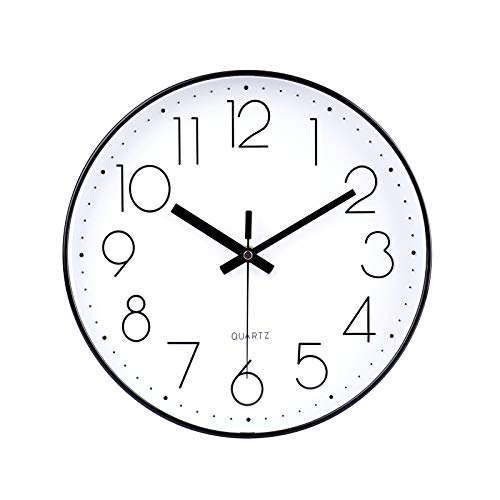 jomparis 12-Inch Silent Wall Clock |
8.3/10 | Buy | |
| Best Budget |
 Roymnie 8-Inch Silent Wall Clock |
8.1/10 | Buy |
Roymnie 8-Inch Silent Non-Ticking Wall and Desk
The Roymnie 8-Inch Clock is a silent, battery-operated quartz timepiece featuring high-contrast 3D numerals and a tick-free sweep movement. It is an ideal, cord-free choice for sound-sensitive sleepers, bedrooms, and home offices where distracting ticking must be avoided.
Pros
- Completely silent sweep movement eliminates sleep-disrupting ticking sounds
- Large 3D numbers ensure clear visibility across bedrooms and offices
- Lightweight and compact build mounts easily to walls or sits on nightstand shelves
- Battery-powered operation keeps time reliably without needing an electrical outlet
Cons
- Requires a single AA battery that is not included in the package
- Does not feature an integrated alarm buzzer or wake-up chime for morning schedules
- Analog dial has no built-in backlight or glow for reading in pitch-black rooms
jomparis 12-Inch Silent Wall Clock
The jomparis 12-inch silent wall clock delivers dependable quartz timekeeping with completely non-ticking operation, making it ideal for light sleepers and quiet bedrooms. It suits anyone seeking room-wide legibility without annoying ticks or sleep-disrupting digital display glow.
Pros
- Silent quartz sweep mechanism produces zero audible ticking in quiet sleeping spaces
- Large, high-contrast 3D numerals provide easy reading for seniors and low-vision users across the room
- Emits zero display glow or blue light, preserving a completely dark sleep environment
- Runs cord-free on a single AA battery, operating reliably through household power outages
- Comes ready to mount with an included hanging hook and lightweight ABS frame
Cons
- Functions as a passive wall timepiece without an audible morning alarm buzzer, chime, or snooze button
- Non-illuminated dial cannot be read in a pitch-black room without ambient lighting
- Requires one AA battery that is not included in the package
Roymnie 8-Inch Silent Wall Clock
The Roymnie 8-Inch Wall Clock is a compact, battery-operated analog timepiece featuring a silent sweeping quartz movement that eliminates distracting ticking noises in quiet bedrooms. With bold black numerals on a high-contrast white dial, it is an ideal zero-glare, phone-free solution for light-sensitive sleepers, students, and home offices.
Pros
- Completely silent sweep movement prevents audible ticking sounds during quiet nighttime hours
- Crisp, uncluttered dial layout provides quick visual clarity without reading glasses
- Cordless 1 AA battery operation eliminates bedside cable clutter and works during power outages
- Emits no artificial screen light, supporting a completely dark sleeping environment
- Compact 8-inch diameter fits small wall spaces without overwhelming room decor
Cons
- Does not include an audible alarm, buzzer, or snooze function for morning wake-ups
- Requires a separate AA battery that is not included in the packaging
- Lacks backlighting or luminescent hands, making it unreadable in total darkness without room lighting

A Practical Guide to Quieting Clock Noise and Restoring Bedroom Silence
The sharp click of an analog wall clock can feel overwhelming when you try to fall asleep in a quiet room. Traditional clocks rely on a pulsed stepper motor that advances the second hand in deliberate, one-second intervals. This mechanical motion produces kinetic energy that vibrates through the casing, turning the entire clock into a miniature acoustic amplifier. Resolving this nuisance requires either absorbing the physical vibrations before they radiate into your bedroom or switching to a modern non-ticking quartz mechanism.
The Mechanics of Ticking: Why Traditional Wall Clocks Produce Repetitive Noise
Traditional quartz wall clocks operate by sending an electrical impulse from a standard battery through a quartz crystal resonator every second. An integrated circuit translates this electrical oscillation into a pulse that drives a tiny internal stepping motor. That stepping motor physically engages a gear train to advance the second hand exactly one notch per second. Each time the gear teeth catch and stop suddenly, the mechanical impact produces a sharp acoustic snap. This repetitive impact creates an impulsive noise spike that easily cuts through ambient room quiet.
The structural housing of an analog clock frequently worsens the perceived volume of this internal gear movement. Hollow plastic or thin wooden rear compartments create an echo chamber that reflects sound waves outward toward the room. When the clock rests flush against a hollow drywall partition, the wall itself begins to act as a resonant sounding board. This mechanical coupling transfers vibrational energy directly into the wall framing, allowing the ticking sound to project across the entire bedroom. The hollow wall cavity acts much like the body of an acoustic guitar, amplifying faint mechanical pulses into room-filling disturbances.
Mechanical gear lash also contributes to the distinct timbre of each individual clock tick. In inexpensive movements, slight manufacturing tolerances between plastic gear teeth allow loose play during each mechanical stop. As the rotor abruptly halts, the second hand quivers slightly, sending micro-reverberations back through the gear train. This reverberation broadens the acoustic profile from a dull thud into a sharp, high-frequency click that human ears detect effortlessly. Understanding this mechanical sequence makes it clear why simple surface adjustments rarely silence a clock completely.
Quick DIY Solutions to Dampen and Muffle an Existing Wall Clock
If you want to keep an existing heirloom or decorative piece, targeted acoustic dampening offers an immediate way to reduce noise. The most effective first step involves decoupling the rear clock chassis from the rigid drywall surface. Placing self-adhesive silicone bumpers or dense felt furniture pads at the primary contact points behind the clock frame dramatically dampens sound transfer. These soft buffers absorb low-frequency vibrations before they can turn the wall cavity into an unintended acoustic speaker. By breaking direct mechanical contact with the wall, you eliminate the largest amplifying element in the room.
Adding internal absorption around the movement module can further suppress high-frequency gear clicks. You can remove the clock from the wall and inspect the open cavity surrounding the central quartz motor box. Packing acoustic batting, closed-cell craft foam, or dense wool felt around the perimeter of the mechanism traps airborne sound waves effectively. You must ensure that no padding material directly touches the open gear spindles or prevents the manual time adjustment dial from rotating smoothly. Creating a snug acoustic perimeter around the motor casing dampens airborne noise before it escapes into the room.
Frontal sound transmission also escapes directly through the face and lens assembly of the clock. Clocks without front glass or acrylic covers allow mechanical clicks to travel unimpeded into the open room. Installing a tight-fitting transparent acrylic cover or enclosing the entire frame inside a glass shadowbox creates a sealed sound barrier. Adding a thin bead of silicone weatherstripping around the perimeter of the glass helps seal acoustic leaks. While these DIY muffling techniques reduce the sharpness of the click, they rarely silence an aggressive stepper motor entirely.
Replacing the Movement with a Continuous Silent Sweeping Quartz Motor
Eliminating ticking completely without discarding a favorite decorative frame often requires swapping the internal motor module. Modern timekeeping engineering provides silent sweeping quartz movements that replace the traditional stepping pulse design. Instead of advancing in sudden one-second jerks, a sweeping mechanism uses a continuous smooth electrical drive to glide the second hand around the dial. Because the internal gears remain in constant fluid motion without sudden mechanical stops, the mechanism operates without audible clicking. This continuous motion delivers a tranquil, fluid visual sweep across the dial while maintaining silent operation.
Replacing a clock movement requires matching the shaft dimensions to the thickness of your clock dial. You must measure both the threaded brass shaft length and the total overall hand-shaft height before purchasing a replacement kit. Installing the new hands requires gentle, even pressure to prevent bending the lightweight aluminum minute and second indicators. If the second hand bends slightly, it can scrape against the front protective lens, creating an annoying scraping friction sound. Proper alignment ensures that the hour, minute, and sweeping second hands rotate freely with adequate clearance on all sides.
Power delivery in sweeping quartz mechanisms differs slightly from traditional stepping movements. Because the motor runs continuously rather than pulsing once per second, it maintains a steady, low-amperage current draw from the battery. Standard alkaline or carbon-zinc primary cells handle this continuous micro-drain efficiently, providing months of reliable timekeeping. Using quality cells prevents early voltage drops that could cause the smooth sweeping motor to hitch or lose accuracy. Upgrading the mechanical core entirely circumvents the acoustic flaws inherent to stepping escapement designs.
Upgrading to Purpose-Built Silent Wall Clocks for Bedrooms and Workspaces
For many homeowners, purchasing a dedicated silent non-ticking wall clock proves far simpler and more reliable than retrofitting old movements. Modern options such as the jomparis 12 Inch Wall Clock Silent Non Ticking incorporate advanced sweeping quartz technology straight out of the box. This standard twelve-inch model utilizes bold three-dimensional white numerals on a neutral gray face to provide effortless legibility from across the room. Its sleek white ABS frame blends easily into contemporary, Scandinavian, or farmhouse room decor without creating visual clutter. The sweeping motor design operates without rhythmic pulses, making it well-suited for bedrooms, quiet study spaces, and home offices where ambient noise must remain low.

Smaller living spaces, bathrooms, or minimalist nightstands often benefit from a more compact profile rather than a full twelve-inch frame. The Roymnie 8 Inch Wall Clock delivers silent quartz performance in a lightweight eight-inch diameter housing. Its three-dimensional numerals offer crisp visibility while its quiet sweeping gear train ensures zero distracting clicks during nighttime hours. Roymnie designed this clock with versatile placement flexibility, allowing you to position it on a wall hanger, desk stand, or bedside bookshelf with equal ease. Its compact footprint makes it a practical option for tight spaces where you need reliable timekeeping without sound.
Clean, uncluttered dials appeal to those who favor contemporary minimalist home decor while prioritizing quiet surroundings. The Roymnie 8 Inch Small Wall Clock features bold black numerals set against a crisp white dial for immediate glanceability. Its silent non-ticking sweeping movement undergoes comprehensive quality inspection to ensure precise timekeeping alongside soundless operation. Running on a single standard AA battery, this compact unit offers low power consumption and straightforward wall mounting. Replacing an irritating older clock with a dedicated silent model provides immediate acoustic relief without the hassle of disassembling clock parts.
Mounting Techniques and Acoustic Decoupling for Wall-Hung Timepieces
How you secure a clock to your wall plays a substantial role in overall acoustic performance. Driving a rigid metal screw directly into an uninsulated drywall stud creates a solid physical pathway for vibration transfer. Using an insulated picture hanger with a soft rubber washer between the fastener head and the clock bracket softens this connection. This small mechanical barrier prevents microscopic motor vibrations from traveling down the fastener and resonating through the structural framing. Even modest decoupling techniques yield noticeable improvements in overall bedroom quiet.
The type of wall you choose for clock mounting also influences acoustic reflection throughout the room. Solid brick, masonry, or poured concrete walls absorb vibrational pulses much better than hollow drywall partitions. If you must mount a clock on a shared bedroom partition, choose an exterior wall or a location positioned away from your headboard. Keeping physical distance between your pillow and the timepiece diminishes sound wave intensity according to the natural inverse-square acoustic principle. Strategic placement on non-resonant surfaces ensures that any faint residual motor hum disperses harmlessly.
Sleep Hygiene and Sensory Sensitivity: Why Ticking Disrupts Sleep Cycles
The human brain remains surprisingly vigilant during the early stages of the sleep cycle, constantly monitoring environmental audio cues. While continuous background sounds like running fans or white noise machines fade into the auditory background, intermittent clicks provoke ongoing neurological awareness. Each sharp tick triggers a subtle auditory spike that can prevent the brain from transitioning smoothly into deep slow-wave sleep. For individuals with sensory processing sensitivities or light sleep tendencies, this repetitive auditory cue can generate real sleep-onset anxiety. Eliminating rhythmic mechanical pulses allows the auditory cortex to rest, promoting deeper physiological recovery.
Optimizing your sleep environment involves addressing both acoustic distractions and optical disruptions simultaneously. Many people who eliminate ticking clocks also discover that pairing silent wall visuals with multi-function bedside digital clocks helps declutter nightstands. These digital bedside hubs provide clear illumination without mechanical moving parts while integrating charging options for mobile electronics. Removing smartphones from the bedside table prevents nighttime notification alerts and blue light exposure that suppress natural melatonin production. Combining silent room decor with organized bedside technology creates a serene, low-stress environment that actively supports healthy sleep hygiene.
Bedroom light pollution can disrupt circadian rhythms just as intensely as irritating mechanical noise. If you enjoy gentle wake-up routines, exploring a sunrise wake-up light guide reveals how simulated dawn illumination supports natural cortisol production. Replacing aggressive buzzing alarms and noisy ticking wall clocks with gradual light and silent quartz movements transforms your morning routine. Simulated sunrise lighting eases you awake naturally, reducing sleep inertia and morning grogginess without sudden adrenaline spikes. Removing harsh sensory triggers allows you to fall asleep faster and wake up feeling naturally refreshed.
Troubleshooting Common Noise and Movement Issues in Quartz Clocks
Even clocks advertised as quiet can occasionally develop unexpected buzzing, grinding, or clicking sounds over time. The most frequent culprit behind unexpected clock noise is physical hand misalignment. If the second hand rubs against the minute hand or scratches the inside of the front lens, it produces an annoying rhythmic friction noise. You can resolve this issue by removing the front cover and gently bending the thin metal hands so they clear each other freely. Checking that the hands remain parallel across the entire twelve-hour rotation prevents recurring contact sounds.
Low battery voltage can also disrupt the smooth operation of sweeping quartz mechanisms. As an alkaline cell depletes, the reduced electrical current forces the internal motor coils to struggle against the gear train resistance. This power loss can cause the continuous sweeping second hand to stutter or emit a faint internal humming sound. Installing a fresh standard alkaline battery typically restores steady rotational momentum and silences motor strain immediately. High-quality alkaline cells provide consistent terminal voltage throughout their discharge cycle, ensuring dependable operation.
Battery installation technique also matters for long-term electrical contact and smooth operation. Manufacturers like jomparis specifically recommend inserting the positive terminal first before pressing the negative terminal into place. Following this sequence protects the delicate rear contact spring from distortion and ensures a secure, low-resistance electrical connection. Maintaining clean battery contact terminals prevents micro-arcing and voltage drops that could otherwise degrade silent motor performance. Regularly inspecting the battery compartment prevents corrosion from compromised cells from damaging the sensitive electronic quartz movement.
Comparing Silent Analog Wall Clocks to Bedside Digital Displays
Deciding between a silent sweeping analog wall clock and a digital bedside alarm clock depends largely on your room layout and viewing habits. Analog wall clocks provide broad room visibility and decorative appeal without consuming nightstand surface space. They require zero power cables or wall outlets, operating reliably for months on a single primary AA battery. However, analog models lack integrated wake-up alarms, programmable schedules, and illuminated backlights for pitch-black viewing. Choosing an analog clock works best when your primary priority is ambient time display across a wide room angle.
Digital alarm clocks excel at nightstand timekeeping, offering stepless dimming dials and dedicated audio waking alarms. They produce absolutely zero mechanical sound because their displays operate entirely through solid-state LED or LCD electronics. On the other hand, wall-mounted analog clocks allow you to check the time from bed without glancing at bright bedside screens. You can check the time naturally without reaching for a nightstand button or dealing with electronic screen glare. Many homeowners find that using a silent analog wall clock in tandem with a corded digital bedside alarm provides the perfect functional balance.
Practical Steps for Creating a Completely Peaceful Bedroom Environment
Achieving total nocturnal silence begins with identifying all sources of mechanical and structural resonance in your room. If you enjoy your current wall clock, start by applying dense silicone dampers to the rear casing and isolating the wall hanger. If that dampening effort fails to silence the sharp escapement clicks, upgrading to an engineered silent sweeping model remains the cleanest solution. Models from trusted brands like jomparis and Roymnie eliminate mechanical pulses while maintaining clear visual appeal and accurate quartz timekeeping. Addressing acoustic resonance early ensures your sleeping quarters remain restful and free from repetitive distractions.
Take time to evaluate your room dimensions before settling on a specific silent clock replacement. A standard twelve-inch clock face offers optimal visibility across large bedrooms and master suites without straining your vision. Compact eight-inch frames fit neatly into cozy bedrooms, home offices, and bedside reading nooks where space is limited. Pairing silent sweeping quartz hardware with intentional room placement lets you enjoy dependable timekeeping without enduring a single annoying tick. Creating an acoustically peaceful bedroom ultimately protects your restorative sleep cycles and morning energy levels.
About the author
Jeremy Klein is an experienced sleep-product tester with a strong focus on testing methodology, data collection, and real-world product performance. His expertise includes evaluating sleep essentials and wake-up devices through structured testing and practical consumer-focused criteria.