
When to Set Time on Automatic Watch: Safe Timing and Setting Guide for 2026
Learn when to set time on automatic watch movements safely without gear damage, plus essential maintenance and synchronization tips for October 2026.
 By Jeremy Klein
Updated October 6, 2026
By Jeremy Klein
Updated October 6, 2026

Waking up in the morning and strapping on a favorite mechanical timepiece should feel effortless, yet many collectors discover that their watch stopped overnight or displays an incorrect date. Knowing when to set time on automatic watch movements is critical for preserving the delicate gears, pinions, and date-change mechanisms inside modern mechanical calibers. While an accurate bedside digital clock keeps flawless electronic time through the night, a mechanical movement relies on physical springs and gear trains that require careful handling during manual adjustments. Integrating reliable timekeeping standards, such as precision bedside alarm clocks for bedrooms, allows watch owners to cross-reference the exact hour before adjusting their wristwear.
Setting a mechanical watch at the wrong hour of its internal twenty-four-hour cycle can strip gear teeth or bind the date-advance wheel. The internal calendar mechanisms of automatic watches typically engage hours before midnight and remain active well into the early morning. Understanding this mechanical danger zone protects self-winding timepieces from expensive repair bills and premature mechanical failure. Whether you wear a daily skeleton watch, a specialized wandering hour design, or maintain your collection with an active watch winder, learning the proper sequence ensures consistent accuracy and smooth daily performance.
| Award | Product | ACR Score About ACR ScoreThe ACR Score is our own rating from 0 to 10, based on performance, design and build, ease of use, and value. It reflects independent research and is never influenced by manufacturers, retailers, or affiliate commissions. Learn more › | |
|---|---|---|---|
| Best Overall |
FEICHONGHO Single Watch Winder for Automatic
|
9.2/10 | Buy |
 GLENAW Men's Automatic Skeleton Mechanical Watch
|
8.9/10 | Buy | |
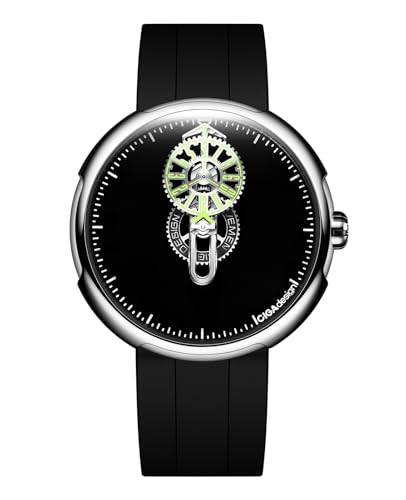 CIGA Design Time Cipher 45mm Mechanical Wandering
|
8.9/10 | Buy |
FEICHONGHO Single Watch Winder for Automatic
The FEICHONGHO Single Watch Winder offers an ultra-quiet pendulum swing mechanism with a 1-12 hour shutdown timer and three adjustable speeds for automatic timepieces. It is a practical nightstand accessory for watch enthusiasts who need reliable overnight winding without disturbing their sleep.
Pros
- Nearly silent operation makes it suitable for quiet bedrooms and bedside nightstands
- Customizable 1-12 hour timer automatically halts motion to suit your schedule
- Three distinct speed settings offer flexibility for different automatic timepiece movements
- Pendulum swing design reduces carbon-brush motor wear compared to standard box winders
- Broad compatibility designed to support 95% of automatic watches including Seiko
Cons
- Requires manual initial pendulum release from a 90-degree angle to begin swaying
- Dual green LED indicators may produce a faint glow in pitch-black bedrooms
- Accommodates only a single automatic watch at a time
GLENAW Men's Automatic Skeleton Mechanical Watch
The GLENAW Automatic Skeleton Mechanical Watch delivers classic, battery-free timekeeping with a visible gear movement encased in durable 304 stainless steel. It is a dependable choice for commuters, travelers, and minimalists seeking an artistic mechanical timepiece without reliance on batteries or charging cords.
Pros
- Battery-free automatic movement self-winds through everyday wrist motion
- Full skeleton open dial provides a clear view of intricate spinning mechanical gears
- Built from durable 304 stainless steel that resists rust and scratches
- Factory pre-calibrated timekeeping within plus or minus 20 seconds daily
- 30M daily water resistance protects against rain and handwashing splashes
Cons
- Mechanical movement requires regular wearing or manual winding to prevent stopping when stationary
- Water resistance is rated for daily splashes (30M) and is not suitable for swimming or showering
- Lacks active electronic alarm audio, backlighting, or high-decibel wake-up features
CIGA Design Time Cipher 45mm Mechanical Wandering
The CIGA Design Time Cipher is an automatic mechanical timepiece featuring an innovative wandering hour complication, a 99.3% light-absorbing super-black dial, and Swiss Super-LumiNova for screen-free timekeeping. It is ideal for digital detoxers and design enthusiasts seeking an elegant, non-disruptive personal timepiece free from glowing digital displays.
Pros
- Innovative wandering hour movement delivers mechanical timekeeping without digital screen glow or smartphone distractions
- Ultra-dark dial absorbs 99.3% of ambient light, providing high contrast against CNC-engraved indices without bedroom glare
- Swiss Super-LumiNova ensures legible nighttime time tracking without requiring electrical power or harsh backlights
- Reliable automatic movement offers 28,800 vibrations per hour and a 42-hour power reserve without disposable batteries
- Slim 11.8mm profile and resilient 316L stainless steel build provide long-lasting durability and wrist comfort
Cons
- Lacks electronic alarm sounds, vibrations, or snooze functions, so it cannot independently wake heavy sleepers
- Wandering hour complication layout requires a brief learning curve compared to standard digital or three-hand dials
- Substantial 45mm case diameter may feel bulky on smaller wrists or crowded nightstand surfaces
Understanding Safe Setting Windows and Automatic Movement Care
Adjusting a self-winding wristwatch requires an understanding of how mechanical gears interact with internal calendar assemblies. While modern quartz and digital displays update instantly through microchips, mechanical movements rely on rotating wheels, spring-loaded pawls, and lever arms to advance date discs. Attempting to change the time or quickset date while these gears are physically meshed can shear teeth and permanently damage the caliber. Determining the right window to adjust your watch keeps the movement operating smoothly and prevents unnecessary servicing.
The Critical Danger Zone: Why Clock Gears Bind Between 9 PM and 3 AM
Mechanical watch movements feature an intricate sub-assembly dedicated to switching the calendar display once every twenty-four hours. In most automatic calibers, a specialized date-driving wheel begins engaging the teeth of the date ring around 9:00 PM and remains engaged until roughly 3:00 AM or 4:00 AM. During this six-to-seven hour window, a spring-tensioned finger or gear tooth physically grips the calendar wheel to push it forward into the next date window. This span of time is widely recognized by watchmakers as the mechanical danger zone.
When you engage the quickset date mechanism by pulling the crown to its intermediate position while the driving finger is engaged, you force two opposing gears to fight each other. The manual quickset wheel tries to rotate the date disc forward, while the automatic driving finger locks the disc in place or advances it at its own gradual pace. This mechanical conflict places severe shear stress on the delicate teeth of the date ring and can snap the spring finger entirely. Once these teeth are bent or broken, the calendar will fail to jump at midnight, requiring an expensive complete teardown to replace the damaged components.
The danger zone applies whether the watch is running or has completely run down its mainspring. If an automatic watch stops running at 11:30 PM due to an exhausted power reserve, the date-driving mechanism remains frozen in direct contact with the calendar ring. Manually forcing the date change in this state causes identical gear damage. For this reason, you should never assume a stopped watch is safe to adjust without first checking hand positions.
The Safe Zone Principle: Using the Six O’Clock Rule
Establishing a foolproof routine eliminates the risk of accidentally forcing gears during the calendar transition window. The most reliable safeguard practiced by horologists is the six o’clock rule. Positioning both the hour and minute hands in the lower half of the watch dial, typically around 6:30, guarantees that the calendar gears are completely disengaged from the date wheel.
At 6:30, the hour hand points directly downward toward the bottom of the case, ensuring that the movement is nowhere near the 9:00 PM to 3:00 AM danger threshold. Even if you do not know whether the watch is currently registering 6:30 AM or 6:30 PM, the lower hemisphere of the dial is universally safe for quickset date engagement. The date-driving finger is parked on the opposite side of the gear train, leaving the date disc free to spin without resistance.
Adopting this habit prevents costly mental errors when picking up an unworn watch. Before touching the quickset date position, always move the hands to 6:30 first using the time-setting crown position. This simple preventative step ensures that you never force delicate gear teeth, regardless of when the watch originally stopped running.
Step-by-Step Procedure for Setting Automatic Watch Time and Date
Setting an automatic watch properly requires a strict sequence of operations to preserve mechanical integrity and ensure proper AM and PM synchronization. Begin by pulling the crown all the way out to the time-setting position, which is typically position two on standard mechanical watches. Slowly advance the hour and minute hands forward in a clockwise direction past the 12:00 mark. Watch the date window closely as the hands cross the top of the dial to see if the calendar flips.
If the date clicks forward to the next day when the hands pass twelve, the watch has just crossed midnight into AM hours. If the date remains stationary, the hands have crossed midday into PM hours. Continue turning the hands forward until you reach 6:30 AM, placing the movement firmly in the universal safe zone. At this stage, the gears driving the date wheel are completely clear of the calendar disc.
Push the crown inward by one click to access position one, which controls the quickset date. Rotate the crown to advance the date disc until it displays yesterday’s date rather than today’s date. Setting the watch to the preceding day allows you to use the hour hands to finalize the sequence accurately. If today is the fifteenth, turn the quickset crown until the date window displays the fourteenth.
Pull the crown back out to position two and advance the hands forward once again. As the hands cross midnight, the date will click over from yesterday to today, confirming that your watch is currently reading the morning hours of the current calendar day. Continue turning the hands forward until you reach the exact current hour and minute, accounting for whether the current time is morning or afternoon. Finally, push the crown fully flush against the case, or screw it down tightly if your watch features a threaded water-resistant crown.
Calibrating Time Against Accurate Bedside Reference Clocks
Mechanical watches are marvels of micro-engineering, but their physical hairsprings and balance wheels naturally experience minute daily deviations. Standard mechanical movements, including the caliber in the GLENAW Automatic Skeleton Mechanical Watches, operate within an expected accuracy tolerance of approximately twenty seconds per day. Maintaining this timing accuracy requires cross-referencing your timepiece against an unwavering electronic reference.
Keeping a dedicated digital timepiece on your bedside table provides a reliable visual standard every morning when setting your wristwear. Sleepers who rely on low-glare bedside timepieces benefit from stable quartz timekeeping that does not suffer from mechanical drift or spring fatigue. Using a clear digital bedside display allows you to stop the mechanical movement using crown hacking and synchronize the second hand to the exact second.
Hacking is a feature found in many modern calibers where pulling the crown to the time-setting position physically stops the balance wheel from oscillating. When setting your watch, wait until the running seconds hand reaches the twelve o’clock marker, pull the crown to engage the hack mechanism, and set your minute hand slightly ahead of the reference time. As the digits on your bedside clock roll over to match the set minute, push the crown inward to start the mechanical gear train in perfect synchronization.
Power Reserves and Hand-Winding Before Setting the Time
Automatic watches rely on an internal weighted rotor that spins with the natural motion of your wrist to wind the mainspring. When a watch sits unworn on a dresser, its mainspring gradually unwinds until the balance wheel loses momentum and stops completely. For example, the Caliber CD-08 inside the CIGA Design Wandering Hour Automatic Mechanical watch provides a forty-two-hour power reserve supported by twenty-four jewels and a high-frequency balance beating at 28,800 vibrations per hour.
Setting the time on a completely depleted movement without first manual-winding can lead to erratic timekeeping during the first few hours of wear. A balance wheel oscillating on low mainspring tension suffers from reduced amplitude, causing the watch to gain or lose time rapidly until wrist activity builds sufficient power. Giving the crown twenty to thirty gentle clockwise turns in position zero before setting the hands establishes healthy spring tension and consistent amplitude.
Unlike manual-wind vintage watches, modern automatic movements incorporate a slipping bridle mechanism inside the mainspring barrel. This safety feature prevents the mainspring from snapping when fully wound by allowing the outer coil to slip harmlessly along the barrel wall. You can safely turn the crown to initiate power without fear of overwinding the movement, providing stable power before adjusting your time.
Maintaining Mainspring Tension with Bedside Watch Winders
Frequent manual adjustments put repeated mechanical wear on crown gaskets, setting levers, and stem tubes. Owners who rotate between multiple watches often find that resetting stopped timepieces every few mornings becomes tedious and increases the risk of gear damage. Using an active bedside device, such as the FEICHONGHO Single Watch Winder for Automatic, keeps automatic movements continuously energized while resting on the nightstand.
The FEICHONGHO unit utilizes an oscillating pendulum mechanism with three distinct speed modes and an integrated timer allowing shutdown between one and twelve hours. Starting the device in fast mode with both green LED lights illuminated releases the pendulum from a ninety-degree angle to provide steady, low-noise rotational motion. This continuous gentle motion maintains optimal mainspring tension for approximately ninety-five percent of wristwatches on the market, including popular Seiko automatic models.
Because the swinging pendulum operates without the friction-prone carbon brushes found in traditional motor boxes, it provides a quiet bedside presence that avoids disrupting light sleepers. Maintaining your automatic watches on a winder ensures that the calendar disc and gear trains remain constantly aligned with the true date, completely eliminating the need to perform manual quickset adjustments.
Handling Distinct Movements: Skeleton and Wandering Hour Calibers
Different movement architectures present unique visual cues and operational characteristics when setting the time. The GLENAW Automatic Skeleton Mechanical Watches feature a full open-worked dial that exposes the balance wheel, escape wheel, and winding gear train directly to the wearer. This transparent design allows you to observe the mechanical engagement firsthand, making it easy to confirm that the balance spring is oscillating freely before setting your time.
In contrast, specialized time displays require a modified reading technique during morning adjustments. The CIGA Design Wandering Hour Automatic Mechanical replaces traditional central hands with three rotating hour discs that travel along an upper minute track. Reading and setting this display involves tracking the specific hour disc currently traversing the top arc, where the disc points to the exact minute index engraved into the super-black dial.
Because wandering hour assemblies move complex satellite gears continuously across the dial face, adjusting the time slowly and smoothly is essential. Turning the crown too rapidly can induce unnecessary strain on the satellite pinions. Taking your time during crown manipulation protects the high-beat Miyota-based movement and preserves the refined mechanics of unique horological complications.
Environmental Hazards: Magnetism, Water Exposure, and Nightstand Storage
Bedside tables often host a variety of electronics that can inadvertently affect the performance of mechanical watches. Placing a mechanical watch directly against powerful magnetic fields, such as those emitted by unshielded audio speakers, tablet cases, or magnetic phone stands, can magnetize the balance spring. When hairspring coils become magnetized, they stick together, causing the watch to gain several minutes or even hours per day.
Modern bedside tables frequently feature integrated nightstand charging stations to power personal devices overnight. While these charging hubs provide exceptional convenience, keeping mechanical wristwear several inches away from inductive charging coils prevents stray magnetic flux from interfering with delicate steel hairsprings. Maintaining clean spatial separation ensures that your mechanical watch retains its factory calibration.
Water resistance is another vital factor to consider when handling your watch near bedside water carafes or during morning bathroom routines. The GLENAW skeleton watch features a 30M daily splash-proof rating, which handles light handwashing and rain splashes comfortably but should never be submerged in water or worn in a hot shower. Steam and moisture can penetrate crown gaskets, causing condensation on the interior crystal and rapid corrosion of polished steel gear teeth.
Common Setting Mistakes That Cause Mechanical Gear Failure
Turning the hands backward across midnight is one of the most frequent mistakes made by mechanical watch owners. While turning hands backward during the daytime hours is generally harmless on modern calibers, reversing the hands across the 12:00 AM threshold forces the date wheel backward against its spring-loaded jumper pawl. This action can bend the jumper spring or cause the calendar disc to freeze between two numbers.
Another common error is adjusting the watch while wearing it on your wrist. Pulling the crown outward while the watch is strapped to your forearm forces you to apply lateral, twisting pressure on the winding stem. Over time, this angular leverage bends the thin steel stem and degrades the internal rubber gaskets, compromising water resistance and causing crown wobble. Always remove the timepiece completely before manipulating the crown.
Forgetting to secure a screw-down crown after setting the time leaves the movement vulnerable to dust and ambient humidity. If your watch case utilizes a threaded crown tube, push inward gently while turning the crown counter-clockwise until you feel the threads engage with a soft click, then screw it down clockwise until snug. Never cross-thread or over-tighten the crown against the case wall, as this crushes the internal sealing rings.
Practical Daily Routines for Mechanical Watch Longevity
Developing a consistent morning routine ensures that your mechanical timepieces deliver reliable performance day after day. Take a moment each morning to inspect the power state of your watch, check whether the date jumped correctly overnight, and synchronize the time against your bedside quartz reference. Approaching manual adjustments with gentle, deliberate movements protects mechanical investments from premature wear.
If you rotate between several watches throughout the week, pairing your collection with an alternating pendulum winder or dedicated resting box keeps movements organized and ready to wear. Giving automatic watches the care they deserve preserves their intricate balance assemblies and ensures that every glance at your wrist offers dependable, beautifully crafted timekeeping.
About the author
Jeremy Klein is an experienced sleep-product tester with a strong focus on testing methodology, data collection, and real-world product performance. His expertise includes evaluating sleep essentials and wake-up devices through structured testing and practical consumer-focused criteria.