
What Age to Use Ok to Wake Clock: Practical Timing and Age Guide for 2026
Understand what age to use ok to wake clock as we break down toddler sleep development, visual cues, and bedtime routines for October 2026.
 By McKenzie Dillon
Updated October 6, 2026
By McKenzie Dillon
Updated October 6, 2026

Parents often find themselves woken before dawn by energetic toddlers who have no concept of whether five in the morning is playtime or sleep time. Young children naturally lack the neurological ability to read standard numerical clocks or gauge the passage of time during dark early hours. Introducing structured sleep trainers such as kids ok to wake alarm clocks bridges this cognitive gap by substituting abstract numbers with clear visual cues like changing colors and friendly icons. Determining what age to use ok to wake clock depends heavily on your child’s developmental readiness, cognitive milestone comprehension, and bedroom independence.
While every child matures at a unique pace, most toddlers begin connecting cause, effect, and basic behavioral rules between two and three years of age. A reliable color-changing sleep trainer reinforces morning boundaries, preserves parent rest, and reduces bedtime stall tactics. By identifying the exact signs of developmental readiness, parents can introduce these bedside devices seamlessly without causing confusion or early-morning resistance.
| Award | Product | ACR Score About ACR ScoreThe ACR Score is our own rating from 0 to 10, based on performance, design and build, ease of use, and value. It reflects independent research and is never influenced by manufacturers, retailers, or affiliate commissions. Learn more › | |
|---|---|---|---|
| Best Overall |
MooLarm Ok to Wake Sleep Trainer Toddler Alarm
|
8.9/10 | Buy |
| Best Value |
 I-CODE Toddler Ok to Wake Clock
|
8.6/10 | Buy |
| Best Premium |
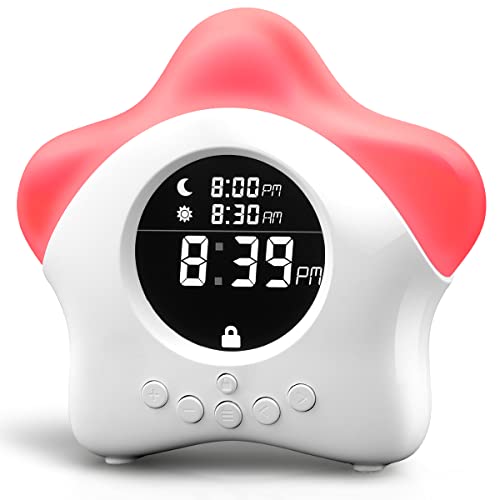 Learn & Climb Toddler Sleep Training Clock
|
8.4/10 | Buy |
| Best Budget |
 Netzu Kids OK to Wake Alarm Clock with RGB Night
|
8.3/10 | Buy |
 ANNNGUL Kids Ok to Wake Clock
|
8.1/10 | Buy |
MooLarm Ok to Wake Sleep Trainer Toddler Alarm
The MooLarm Sleep Training Alarm Clock uses clear sun, moon, and color cues alongside an integrated 17-sound noise machine to help toddlers build healthy sleep schedules. It is a practical bedside tool for parents seeking an effective way to teach early-rising children when to stay in bed and when it is okay to wake up.
Pros
- Clear sun and moon visual indicators teach early risers when to stay in bed without needing to read time digits
- Versatile 17-sound audio library eliminates the clutter of having a separate nursery sound machine
- Convenient independent nap timer prevents accidental resets of the daily morning wake schedule
- Four-level dimming with automatic nighttime reduction helps prevent excess bedside glare during sleep
Cons
- Stepped 4-level dimmer does not offer continuous stepless 0 to 100 percent brightness tuning
- Visual coaching cues may require consistent parental reinforcement before young toddlers follow them reliably
- Lightweight 0.7-pound build can be easily tipped over or displaced by curious children if kept within arm's reach
I-CODE Toddler Ok to Wake Clock
The I-CODE Ok to Wake Alarm Clock is a compact bedside sleep trainer that pairs clear red and green visual cues with friendly facial emojis to teach young children healthy morning boundaries. Equipped with an adjustable night light, flexible nap timer, and toddler-proof lock, it is an effective tool for parents helping kids establish independent sleep routines.
Pros
- Intuitive color-coded lighting and facial expressions help toddlers understand wake boundaries before they can read numbers
- Child safety lock prevents curious toddlers from resetting the clock or changing alarm times
- Versatile nap timer allows parents to set quick rest countdowns without altering regular morning wake schedules
- Small footprint and lightweight 0.65-pound ABS frame fit conveniently on any bedside surface
Cons
- Relies primarily on visual learning cues, which may require an initial adjustment period and parental coaching for younger toddlers
- Compact 4-inch square chassis houses multiple configuration buttons that require careful setup using the included directions
- Manufacturer specifications do not detail internal battery backup or prolonged cordless operating capabilities
Learn & Climb Toddler Sleep Training Clock
The Learn & Climb Stay-in-Bed Clock is an electronic toddler sleep trainer featuring a clear LCD display and a color-coded light system to help kids know when to stay in bed and when to wake up. It is an ideal bedside tool for parents seeking consistent morning routines and better sleep habits for toddlers and young children.
Pros
- Color-coded visual cues help non-time-reading toddlers easily understand when it is acceptable to leave bed
- Supplied with a sturdy DC power adapter and USB cord for immediate out-of-the-box operation
- Battery backup preserves essential alarm and time settings if wall power drops or cords are bumped
- Includes comprehensive sleep training materials like an eight-week reward chart and bedtime storybook
- Dedicated nap countdown mode simplifies daytime rest routines without overriding primary alarm times
Cons
- Backup batteries are not included and only preserve memory settings rather than powering active lights or audio
- Speaker volume is limited to two preset levels rather than a continuous variable adjustment slider
- Requires continuous connection to AC wall power to keep the nightlight and digital display active
Netzu Kids OK to Wake Alarm Clock with RGB Night
The Netzu Kids Alarm Clock combines an OK-to-wake visual sleep trainer, a 7-sound sleep machine, and a 10-color RGB nightlight into a compact bedside hub. It is a practical choice for parents teaching toddlers healthy sleep schedules or children wanting a customizable morning routine.
Pros
- Dual-function visual sleep trainer uses sun, moon, and green light cues to reinforce early morning routines
- Built-in sound machine offers 7 soothing audio tracks with 15 volume settings and continuous or timed play
- Display personalization with 10 RGB colors and 5 brightness adjustments alongside a soft warm nightlight
- Includes a CR2025 battery backup to preserve programmed settings during brief power outages
- Dedicated 9-minute snooze and nap timer provide practical timing for naps and morning wakeups
Cons
- CR2025 battery backup retains time settings only and will not illuminate the display or sound alarms during a blackout
- Stepped 5-level display brightness lacks 0-100% stepless dimming for complete pitch-black light control
- Requires continuous connection to wall power via the included adapter, offering no cordless battery operation
ANNNGUL Kids Ok to Wake Clock
The ANNNGUL Kids Alarm Clock is a compact bedside sleep trainer that uses clear red and green light indicators to teach toddlers when to stay in bed and when it is okay to get up. Featuring 10 night light colors, 5 brightness levels, and accessible front-facing buttons, it is well suited for parents seeking an intuitive morning routine helper.
Pros
- Red and green visual wake indicators help toddlers understand sleep boundaries before they can read numbers
- Front-mounted controls eliminate the frustration of navigating hidden buttons on the bottom of the clock
- 10 vibrant night light color options and 5 brightness settings allow customized bedtime lighting
- Comes complete with both the required power cable and AC wall adapter in the box
- Settings preservation prevents the need to reprogram routines after brief power disconnections
Cons
- Must remain plugged into an electrical outlet to function and cannot operate cordlessly on battery power alone
- Brightness adjustment uses 5 preset steps rather than a continuous 0-to-100 percent stepless dial
- Lacks separate weekday and weekend dual-alarm scheduling options
Understanding Developmental Milestones and Timing for Sleep Training Clocks
The primary developmental window for introducing an ok-to-wake clock spans from two to three years of age. At this stage, young toddlers transition from simple object permanence to understanding sequential routines and visual symbolism. While children under two rarely possess the impulse control necessary to stay in bed based on a light, children between two and four can readily associate glowing colors with expected bedroom behavior. Choosing when to integrate this tool into your family schedule requires matching the hardware features to your child’s cognitive milestones.
Cognitive Readiness: When Toddlers Grasp Color Associations and Time Rules
Children do not develop the cognitive framework to understand hours and minutes on standard digital or analog displays until early elementary school. Before that age, a child waking at four in the morning perceives no difference between pitch darkness and their usual morning rising time. Sleep training clocks solve this developmental gap by converting complex temporal data into basic color cues. When a young child sees a glowing red or yellow light, they learn to pause their morning requests until the designated transition color appears.
Impulse control develops gradually alongside receptive language skills during the toddler phase. A two-year-old may recognize that red means stop, but their ability to remain quietly in their crib or toddler bed requires consistent practice. Models such as the I·CODE Ok to Wake Alarm Clock for Toddlers reinforce this concept by combining facial expressions like sleeping and smiling emojis with distinct color shifts. Toddlers frequently respond faster to anthropomorphic symbols because facial recognition is an intuitive developmental skill long before reading numbers becomes possible.
Age-by-Age Breakdown: Introducing Visual Sleep Aids from Toddlerhood to School Age
Introducing an ok-to-wake clock before eighteen months of age rarely yields behavioral success. Infants and young toddlers lack the symbolic comprehension required to link an external glowing device with self-regulated sleep behavior. Placing a glowing clock near a crib at twelve to eighteen months primarily serves as a soothing ambient nightlight or white noise generator rather than an active behavioral cue. Parents using clocks during this infant phase should focus entirely on audio masking and gentle nighttime nursery illumination without expecting the child to delay waking.
The sweet spot for intentional sleep training emerges between two and three and a half years old, particularly when toddlers transition out of a crib into a standard bed. Once a toddler has the physical freedom to wander out of bed unsupervised, visual boundaries become essential for household safety and sleep hygiene. Clocks like the Stay-in-Bed Clock for Kids leverage this exact milestone by providing four-color light progressions alongside companion storybooks and reward charts. Engaging a three-year-old through interactive stories reinforces why staying under the blankets until green appears leads to morning praise and positive reinforcement.
Older preschoolers and school-age children between four and seven years continue to benefit from visual wake systems, even as they begin identifying digital numerals. Children in kindergarten often experience shifting wake schedules due to school bus pickups and structured classroom routines. Clocks designed with dual sun and moon displays, such as the Ok to Wake Sleep Training Kids Sun Moon Alarm, help older children manage early morning wakeups independently while teaching early time-telling skills. As children advance into elementary school, these devices naturally transition from behavioral sleep trainers into standard morning alarms with customizable chime alerts.
Color Spectrum and Nightstand Lighting: Choosing Melatonin-Safe Bedroom Cues
Optical spectrum management plays a fundamental role in maintaining healthy pediatric circadian rhythms and sleep architecture. Short-wavelength blue and cool white backlights suppress natural melatonin secretion, which can delay sleep onset and cause frequent nighttime arousals. Bedside clocks that use soft red, amber, or warm tones during overnight periods support natural evening melatonin production. When selecting a visual trainer, verify that the sleep indicator employs red or warm tones to signal bedtime rather than harsh blue tones.
Display dimming capabilities are equally crucial for creating an optimal dark bedroom environment for sensitive young sleepers. Models like the ANNNGUL Kids Alarm Clock feature dedicated five-level dimming controls that allow parents to adjust the illumination from a soft night glow down to minimal output. Pairing gentle nocturnal lighting with gradual sunrise wake-up lights or morning green transitions helps signal awakening naturally without shocking the child with sudden fluorescent glare. A properly calibrated dimmer prevents bedroom light pollution while maintaining sufficient legibility for toddlers checking the status from their pillow.
Auditory Support and Sound Masking: Melodies, White Noise, and Gentle Wakeup Tones
Visual indicators represent only half of an effective pediatric sleep environment, as ambient auditory consistency is equally vital. Sudden household noises, barking neighborhood dogs, or creaking floorboards frequently wake light-sleeping toddlers during the early morning hours. Clocks equipped with multi-track sound machines, such as the Netzu Alarm Clock for Kids, integrate white noise, lullabies, and nature sounds with up to fifteen volume steps. Constant acoustic masking dampens disruptive environmental spikes, allowing toddlers to remain in deeper sleep stages until the visual wake indicator activates.
When waking time arrives, gentle acoustic alerts can accompany visual color shifts to accommodate children who sleep heavily. Rather than using harsh, anxiety-inducing buzzers, modern sleep training units offer soft morning chimes and ascending melodies. Parents can choose whether to activate acoustic alarms on weekends or maintain silent color-only transitions to allow overtired children to sleep past their normal rising hour. Establishing quiet daytime routines using built-in countdown nap timers also conditions young toddlers to associate specific soundscapes with resting intervals.
Establishing Morning Boundaries: Practical Methods for Introducing the Clock
Introducing a sleep training clock requires proactive daytime preparation rather than simply setting the device on a nightstand at bedtime. Start by letting your toddler explore the clock during the day while demonstrating what each glowing color and symbol means. Explain clearly that when the clock shows red or the moon icon, everyone in the family stays resting quietly in their room. Demonstrate the transition to green or the sun icon, celebrating enthusiastically when the light turns green to build positive emotional associations with the morning cue.
During the first week of implementation, set the morning wake trigger to match your child’s current natural rising time. If your toddler habitually awakens at five-fifteen in the morning, set the green light to trigger at five-twenty rather than aiming immediately for seven o’clock. Achieving immediate success on the first morning reinforces the rule and builds the child’s confidence in the system. Once your toddler reliably waits for the green light, push the wake-up time back incrementally in ten-minute intervals over several weeks until you reach your family target schedule.
Consistency across morning routines remains the most decisive factor in determining how quickly a toddler adapts to the clock. If a child leaves their room before the light changes, calmly guide them back to bed and remind them that the morning has not started yet. Pair this behavioral boundary with physical bedroom comforts, ensuring the clock sits within sight of the bed while remaining out of reach of curious little hands. Families striving to build healthy rest habits can explore top rated bedroom alarm clocks to find designs that balance child-friendly cues with dependable timekeeping.
Troubleshooting Reluctance, Nighttime Waking, and Button Tampering
Toddler curiosity presents one of the most common hurdles when setting up bedside electronics in a nursery or bedroom. Young children naturally love pressing buttons, adjusting dials, and experimenting with colorful light modes during unsupervised bedtime moments. Models like the I·CODE Ok to Wake Alarm Clock for Toddlers incorporate dedicated child-lock toggles that disable surface controls when pressed for three seconds. Activating a hardware lock prevents little hands from accidentally disabling alarms, altering the current time, or triggering sound machines in the middle of the night.
If your child wakes up crying or upset despite the red sleep light, evaluate whether external factors are disturbing their rest. Teething pain, developmental growth spurts, room temperature fluctuations, or nighttime fears can override even the most consistent visual sleep training. Avoid punishing a child who struggles to stay in bed, as sleep anxiety can exacerbate morning resistance and bedtime battles. Instead, offer gentle verbal reassurance, verify the nightlight brightness setting, and confirm that the child understands they remain completely safe in their bedroom environment.
Power Continuity and Backup Architecture for Bedroom Sleep Trainers
Residential power outages and accidental cord disconnections can quickly disrupt carefully scheduled toddler sleep training routines. Most modern visual clocks rely on standard direct-current power adapters plugged into household wall outlets to power bright LED displays and multi-color lighting arrays. However, differences in internal backup architecture dictate how a clock behaves during an unexpected nighttime electrical drop. Understanding how your chosen clock handles power loss ensures morning routines remain uninterrupted during inclement weather.
Many units, including the Netzu Alarm Clock for Kids and the Stay-in-Bed Clock for Kids, utilize internal battery backup options like CR2025 button cells or secondary battery compartments. In most visual sleep training designs, backup batteries maintain internal time-memory retention rather than powering continuous illumination during wall power loss. When wall power cuts out, the internal quartz mechanism preserves programmed alarm schedules and clock time without illuminating the display. Once main power returns, the clock immediately resumes normal operations without requiring frantic reprogramming before sunrise.
Evaluating Essential Hardware Features Across Different Childhood Ages
Selecting an ok-to-wake clock that grows alongside your child provides long-term value and avoids frequent nightstand replacements. For younger toddlers between two and three, prioritize straightforward interfaces with prominent color changes, friendly icon illustrations, and intuitive button arrangements. Clocks such as the ANNNGUL Kids Alarm Clock feature straightforward front-panel controls that eliminate confusing hidden menus, making setup simple for tired parents. Sturdy construction made from child-safe ABS materials also ensures the housing withstands occasional bumps or curious toddler handling.
As children reach preschool and kindergarten, customizable countdown timers become increasingly valuable for midday resting routines. Integrated nap timers allow caregivers to set thirty, sixty, ninety, or one-hundred-twenty minute countdowns without altering core morning wake-up settings. Versatile models like the Ok to Wake Sleep Training Kids Sun Moon Alarm offer independent nap functions alongside expansive sound profiles, ensuring the clock serves multiple daily needs. Evaluating how easily a device transitions from toddler visual trainer to functional student timepiece helps parents invest in a reliable nightstand companion.
Examining cord routing and nightstand clearance is another practical step before placing any powered electronic device near a child’s bed. Ensure power cables remain safely tucked behind furniture and away from crib slats or toddler foot paths to eliminate tripping hazards. Verifying that the clock base includes non-slip rubber feet prevents accidental slides when older children press top-mounted snooze bars or nightlight toggles. A secure, well-placed bedside clock provides toddlers with a reliable visual reference point, fostering confidence, independence, and peaceful mornings for the entire household.
Determining the right age to introduce a visual sleep trainer comes down to observing your child’s cognitive cues and communication skills. While most families find the greatest success between two and three years of age, older preschoolers also gain significant routine stability from color-coded waking cues. By pairing age-appropriate hardware with patient daytime practice, parents can turn early morning disruptions into predictable, restful routines for the whole household.
About the author
McKenzie Dillon is a Certified Sleep Science Coach and experienced sleep-product editor who has personally tested dozens of sleep products. Her expertise bridges sleep technology, product evaluation, and practical guidance for creating more comfortable sleep and wake-up routines.