
What Is the Dimmest Night Light: A Practical Guide for 2026
Evaluate what is the dimmest night light options to preserve dark adaptation and compare adjustable plug-in models for October 2026.
 By Jeremy Klein
Updated October 6, 2026
By Jeremy Klein
Updated October 6, 2026
Disruptive bedroom light pollution often ruins an otherwise peaceful evening when standard plug-in fixtures illuminate the room like small floodlights. Many sleepers asking what is the dimmest night light discover that conventional LEDs cast harsh glares that wake up household members or suppress natural melatonin production. Balancing nighttime navigation safety with complete darkness requires fixtures that dial down to minimal lumen thresholds. Integrating thoughtful illumination alongside bedside alarm clocks for dark bedrooms creates a calm sleep sanctuary where your eyes adapt naturally without jarring brightness.
Hardware controls and color temperature determine whether a nightlight supports or ruins your sleep. Models featuring continuous slide dimmers allow homeowners to drop luminance to fractions of a single lumen, preventing intrusive midnight illumination. In contrast, fixed-brightness daylight fixtures may overpower dark-adapted eyes even when consuming minimal wattage. Selecting the right ultra-low illumination fixture keeps hallways passable while preserving the deep resting environment every bedroom deserves.
| Award | Product | ACR Score About ACR ScoreThe ACR Score is our own rating from 0 to 10, based on performance, design and build, ease of use, and value. It reflects independent research and is never influenced by manufacturers, retailers, or affiliate commissions. Learn more › | |
|---|---|---|---|
| Best Overall |
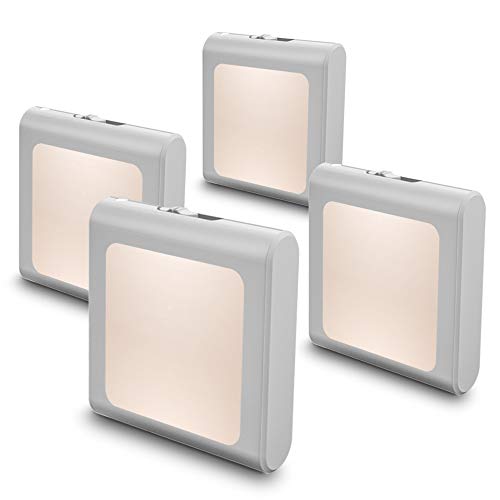
MAZ-TEK Dimmable LED Night Light 4-Pack
|
8.6/10 | Buy |
| Best Value |
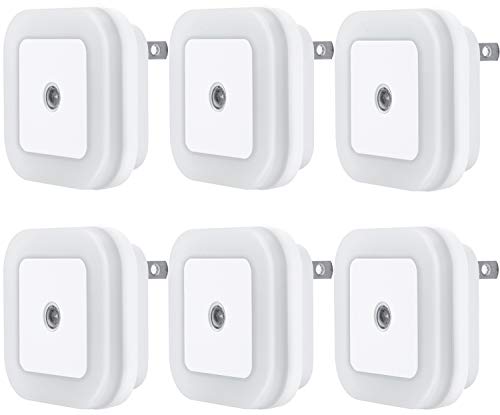 Uigos Dusk-to-Dawn LED Night Light 6-Pack
|
8.4/10 | Buy |
MAZ-TEK Dimmable LED Night Light 4-Pack
The MAZ-TEK Dimmable LED Night Light delivers stepless 0 to 15-lumen warm white illumination paired with an automatic dusk-to-dawn sensor and a non-blocking outlet profile. It is an ideal bedroom accessory for light-sensitive sleepers, parents, and seniors seeking soft nighttime navigation without sleep-disrupting glare.
Pros
- Stepless physical slider switch enables smooth 0 to 15 lumen light level adjustment
- Smart dusk-to-dawn sensor turns on automatically when darkness is detected
- Low-profile casing leaves the second AC outlet open for bedside clocks and chargers
- Ultra-low 0.5-watt power consumption with up to 50,000 hours of LED lifespan
- Convenient 4-pack bundle covers multiple bedrooms and hallways
Cons
- Maximum brightness tops out at 15 lumens, which is meant for accent navigation rather than full room illumination
- Standard AC plug-in design does not provide emergency light during an electrical blackout
- Slide switch is positioned directly on the wall-mounted housing, which can be tricky to reach behind deep nightstands
Uigos Dusk-to-Dawn LED Night Light 6-Pack
The Uigos LED Night Light 6-Pack delivers automatic dusk-to-dawn illumination using energy-efficient 0.5W LED clusters, offering dependable low-profile guidance across dark rooms without harsh overhead glare. It is an ideal sleep accessory for parents, seniors, and nighttime navigators seeking simple, hands-free path lighting to complement their bedroom setup.
Pros
- Smart dusk-to-dawn optical sensor automates activation without requiring physical switches
- Exceptionally low 0.5W power rating keeps annual electricity consumption minimal
- Slim, unobtrusive dimensions prevent bulky obstruction around duplex wall receptacles
- Six-pack bundle allows coordinated low-light illumination across multiple rooms and corridors
- Durable four-LED configuration delivers consistent pathfinding light without bulb replacements
Cons
- Daylight white color temperature provides crisp illumination rather than soft warm or amber sleep wavelengths
- Fixed brightness output lacks a manual dimming slider or adjustable intensity toggles
- Optical sensor may engage prematurely if plugged into dark alcoves, deep corners, or heavily shadowed hallways
Core Illumination Principles and Low-Lumen Output
Identifying the dimmest possible night light requires examining both light volume and physical brightness controls. True minimal illumination comes from fixtures engineered with stepless manual dimming that reach near-zero lumen levels. Standard plug-in units often emit fixed output that appears blinding to dark-adapted eyes. A dedicated fixture offering adjustable low-lumen settings allows sleepers to maintain night vision while moving safely.
Light sensitivity varies substantially among individuals resting in complete darkness. A fixture that seems faint during daytime can cast harsh shadows across a dark bedroom at night. Understanding how diodes, physical switches, and human biology interact makes finding the right balance straightforward. With appropriate hardware, you can keep floorboards navigable without compromising deep sleep.
The Mechanical Advantage of Stepless Slide Dimming
Physical dimming controls represent the most significant distinction among low-light sleep accessories. Fixtures equipped with continuous slide switches or rotary dials permit users to dial output down smoothly. Preset stepped dimmers often jump between wide intervals like twenty-five, fifty, and one hundred percent. These rigid increments frequently miss the delicate sweet spot required for sensitive eyes resting in pitch darkness.
A continuous slide mechanism gives homeowners precise authority over the light spectrum. The MAZ-TEK Plug in Dimmable Led Night Light with Auto exemplifies this approach with a slide switch adjustable from zero to fifteen lumens. This physical slider allows you to drop diode illumination down to a faint fraction of a lumen. Being able to shut the light down to zero lumens or push it just above darkness provides unmatched bedside flexibility.
In comparison, non-adjustable units force owners to accept a fixed brightness output regardless of room conditions. While fixed models work well in open corridors, they often prove overwhelming inside compact master suites. Having analog slider control means you can customize output across seasons or changing needs. You can set faint lighting for an infant nursery and later recalibrate it for a dark guest room.
Understanding Color Temperature and Melatonin Suppression
Lumen volume tells only half the story when evaluating how bright a fixture feels in a dark room. Color temperature fundamentally changes how human eyes react to low-level lighting. Daylight white diodes emitting around five thousand to six thousand Kelvin stimulate melanopsin-containing retinal ganglion cells. This spectral spike signals daytime alert status to the brain, suppressing melatonin production and disrupting sleep.
Soft warm white illumination between two thousand and three thousand Kelvin feels dramatically softer at identical lumen outputs. The gentle amber hue lacks harsh blue-wavelength peaks that scatter across the ocular lens. Fixtures like the Uigos LED Night Light Lamp with Smart Sensor Dusk provide clean daylight illumination, which suits daytime utility areas or active laundry rooms. In contrast, bedrooms and sleeping corridors benefit far more from warm white tones that allow pupils to remain relaxed.
Blue and cool-white wavelengths also cause noticeable visual halo effects when viewed through tired eyes. These short wavelengths scatter rapidly across the eyeball, creating visual distortion in the dark. Amber and warm white hues penetrate dark spaces without producing excessive peripheral haze. Selecting warm Kelvin ratings ensures midnight visits to the bathroom leave your sleep readiness intact.
Lumen Output Versus Electrical Wattage Ratings
Consumers often mistake electrical power consumption for illumination output. Many modern LED units draw roughly zero point five watts of mains electricity, leading buyers to assume they produce identical amounts of light. In reality, modern solid-state diodes convert that minute electrical draw into vastly different lumen quantities. A half-watt daylight fixture can easily generate enough radiance to illuminate an entire bedroom.
Lumen output measures visible brightness, whereas wattage merely indicates energy draw from your wall socket. Efficient solid-state engineering allows manufacturers to extract up to fifteen lumens from a single half-watt diode. Without an integrated dimmer, all those lumens flood into the room immediately once the sensor triggers. Prioritizing adjustable lumen ratings rather than low wattage ratings ensures you avoid accidental light pollution.
Dimmable hardware that throttles light below one lumen offers an optical environment that fixed-wattage nightlights cannot match. Low wattage guarantees low operating costs, but low lumen control guarantees restorative rest. The ability to calibrate diode radiance ensures your sleep sanctuary remains peaceful. Evaluating actual lumen ceilings prevents unpleasant midnight surprises when ambient lighting turns off.
Photodiode Sensor Calibration and Ambient Light Thresholds
Automatic dusk to dawn sensors govern how and when plug-in fixtures illuminate your space. These small cadmium sulfide or silicon photodiodes detect ambient foot-candles to toggle LEDs automatically. High-sensitivity sensors turn on the moment dusk settles or when hallway window curtains close. When placed in deeply shaded corners, overly sensitive photodiodes may remain active throughout daylight hours.
Proper sensor calibration prevents unnecessary light emission when other ambient sources are active. If an ambient sensor is sluggish, it may stay illuminated even after you switch on an overhead fixture. Quality sensor integration ensures the light shuts off completely once room lighting passes twilight thresholds. This automated cycling extends internal component longevity while ensuring you only encounter low illumination when darkness requires it.
Positioning near reflective walls or mirrors can occasionally confuse photodiode sensors. Stray reflections from the nightlight itself might cause rapid flickering if the sensor detects its own bounced photons. Reliable designs recess the optical sensor or orient it away from the primary LED lens to prevent optical feedback loops. This physical isolation guarantees steady, flicker-free illumination all night long.
Optical Diffuser Materials and Direct Glare Elimination
The physical housing of a plug-in fixture heavily dictates how light disperses across walls and flooring. Forward-facing transparent lenses project raw optical energy directly toward your eyes, producing sharp peripheral glares. Frosted diffusers spread diode radiance evenly across the casing face, which significantly reduces optical hot spots. An opaque baffle that directs illumination downward toward the baseboard yields the dimmest practical footprint.
Indirect bounce lighting utilizes baseboards and flooring to scatter lumens softly before they reach eye level. When light reflects off matte floorboards, the overall intensity drops naturally. Compact casing dimensions also preserve access to secondary electrical outlets. A slim profile ensures you can run an alarm clock or air purifier in the upper receptacle while keeping soft ground-level lighting below.
Unobstructed dual-outlet access matters tremendously in crowded bedroom spaces where phone chargers, humidifiers, and bedside electronics compete for wall plugs. Bulky circular designs often overlap adjacent sockets, forcing homeowners to unplug vital equipment. Modern slim fixtures leave the upper ground and neutral slots completely clear. This thoughtful form factor allows you to maintain pathway illumination without sacrificing access to bedside power.
Balancing Nighttime Mobility with Circadian Sleep Architecture
Navigating home corridors during early morning hours requires just enough visual reference to avoid hazards. Stubbed toes, misplaced pet toys, and unseen furniture corners represent genuine nighttime risks. Relying on ceiling fixtures or smartphone screens shocks your circadian system and resets night vision. An ultra-dim nightlight provides a soft visual anchor without destroying dark adaptation.
Scotopic vision relies on rod cells in the retina that take up to thirty minutes to reach maximum dark sensitivity. Exposing these cells to sudden spikes of harsh light bleaches rhodopsin photopigments instantly. Once bleached, your eyes require another extended adjustment period to regain low-light visual acuity. Maintaining a faint, continuous floor glow preserves retinal adaptation throughout brief midnight awakenings.
Strategic low-level illumination allows you to cross rooms while keeping your nervous system in a restful state. You can maintain pitch-black conditions near your pillow while illuminating critical hallway thresholds. Pair subtle ground-level lights with modern sunrise wake-up light clocks to build a bedroom that transitions smoothly from deep night to natural dawn. This combination protects restful darkness overnight while delivering reliable morning waking cues.
Creating Gentle Illumination for Children and Nurseries
Young children often require gentle visual reassurance to settle comfortably into bedtime routines. Overly bright illumination, however, can prevent deep sleep and encourage midnight wakeups. Parents frequently struggle to balance bedtime comfort with optimal pediatric sleep hygiene. An adjustable slider allows caregivers to set a dim baseline that satisfies fearful toddlers without interfering with melatonin release.
Infant nurseries also demand specialized lighting for midnight feedings and diaper changes. Swapping bright nursery lamps for an adjustable plug-in fixture prevents the baby from waking up fully during brief care routines. Caregivers can dial the brightness slightly upward to check on infant breathing, then slide it down to near-blackout levels before leaving. This dynamic control helps babies establish healthy circadian cycles much faster.
Families transitioning toddlers away from midnight wakeups can integrate low-lumen wall lights alongside ok-to-wake clocks with built-in night lights for structured morning visual cues. The faint wall fixture illuminates the path to the bathroom, while the clock provides timing guidance. Because children are especially vulnerable to blue-light stimulation, warm white tones remain mandatory in these environments. Setting the nightlight to its lowest functional output prevents children from playing after bedtime.
Long-Term Thermal Safety and Energy Footprints
Continuous overnight operation makes electrical efficiency and thermal safety primary considerations. Solid-state light-emitting diodes consume tiny fractions of household energy compared to legacy incandescent bulbs. Drawing merely zero point five watts of continuous power ensures your electrical meter barely registers the load. Modern units deliver up to fifty thousand hours of operational lifespan without demanding diode replacements.
Calculated over an entire year of eight-hour nightly use, four long-life LEDs consume approximately two point two kilowatt-hours of total energy. This negligible power consumption means you never have to worry about utility bills when operating several units across multiple hallways. Unlike older filament lamps that burned out unpredictably, solid-state chips maintain steady performance across years of continuous cycles.
Operating at fractions of a watt also ensures the housing remains cool to the touch. Older incandescent nightlights often generated significant heat that could scorch nearby drapes or burn curious hands. Solid-state circuitry stays completely safe around children, pets, and bedding materials. You can leave these efficient fixtures plugged into baseboards indefinitely with total peace of mind.
Strategic Wall Receptacle Placement and Angle Control
Placement strategy ultimately determines whether a low-lumen light aids your sleep or disrupts it. Installing a light directly across from your bed creates an unavoidable focal point that draws your eyes in the dark. Instead, choose electrical receptacles positioned along floorboards outside the primary line of sight. Placing lights in adjacent hallways or behind bathroom doors allows indirect glow to guide you safely.
Reflective surfaces such as glossy tiles and mirrors can amplify minor lumen output into noticeable room glare. Positioning units near matte surfaces helps absorb stray photons, preserving the gentle ambient effect. If you must place a fixture inside the sleeping area, orient it beneath the nightstand or behind a bureau. This placement shields your pillow from direct line-of-sight exposure while still washing the carpet in faint, usable light.
Staircases and high-traffic transition zones benefit from staggered placement rather than concentrated clusters. Installing one low-lumen fixture near the bottom landing and another near the top riser illuminates footing hazards without creating glare corridors. The human eye easily connects faint points of light across open paths. This sparse distribution keeps navigation effortless while ensuring secondary bedrooms remain untouched by light trespass.
Practical Guidance for Selecting the Ideal Low-Lumen Fixture
Choosing the right fixture requires matching your biological light sensitivity with the layout of your home. If your priority is achieving total darkness in a bedroom, opt for models featuring manual stepless dimming sliders. Slide switches grant total authority over luminance, allowing you to settle on sub-lumen outputs that fixed designs cannot replicate. Ensure the casing uses warm white diodes rather than crisp daylight tones to protect your circadian rhythm.
For utility spaces such as laundry rooms or basements, fixed daylight sensors offer crisp clarity where biological sleep impact matters less. Testing your fixture in full darkness helps identify the exact slider position where obstacles become visible without irritating your eyes. A carefully calibrated, low-output fixture respects your biological need for night darkness while guaranteeing secure footing whenever you rise.
Investing in fixtures with durable polycarbonate housings and dusk-to-dawn sensors guarantees years of reliable bedtime comfort. Taking time to map out outlet locations prevents unwanted glare and preserves essential sleep hormones. Once your home corridors are equipped with gentle, ultra-low lighting, midnight awakenings cease to be jarring disruptions. You can move freely through the dark, attend to nighttime needs, and return effortlessly to restful slumber.
About the author
Jeremy Klein is an experienced sleep-product tester with a strong focus on testing methodology, data collection, and real-world product performance. His expertise includes evaluating sleep essentials and wake-up devices through structured testing and practical consumer-focused criteria.