
Where Is Click Clock Wood Entrance: Practical Bedside Setup Guide for 2026
Learn how to locate ports and optimize your bedside setup with where is click clock wood entrance during November 2026 for a clean, reliable nightstand.
 By Daniel Noyed
Updated November 5, 2026
Modern bedrooms often suffer from excessive electronic clutter, with glaring smartphone screens and tangled power cords disrupting an otherwise peaceful sleep environment. When transitioning toward a minimalist aesthetic, many sleepers wonder about where is click clock wood entrance details and interface points on seamless wooden block timepieces. These decorative solid-look timepieces hide their internal electronics behind realistic timber veneers to preserve visual tranquility on your nightstand. Selecting the right model among reliable bedside alarm clocks for bedrooms ensures you get both understated design and dependable morning timekeeping without unnecessary bedroom glare.
Minimalist wood-grain clocks conceal functional ports, battery doors, and control switches to maintain an organic, monolithic appearance. Whether you need to plug in a power cable, replace backup batteries, or configure acoustic wake sensors, knowing exactly where to access the rear panel simplifies daily operation. Acoustic sensors allow these units to stay dark until a finger snap or gentle surface tap awakens the display. By balancing clean aesthetic lines with practical wake-up reliability, these wooden timepieces deliver a distraction-free bedroom experience tailored for deep, restorative sleep.
| Award | Product | ACR Score About ACR ScoreThe ACR Score is our own rating from 0 to 10, based on performance, design and build, ease of use, and value. It reflects independent research and is never influenced by manufacturers, retailers, or affiliate commissions. Learn more › | |
|---|---|---|---|
| Best Overall |
 OCT17 Wooden Digital Alarm Clock with 7-Level |
9.1/10 | Buy |
| Best Value |
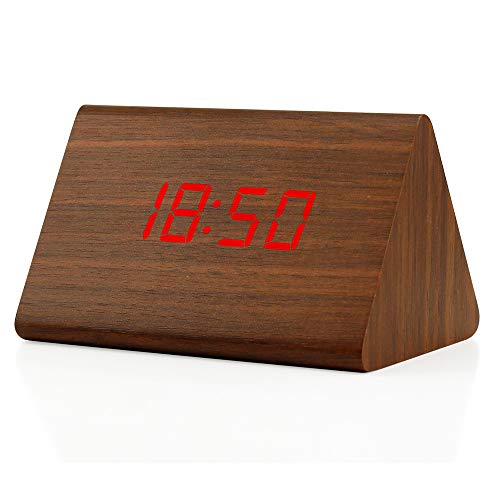 OCT17 Wooden Digital LED Desk Clock |
8.6/10 | Buy |
OCT17 Wooden Digital Alarm Clock with 7-Level
The OCT17 Wooden Alarm Clock blends modern bedside aesthetics with practical utility, featuring an LED display that tracks time, temperature, and humidity alongside 7 dimming levels and dual USB charging ports. It is an ideal pick for bedroom minimalists and digital detoxers seeking an all-in-one nightstand timepiece without smartphone clutter.
Pros
- Clean bamboo-style MDF exterior complements modern bedroom, dorm, and home office decor
- 7 distinct brightness levels provide versatile control over display light output
- Dual rear USB output ports (5V, 1A) simplify bedside device charging
- Built-in acoustic sensor enables sound-activated display to reduce nightstand glow
- Convenient environmental monitoring with real-time temperature and humidity readouts
Cons
- 5V, 1A USB ports provide standard overnight charging rather than high-wattage fast charging
- Sound-activated mode turns the display off after 10 seconds, requiring a clap or tap to check the time
- Relies on continuous AC adapter power without documented battery-backup operation
OCT17 Wooden Digital LED Desk Clock
Designed with a minimalist wood finish, this compact desk clock displays time, date, and ambient temperature on a single LED face. Its adjustable brightness and slim profile make it a space-saving option for nightstands and workstations.
Pros
- Compact footprint fits crowded nightstands
- Convenient all-in-one information display
- Adjustable brightness for nighttime use
- Clean wooden aesthetic
Cons
- Small display may be hard to read across a room
- Thin 0.62-inch profile can tip over easily

Architectural Layout, Sensor Navigation, and Bedside Integration of Wooden Clocks
Navigating the exterior of a seamless wooden digital clock often surprises new users because the entire chassis mimics a solid block of timber. Understanding where is click clock wood entrance details requires looking directly at the rear panel, where manufacturers recess all functional interfaces to preserve the clean facade. From the primary DC power input jack to the acoustic sound detection modules, these components work together behind the scenes. Getting acquainted with the physical layout ensures your bedside setup remains tidy while delivering accurate scheduling every morning.
Locating the Rear Interface, Battery Compartment, and Cable Access
The primary entrance point on a wooden block digital clock is situated on the flat rear face of the medium density fiberboard housing. Unlike traditional plastic digital clocks that scatter switches across the top and sides, a wood clock places every port and button out of sight. You will find the DC barrel connector or USB power entrance recessed flush against the back panel to prevent strain on the cable. Directly adjacent to the power jack sits the battery compartment door, which typically slides or unclips to reveal space for backup cells.
Keeping these entrance cavities recessed allows the clock to sit flush against a wall or headboard without bending cords. In multi-function models such as the OCT17 Wooden Alarm Clock, the rear entrance area also houses two dedicated 5V 1A USB output ports. These auxiliary ports allow you to route phone charging cords directly through the back of the clock housing. By consolidating power inputs and charging outputs onto a single hidden rear surface, the clock preserves its clean, monolithic appearance from the front and sides.
How Acoustic Sound Control Operates in Wood Block Clocks
The defining feature of a click clock is its acoustic sensor, which enables voice and sound control to keep the bedroom dark. When sound control mode is active, the LED digits illuminate through the wood grain only when triggered by ambient sound. A sharp finger click, a gentle hand clap, or a firm tap on the bedside table sends acoustic vibrations to the internal microphone sensor. After remaining idle for roughly ten seconds, the internal logic controller automatically puts the LED screen into standby mode.
This standby behavior confuses some owners who assume the clock has lost power or shut off completely. In reality, the acoustic sensor remains continuously energized to detect subsequent audio frequencies while the digits stay dormant. If you prefer continuous illumination throughout the night, you can toggle this sound sensor off using the rear controls. Disabling voice control keeps the display active around the clock, though using the standby mode helps preserve bedroom darkness and reduces unnecessary energy consumption.
Display Brightness Calibration and Nighttime Melatonin Protection
Glowing digits shining through a faux wood or marble pattern rely on high-output LED emitters mounted beneath a micro-thin veneer layer. In models like the OCT17 Wooden Wood Clock, New Version LED Alarm, adjustable brightness settings prevent the light from overwhelming a darkened bedroom. Having multiple dimming increments lets you match the ambient lighting of your room across daytime and nighttime hours. If a display remains too bright at midnight, ambient glow can disrupt evening melatonin release and keep light-sensitive sleepers awake.
Adjusting the intensity requires cycling through the brightness levels using the rear control switches. The upgraded OCT17 Wooden Alarm Clock expands this versatility by providing seven distinct levels of display illumination. Setting the LEDs to a lower brightness step softens the white light as it diffuses through the bamboo or dark fiberboard face. For sleepers exploring gentle waking alternatives, pairing dimmable bedside clocks with sunrise wake-up light options offers another pathway toward circadian-friendly mornings.
Power Delivery Architecture and Battery Backup Reliability
Operating a wood-veneer digital clock requires stable direct-current power supplied via an included AC wall adapter and USB cable. The DC power input entrance on the rear panel receives regulated voltage to drive the internal microcontrollers, LED arrays, and environmental sensors. Using the manufacturer-supplied power brick prevents unexpected voltage fluctuations that might cause the display to flicker or reset. Bedside cord management remains simple because the single power lead plugs straight into the back, keeping wires neatly out of view.
Understanding power backup limitations is essential for reliable morning wake-ups. Many compact wooden clocks use internal battery slots primarily to retain internal clock time and calendar memory during short electrical dropouts. When line power cuts out, the primary LED display may go dark to conserve energy while the quartz oscillator continues tracking time internally. Checking your specific clock manual clarifies whether alarms can sound acoustically during an outage or if continuous AC mains power is mandatory.
Consolidating Bedside Devices with Rear USB Charging Ports

Bedroom nightstands frequently become cluttered with separate charging bricks for phones, tablets, and smart accessories. Clocks engineered with dual 5V 1A USB output ports on the rear entrance panel help streamline this bedside cord tangle. By plugging your device charging cables directly into the clock housing, you eliminate the need for extra wall adapters behind your nightstand. This setup transforms a simple decorative clock into a convenient secondary power hub for everyday electronics.
While standard 1A ports provide steady overnight trickle charging, they generate minimal heat compared to high-wattage fast-charging blocks. Sleepers looking to consolidate cords often compare built-in USB ports against integrated bedside charging stations to decide which style fits their device ecosystem. Lower-wattage outputs are well suited for overnight replenishment because they charge steadily while you sleep without overheating mobile device batteries. Just be sure to position charging cords so they do not accidentally block the rear acoustic sensor or pull on the clock.
Environmental Sensor Integration for Temperature and Humidity Readouts
Modern bedside wellness often involves tracking ambient room conditions to promote optimal sleep architecture. Upgraded wooden alarm clocks integrate internal thermistors and hygrometers to display real-time room temperature and relative humidity percentages. These metrics appear right alongside the digital clock face, shining gently through the exterior wood or marble pattern. Maintaining bedroom temperatures around sixty-five degrees Fahrenheit and moderate humidity levels helps promote deeper, uninterrupted sleep cycles.
The internal sensors sample environmental air through small ventilation slots located on the rear or underside of the chassis. To ensure accurate readings, avoid placing the clock directly over heating vents, beside humidifiers, or in direct sunlight streaming through a window. Rapid localized temperature changes can skew the digital readout and give an inaccurate representation of room conditions. Allowing free air circulation around the rear entrance panel ensures the internal thermistor reflects true ambient bedroom climate.
Button Mapping and Programming the Multi-Function Controls
Setting the time, calendar, and alarm schedules on a wooden digital clock involves using three tactile buttons located on the rear panel. These buttons are typically labeled Set, Up, and Down, and they manage multiple programming branches through short presses and long holds. Holding the Set button enters the primary adjustment sequence, allowing you to calibrate the year, month, date, and 12-hour or 24-hour time format. Pressing the directional buttons adjusts the numeric values before you confirm each parameter with a subsequent tap of the Set button.
Configuring independent wake-up alarms follows a similar pattern within the programming menu. You can store multiple alarm times, which proves useful for households managing staggered morning commutes or alternating work shifts. When an alarm activates, pressing any rear button silences the chime, while leaving it unattended allows it to cycle through its set acoustic duration. Because the buttons share identical shapes on the back panel, learning their physical order helps you make quick adjustments without having to flip the clock around.
Digital Detox Advantages of Minimalist Wooden Clocks
Banishing smartphones from the bedside table is one of the most effective strategies for improving evening sleep hygiene. When a phone rests within arm reach, late-night notifications and compulsive screen scrolling disrupt natural melatonin production. Replacing a handheld device with a dedicated wooden digital clock restores healthy boundaries between digital communication and restorative rest. The warm aesthetic of natural wood grain blends seamlessly with bedroom decor, creating a calm visual environment free from blue-light distractions.
Acoustic sound activation reinforces this digital detox lifestyle by keeping the bedroom in complete darkness until needed. Instead of facing an omnipresent illuminated screen that glows throughout the night, the clock remains totally dark during sleep. If you wake in the middle of the night and need to check the time, a gentle tap on the nightstand instantly displays the hours. Once you fall back asleep, the screen turns off automatically after ten seconds, preserving an ideal zero-lux sleep sanctuary.
Troubleshooting Display Standby, Time Drift, and Sensor Responsiveness
The most frequent troubleshooting question regarding wooden clocks involves the display shutting down unexpectedly after ten seconds. As noted earlier, this is not an electrical defect but the standard operation of the energy-saving sound control feature. If you prefer the LED digits to remain lit continuously, simply press the Down button on the rear panel to toggle sound control off. The display will then show a confirmation code, such as displaying standard status before locking the illumination into constant-on mode.
Another common challenge involves the acoustic sensor failing to trigger when you clap or click your fingers. This issue usually stems from excessive ambient distance, heavy background noise, or placing the clock on an overly soft acoustic-dampening surface like a plush blanket. Setting the clock on a solid wooden or stone nightstand allows physical vibrations to reach the internal microphone more effectively. If the clock still resists audio triggers, verify that your power adapter is firmly seated in the rear DC entrance and supplying steady voltage.
Maintenance, Nightstand Stability, and Long-Term Ownership
Caring for a wood-composite alarm clock requires gentle surface cleaning to protect the thin decorative veneer. Use a dry microfiber cloth to wipe dust from the front face and rear ventilation openings without applying liquid cleaners. Moisture can seep into the seam lines or rear port entrance, potentially damaging the internal circuitry or clouding the LED display layer. Keeping the clock away from edge drop-offs prevents accidental impacts that could loosen the internal acoustic microphone or crack the casing.
Positioning the clock at an optimal bedside angle ensures the digits remain easily readable while keeping cables tucked neatly out of sight. Locating the rear entrance ports during initial setup takes only a few seconds once you know where to look. By combining sound-activated standby, dimmable LED illumination, and clean timber aesthetics, a quality wooden clock enhances your bedroom environment. It delivers reliable morning wake-ups while supporting the tranquil, pitch-black sleep space necessary for deep nightly recovery.
About the author
Daniel Noyed is a Certified Sleep Science Coach and experienced product editor with extensive knowledge of sleep health and sleep-related products. He has hands-on experience testing hundreds of products and translating technical features into practical guidance for everyday sleepers.