
What Is the Best Bedside Clock? Practical Bedside Guide for 2026
Learn what is the best bedside clock for your bedroom in November 2026, comparing dimming controls, battery backup safety, and acoustic volume options.
 By Daniel Noyed
Updated October 13, 2026

Morning wakeups often feel abrupt and stressful when driven by piercing phone alerts or glaring screen notifications. Many people discover that keeping a mobile device next to the mattress disrupts restful sleep hygiene and creates unnecessary nighttime distraction. Evaluating What Is The Best Bedside Clock helps sleepers transition toward a dedicated, stress-free timekeeping setup that supports deeper rest. Exploring a dedicated bedroom alarm clock selection allows you to reclaim your evening routine while ensuring dependable morning alerts.
Modern bedside electronics balance simple legibility with circadian-friendly dimming options and customizable acoustic profiles. Finding the right match depends on personal sleep habits, bedroom ambient lighting conditions, and power outage backup expectations. High-contrast LED displays with wide dimming ranges, compact wooden casings, and adjustable acoustic alerts allow users to customize their nightstand environment. Identifying what is the best bedside clock for your specific bedroom requires weighing physical button ergonomics, display spectrum warmth, and reliable operational safeguards.
| Award | Product | ACR Score About ACR ScoreThe ACR Score is our own rating from 0 to 10, based on performance, design and build, ease of use, and value. It reflects independent research and is never influenced by manufacturers, retailers, or affiliate commissions. Learn more › | |
|---|---|---|---|
| Best Overall |
Peakeep Small Digital Alarm Clock
|
8.6/10 | Buy |
| Best Budget |
 Sharp Digital Bedside Alarm Clock with Simple |
8.4/10 | Buy |
| Best Value |
 DreamSky Wooden Digital Bedside Alarm Clock |
8.3/10 | Buy |
 Amazon Basics Small Digital Oval Bedside Alarm |
8.0/10 | Buy | |
 DreamSky Wooden Digital Bedside Alarm Clock |
8.0/10 | Buy | |
| Best Premium |
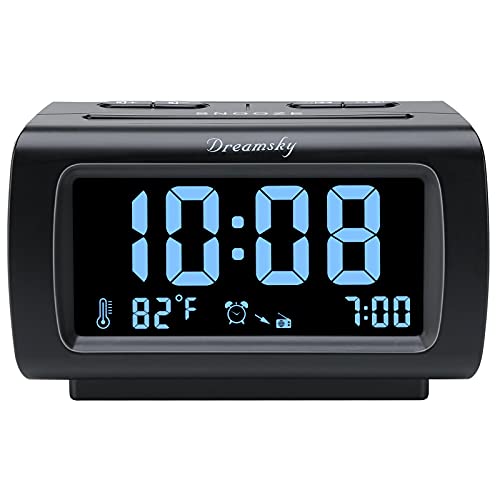 DreamSky Compact Digital Alarm Clock Radio |
7.8/10 | Buy |
Peakeep Small Digital Alarm Clock
The Peakeep Small Digital Alarm Clock delivers crisp blue LED numerals, a 55 to 90 dB volume range, and an adjustable dimmer with full display-off capability. Powered by an included AC adapter with a 4-AAA battery backup that keeps your alarm working during blackouts, it is a dependable, compact choice for nightstand minimalists and deep sleepers.
Pros
- Wide 55 to 90 dB volume adjustment accommodates both light sleepers and deep sleepers
- Six brightness options include a full display-off setting for complete nighttime darkness
- Battery backup sounds the alarm and preserves time settings during AC power failures
- Compact 5-inch size fits easily on tiny nightstands and packs neatly for travel
- Dedicated AC power adapter is included in the package for immediate plug-and-play use
Cons
- Blue digit wavelength may feel bright in dark rooms if not dimmed or turned off
- Display does not stay illuminated continuously on battery backup without pressing the top button
- Lacks dual-alarm settings and weekday-only scheduling options for variable work routines
Sharp Digital Bedside Alarm Clock with Simple
The Sharp Digital Alarm Clock combines simple keyboard-style controls with a high-visibility red LED readout and an easy-to-hit snooze bar. With its compact footprint and reliable AAA battery backup that keeps the alarm active during power outages, it is an ideal straightforward bedside clock for minimalists, seniors, and students.
Pros
- Intuitive keyboard-style top buttons make programming time and alarms straightforward for all ages
- Loud audible alarm helps wake deep sleepers and everyday commuters reliably
- Dedicated battery backup keeps the alarm functional even during overnight electrical blackouts
- Oversized top snooze button is easy to press without fumbling around in the dark
- Space-saving 4.35-inch wide chassis preserves valuable space on compact bedside tables
Cons
- Lacks adjustable brightness dimming controls, which may feel too bright for very light-sensitive sleepers
- Requires 2 AAA backup batteries that are not included in the package
- Display remains dark during a power outage until mains AC electricity is restored
DreamSky Wooden Digital Bedside Alarm Clock
The DreamSky Wooden Digital Alarm Clock combines a clean wood-grain look with high-contrast 1.8-inch digits and an adjustable 70 to 105dB buzzer. It is an excellent, no-fuss bedside choice for heavy sleepers, seniors, and bedroom minimalists who want dependable wake-up volume and blackout alarm protection.
Pros
- Packs an adjustable 70 to 105dB alarm that provides substantial waking volume for deep sleepers.
- Unlike many basic digital clocks, the battery backup actively sounds the alarm during AC power failures.
- Bold 1.8-inch numerals remain clearly legible from across the room and from bed height.
- Dedicated buttons for DST and 12/24-hour toggles simplify everyday operation without confusing menus.
- Clean wood-style chassis provides a warm, non-clinical accent for phone-free nightstands.
Cons
- Display remains completely dark during power disruptions, as battery power operates the internal clock and alarm only.
- Features six preset brightness steps rather than a fully stepless 0 to 100 percent rotary dimmer wheel.
- Does not include integrated USB charging ports or wireless device charging pads.
Amazon Basics Small Digital Oval Bedside Alarm
This compact oval alarm clock from Amazon Basics features a 0.7-inch green LED display, a gentle built-in nightlight, and a repeating snooze function. It is a straightforward, budget-friendly option for students, guest bedrooms, and minimalists who want dependable AC-powered timekeeping without smartphone distractions.
Pros
- Small 4.5-inch oval chassis takes up minimal space on nightstands and bedside tables
- Green 0.7-inch LED display provides clear numerals for at-a-glance nighttime viewing
- Built-in soft nightlight offers convenient ambient illumination in dark rooms
- Dedicated battery backup preserves programmed time and alarms for up to 8 hours during power drops
- Straightforward, dedicated controls make daily alarm operation simple without confusing menus
Cons
- Backup batteries preserve memory only and do not keep the display lit or guarantee alarm sounding during outages
- Lacks USB device charging ports, Qi wireless charging, and FM radio features found on larger bedside hubs
- Compact 0.7-inch digit size may be less visible from across large master bedrooms for individuals with low vision
DreamSky Wooden Digital Bedside Alarm Clock
The DreamSky Wooden Digital Alarm Clock combines a warm wood-grain finish with bold 1.8-inch numbers, a five-level dimmer with a complete display-off setting, and a built-in USB charging port. Featuring an emergency battery backup that actually sounds the alarm during power outages, it is an excellent choice for heavy sleepers, seniors, and bedroom minimalists.
Pros
- Prominent 1.8-inch numbers are clear and easy to read from bed without needing glasses
- Display dimmer includes a true OFF mode for sleepers who demand complete bedroom darkness
- Unlike clocks that only save internal time settings, the battery backup actively triggers the alarm during blackouts
- Convenient USB port helps reduce nightstand charging clutter and frees up wall outlets
- Manual DST button simplifies seasonal time changes with a single button press
Cons
- LED numbers remain unlit during an electrical outage when operating on backup batteries alone
- Requires continuous connection to an electrical outlet for normal time display and is not designed for cordless battery use
- Two AAA backup batteries are required for blackout alarm protection but are not included in the package
DreamSky Compact Digital Alarm Clock Radio
The DreamSky Alarm Clock Radio combines a clear 4-inch LCD with a full 0-100% dimmer, ascending alarm volume, and an integrated USB charging port. It is a solid bedside companion for anyone seeking an easy-to-read, compact timepiece with FM radio and battery backup reliability.
Pros
- True 0% to 100% display dimmer allows complete screen blackout for light-sensitive sleepers
- Ascending alarm volume prevents jarring morning shocks by ramping up over 5 seconds
- Integrated USB charging port frees up wall outlets around the nightstand
- Generous 76-inch power cord provides flexible placement across wider bedside tables
Cons
- Blue digit wavelength may cause glare if the screen is not dimmed appropriately at night
- 3 AAA backup batteries are not included and are intended only for short power outages, not daily cordless use
- Manufacturer does not specify USB charging port wattage or fast-charging support
Evaluating Bedside Clocks for Sleep Quality and Reliable Waking
Choosing an optimal bedside timepiece requires balancing nighttime visibility against the critical need for a dark, restful sleeping environment. While mobile phones offer basic alarm functions, their unpredictable operating system updates, invasive notification pings, and tempting screens frequently undermine healthy sleep habits. A dedicated nightstand unit delivers singular reliability, giving you time awareness without inviting digital distractions into your bedroom sanctuary. Understanding what is the best bedside clock for your personal routine comes down to isolating key hardware features, including display illumination control, acoustic versatility, power backup architecture, and tactile button accessibility.
Defining the Core Qualities of an Effective Bedside Timepiece
A superior bedside clock must perform its primary duties without disturbing your sleep environment before the alarm sounds. It must present the current hour with absolute clarity when viewed from a low mattress angle, yet remain dim enough to avoid lighting up a pitch-black room. The acoustic alarm must also provide sufficient volume to wake deep sleepers without triggering an unnecessary panic response. When these functional priorities align, a nightstand clock becomes a seamless component of your daily rest cycle rather than a source of nighttime frustration.
Sleepers who remove smartphones from their nightstands often notice an immediate reduction in bedtime cognitive stimulation. Replacing a multi-purpose phone with a dedicated electronic clock creates a clear psychological boundary between daytime activities and overnight recovery. This digital separation encourages faster sleep onset and reduces nocturnal awakenings caused by screen checks. High-quality bedside units support this transition by keeping controls straightforward and time readouts instantly visible at any hour.
Display Illumination, Color Spectrums, and Dimming Controls
Display backlighting represents one of the most critical factors in bedroom comfort. Short-wavelength blue and cool-white backlights can suppress melatonin synthesis, signaling daytime alertness to the brain during hours meant for deep rest. In contrast, warmer tones such as amber, soft green, and deep red provide adequate contrast without casting harsh ambient light across the ceiling. Clocks with gentle red LED numbers or soft green characters offer practical legibility while preserving night-adjusted vision.
Stepped dimming controls and continuous rotary dials offer distinct approaches to brightness management. Entry-level units often feature discrete brightness presets, such as five distinct levels paired with a complete display shutoff option. Multi-level dimmers allow users to drop the backlight to a faint glow suitable for pitch-dark bedrooms while retaining higher brightness settings for daytime reading. Completely turning off the display provides an ideal solution for light-sensitive individuals who prefer total darkness until they press a snooze bar to check the hour.
Digit height and panel technology also influence how easily you can read the time in the middle of the night. Large numeric displays measuring 1.8 inches or taller allow users to check the time across the room without reaching for prescription glasses. Conversely, compact 0.7-inch digits offer an unobtrusive footprint that minimizes total light output on crowded nightstands. Liquid crystal displays and segmented LED panels both provide sharp numeric definitions, though viewing angles can shift depending on whether the unit sits above or below your resting eye level.
Built-in nightlights offer secondary utility for bedrooms that require subtle illumination for late-night movement. Low-lumen accent lighting positioned on the chassis provides enough ambient guidance to navigate the room without activating harsh overhead fixtures. The key consideration remains personal sensitivity; sleepers who require zero ambient glow should prioritize clocks that allow independent operation of time digits and accent lights. Verifying that a clock offers an absolute blackout mode ensures you retain total control over your sleeping environment.
Power Architecture and Reliable Outage Backup Systems
Bedside clocks rely primarily on household alternating current supplied through wall adapters, but backup engineering varies widely across different models. A fundamental distinction exists between passive memory retention and active operational battery backup during electrical grid failures. Memory-only backup systems use internal coin cells or auxiliary batteries to maintain accurate timekeeping data internally without illuminating the display or sounding the buzzer. In these designs, the clock resumes normal operation with correct time settings only after mains power returns.
Active operational battery systems take resilience further by keeping the acoustic alarm functional even when the power grid drops. Some compact units utilize secondary AAA battery arrays to power the internal alarm circuitry during outages, ensuring you wake up on schedule regardless of storm damage or tripped breakers. Certain models also incorporate momentary display illumination, illuminating the numbers for several seconds when you tap the top snooze button during an outage. This capability delivers critical reassurance for professionals, students, and travelers who cannot afford missed morning commitments.
Brownout vulnerability is an overlooked issue in modern digital clocks. Brief residential voltage dips can scramble unprotected microprocessor circuits, resetting unbacked clocks to midnight and wiping scheduled wake times. Using fresh backup batteries safeguards internal quartz memory against these micro-interruptions throughout the year. Routine battery checks every six to twelve months prevent unexpected cell depletion and protect the unit against accidental corrosive leakage inside the battery compartment.
Acoustic Alarm Engineering and Progressive Awakening Profiles
Alarm volume and tone modulation determine whether your morning begins smoothly or with an adrenaline spike. Standard bedside alarms range from moderate 55-decibel acoustic levels up to commanding 90 or 105-decibel outputs engineered specifically for heavy sleepers. High-decibel capabilities ensure that deep sleepers, teenagers, and hard-of-hearing individuals wake promptly without sleeping past critical alarms. Meanwhile, adjustable volume sliders allow lighter sleepers to configure gentle, lower-volume signals that avoid waking partners sleeping nearby.
Ascending volume curves represent a thoughtful audio innovation in bedside electronics. Rather than instantly blasting at full volume, ascending alarms start softly and progressively build intensity over several seconds. This gradual acoustic escalation alerts the sleeping brain gently, reducing morning grogginess and avoiding sudden blood pressure spikes. Piezoelectric buzzers that utilize progressive frequency pulses help sleepers transition naturally out of deep sleep stages before reaching maximum output.
Alternative waking modalities expand choices beyond traditional electronic beeps. Integrated FM radio receivers allow listeners to wake up to music, morning news broadcasts, or talk programs with customizable tuning levels. Sleepers who prefer gradual sensory stimulation often explore sunrise wake-up lights that simulate dawn to complement or replace acoustic buzzers. Combining gentle sound options with visual cues provides a balanced awakening method tailored to specific biological rhythms.
Tactile Button Ergonomics and Intuitive Control Layouts
Operating a clock while half-asleep requires clear physical button separation and responsive tactile feedback. Oversized snooze bars mounted prominently on top of the housing allow easy access without requiring open eyes or precise aim. Standard snooze intervals typically grant an extra eight to nine minutes of rest before re-engaging the acoustic buzzer. Ensuring that the snooze bar is physically distinct from the alarm shutoff switch prevents accidental disarming when you merely intended to pause the alert.
Clustered multi-function buttons on the rear chassis frequently cause setup headaches and programming mistakes. Bedside units featuring keyboard-style controls or top-mounted dedicated sliders simplify daily adjustments considerably. When each function possesses a dedicated physical switch, changing wake times or toggling alarm states becomes an effortless task. This straightforward interface proves especially valuable for seniors, children, and anyone who prefers avoiding dense instruction booklets.
Accidental shutoff prevention represents another essential ergonomic detail. Dedicated sliding switches that require intentional physical movement to disarm ensure that sleepers do not deactivate alarms unintentionally. Furthermore, clearly labeled control surfaces reduce the risk of setting alarms for the wrong hour or confusing 12-hour civilian time with 24-hour military notation. Reliable hardware interfaces prioritize functional clarity over decorative minimalism to prevent missed morning wakeups.
Nightstand Utility and Multi-Function Electronic Safety
Bedside tables often suffer from severe power outlet congestion due to lamps, phones, and accessory chargers. Dedicated USB charging ports built directly into the clock chassis help declutter nightstands by consolidating cords into a single electrical wall connection. These auxiliary ports supply standard five-volt power suitable for charging smartphones, e-readers, and wireless headphones overnight. Eliminating extra wall adapters frees up nearby outlets and prevents tangled cords behind bedside furniture.
Bedside charging stations continue to evolve, with many sleepers considering nightstand clocks with integrated charging coils to reduce bedside clutter further. When evaluating charging options, electronic quietness is a crucial specification to examine. Inexpensive transformers and unshielded power supplies can emit subtle high-frequency coil whine that becomes distinctly audible in quiet bedrooms. Choosing quality bedside electronics with stable power regulation prevents electrical humming and protects your sleeping environment from unwanted acoustic interference.
Chassis materials and footprint dimensions also dictate how well a clock integrates into your bedroom decor. Sleek wooden finishes and minimalist geometric housings blend naturally with contemporary furniture, resembling decorative accessories rather than utilitarian plastic gadgets. Compact oval or rectangular footprints measuring under six inches across occupy minimal surface area, leaving ample space for a glass of water, reading glasses, and a bedside lamp. Stable rubberized feet on the bottom plate prevent the clock from sliding backward when you press the top snooze button.
Programming Simplicity, Daylight Saving Controls, and Time Calibration
Routine seasonal time changes often cause confusion when alarm clocks lack simple adjustment mechanisms. Dedicated Daylight Saving Time buttons allow users to advance or rewind internal timekeeping by one hour with a single button press. This manual feature eliminates the frustrating chore of cycling through twelve or twenty-four hours to correct the display twice a year. Simplifying this adjustment helps ensure that your morning schedule remains intact during spring and autumn time transitions.
Switchable time formats accommodate individual user habits and professional scheduling needs. A simple toggle allows users to alternate between standard twelve-hour civilian time with clear AM and PM indicators and twenty-four-hour military time. Clear PM indicators on the display screen prevent the classic error of accidentally scheduling an alarm for evening hours instead of morning. Checking indicator dots during initial setup confirms that your intended wake schedule is properly registered in memory.
Quartz crystal timing circuits inside quality bedside clocks generally deliver solid accuracy over months of continuous use. However, electronic components can occasionally drift slightly due to room temperature swings and power fluctuations. Inspecting time accuracy against a calibrated reference clock every few months ensures your bedside display stays precise. Routine checks guarantee that minor drift never compromises your punctuality for work, school, or travel schedules.
Matching Bedside Clock Features to Sleeper Profiles
Determining the best clock for your nightstand ultimately depends on matching hardware specifications to your sleep habits and bedroom layout. Deep sleepers and individuals with hearing limitations benefit most from models boasting high decibel ratings between 90 and 105 decibels paired with prominent snooze bars. Conversely, sensitive sleepers who wake easily should prioritize stepless dimming or complete display shutoff modes alongside gentle ascending chimes. Compact battery-backed models excel for frequent travelers and regions prone to thunderstorm power outages.
Before relying on any new bedside timepiece for an important morning commitment, run a daytime test cycle to verify volume, snooze timing, and AM or PM indicators. Position the unit within comfortable arm reach, route power cords safely away from foot traffic, and insert fresh backup cells to protect against unforeseen utility disruptions. Taking these practical setup steps establishes a dependable, restful bedroom environment that supports peaceful evenings and confident morning wakeups.
About the author
Daniel Noyed is a Certified Sleep Science Coach and experienced product editor with extensive knowledge of sleep health and sleep-related products. He has hands-on experience testing hundreds of products and translating technical features into practical guidance for everyday sleepers.