
What Is a Sleep Training Clock: A Practical Guide for 2026
Understand what is a sleep training clock, how visual cues guide toddler sleep, and top features to choose in October 2026 for better rest.
 By McKenzie Dillon
Updated October 6, 2026
By McKenzie Dillon
Updated October 6, 2026

Early morning wake-up calls from energetic toddlers can disrupt an entire household before the sun even rises. When young children cannot yet read traditional numbers or understand abstract hours, parents often wonder what is a sleep training clock and how it can help restore peaceful sleep schedules. These specialized bedside devices replace confusing digital digits with intuitive visual signals, utilizing shifting colors, friendly facial expressions, and celestial icons to communicate when it is time to rest and when it is acceptable to leave the bed.
Unlike standard loud alarm clocks designed to jar deep adult sleepers awake, a sleep trainer focuses on behavioral guidance and gentle boundary setting. Incorporating soothing ambient night lights, white noise generators, and customizable nap timers, modern models help children feel secure while learning self-regulation. Exploring dedicated kids ok to wake alarm clocks allows families to establish clear circadian routines that prevent groggy mornings and nighttime boundary confusion.
| Award | Product | ACR Score About ACR ScoreThe ACR Score is our own rating from 0 to 10, based on performance, design and build, ease of use, and value. It reflects independent research and is never influenced by manufacturers, retailers, or affiliate commissions. Learn more › | |
|---|---|---|---|
| Best Overall |
MooLarm Ok to Wake Sleep Trainer Toddler Alarm
|
8.9/10 | Buy |
| Best Budget |
 I-CODE Toddler Ok to Wake Clock
|
8.6/10 | Buy |
| Best Premium |
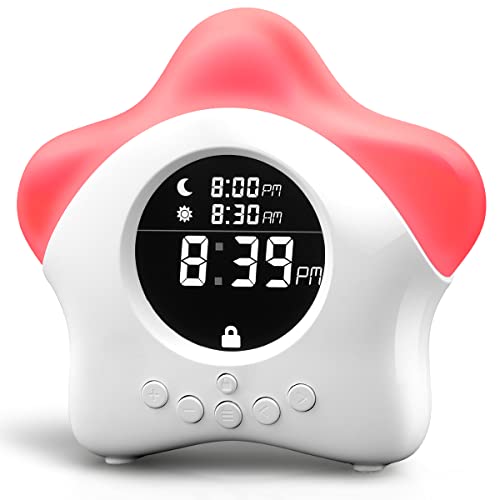 Learn & Climb Toddler Sleep Training Clock
|
8.4/10 | Buy |
 ANNNGUL Kids Ok to Wake Clock
|
8.1/10 | Buy | |
| Best Value |
 ANALOI Kids Ok to Wake Clock
|
8.0/10 | Buy |
MooLarm Ok to Wake Sleep Trainer Toddler Alarm
The MooLarm Sleep Training Alarm Clock uses clear sun, moon, and color cues alongside an integrated 17-sound noise machine to help toddlers build healthy sleep schedules. It is a practical bedside tool for parents seeking an effective way to teach early-rising children when to stay in bed and when it is okay to wake up.
Pros
- Clear sun and moon visual indicators teach early risers when to stay in bed without needing to read time digits
- Versatile 17-sound audio library eliminates the clutter of having a separate nursery sound machine
- Convenient independent nap timer prevents accidental resets of the daily morning wake schedule
- Four-level dimming with automatic nighttime reduction helps prevent excess bedside glare during sleep
Cons
- Stepped 4-level dimmer does not offer continuous stepless 0 to 100 percent brightness tuning
- Visual coaching cues may require consistent parental reinforcement before young toddlers follow them reliably
- Lightweight 0.7-pound build can be easily tipped over or displaced by curious children if kept within arm's reach
I-CODE Toddler Ok to Wake Clock
The I-CODE Ok to Wake Alarm Clock is a compact bedside sleep trainer that pairs clear red and green visual cues with friendly facial emojis to teach young children healthy morning boundaries. Equipped with an adjustable night light, flexible nap timer, and toddler-proof lock, it is an effective tool for parents helping kids establish independent sleep routines.
Pros
- Intuitive color-coded lighting and facial expressions help toddlers understand wake boundaries before they can read numbers
- Child safety lock prevents curious toddlers from resetting the clock or changing alarm times
- Versatile nap timer allows parents to set quick rest countdowns without altering regular morning wake schedules
- Small footprint and lightweight 0.65-pound ABS frame fit conveniently on any bedside surface
Cons
- Relies primarily on visual learning cues, which may require an initial adjustment period and parental coaching for younger toddlers
- Compact 4-inch square chassis houses multiple configuration buttons that require careful setup using the included directions
- Manufacturer specifications do not detail internal battery backup or prolonged cordless operating capabilities
Learn & Climb Toddler Sleep Training Clock
The Learn & Climb Stay-in-Bed Clock is an electronic toddler sleep trainer featuring a clear LCD display and a color-coded light system to help kids know when to stay in bed and when to wake up. It is an ideal bedside tool for parents seeking consistent morning routines and better sleep habits for toddlers and young children.
Pros
- Color-coded visual cues help non-time-reading toddlers easily understand when it is acceptable to leave bed
- Supplied with a sturdy DC power adapter and USB cord for immediate out-of-the-box operation
- Battery backup preserves essential alarm and time settings if wall power drops or cords are bumped
- Includes comprehensive sleep training materials like an eight-week reward chart and bedtime storybook
- Dedicated nap countdown mode simplifies daytime rest routines without overriding primary alarm times
Cons
- Backup batteries are not included and only preserve memory settings rather than powering active lights or audio
- Speaker volume is limited to two preset levels rather than a continuous variable adjustment slider
- Requires continuous connection to AC wall power to keep the nightlight and digital display active
ANNNGUL Kids Ok to Wake Clock
The ANNNGUL Kids Alarm Clock is a compact bedside sleep trainer that uses clear red and green light indicators to teach toddlers when to stay in bed and when it is okay to get up. Featuring 10 night light colors, 5 brightness levels, and accessible front-facing buttons, it is well suited for parents seeking an intuitive morning routine helper.
Pros
- Red and green visual wake indicators help toddlers understand sleep boundaries before they can read numbers
- Front-mounted controls eliminate the frustration of navigating hidden buttons on the bottom of the clock
- 10 vibrant night light color options and 5 brightness settings allow customized bedtime lighting
- Comes complete with both the required power cable and AC wall adapter in the box
- Settings preservation prevents the need to reprogram routines after brief power disconnections
Cons
- Must remain plugged into an electrical outlet to function and cannot operate cordlessly on battery power alone
- Brightness adjustment uses 5 preset steps rather than a continuous 0-to-100 percent stepless dial
- Lacks separate weekday and weekend dual-alarm scheduling options
ANALOI Kids Ok to Wake Clock
The ANALOI Kids Sleep Training Alarm Clock combines an intuitive red-and-green visual wake system with gradual ascending tones and dual alarm scheduling to build consistent morning routines. Wrapped in a drop-resistant silicone shell with an integrated sound machine and night light, it is a practical choice for parents transitioning toddlers into independent sleeping habits.
Pros
- Intuitive red-to-green light and facial expression cues help toddlers identify wake-up time without reading numbers
- Dual independent alarms provide separate scheduling for weekdays and weekends
- Shock-absorbing silicone build paired with hidden buttons and a child lock prevents accidental setting changes
- Built-in sound machine offers 7 soothing audio tracks and a flexible 15-to-60 minute sleep timer
Cons
- Display and night light brightness is limited to 3 preset levels rather than a continuous stepless dimming dial
- USB-powered design requires an available USB outlet or standard USB wall adapter
- Compact 4.4-inch display size is optimized for close bedside viewing rather than large rooms
Understanding How Sleep Training Clocks Establish Healthy Bedtime Boundaries
A sleep training clock serves as an intuitive visual chronometer that bridges the cognitive gap between a toddler’s internal clock and the household schedule. Young children lack the abstract mathematical reasoning required to interpret numeric digits on standard bedroom alarm clocks. Instead of expecting a toddler to understand that six in the morning is too early to wake the family, these specialized devices translate wake and sleep boundaries into tangible visual feedback. Through dynamic color shifts, expressive face animations, and celestial icons, children learn exactly when to rest quietly and when it is permissible to begin their day.
The Core Mechanism of Visual Time Cues
Visual signaling forms the primary foundation of every modern sleep trainer on the market. Most models utilize universally recognized color coding, adopting red to denote bedtime and green to indicate waking hours. Models like the ANNNGUL Kids Alarm Clock and the I·CODE Ok to Wake Alarm Clock for Toddlers rely on clear red and green illumination to establish immediate comprehension. When toddlers wake up during the night and look across the bedroom, an illuminated red glow informs them that sleep time continues. Once the clock transitions to green, the child receives immediate, unambiguous permission to climb out of bed.
Iconography adds another vital developmental layer to visual reinforcement. Many young children respond enthusiastically to anthropomorphic characters and celestial symbols that mirror the natural world. The MooLarm Ok to Wake Sleep Training Kids Sun Moon Alarm integrates distinct sun, moon, and star graphics directly on its display face. A glowing moon or sleeping star clearly communicates the nocturnal cycle, while a smiling sun greets the child when morning officially arrives. This intuitive symbolism reinforces internal circadian rhythms without demanding any numeric literacy from the child.
Facial expressions further simplify comprehension for early learners transitioning out of a crib. Devices such as the ANALOI Alarm Clock for Kids and the I·CODE sleep trainer feature expressive digital faces that display closed or sleeping eyes at night and wide-open, cheerful eyes in the morning. Children naturally mirror emotional cues and facial states from their environment. When a toddler glances at the bedside table and observes an egg-shaped character with closed eyes, they understand that the clock is resting. That visual solidarity comforts young children, helping them self-soothe back to sleep without parental intervention.
Multi-Stage Wake Sequences and Transitional Colors
Single-step alarms that switch abruptly from red to green can sometimes cause confusion for light-sleeping toddlers. A child who wakes up fifteen minutes before the official wake time might feel frustrated seeing a stubborn red light, prompting them to leave bed prematurely. To address this developmental friction, advanced units incorporate multi-stage transitional lighting sequences. Models like the Learn & Climb Stay-in-Bed Clock for Kids introduce an intermediate yellow light that signals the day will begin shortly. This three-tier traffic light concept teaches children patience by giving them a recognizable preparatory window.
Transitional lighting creates a gentle bridge between deep rest and full morning alertness. During this yellow phase, parents generally encourage children to engage in quiet in-bed activities like looking at picture books or cuddling a stuffed toy. The child understands that while they cannot leave their room or wake their parents, morning arrival is imminent. Much like gradual wake up light alarms ease adults into waking through progressive illumination, multi-colored transitional phases soften morning wakefulness for young minds. Flexible programming allows parents to adjust the duration of preparatory stages to match individual developmental milestones.
Auditory Support, White Noise, and Gentle Wake Ramps
Sound machine integration transforms a standard visual timer into an all-in-one nighttime sleep sanctuary. Many children struggle to fall asleep or wake prematurely due to household creaks, distant traffic, or barking neighborhood pets. Models like the MooLarm sleep trainer feature seventeen distinct acoustic options, ranging from pink and white noise to calming nature sounds and gentle lullabies. Continuous background audio masks sudden auditory spikes that disrupt light sleep cycles. By combining visual cues with auditory soothing, the clock addresses both circadian boundaries and sensory sleep barriers.
Waking audio profiles require equal engineering precision to prevent morning distress. Jarring electronic buzzers and aggressive high-frequency alarms induce sudden adrenaline spikes that leave children crying or anxious. Thoughtful designs like the ANALOI Alarm Clock for Kids utilize gentle wake technology that gradually ramps volume over several minutes. The clock can cycle through pleasant nature melodies, soft chimes, or gentle musical chords that awaken the child naturally. This ascending acoustic curve supports healthy morning cortisol regulation without startling developing sensory systems.
Silent wake options also play an essential role for children who wake up later on certain mornings. If a child is sleeping peacefully past their scheduled alarm time, parents rarely want an aggressive sound to disturb restorative rest. Most quality sleep trainers allow parents to activate the green light cue silently without triggering any acoustic alarm. The visual change greets the child only when their natural sleep cycle concludes. This silent operation respects developmental sleep variations while maintaining clear behavioral boundaries once the child opens their eyes.
Dedicated Nap Timers for Daytime Rest
Daytime nap routines present unique challenges that standard 24-hour alarm schedules cannot easily resolve. Changing your child’s primary morning wake settings every afternoon creates confusion and increases the risk of scheduling errors. Dedicated countdown nap timers solve this problem by operating independently from standard morning alarms. The MooLarm and I·CODE models include direct nap countdown settings offering intervals from fifteen minutes up to two hours. Parents simply initiate the countdown before laying the child down, leaving morning parameters completely untouched.
Countdown functionality provides parents with quick control during busy afternoon transitions. Pressing a dedicated nap button initiates soothing background audio and sets the red sleep indicator instantly. Once the chosen duration expires, the light shifts to green just as it does in the morning. This consistency reinforces the same sleep rules across all rest periods, whether day or night. Many parents also repurpose these countdowns for quiet time or screen boundaries, allowing the clock to serve as an objective referee during daily activities.
Night Light Dimming and Sleep Spectrum Safety
Bedside illumination requires careful spectral management to protect natural melatonin synthesis in developing brains. Exposure to short-wavelength blue or intense cool-white light suppresses nocturnal melatonin production, making sleep onset exceptionally difficult. Modern sleep training clocks address this by prioritizing warm light wavelengths and soft red nighttime glows. The ANNNGUL Kids Alarm Clock and the MooLarm unit offer extensive color selections, featuring ten distinct night light shades. Selecting warm amber, soft orange, or deep red creates a comforting atmosphere that helps anxious children feel secure.
Stepped and continuous dimming capabilities ensure the bedside glow never overpowers the dark bedroom. An illuminated clock that casts harsh glare across a child’s pillow will disrupt REM sleep cycles. Models like the ANNNGUL clock provide five discrete brightness dimmer levels, while others provide four or three calibrated steps. This allows parents to keep the clock bright and visible during sunny daytime hours while lowering luminance to a subtle whisper after sunset. Calibrating brightness appropriately prevents ambient light bleed while maintaining clear icon readability across the room.
Auto-off timer functions give parents additional control over nighttime energy usage and room darkness. While some children need a soft night light running through the night, others sleep best once the room returns to pitch darkness. Sleep timers on devices like the I·CODE trainer allow parents to set illumination to shut off after fifteen, thirty, sixty, or one hundred twenty minutes. The light stays on long enough to guide the child into deep slumber, then extinguishes quietly. This flexibility allows families to customize sleep environments to each child’s sensory preferences.
Hardware Durability, Child Locks, and Button Security
Curious toddler hands represent the greatest operational threat to any bedside electronic device. Children naturally explore flashing lights and tactile buttons, which often leads to accidental time resets, altered alarms, or disabled sounds. Robust child lock engineering is therefore an essential safeguard on any dedicated sleep trainer. The I·CODE clock incorporates a dual-button lockout mechanism requiring users to hold down two specific buttons simultaneously for three seconds. This intentional combination prevents toddlers from inadvertently disabling morning alarms or shifting clock parameters while playing in bed.
Physical button placement and exterior housing materials further safeguard reliable operation. Clocks with intuitive front-facing button layouts, such as the ANNNGUL model, make rapid evening adjustments simple for tired parents. Conversely, devices like the ANALOI clock tuck configuration buttons away or use hidden compartments to keep controls out of reach. Models engineered with soft silicone outer shells absorb shock and resist cracks from accidental bedside tumbles. Sturdy construction guarantees that the sleep trainer remains functional throughout years of active toddler ownership.
Power Supply Architecture and Backup Reliability
Bedside electronics rely on dependable power delivery to keep daily sleep schedules properly synchronized. Most sleep training clocks operate primarily through an included AC wall adapter or USB power cable connected to mains electricity. The Learn & Climb model utilizes a sturdy DC port and wall adapter designed to withstand repeated plugging and unplugging. Because nightlight illumination, audio speakers, and color displays consume steady power, continuous mains electricity provides stable long-term performance. Keeping cords tucked neatly behind nightstands prevents hazardous entanglements during nighttime bedroom movement.
Internal battery backup architecture provides vital peace of mind during unexpected residential power cuts. Severe weather or brief electrical grid flickers can easily wipe out a digital clock’s internal memory, resetting the clock to midnight. When this occurs on an unbacked clock, morning wake cues fail entirely, throwing household schedules into chaos. Quality sleep trainers incorporate internal battery compartments that preserve time, alarm, and custom sound settings throughout power drops. Once grid power returns, the clock resumes its schedule instantly without requiring manual reprogramming by parents.
Routine Implementation and Behavioral Reinforcement
Introducing a sleep training clock requires consistent behavioral coaching rather than simply plugging the device into the wall. Parents should introduce the clock during daytime hours when the child is rested, receptive, and calm. Explaining the color rules through storytelling or interactive roleplay helps demystify the new bedside companion. The Learn & Climb model enhances this process by including an illustrated bedtime storybook and a structured eight-week reward chart. Associating visual clock milestones with positive praise or stickers reinforces good sleep habits rapidly.
Setting achievable early goals ensures that toddlers build confidence rather than growing frustrated by impossible expectations. If a child currently wakes up at five in the morning, setting the green light to seven will guarantee immediate failure. Instead, set the initial wake cue for five-fifteen, rewarding the child immediately when they wait for the green light. Once the child reliably masters that brief threshold, adjust the wake time outward in ten-minute increments over subsequent weeks. This progressive pacing teaches patience systematically without turning mornings into a battle of wills.
Matching Clock Features to Your Child’s Developmental Stage
Selecting the appropriate sleep training clock depends heavily on your child’s age, sensory sensitivity, and cognitive maturity. Younger toddlers between eighteen months and three years benefit most from high-contrast colors, simple facial animations, and durable silicone enclosures. Models like the ANALOI or I·CODE trainers offer friendly, expressive aesthetics that appeal directly to this developmental demographic. Simple dual-state systems that focus exclusively on sleep and wake signals prevent overwhelming very young minds with excessive configuration options.
Older preschoolers and school-age children between four and eight years require more sophisticated scheduling capabilities. Dual independent alarms allow parents to establish separate wake schedules for weekdays and weekends, preventing unwanted early rises on Saturdays. Models with clear digital numerical displays alongside color indicators help older kids learn to read traditional hours and minutes. Features such as gradual sound ramps, custom snooze intervals, and multi-color ambient lighting allow the clock to transition smoothly into a standard bedside timepiece as the child grows.
Evaluating the total feature package ensures the clock remains useful long after early sleep training concludes. Multi-functional devices that blend white noise generation, nightlight capabilities, and alarm timing consolidate nightstand space and eliminate bedside clutter. Reliable child locks and durable power architectures protect your investment against toddler wear and tear. By matching specific hardware functions to your family’s unique sleep routine, a sleep trainer becomes an indispensable tool for raising independent, well-rested children.
About the author
McKenzie Dillon is a Certified Sleep Science Coach and experienced sleep-product editor who has personally tested dozens of sleep products. Her expertise bridges sleep technology, product evaluation, and practical guidance for creating more comfortable sleep and wake-up routines.