
What Is a Mantel Clock: A Practical Guide for 2026
Learn what is a mantel clock, explore traditional shelf designs, and compare silent quartz movements for October 2026.
 By Jeremy Klein
Updated October 6, 2026
By Jeremy Klein
Updated October 6, 2026

Bedroom dressers and living room fireplace shelves often feel incomplete when dominated by cluttered charging cables and harsh mobile phone screens. Homeowners seeking a refined, screen-free way to track the passing hours frequently ask what is a mantel clock and how it differs from ordinary tabletop timepieces. These freestanding decorative pieces balance classic furniture craftsmanship with dependable quartz or mechanical timekeeping, creating a warm focal point in any living area or sleeping space. While many sleepers turn to top-rated bedroom clocks for specialized morning alerts, a traditional shelf timepiece offers a timeless decorative presence without the glare of modern digital backlights.
Modern versions often feature quiet movements or customizable electronic chimes housed in ornate wooden or resin frames. By relying on compact battery cells rather than wall adapters, these clocks sit easily on narrow fireplace shelves, desks, and bedroom sideboards. Understanding the structural build, acoustic chime capabilities, and movement types helps you decide whether an analog shelf clock complements your daily routine better than a standard digital bedside display.
| Award | Product | ACR Score About ACR ScoreThe ACR Score is our own rating from 0 to 10, based on performance, design and build, ease of use, and value. It reflects independent research and is never influenced by manufacturers, retailers, or affiliate commissions. Learn more › | |
|---|---|---|---|
| Best Overall |
Infinity Instruments Miniature Grandfather Clock
|
8.9/10 | Buy |
| Best Premium |
 AYRELY Wooden Mantel Clock with Westminster Chime
|
8.6/10 | Buy |
| Best Budget |
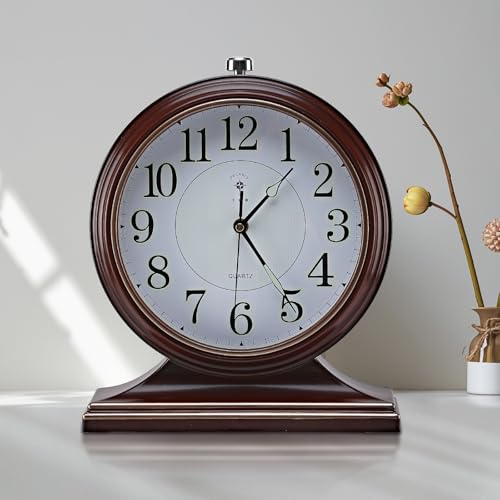 Vintage 10-Inch Silent Desk and Mantel Clock
|
8.4/10 | Buy |
 Auafanzy 10-Inch Vintage Desk Clock
|
8.0/10 | Buy |
Infinity Instruments Miniature Grandfather Clock
The Infinity Instruments Miniature Grandfather Clock delivers vintage tabletop styling and reliable quartz timekeeping in a lightweight plastic resin frame. It serves as an attractive phone-free accent clock for desks, mantles, and nightstands, though buyers requiring an audible morning alarm will need a separate wake-up device.
Pros
- Distinguished antique grandfather clock styling at an accessible desktop size
- Dependable quartz movement ensures reliable and steady timekeeping
- Zero electronic display glow, preserving a completely dark bedroom environment for light-sensitive sleepers
- Lightweight, durable plastic resin construction weighs under one pound for effortless repositioning
- Includes a 1-year limited manufacturer warranty from Infinity Instruments
Cons
- Lacks an integrated audible alarm or snooze feature, so it cannot serve as a primary morning wake-up device
- Unlit analog dial cannot be read in total darkness without an ambient bedside lamp
- Molded plastic resin housing does not offer the heavy feel or grain of authentic solid timber
AYRELY Wooden Mantel Clock with Westminster Chime
The AYRELY Wooden Mantel Clock combines sturdy ash wood craftsmanship with an electronic chime movement featuring Westminster melodies and an essential nighttime mute mode. It is a dependable, cordless timepiece suited for homeowners and digital detoxers who want elegant, glare-free timekeeping without midnight chime disruptions.
Pros
- Sturdy ash wood frame and hand-polished base beads deliver handsome, furniture-grade craftsmanship
- Nighttime mute function silences hourly chimes so light sleepers remain undisturbed throughout the night
- Bold black numbers on a high-contrast vintage face make daytime reading simple from across the room
- Cordless battery power eliminates the need for nearby electrical outlets or tangled bedside cords
- Customizable chime volume lets you easily adjust the sound output to suit your living space
Cons
- Wide 15.94-inch profile requires generous flat surface space and will not fit narrow or compact nightstands
- Traditional analog face lacks an illuminated backlight, meaning you cannot read the hands in total darkness without room lighting
- Operates exclusively on battery power, requiring periodic battery monitoring and replacement to avoid missed timekeeping
Vintage 10-Inch Silent Desk and Mantel Clock
This 10-inch vintage mantel desk clock combines a silent non-ticking quartz movement with a large, high-contrast analog dial for clear room-wide visibility. It is a solid choice for light sleepers, seniors, and digital detoxers seeking a classic, glare-free timepiece for a calm bedroom or living room shelf.
Pros
- Silent non-ticking quartz movement prevents rhythmic noise in quiet bedrooms
- Large 10-inch dial face is easy to read without reading glasses
- Fully cordless design powered by one AA battery eliminates nightstand cord clutter
- No LED backlights or glowing screens to disrupt light-sensitive sleepers
- Sturdy decorative Baroque-style base stays steady on flat surfaces
Cons
- Does not include an audible wake-up alarm or snooze mechanism
- Lacks backlighting or luminescent markers for reading the time in complete darkness
- Requires one AA battery that is not included in the package
Auafanzy 10-Inch Vintage Desk Clock
The Auafanzy 10-Inch Vintage Table Clock delivers completely silent, non-ticking timekeeping with an oversized dial that is easy to read across a bedroom or living area. It is an excellent choice for light sleepers, seniors, and digital detoxers who want reliable, cord-free timekeeping without glowing screens.
Pros
- Non-ticking silent movement preserves an undisturbed auditory environment for light sleepers
- Oversized 10-inch dial face is easily legible from across large bedrooms and living rooms
- Cord-free battery power allows versatile placement on wide nightstands, dressers, and fireplace mantels
- Sturdy Baroque-style base offers stable, tip-resistant placement on flat surfaces
- Screen-free analog presentation produces zero sleep-disrupting light pollution
Cons
- Lacks an integrated audible alarm buzzer, snooze button, or digital wake-up scheduling
- Unilluminated analog dial cannot be read in total darkness without switching on ambient room lighting
- Substantial 10.5 by 12.5 inch profile requires ample surface area on compact bedside tables
Understanding the Design and Function of Mantel Clocks
A mantel clock is a compact, decorative timepiece engineered to rest horizontally on a fireplace mantel, shelf, or tabletop. Unlike towering floor clocks or small pocket watches, these units were originally developed to bring precise, attractive timekeeping into the central living spaces of a home. Today, they combine historic aesthetics with modern internal movements, serving as functional decor in living rooms, offices, and bedrooms alike. Understanding their origins, mechanisms, and design details reveals why these classic clocks remain popular in a world filled with digital screens.
The Historical Definition and Origins of Shelf Clocks
The term mantel clock originally referred to spring-driven domestic clocks created in eighteenth-century France and England. Before their introduction, domestic timekeeping relied on heavy cast-iron weights that required long drop spaces, giving rise to tall grandfather clocks. Clockmakers developed coiled mainsprings that eliminated the need for tall floor housings, allowing the entire mechanism to sit comfortably upon a fireplace shelf. This innovation transformed personal horology by turning timepieces into portable furniture pieces that homeowners could display prominently.
As the Industrial Revolution expanded into the nineteenth century, clockmakers in Connecticut and across New England popularized affordable shelf clocks for working households. Innovators replaced expensive hand-cut brass gears with standardized wooden movements and stamped metal parts. Fireplaces were the architectural heart of Victorian living rooms, making the mantel the most visible platform for family time tracking. While modern architecture no longer treats fireplaces as mandatory heating sources, the mantel clock continues to symbolize domestic warmth and craftsmanship.
Movement Engineering: Quartz Crystal Accuracy Versus Mechanical Windings
Traditional antique shelf timepieces relied on mechanical balance wheels, pendulums, and geared escapements that required regular winding with a brass key. If a homeowner forgot to wind the mainspring or if the mantel was slightly unlevel, the mechanical escapement would drift or stop entirely. Modern iterations replace those intricate gear trains with modern quartz crystal movements that deliver steady, reliable timekeeping. Quartz oscillators vibrate at a consistent frequency when powered by an electric current, maintaining high accuracy with virtually zero daily maintenance.
Modern quartz movements also eliminate the delicate leveling requirements that once troubled owners of mechanical pendulum timepieces. You can position a quartz-driven shelf clock on an uneven wooden mantle or a tilted desktop without disrupting its timekeeping cadence. Contemporary manufacturers often install these electronic movements behind classic dials to preserve antique styling while avoiding complex mechanical servicing. This engineering bridge allows homeowners to enjoy vintage visual charm without the chore of weekly winding routines or professional gear oiling.
Materials and Architectural Profiles in Modern Models
Mantel clocks showcase a wide variety of cabinet shapes, ranging from miniature grandfather profiles to curved Baroque designs. Some designs, such as the Infinity Instruments Miniature Grandfather Clock, utilize lightweight plastic resin frames molded with antique detailing to deliver authentic historic silhouettes at an accessible build standard. Resin allows manufacturers to replicate the elaborate fluting, pediments, and base plinths of heirloom timepieces while resisting humidity changes that can warp natural wood. This makes molded resin a practical choice for shelves near fluctuating room temperatures.
Higher-end traditional models rely on solid hardwoods to honor historical carpentry techniques. Timepieces like the AYRELY Grandfather Mantel Clock incorporate sturdy ash wood frames detailed with hand-polished decorative beads along the base. Natural wood grains bring organic texture into a room, complemented by embedded golden brass metal rings surrounding the dial face. A curved crown and rich timber stains create a substantial presence, helping the timepiece anchor a fireplace mantel or formal living room credenza with dignity.
Low-profile bracket and desk clocks offer another distinct aesthetic direction with smooth horizontal silhouettes. Options like the 10-inch vintage desk clocks from Generic and Auafanzy use classic black finishes paired with gold-plated accents and stable Baroque bases. These wider, lower-slung designs sit securely on bookshelves, office credenzas, and decorative fireplace ledges. The balance between ornate metallic trim and dark matte housings complements both traditional farmhouse decor and contemporary transitional interiors.
Dial Readability, Numerals, and Display Ergonomics
Legibility remains a primary consideration when evaluating an analog mantel clock for communal living areas or private bedrooms. Many modern vintage-style models feature generous ten-inch dials that display bold black numerals against pale, high-contrast backgrounds. This large dial diameter allows family members to check the current hour from across a spacious living room without squinting. Seniors and visually impaired users particularly benefit from oversized faces that present clean hour markers and clearly defined spade hands.
Analog dials also eliminate the digital eye fatigue associated with glowing segmented displays. In spaces where homeowners want to minimize blue light exposure, a traditional printed face offers passive readability under ambient room lighting. Clear protective glass lenses shield the hands and dial from dust accumulation while preserving sharp contrast. The inclusion of decorative golden bezels often frames the numerals, focusing the viewer’s eye directly on the time without distracting digital indicators.
Chime Mechanisms, Musical Modes, and Nighttime Volume Control
Acoustic chimes have defined the presence of mantel clocks for centuries, announcing the passage of time through pleasant tonal cadences. Antique units used tuned mechanical gong rods or small cast bells struck by spring-loaded hammers. Modern versions frequently feature electronic chimer modules capable of playing traditional melodies like Westminster chimes or alternative retro musical sequences on the hour. Timepieces like the AYRELY Grandfather Mantel Clock provide programmable chime options that let users choose their preferred acoustic style.
Because chiming clocks often share space with sleeping quarters or quiet home offices, acoustic control is an essential feature. Adjustable volume dials allow owners to calibrate chime intensity to suit room acoustics, preventing loud bells from echoing through quiet hallways. More importantly, advanced electronic chimes often incorporate an automated nighttime mute mode. This feature silences hourly melodies during evening hours, allowing households to enjoy daytime musical announcements without suffering disturbed sleep during the night.
Silent Quartz Sweep Movements for Bedroom Serenity
While some homeowners appreciate traditional acoustic feedback, loud ticking sounds can quickly become an annoyance in resting spaces. Mechanical clocks and basic quartz movements use step-second mechanisms that produce a distinct click every sixty seconds as the gear jumps. In a quiet bedroom, that rhythmic clicking sound can elevate sensory awareness, preventing light sleepers from falling into deep slumber. Silent quartz movements resolve this issue by driving the second hand in a smooth, continuous sweep.
Timepieces such as the 10-inch Vintage Mantel Desk Clock and the Auafanzy Retro Mantel Décor Desk Clock utilize silent, no-tick internal movements. By eliminating the mechanical click of the escapement gear, these clocks operate without distracting noises that break nighttime silence. Homeowners can position them on bedside dressers, reading tables, or study desks without worrying about acoustic distractions. A completely silent analog movement provides the decorative charm of an antique clock while supporting the quiet environment required for quality rest.
Comparing Mantel Clocks with Bedside Digital Alarm Clocks
Choosing between a classic mantel clock and a modern bedside digital device depends primarily on your intended functional priorities. Mantel clocks excel at decorative elegance, zero-glare passive readability, and cable-free shelf styling throughout living spaces. However, when waking up for work or managing split sleep schedules, dedicated electronic sleep devices offer specialized features that analog shelf clocks lack. For example, individuals who struggle with morning grogginess often prefer sunrise alarm clocks for heavy sleepers to stimulate waking through gradual light transitions.
Digital bedroom clocks also consolidate nighttime utilities that traditional analog cabinets cannot accommodate. Modern bedside devices frequently integrate charging stations, such as alarm clocks with wireless charging pads, allowing users to power mobile phones and accessories overnight. These digital stations also provide programmable dual alarms, snooze buttons, and high-decibel buzzers designed specifically for prompt morning waking. A mantel clock, by contrast, is primarily designed for passive ambient timekeeping rather than structured waking routines.
Light management creates another stark distinction between these two clock categories. Digital displays emit active backlights that can illuminate a dark bedroom unless equipped with zero-percent blackout dimmers. A traditional analog mantel clock emits absolutely no artificial light, preserving complete nocturnal darkness for optimal melatonin production. Many sleepers find that placing an analog clock on the bedroom dresser and keeping digital devices off the bedside table creates a calming, screen-free sanctuary.
Power Architecture and Battery Maintenance
Unlike digital bedside clocks that depend on wall adapters and residential alternating current, most modern mantel clocks operate entirely on primary battery cells. Standard alkaline AA batteries supply the low voltage needed to oscillate the internal quartz crystal. Because quartz movements consume minimal electrical energy, a single battery typically powers the movement for six months to a full year. This energy efficiency makes shelf clocks exceptionally economical and convenient for locations without nearby electrical outlets.
Battery power also provides built-in immunity against municipal power cuts and overnight electrical brownouts. When severe storms knock out residential power lines, corded digital clocks often reset their time or shut down entirely. A battery-powered mantel clock continues tracking time without hesitation, ensuring that your home retains an accurate timekeeper during emergencies. Routine maintenance simply involves swapping out the alkaline cell once or twice a year to prevent voltage drops or harmful battery leakage.
Proper battery care prevents accidental damage to the clock housing and electrical contacts. Inspecting the battery compartment during seasonal time changes allows you to detect early signs of terminal oxidation or battery swelling. If storing a mantel clock for an extended period, always remove the battery to avoid chemical leaks that could ruin the movement. Using fresh, brand-name alkaline batteries guarantees steady voltage delivery, keeping the quartz movement accurate down to the second.
Placement Strategies for Fireplace Mantels and Living Areas
Positioning a mantel clock requires evaluating both aesthetic proportion and environmental safety. When placing a timepiece above an active wood-burning or gas fireplace, check that the mantel shelf adequately deflects rising heat. Prolonged exposure to high temperatures can degrade plastic resin housings, dry out natural ash wood, and drain battery life prematurely. Positioning the clock centered on the mantel creates a balanced visual anchor, especially when flanked by symmetrical decor like candlesticks or framed photographs.
Beyond the fireplace, mantel clocks perform well on hallway consoles, library bookcases, and dining room sideboards. The wide base and low center of gravity typical of Baroque and grandfather-style cases provide physical stability against accidental bumps. Placing the clock at roughly eye level ensures optimal viewing angles and prevents glare from overhead lighting fixtures. If positioning the clock on a polished wooden surface, consider attaching felt or rubber pads beneath the base to prevent surface scratches.
Practical Considerations for Selecting Your Timepiece
Selecting the best mantel clock comes down to matching its movement style and materials to your room environment. If the clock is destined for a bedroom or home office, prioritize silent sweep quartz movements that eliminate rhythmic ticking. For formal living rooms and entry foyers, models featuring ash wood construction and Westminster chimes deliver classic acoustic charm and heirloom appeal. Check the dial dimensions as well, ensuring that the numerals remain legible from your primary seating position.
Warranty coverage and build materials also warrant consideration before making a final purchase. Budget-friendly models made of durable resin often include manufacturer warranties, such as the one-year limited warranty offered with Infinity Instruments designs. Solid wood models carry higher price points but offer enduring structural longevity that complements fine home furnishings. By assessing your sound preferences, lighting conditions, and decorative goals, you can choose a mantel clock that enriches your home for years to come.
About the author
Jeremy Klein is an experienced sleep-product tester with a strong focus on testing methodology, data collection, and real-world product performance. His expertise includes evaluating sleep essentials and wake-up devices through structured testing and practical consumer-focused criteria.