
What Iphone Alarm Is Best for Heavy Sleepers: Practical Guide for 2026
Evaluating what iphone alarm is best for heavy sleepers in October 2026 reveals top iOS alarm tones, volume limits, and when dedicated bedside hardware is necessary.
 By Jeremy Klein
Updated October 21, 2026

Waking up to a muffled smartphone speaker often leads to missed appointments, frantic mornings, and frustrating sleep inertia. Anyone wondering what iphone alarm is best for heavy sleepers quickly discovers that built-in smartphone audio hardware faces severe acoustic limitations. While piercing system chimes like Radar or Beacon cut through light slumber, standard mobile speakers cannot match the penetrating decibel levels of dedicated nightstand hardware. Sleepers who consistently snooze through morning alerts frequently require multi-sensory wake-up methods rather than relying entirely on a handheld telephone.
Smartphone notifications, silent mode toggles, and accidental touch-screen swipes create additional failure points on busy workdays. Transitioning to dedicated sleep electronics or pairing mobile devices with top-rated bedroom alarm clocks provides failsafe auditory volume alongside tactile bed-shaking stimulation. Physical controls eliminate the groggy screen fumbling that turns off digital alerts prematurely. Understanding how standard mobile alerts operate helps deep sleepers decide whether optimizing device settings is sufficient or if dedicated heavy-sleeper alarm hardware is necessary for dependable mornings.
| Award | Product | ACR Score About ACR ScoreThe ACR Score is our own rating from 0 to 10, based on performance, design and build, ease of use, and value. It reflects independent research and is never influenced by manufacturers, retailers, or affiliate commissions. Learn more › | |
|---|---|---|---|
| Best Overall |
REACHER Super Loud Vibrating Alarm Clock
|
9.1/10 | Buy |
| Best Budget |
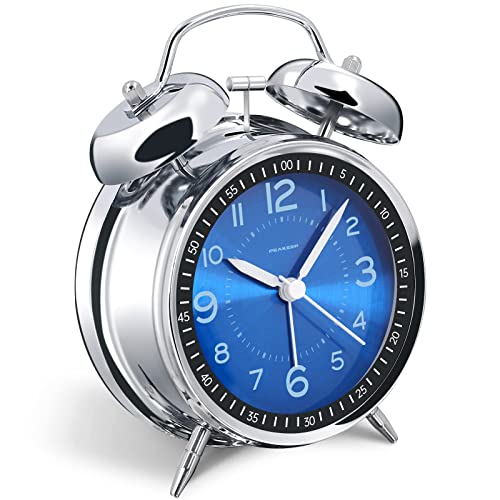 Peakeep Loud Twin Bell Alarm Clock for Heavy |
8.4/10 | Buy |
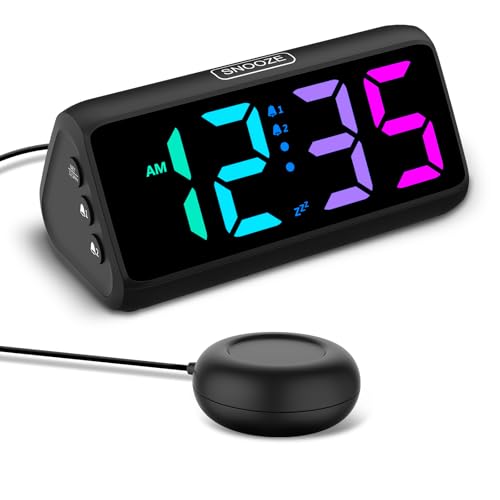 Netzu Loud Alarm Clock for Heavy Sleepers with Bed |
8.1/10 | Buy | |
| Best Value |
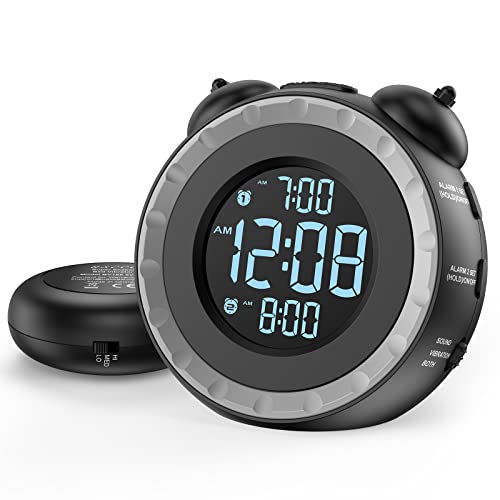 uscce Loud Bedside Alarm Clock with Powerful Bed |
8.1/10 | Buy |
| Best Premium |
 Sonic Alert Sonic Bomb Dual Extra Loud Alarm Clock |
8.1/10 | Buy |
 AuroraCalm Extra Loud Alarm Clock for Heavy |
7.8/10 | Buy |
REACHER Super Loud Vibrating Alarm Clock
The REACHER Super Loud Vibrating Alarm Clock combines a powerful 110 dB buzzer with a cordless under-pillow vibration motor and a magnetic charging base. It is a dependable wake-up solution for heavy sleepers, deep-sleeping teens, and hearing-impaired individuals seeking strong physical alerts without tangled bedside cords.
Pros
- Cordless design eliminates messy cables associated with traditional external bed-shaker pucks
- Vibration-only wake setting allows sleepers to wake up quietly without disturbing a sleeping partner
- Magnetic charging dock doubles as an angled display stand for convenient daytime viewing
- Raised tactile markers on key buttons help prevent fumbling and accidental shutoffs while half-asleep
Cons
- Checking the time while the clock is positioned under a pillow requires lifting the bedding
- AutoBrightness relies on ambient light detection rather than offering manual stepless dial adjustments
- Compact 3.2-inch square display may be harder to read from across large rooms compared to oversized bedside clocks
Peakeep Loud Twin Bell Alarm Clock for Heavy
Featuring an authentic twin-bell design with a physical striking hammer, this battery-operated Peakeep clock provides an extra-loud ring built to wake heavy sleepers without smartphone distractions. Its silent quartz sweep movement prevents distracting ticking noises, while a rear on-demand light button offers quick time checks without continuous bedroom glare.
Pros
- Physical twin-bell striking hammer delivers a very loud ring well suited for heavy sleepers and teenagers
- Quartz sweep movement operates completely silently without rhythmic ticking distractions
- On-demand backlight keeps the bedroom dark at night by lighting the face only when pressed
- Solid metal casing and front face provide durable craftsmanship and a distinctive jewel blue appearance
- Operates independently of wall outlets using a single AA battery for reliable bedside placement
Cons
- Lacks an electronic snooze button, requiring the user to flip the rear switch to silence the bell
- Analog fourth-hand alarm dial requires manual alignment rather than exact digital minute programming
- Requires one AA battery that is not included in the package
Netzu Loud Alarm Clock for Heavy Sleepers with Bed
The Netzu Loud Alarm Clock delivers a powerful wake-up solution featuring an included bed-shaking vibrator and an audible alert reaching up to 115 decibels. With an RGB customizable color display, five dimming levels including display-off, and dual alarms, it is a practical bedside choice for heavy sleepers, hearing-impaired users, and couples.
Pros
- Three versatile wake modes provide audible, physical tactile, or combined alert options.
- Listed 115 dB volume capability provides robust sound pressure for very heavy sleepers.
- Display can be turned completely off to eliminate nightstand glow in dark bedrooms.
- RGB customizable screen lets you change digit colors to match your personal preference.
- Dual alarm programming supports two distinct wake-up schedules simultaneously.
Cons
- Uses five fixed brightness steps rather than a continuous 0-100% stepless dimming dial.
- Maximum 115 dB alarm output can be quite jarring if placed immediately next to ear level on a compact nightstand.
- Product specifications do not list backup battery details or integrated USB phone charging ports.
uscce Loud Bedside Alarm Clock with Powerful Bed
The uscce Dual Alarm Clock pairs a customizable 3-level vibrating bed shaker with versatile wake-up tones and a 0-100% brightness dial, making it a reliable, compact bedside choice for heavy sleepers, couples, and the hearing-impaired.
Pros
- External 3-level bed shaker provides a strong tactile alternative or supplement to audible alarms
- Stepless 0 to 100% rotary dimmer allows precise brightness control down to complete display shut-off
- Dual rotary ear knobs make adjusting clock and alarm times intuitive right out of the box
- Battery backup sounds the audible alarm and retains internal settings during AC power interruptions
- Integrated USB port charges mobile devices directly from the clock to save wall outlet space
Cons
- Vibrating bed shaker puck and USB charging port do not operate when running solely on AAA backup battery power
- Requires two AAA backup batteries that are not included in the standard retail package
- Lacks dedicated weekday-only or weekend-only programming modes, requiring manual toggling on days off
Sonic Alert Sonic Bomb Dual Extra Loud Alarm Clock
The Sonic Alert Sonic Bomb is an intense bedside alarm clock pairing an adjustable 113dB siren with a physical bed-shaking vibration puck and red flashing alert lights. It is an ideal pick for deep sleepers, students, shift workers, and hearing-impaired individuals who consistently sleep through standard phone alarms.
Pros
- Massive 113dB maximum volume output easily cuts through heavy sleep cycles
- Included bed shaker puck offers a reliable tactile wake-up alternative for hard-of-hearing sleepers
- Three versatile notification modes (vibrate, buzz, or combo) provide customizable morning alerts
- Flexible controls let users fine-tune alarm duration (1-59 mins) and snooze duration (1-30 mins)
- Pulsing red alert lights add an extra layer of visual urgency in dark bedrooms
Cons
- The high volume and vigorous mattress shaker will likely disturb sleeping partners or light-sleeping roommates
- Does not include modern convenience features like built-in USB charging ports or wireless charging pads
- Aggressive industrial design with bold accents may not blend with subtle or traditional bedroom decor
AuroraCalm Extra Loud Alarm Clock for Heavy
The AuroraCalm Extra Loud Alarm Clock delivers up to 115dB of audio wake-up power paired with a flashing red alert light and dual alarms. It is an excellent bedside solution for heavy sleepers, teenagers, and shift workers who consistently sleep through standard phone alarms.
Pros
- Reaches a powerful 115dB volume level with a front-firing acoustic design
- Red flashing alert light offers visual reinforcement for hard-to-wake individuals
- Screen can be dimmed completely off to eliminate ambient glow in dark bedrooms
- Battery backup sounds the alarm during power outages while preserving internal time settings
- Built-in USB charging port and compact 3.54-inch wood-grain chassis reduce nightstand clutter
Cons
- The display remains powered off during battery backup mode until AC power is restored
- Intense siren and jackhammer sounds can startle sleeping partners or household pets
- USB charging port output wattage is not specified in the manufacturer documentation
Evaluating iPhone Alarm Sounds and Bedside Alternatives for Deep Sleepers
The most effective built-in iPhone alarm sound for heavy sleepers is Radar, followed closely by Beacon. Both alerts utilize sharp, rapid attack envelopes and high-frequency acoustic bursts that cut through slow-wave delta sleep more effectively than melodic tones like By the Seaside or Chimes. Radar delivers an erratic, high-pitched rhythm that actively prevents the auditory cortex from treating the sound as background ambient noise. However, even the sharpest iPhone audio profile often falls short for deep sleepers due to the hardware limitations of handheld mobile speakers.
When software settings alone fail to produce a dependable morning awakening, pairing mobile alarms with purpose-built bedside hardware bridges the sensory gap. Dedicated nightstand units provide substantial acoustic amplification, tactile bed-shaking motors, and high-contrast visual cues that mobile operating systems cannot replicate. Examining how iOS tones interact with sleep cycles reveals why many individuals ultimately transition to external alarm devices.
Built-In iOS Alarm Tones and Acoustic Frequency Analysis
Apple designs iOS alert sounds across a broad spectrum of acoustic frequencies, ranging from gentle harmonic progressions to jarring dissonant pulses. Melodic sounds such as Uplift, Constellation, and Silk rely on smooth sine waves and low-frequency resonance designed for gentle awakenings. While pleasant for light sleepers, these harmonic tones blend easily into deep dream states, allowing heavy sleepers to incorporate the melody into their sleep architecture rather than waking up. The auditory system rapidly filters out predictable, low-contrast acoustic patterns when the brain is locked in deep slow-wave slumber.
In contrast, Radar and Beacon function as jarring auditory stressors by employing sharp, square-wave synthesis with instantaneous transient peaks. These aggressive sounds concentrate acoustic energy between two and four kilohertz, which happens to be the frequency range where the human ear canal is naturally most sensitive. This specific auditory spike triggers an immediate surge of adrenaline, elevating heart rate and forcing the central nervous system out of stage three non-REM sleep. The erratic rhythm of Radar also prevents auditory habituation, ensuring the brain cannot easily predict or ignore the incoming noise pattern.
Rotating alert sounds on a regular schedule helps prevent neural adaptation over prolonged periods. Even the most piercing alert tone loses its effectiveness when heard every morning at the exact same hour, as the brain gradually classifies the repetitive frequency as non-threatening. Heavy sleepers who rely on an iPhone should cycle between Radar, Beacon, and Presto every two to three weeks to maintain alert sensitivity. Adding custom loud ringtones via digital audio files represents another software approach, though physical speaker volume remains a rigid barrier.
Physical Constraints of Smartphone Micro-Speakers
Handheld smartphones utilize miniature micro-transducers engineered primarily for voice calls, media streaming, and hands-free speakerphone usage. The microscopic acoustic enclosures inside slim aluminum phone chassis cannot produce significant sound pressure levels without severe harmonic distortion. At a standard bedside nightstand distance of one meter, an iPhone set to maximum volume typically generates sound pressure levels between seventy-five and eighty decibels. While adequate in quiet environments, this volume quickly drops when a blanket covers the phone or when the user turns their head away from the nightstand.
Dedicated heavy-sleeper alarm clocks bypass these limitations by incorporating substantial dynamic speaker cones and high-output acoustic drivers. Units such as the AuroraCalm Extra Loud Alarm Clock feature front-facing speakers capable of projecting up to 115 decibels directly toward the sleeping area. Similarly, the Netzu Loud Alarm Clock produces an intense 115-decibel output that penetrates even the deepest stages of sleep or ambient white noise. For users who prefer acoustic simplicity without digital circuitry, the Peakeep Loud Alarm Clock utilizes twin metal bells struck by a physical mechanical hammer to produce sharp, relentless ringing that persists for up to fifty minutes.
Sound pressure attenuation follows the inverse-square law, meaning alarm volume drops precipitously over relatively short physical distances. When a smartphone rests on a nightstand or floor, ambient sound waves lose significant energy before reaching the sleeper’s ears. Dedicated bedside clocks compensate for this physical reality by utilizing multi-tone sound libraries that include sirens, jackhammers, and classic buzzers. The Sonic Alert Sonic Bomb Dual Extra Loud Alarm Clock exemplifies this approach by producing an adjustable 113-decibel buzzer designed specifically to cut through deep sleep and hearing barriers.
Tactile Awakening Mechanics: Wired and Cordless Bed-Shaker Pucks
Auditory alerts represent only one sensory channel, and heavy sleepers often develop subconscious coping mechanisms that tune out sound completely. Tactile stimulation bypasses the auditory cortex entirely, delivering physical kinetic energy directly to the body to stimulate the somatosensory system. Placing an auxiliary bed-shaker puck beneath a pillow or mattress creates mechanical vibration that jars the body awake even when acoustic alarms fail. This multi-sensory combination of sound and movement reliably dispels severe morning sleep inertia.
Bed-shaker hardware generally divides into wired tethered pucks and modern cordless vibration units. The uscce Loud Dual Alarm Clock features a wired bed shaker with three adjustable intensity levels, allowing users to combine low, medium, or high vibrations with buzzer tones. On the other hand, the REACHER Super Loud Vibrating Alarm Clock provides a cordless under-pillow shaker with five distinct vibration levels. Eliminating the physical tether prevents cord tangling during nocturnal movement and allows users to position the puck exactly where body contact is highest.
Vibration-only wake modes provide a vital benefit for individuals sharing a bedroom or living in shared dormitory spaces. High-decibel sirens inevitably wake partners, roommates, and adjacent family members, creating household friction on early workday mornings. Switching a unit like the REACHER or Netzu clock to vibration-only mode delivers a silent yet forceful wake-up call directly to the user’s pillow. This tactile method awakens the heavy sleeper through localized physical displacement while leaving the surrounding room completely silent and undisturbed.
Touchscreen Pitfalls Versus Tactile Physical Snooze Architecture
Smartphone touchscreens represent one of the primary points of failure for groggy sleepers attempting to wake up on schedule. When an iOS alarm sounds, the lock screen displays a large snooze button alongside a subtle slide-to-stop option or screen tap response. In a state of profound sleep inertia, fine motor coordination declines significantly, causing drowsy fingers to accidentally dismiss the alarm rather than engaging a temporary snooze cycle. Once dismissed, the mobile operating system will not sound again unless secondary alarms were pre-configured.
Dedicated bedside clocks solve this ergonomic vulnerability by utilizing distinct, physically separated mechanical buttons. The REACHER clock incorporates raised tactile points on its top surface, allowing users to distinguish the snooze bar from the alarm-off switch purely by touch in total darkness. The uscce clock utilizes intuitive twin rotary dials for alarm and time adjustments, completely eliminating confusing multi-button programming sequences. Physical separation ensures that groggy users can smack a broad snooze bar without the risk of accidentally disarming the entire system.
Classic analog clocks offer the most straightforward physical interface available for bedrooms. The Peakeep Loud Alarm Clock features a simple mechanical toggle switch on the rear panel, requiring an intentional manual flip to silence the twin bells. Users cannot accidentally cancel the alert through a half-hearted swipe or mistaken touchscreen tap. This physical resistance demands conscious physical effort, forcing the sleeper to engage motor planning areas of the brain that accelerate mental alertness.
Power Failures, Operating System Glitches, and Backup Reliability
Mobile phones rely on intricate software ecosystems that occasionally experience unexpected overnight interruptions. Automatic operating system updates, unexpected battery drainage, silent mode switch toggles, and volume slider software bugs can easily silence an iPhone alarm without warning. If a charging cable slips out overnight, a dead smartphone battery guarantees a missed morning wake-up call. Deep sleepers who rely solely on a handheld device remain vulnerable to these routine technical glitches.
Bedside digital clocks address grid instability through integrated battery backup architecture. Many budget clocks utilize memory-only battery retention, which preserves internal timekeeping during power outages but leaves the speaker disabled until AC mains power returns. In contrast, units like the AuroraCalm Extra Loud Alarm Clock feature backup systems capable of sounding acoustic alerts even when electrical grid disruptions occur. Similarly, the Peakeep clock operates entirely on a single AA battery for months, providing total immunity against power grid failures or electrical cord disconnections.
Testing battery backup functionality before an emergency occurs ensures long-term morning reliability. When setting up a bedside clock, unplugging the AC adapter while an alarm is scheduled verifies whether the internal battery powers the acoustic driver or merely maintains quartz crystal timing. If the unit features a dedicated USB charging port like the uscce or AuroraCalm, users should remember that auxiliary phone charging typically ceases during power cuts. Keeping fresh backup cells installed protects work schedules from storm-related blackouts and overnight circuit breaker trips.
Visual Stimulation and Bedroom Light Management
Visual stimuli provide a powerful secondary wake-up modality that complements sound and vibration. Units such as the Sonic Alert Sonic Bomb and the AuroraCalm integrate bright flashing red alert lights that trigger when the alarm sounds. These high-contrast optical pulses penetrate through closed eyelids, signaling to the brain that darkness has ended. Combining flashing light with high-decibel buzzers creates an intense sensory environment that compels heavy sleepers to get out of bed immediately.
While wake-up lighting is beneficial in the morning, nighttime display glare can severely disrupt sleep hygiene and delay melatonin secretion. Segmented digital displays that lack proper dimming can illuminate an entire bedroom with harsh blue or white wavelengths. The uscce clock addresses this issue with a stepless dial dimmer adjustable from zero to one hundred percent, allowing full blackout conditions. The REACHER clock utilizes intelligent AutoBrightness to dim softly in dark rooms, while the Netzu offers five selectable brightness levels and customizable RGB screen tones.
Sleepers interested in gentle, biology-aligned awakenings often combine aggressive audio backups with gradual morning illumination. Exploring sunrise alarm clocks for deep sleepers highlights how simulated dawn transitions stimulate the cortisol awakening response before audible alarms sound. Preparing the endocrine system with progressive light softens morning grogginess, making sudden acoustic alerts far more effective when they finally trigger. Balancing pitch-black sleeping conditions with intense morning illumination reinforces healthy circadian rhythms.
Nightstand Consolidation and Bedside Cable Management
Transforming a bedside table into an organized, functional sleep sanctuary requires managing multiple electronic cables and accessories. Modern heavy sleepers often juggle smartphone chargers, bed-shaker cords, sound machines, and bedside lamps on a single cramped nightstand. Bedside clocks that feature built-in USB charging ports, such as the AuroraCalm and uscce units, allow users to charge mobile devices directly through the clock housing. This internal passthrough consolidates electrical connections and frees up valuable wall outlets near the bed.
Cordless accessories further streamline nightstand organization by eliminating awkward wire routing under bedding. The REACHER vibrating clock incorporates a dedicated magnetic charging dock that serves as an angled display stand during daytime hours. When evening arrives, the cordless shaker puck detaches effortlessly and slips beneath the pillow without messy cords trailing across the floor. This clean physical setup prevents cord damage from mattress movement and keeps the sleeping area safe and tidy.
Consolidating bedside electronics also reduces the risk of electrical coil whine and nighttime electromagnetic clutter. Choosing alarm clocks with integrated charging provides a streamlined hub that keeps smartphones fully powered without requiring messy tangle-prone wall adapters. Positioning the primary alarm clock across the room while leaving the charging phone within reach forces deep sleepers to physically stand up to silence morning alerts. This strategic arrangement turns bedside organization into an active wake-up tool.
Building a Fail-Safe Multi-Stage Morning Routine
Relying on a single alarm source rarely provides long-term peace of mind for deep, difficult-to-wake sleepers. A robust morning strategy combines optimized iPhone software alerts with dedicated heavy-sleeper bedside hardware operating in distinct stages. Setting the iPhone to sound a melodic tone like Uplift five minutes before the main wake-up time acts as an initial sensory primer. If the sleeper remains in delta sleep, the secondary bedside clock then deploys maximum acoustic decibels, flashing lights, or bed-shaker vibrations to ensure a complete awakening.
Physical placement of bedside hardware plays a pivotal role in eliminating the temptation to fall back asleep. Placing an extra-loud unit like the Sonic Alert Sonic Bomb or the Peakeep twin bell clock across the room prevents groggy disarming while lying down. Forcing the body to assume a standing posture and walk several steps activates leg muscle pumps, elevating blood pressure and rapidly dispersing sleep inertia. Once upright, the cognitive fog that encourages unnecessary snoozing dissipates far more quickly.
Ultimately, while Radar and Beacon remain the most potent built-in iPhone alarm sounds, software alone cannot overcome the physical limits of compact mobile speakers. Incorporating dedicated high-decibel alarm clocks, tactile bed-shakers, and reliable physical controls creates an infallible morning system that heavy sleepers can trust every day. Choosing the right combination of sound, vibration, and placement ensures punctual mornings without ongoing anxiety about oversleeping.
About the author
Jeremy Klein is an experienced sleep-product tester with a strong focus on testing methodology, data collection, and real-world product performance. His expertise includes evaluating sleep essentials and wake-up devices through structured testing and practical consumer-focused criteria.