
What Alarm Sound Wakes You Up? A Bedside Guide for 2026
Learn what alarm sound wakes you up best with research on frequencies, decibels, and bedside clock features updated for October 2026.
 By McKenzie Dillon
Updated October 6, 2026
By McKenzie Dillon
Updated October 6, 2026
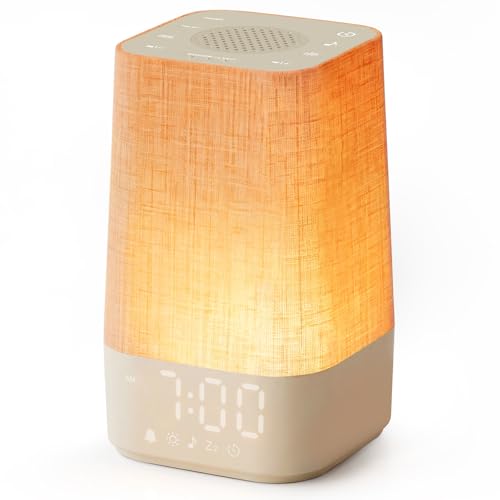
Waking up to an aggressive, screeching buzzer often triggers an immediate adrenaline spike, leaving you feeling disoriented and fatigued before your feet even touch the floor. Many sleepers wonder what alarm sound wakes you up effectively without causing this jarring morning shock. The human brain processes auditory cues differently depending on your sleep stage, meaning the type of audio emitted from your nightstand directly influences how quickly you clear morning grogginess. Exploring gentler alternatives like bird sound alarm clocks demonstrates that natural acoustic tones can stimulate alertness just as reliably as traditional buzzers without the associated stress.
Modern digital clocks and bedside sleep systems now offer a diverse range of acoustic profiles, spanning melodic chimes, FM radio broadcasts, ambient nature tracks, and synthesized tones. Hardware from brands like Philips, REACHER, JALL, Odokee, and Wkzay pairs these auditory options with progressive volume curves and circadian lighting. Finding the right balance between volume, frequency, and rise time transforms your wake-up experience from a panicked jolt into a smooth, consistent morning transition.
| Award | Product | ACR Score About ACR ScoreThe ACR Score is our own rating from 0 to 10, based on performance, design and build, ease of use, and value. It reflects independent research and is never influenced by manufacturers, retailers, or affiliate commissions. Learn more › | |
|---|---|---|---|
| Best Overall |
Wkzay Sunrise Alarm Clock with Sound Machine
|
9.2/10 | Buy |
| Best Value |
 Odokee Sunrise Alarm Clock and Sound Machine
|
9.1/10 | Buy |
| Best Premium |
 Hatch Restore 3 Sunrise Alarm Clock and Bedside
|
8.9/10 | Buy |
 Philips SmartSleep HF3520/60 Wake-Up Light Alarm
|
8.6/10 | Buy | |
| Best Budget |
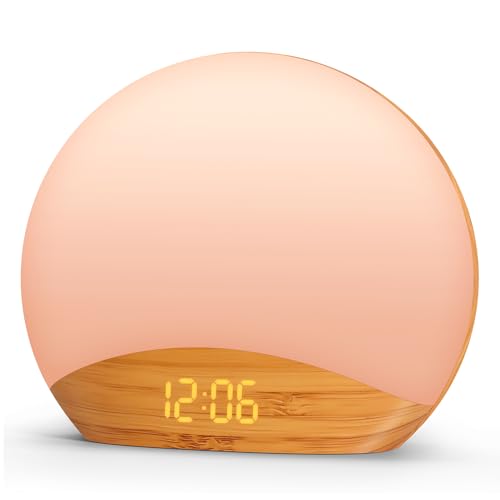 REACHER Wood Grain Sunrise Alarm Clock with 26
|
8.4/10 | Buy |
 JALL Full-Screen Sunrise Alarm Clock with Wake-Up
|
8.1/10 | Buy |
Wkzay Sunrise Alarm Clock with Sound Machine
The Wkzay Sunrise Alarm Clock combines a customizable 10-60 minute dawn simulation with an integrated 30-track sound machine and a 5-level dimmable display. It is a practical bedside solution for light sleepers and alarm-sensitive adults seeking a gentler morning routine without abrupt buzzer noise.
Pros
- Wide selection of 30 soothing sounds (10 white noise and 20 nature tracks) for bedtime relaxation and sleep masking.
- Adjustable 10-60 minute dawn progression supports gentle, light-first waking without sudden, jarring alarms.
- Fine-grained 32-level volume control prevents large, abrupt jumps in sound output.
- Backlit buttons allow easy navigation in dark bedrooms without turning on overhead lighting.
- Flexible sleep timer spans 30 to 480 minutes with an optional continuous play mode.
Cons
- Display dimming operates across 5 fixed steps rather than a stepless 0-100% rotary slider.
- Lacks dedicated dual-alarm programming for separate weekday and weekend schedules.
- Does not feature integrated USB charging ports or wireless device charging pads.
Odokee Sunrise Alarm Clock and Sound Machine
The Odokee Sunrise Alarm Clock combines a gradual 5-to-60-minute wake-up light with a 25-sound sleep machine, full-range 0-100% display dimmer, and app-free physical controls. It is a practical bedside upgrade for sleepers seeking a gentler morning routine without smartphone clutter on the nightstand.
Pros
- Stepless 0-100% display dimming allows users to lower nightstand illumination to comfortable levels for light-sensitive sleepers
- Wide selection of 25 sleep sounds across four distinct noise colors provides tailored acoustic masking for street noise or snoring
- No smartphone application or wireless account setup required, ensuring complete offline nightstand functionality
- Customizable sunrise duration between 5 and 60 minutes adapts easily to fast risers or sleepers who need an extended dawn progression
- Silent wake-up mode with sunrise light alone enables early risers to wake without jarring a sleeping partner
Cons
- Product specifications do not list a battery backup feature to preserve timekeeping during electrical power interruptions
- The 7-inch by 7-inch circular housing requires a moderate amount of dedicated surface area on compact nightstands
- Lacks Wi-Fi synchronization or mobile app integration for users who prefer smartphone-managed alarm schedules
Hatch Restore 3 Sunrise Alarm Clock and Bedside
The Hatch Restore 3 combines a gentle sunrise wake-up light with science-backed sleep audio and a dimmable display for a screen-free bedroom. It is an ideal nightstand companion for light-sensitive sleepers and digital detoxers wanting a calmer morning routine.
Pros
- Gradual sunrise light progression helps sleepers wake up naturally without sudden, startling buzzers
- Integrated sound library offers 10+ sleep sounds to help quiet the mind and drown out external noise
- Dimmable clock face prevents intrusive nightstand glow in dark bedrooms
- Encourages a phone-free nightstand environment to support healthier nighttime routines
- Compact 1.5-inch depth fits neatly on narrow bedside tables without crowding
Cons
- Access to the complete library of meditations and specialized content requires an ongoing Hatch+ subscription after the trial period
- Relies on companion app pairing for deep routine customization rather than standalone physical dials
- Product data does not specify backup battery operation or integrated device charging ports
Philips SmartSleep HF3520/60 Wake-Up Light Alarm
The Philips SmartSleep HF3520/60 combines colored sunrise simulation with natural wake-up sounds, an automatic dimmable display, and a 20-setting reading lamp. It is a dependable choice for light-sensitive sleepers and morning commuters seeking a gentler bedside routine.
Pros
- Dual-function design serves as both a gradual dawn simulator and a multi-level bedside reading lamp
- Automatic display dimming helps prevent unwanted ambient light glow during pitch-black sleep hours
- Choice between five natural sound profiles and FM radio wake-up audio caters to varied preferences
- Tap snooze feature makes silencing the morning chime straightforward without fumbling for small switches
- Substantial circular base and 2.45-pound weight keep the unit firmly anchored on the nightstand
Cons
- Generous 5.7 x 7.8 x 7.5 inch round footprint occupies significant space on smaller bedside tables
- Does not include integrated USB charging ports or wireless charging surfaces for mobile devices
- Light-based waking cues may be less effective for individuals who wear sleep masks or turn completely away
REACHER Wood Grain Sunrise Alarm Clock with 26
Combining an adjustable 5-60 minute sunrise simulation with 26 ambient sleep sounds, this REACHER alarm clock provides a gentle wake-up routine and nightstand sound masking. Its full-range 0-100% display dimmer and settings backup battery make it a practical choice for light-sensitive sleepers.
Pros
- Customizable 5 to 60 minute dawn simulation for a gradual wake-up experience
- Stepless 0 to 100% display dimmer eliminates harsh nighttime light bleed
- Generous 26-track sound library with a versatile 5 to 180 minute shutoff timer
- Internal memory battery safeguards alarm and lighting preferences during blackouts
- Wood grain exterior offers an attractive alternative to standard plastic clocks
Cons
- Internal battery is intended for settings preservation rather than fully cordless lamp operation
- Does not include an FM radio tuner for sleepers who prefer wake-up broadcasts
- Consolidates lighting and audio controls on a compact frame, requiring brief initial familiarity
JALL Full-Screen Sunrise Alarm Clock with Wake-Up
The JALL Full-Screen Sunrise Alarm Clock pairs gradual dawn simulation with dual alarms, 25 relaxing sleep sounds, and an L0 blackout display mode for low-glare sleep. It is a capable bedside light and sound machine for heavy sleepers and structured households.
Pros
- Broad front full-screen panel offers expansive sunrise simulation lighting across the nightstand
- L0 display blackout setting provides complete dark-room comfort without background halo glow
- Dual alarm scheduling includes dedicated Everyday, Weekday, and Weekend routine options
- Bluetooth time synchronization eliminates tedious manual hour and minute adjustments
- Offers 25 natural sounds, white noise tracks, and FM radio station alarm tones
Cons
- Sunrise light simulation is most effective when sleeping facing toward the clock face
- The 7.2-inch circular front panel occupies more vertical nightstand space than basic travel clocks
- Requires initial Bluetooth pairing to complete automatic time synchronization
The Mechanics of Morning Auditory Arousal and Alarm Sounds
The human auditory system remains active even during deep slumber, acting as an internal monitor for significant environmental changes. When determining what alarm sound wakes you up most effectively, acoustic frequency, rhythm, and volume rise time matter far more than raw noise level. A harsh buzzer might jolt you upright, but it frequently triggers severe sleep inertia that leaves you feeling groggy and unfocused for hours. Selecting a sound that balances melodic structure with penetrating frequencies allows your central nervous system to shift smoothly from restorative sleep into active wakefulness.
Melodic Tones Versus Monotonic Buzzers
Standard bedside digital clocks traditionally rely on monotonic square-wave buzzers designed to create immediate auditory irritation. While these sharp beeps penetrate background silence, they trigger an abrupt release of stress hormones like cortisol and adrenaline. This sudden physiological shock causes your heart rate to jump and constricts blood vessels before your brain can orient itself. Acoustic research indicates that melodic alarms, which incorporate recognizable note progressions and varied harmonic overtones, encourage wakefulness without inducing that intense fight-or-flight panic. The changing melodic contour stimulates cognitive alertness while keeping morning blood pressure stable.
Rhythm also dictates how quickly your mind dispels morning fog. Monotonic beeping produces a repetitive cadence that the sleeping brain can quickly habituate to or dismiss, especially during heavy slow-wave sleep cycles. Melodic audio tracks, by contrast, present dynamic rhythm changes that keep auditory processing networks actively engaged as consciousness returns. Clocks featuring varied tones or customizable chime sequences prevent auditory fatigue, where your brain learns to ignore a predictable morning beep. Alternating your wake-up melody periodically preserves this neurological sensitivity, ensuring your alarm remains dependable over time.
Decibel Levels and Progressive Ascending Volume Curves
Acoustic volume selection represents a delicate balance between sleep penetration and cardiovascular comfort. Setting an alarm too low risks oversleeping, while an excessively loud alert induces immediate morning agitation. A sound pressure level between 60 and 70 decibels measured at bedside distance is generally sufficient for light or moderate sleepers in a quiet bedroom. Heavy sleepers often require sound levels reaching 80 to 85 decibels to cross their auditory arousal threshold. Finding the ideal sound pressure depends largely on your personal sleep depth and the ambient sound environment of your home.
Ascending volume curves, frequently engineered into modern digital clocks, provide an effective solution to the volume dilemma. Instead of blaring at maximum volume from the first second, a progressive ramp begins at a whisper and steadily builds over several minutes. Light sleepers wake up during the initial low-decibel phase, avoiding unnecessary acoustic stress and allowing sleeping partners to rest undisturbed. If you are locked in deeper sleep, the volume steadily climbs until it provides sufficient acoustic energy to wake you. This gradual escalation protects against morning heart rate spikes while preserving morning reliability.
Fine-grained volume adjustment is crucial when matching a clock to different room acoustics and sleeping habits. Many basic clocks offer only crude high or low switches, leaving the audio either too faint to work or uncomfortably loud. Devices that incorporate 16 to 32 discrete volume levels allow precise calibration for compact nightstands or larger master bedrooms. This control ensures that you can establish an effective auditory boundary without overwhelming your immediate sleeping environment. Paired with progressive volume escalation, accurate decibel control creates a far more humane wake-up routine.
Nature Soundscapes and Frequency Spectrum Profiles
Organic soundscapes such as singing birds, gentle rain, and rolling ocean surf offer an alternative to synthetic beeps. These natural audio files distribute sound energy across a wider frequency spectrum, stimulating auditory awareness in a gentle manner. Forest bird calls are especially effective because the human brain inherently associates dawn chorus sounds with the start of day. The dynamic chirps and pauses provide acoustic variety that prevents the brain from tuning out the track. Waking to natural soundscapes fosters a tranquil bedroom atmosphere that sets a composed tone for the rest of your day.
Bedside clocks often integrate nighttime masking sounds alongside their morning alarms to support continuous sleep quality. Masking options such as white, pink, or brown noise drown out unpredictable nocturnal noises like passing traffic or creaking floorboards. Brown noise features deeper low-frequency energy that many people find more soothing than static-heavy white noise. When using nocturnal sound masking, your morning wake-up sound must provide sufficient tonal contrast to break through the ambient audio curtain. A sharp transition from soothing brown noise to a bright acoustic melody signals your brain that sleep time has concluded.
Exploring specialized sunrise alarm clocks for heavy sleepers shows how pairing nature tracks with full-spectrum dawn lighting enhances arousal. The visual dawn simulation prepares your endocrine system while the gentle nature sounds provide the final conscious nudge. FM radio alarms represent another useful alternative, letting sleepers wake to spoken dialogue or current broadcasts. Processing human speech stimulates linguistic and cognitive networks in the brain, helping you clear mental grogginess faster than repetitive electronic tones alone.
Circadian Alignment and Wake-Up Light Integration
Sound is not the only sensory channel capable of stirring you from sleep; light serves as the primary environmental cue regulating your master biological clock. Specialized photoreceptors in the human retina detect ambient light through closed eyelids as dawn approaches. This subtle light exposure signals the brain to lower melatonin levels and begin releasing morning cortisol. Sunrise alarm clocks simulate this solar progression by transitioning from soft red and amber tones to bright warm white light over 10 to 60 minutes. This biological priming prepares your body to wake up before any sound even plays.
Because your body has already shifted out of deep sleep into a lighter stage, the accompanying audio cue does not need to be abrasive. A gentle acoustic chime playing at moderate volume can easily wake a sleeper whose circadian rhythms have already been nudged by artificial dawn light. This combined visual and acoustic approach eliminates the feeling of being abruptly torn from deep rest. Sleepers who wake up to light and sound combinations frequently report feeling more alert and cheerful throughout their mornings. It is an especially valuable strategy during dark winter months when natural sunlight is unavailable.
Power Architecture and Audible Alarm Outage Protection
A carefully selected alarm sound is useless if a residential power outage silences your clock overnight. When shopping for bedside timekeeping electronics, it is critical to distinguish between memory-retention batteries and active operational battery backup. Many AC-powered clocks use a coin cell or a pair of AAA batteries exclusively to preserve internal time settings when the wall plug loses power. In these clocks, the display turns off and the audio transducer remains completely dead until mains power returns. If a storm cuts power while you sleep, an alarm relying solely on memory backup will not sound.
True operational battery backup systems include dedicated circuitry that can power the internal speaker and trigger the alarm even during a total blackout. Some bedside devices utilize internal rechargeable lithium cells, while others rely on primary alkaline batteries to run basic sound functions during outages. You should always review manufacturer documentation to confirm whether a clock sounds an audible alert on DC battery power alone. Conducting a simple test by unplugging the unit and setting an alarm confirms that your audio will fire during an unexpected power cut.
Dual-alarm scheduling systems provide added reliability for households with complex morning routines. Clocks with independent dual alarms allow partners to program separate wake-up times and custom sound profiles without resetting the unit every evening. You can assign a gentle nature chime for early work shifts and configure a distinct weekend routine that stays silent or rings later. Clear visual indicators for Alarm 1 and Alarm 2 help prevent accidental disarming or confusing AM and PM settings that lead to missed schedules.
Nightstand Ergonomics and Acoustic Environment Control
The tactile layout of your bedside alarm clock strongly impacts how smoothly your morning begins. A wide, top-mounted snooze bar gives you a prominent target to tap without requiring you to open your eyes or fumble in the dark. It is vital that this snooze bar has physical separation from the permanent alarm disarm button. Clocks that place tiny, identical buttons close together on the top or rear panel often cause groggy sleepers to shut off their alarm entirely when they merely wanted an extra nine minutes of rest.
Display brightness controls are just as important for protecting the restful sleep that makes wake-up sounds effective. A clock display that casts bright blue or cool white light into the room can disrupt natural melatonin secretion and delay sleep onset. High-performance bedside units provide continuous 0 to 100 percent dial dimming or automated ambient light sensors that drop display output to absolute zero. Keeping your bedroom completely dark preserves deep sleep cycles, ensuring your morning audio performs its duty on a well-rested brain.
Investing in reliable bedroom alarm clocks that consolidate multiple bedside gadgets keeps your nightstand orderly and restful. Many modern alarm clocks integrate convenient features like Bluetooth audio streaming, USB device charging, or wireless charging pads. When choosing an integrated clock, check that internal electronics remain completely silent without producing high-pitched transformer hum or coil whine near your pillow. A quiet, organized nightstand environment ensures that the only sound you hear in the morning is your intended wake-up alert.
Matching Wake-Up Sounds to Your Personal Sleep Profile
Every sleeper maintains a unique auditory arousal threshold that dictates the most effective wake-up sound. Light sleepers who stir at minor noises do best with soft melodic chimes, gentle water sounds, or quiet FM radio broadcasts. Deep sleepers and individuals with mild hearing loss require high-output tones with sharp attacks and greater sound volume. If you routinely sleep through gentle chimes, switching to a more dynamic acoustic profile with an ascending volume ramp will improve reliability without causing panic.
For deep sleepers who fail to respond to sound alone, pairing an audible alert with physical vibration provides an effective solution. Bedside clocks that support auxiliary bed-shaker pucks slide beneath your mattress or pillow to deliver tactile pulses when the alarm triggers. Combining mechanical vibration with an 80-decibel chime engages multiple sensory systems simultaneously, breaking through deep slow-wave sleep cycles quickly. Evaluating whether you respond better to sound, light, or tactile movement ensures you build a bedside system suited to your specific biology.
Optimizing your morning wake-up sound requires intentional experimentation and consistent sleep habits. Start by replacing sudden electronic beeps with an ascending melodic tone or nature track paired with gradual sunrise illumination. Give your nervous system several days to adjust to the new acoustic cues, taking note of how quickly your morning grogginess lifts after rising. Aligning proper acoustic frequencies, progressive volume, and thoughtful clock ergonomics transforms your wake-up experience into a calm, reliable start to every morning.
About the author
McKenzie Dillon is a Certified Sleep Science Coach and experienced sleep-product editor who has personally tested dozens of sleep products. Her expertise bridges sleep technology, product evaluation, and practical guidance for creating more comfortable sleep and wake-up routines.