
How to Wake up to Alarm as a Heavy Sleeper: Practical Guide for 2026
How To Wake Up To Alarm As A Heavy Sleeper in October 2026 by combining high-decibel sound, vibrating bed shakers, and progressive light to break through deep sleep.
 By Jeremy Klein
Updated October 8, 2026
By Jeremy Klein
Updated October 8, 2026
Waking up during stage-three non-REM rest often leaves deep sleepers completely oblivious to faint smartphone rings and delicate bedside chimes. Learning how to wake up to alarm as a heavy sleeper requires looking beyond ordinary audio buzzers toward multi-sensory awakening methods that actively engage the central nervous system. When standard phone ringtones blend directly into dreams, heavy sleepers need reliable physical stimuli like penetrating high-decibel tones, mechanical vibration pucks, or bright morning light shifts to break through deep slumber. Relying on an underpowered mobile device placed on a soft mattress often leads to morning anxiety, missed work shifts, and severe sleep inertia that ruins the entire day.
Switching to dedicated bedside hardware creates an unmistakable physical signal that reaches through deep sensory fatigue. For sleepers who also struggle with dark morning bedrooms, pairing physical alerts with sunrise alarm clock options can introduce gradual dawn illumination alongside auditory alarms. This guide breaks down the physical mechanics of waking up reliably, highlighting how specialized auditory alerts, silent vibrating wristbands, and physical bed shakers bypass sound fatigue to pull even the deepest sleepers out of slumber on time.
| Award | Product | ACR Score About ACR ScoreThe ACR Score is our own rating from 0 to 10, based on performance, design and build, ease of use, and value. It reflects independent research and is never influenced by manufacturers, retailers, or affiliate commissions. Learn more › | |
|---|---|---|---|
| Best Overall |
RITHEM Vibrating Alarm Clock Wristband
|
9.2/10 | Buy |
| Best Value |
 Sharp Big Bang 115dB Extra Loud Alarm Clock
|
9.1/10 | Buy |
| Best Budget |
 Peakeep Loud Twin Bell Alarm Clock for Heavy
|
8.4/10 | Buy |
 TEERAVD Silent Vibrating Alarm Wristband Clock
|
8.4/10 | Buy | |
| Best Premium |
 uscce Loud Bedside Alarm Clock with Powerful Bed
|
8.1/10 | Buy |
 Ulvixar Vibrating Alarm Watch for Heavy Sleepers
|
7.8/10 | Buy |
RITHEM Vibrating Alarm Clock Wristband
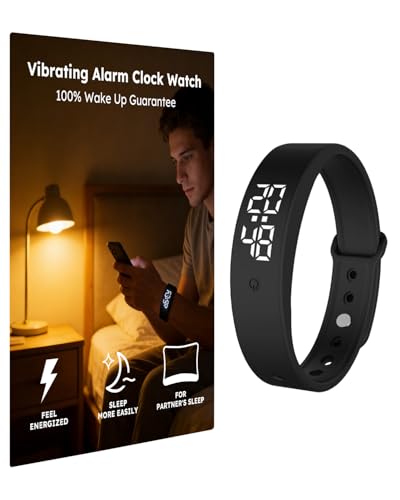
The RITHEM Vibrating Alarm Clock Wristband delivers strong, non-audible tactile pulses directly to your wrist to wake heavy sleepers without disturbing a partner. It is a practical, silent morning solution for couples, shift workers, students, and deep sleepers.
Pros
- Completely silent tactile alert wakes only the wearer without disturbing sleeping partners or roommates
- Potent vibration motor designed specifically to penetrate deep sleep stages through direct skin contact
- IP68 water resistance ensures durability against sweat and daily splashes
- Supports multiple customizable vibration alerts for morning wake-up and daytime schedule management
Cons
- Non-audible design lacks an optional secondary audible speaker backup for sleepers who might ignore tactile pulses
- Requires sleeping with a wearable band on the wrist, which may feel unfamiliar to those used to tabletop clocks
- Manufacturer specifications do not detail exact display screen technology or expected battery runtime between charges
Sharp Big Bang 115dB Extra Loud Alarm Clock
The Sharp Big Bang is a dedicated bedside alarm clock engineered with an intense 115dB maximum output and six distinct wake sounds to cut through deep sleep. Featuring dual alarms, an oversized dimmable white LED display, and battery backup memory protection, it is an effective pick for heavy sleepers, shift workers, and students who routinely sleep through standard phone alarms.
Pros
- Extreme 115dB sound capability delivers authoritative volume for deep sleepers and shift workers
- Selection of six unique alarm sounds prevents morning acoustic habituation
- Dual alarm settings provide convenience for couples or multi-schedule routines
- Large white LED numerals are easy to read from pillow height across the room
- Compact and lightweight 0.78-pound frame occupies minimal nightstand space
Cons
- Battery backup requires 2 AAA batteries that are not included in the box
- Backup battery system only preserves internal settings and does not operate the display or sound during an outage
- Does not include integrated USB charging ports or wireless charging pads for mobile devices
Peakeep Loud Twin Bell Alarm Clock for Heavy
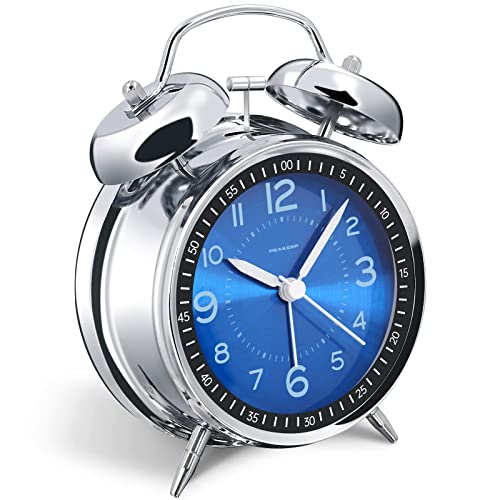
Featuring an authentic twin-bell design with a physical striking hammer, this battery-operated Peakeep clock provides an extra-loud ring built to wake heavy sleepers without smartphone distractions. Its silent quartz sweep movement prevents distracting ticking noises, while a rear on-demand light button offers quick time checks without continuous bedroom glare.
Pros
- Physical twin-bell striking hammer delivers a very loud ring well suited for heavy sleepers and teenagers
- Quartz sweep movement operates completely silently without rhythmic ticking distractions
- On-demand backlight keeps the bedroom dark at night by lighting the face only when pressed
- Solid metal casing and front face provide durable craftsmanship and a distinctive jewel blue appearance
- Operates independently of wall outlets using a single AA battery for reliable bedside placement
Cons
- Lacks an electronic snooze button, requiring the user to flip the rear switch to silence the bell
- Analog fourth-hand alarm dial requires manual alignment rather than exact digital minute programming
- Requires one AA battery that is not included in the package
TEERAVD Silent Vibrating Alarm Wristband Clock
The TEERAVD Vibrating Alarm Wristband is a silent, wearable digital alarm clock that wakes you through tactile wrist pulses rather than loud audio. It is a practical choice for heavy sleepers, deaf or hard-of-hearing individuals, and couples who want reliable morning wake-ups without disturbing a partner.
Pros
- Delivers silent vibration alarms directly to the wrist without waking a sleeping partner or roommate
- Built-in USB connector eliminates the need to carry or keep track of dedicated charging cables
- Supports multiple independent daily alarms for wake-up times and routine daytime reminders
- Combines a silent alarm clock with 3D step counting, distance estimation, and calorie tracking
Cons
- Tactile vibration waking may not wake deep sleepers who require loud acoustic sound pressure
- Compact wrist display lacks the large, across-the-room numerals found on traditional bedside clocks
- Requires wearing a band to bed, which may take adjustment for sleepers unaccustomed to wrist accessories
uscce Loud Bedside Alarm Clock with Powerful Bed
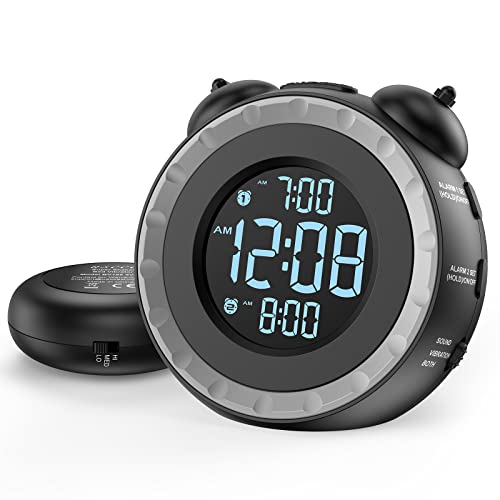
The uscce Dual Alarm Clock pairs a customizable 3-level vibrating bed shaker with versatile wake-up tones and a 0-100% brightness dial, making it a reliable, compact bedside choice for heavy sleepers, couples, and the hearing-impaired.
Pros
- External 3-level bed shaker provides a strong tactile alternative or supplement to audible alarms
- Stepless 0 to 100% rotary dimmer allows precise brightness control down to complete display shut-off
- Dual rotary ear knobs make adjusting clock and alarm times intuitive right out of the box
- Battery backup sounds the audible alarm and retains internal settings during AC power interruptions
- Integrated USB port charges mobile devices directly from the clock to save wall outlet space
Cons
- Vibrating bed shaker puck and USB charging port do not operate when running solely on AAA backup battery power
- Requires two AAA backup batteries that are not included in the standard retail package
- Lacks dedicated weekday-only or weekend-only programming modes, requiring manual toggling on days off
Ulvixar Vibrating Alarm Watch for Heavy Sleepers
The Ulvixar Vibrating Alarm Wristband is a dedicated wearable wake-up device featuring a strong 30-second tactile motor and completely silent, zero-decibel operation. It is an ideal, distraction-free choice for deep sleepers, deaf or hard-of-hearing individuals, shift workers, and dorm students who need to wake up reliably without disturbing a partner.
Pros
- Silent vibration wakes the wearer effectively without alarming a sleeping partner or roommate
- App-free and Bluetooth-free design avoids smartphone connectivity glitches and bedroom screen distractions
- Long-lasting 20-day battery life minimizes the need for frequent nightstand recharging
- IP68 waterproof and 10-meter drop-reviewed silicone construction resists sweat, splashes, and daily wear
- Standard USB rechargeability works with existing household adapters and computer ports
Cons
- Speakerless design means there is no audible buzzer backup if tactile vibration alone fails to wake you
- Requires wearing a band to sleep, which may take adjustment for users unaccustomed to wrist accessories
- Vibration alert cycle is limited to 30 seconds per sequence rather than continuous until dismissed
Comprehensive Strategies on How to Wake Up to an Alarm as a Heavy Sleeper
Deep sleepers face a difficult neurological barrier every morning when attempting to transition from slow-wave rest into alert wakefulness. Standard smartphone ringtones often fail because the human brain naturally adapts to repetitive electronic chimes, filtering them out as ambient background noise. Solving this challenge requires a coordinated combination of sensory disruption, robust hardware engineering, and deliberate bedroom placement. By layering physical vibration, intense acoustic frequencies, and strategic device positioning, heavy sleepers can systematically eliminate the vulnerability of missed morning wake-up calls.
Understanding Deep Sleep Inertia and Sensory Arousal Thresholds
Sleep inertia occurs when an individual is suddenly roused from slow-wave stage-three sleep, producing profound cognitive impairment and prolonged grogginess. During this state, the brain sensory gating mechanism actively suppresses weak environmental stimuli to protect restorative rest cycles. Gentle melodic sounds often get incorporated into dreams rather than triggering an awakening reflex. Overcoming this elevated arousal threshold requires an abrupt, multi-sensory prompt that demands immediate neural processing from the brainstem.
Different sensory pathways activate distinct neurological circuits during morning wake-up routines. Acoustic stimulation targets the auditory cortex, but prolonged exposure to monotonic beeping frequently leads to sensory habituation. In contrast, somatic tactile stimulation sends direct proprioceptive signals through mechanoreceptors located in skin and muscle tissue. Integrating both tactile and auditory inputs creates an overlapping sensory demand that deep sleep cannot easily ignore.
Auditory Escalation and High-Decibel Acoustic Stimulation
Standard bedside alarms and mobile devices typically produce between 60 and 70 decibels of sound pressure at standard nightstand distances. For profound heavy sleepers, this output is frequently insufficient to penetrate earplugs, white-noise machines, or deep slumber. High-output digital alarm units increase sound pressure up to 115 decibels, creating an intense acoustic wake-up call designed to interrupt the deepest sleep stages. Clocks like the Sharp Big Bang utilize specialized tone profiles such as sirens, bugles, jackhammers, and high-frequency rooster calls to prevent auditory acclimatization.
Traditional mechanical bells provide another distinct acoustic profile that electronic speakers often struggle to replicate. Clocks featuring dual metallic bells and an oscillating steel hammer, such as the Peakeep twin-bell design, generate a piercing physical resonance. These mechanical clappers can ring continuously for up to 50 minutes without electronic cutoff, creating an insistent metallic ring that cuts through room acoustics. The absence of digital compression makes mechanical clanging particularly effective at jolting deep sleepers out of bed.
Bedside acoustic placement requires careful consideration of safe listening distances to avoid long-term hearing strain. Positioning a 100-plus decibel sound source directly next to your ear canal is unadvisable, as prolonged close-range exposure can cause acoustic discomfort. Setting extra-loud alarm units five to eight feet away across the bedroom preserves auditory safety while ensuring the sound remains loud enough to rouse you. This distance also forces physical movement across the room, which quickly disperses lingering morning brain fog.
Tactile Arousal Mechanics: Bed Shakers and Vibrating Wristbands
Tactile stimulation offers a completely non-audible alternative that bypasses the auditory system entirely. Specialized bed-shaker digital clocks incorporate wired vibration pucks designed to slide directly beneath a mattress or inside a pillowcase. When the alarm triggers, an internal motor with an off-center rotating mass generates powerful physical vibrations through the bedding. Digital units like the uscce dual alarm clock offer multi-level adjustable vibration intensities, allowing users to customize the physical shaking force needed to jar their sleep state.
Tactile alarm wristbands provide a targeted, personal awakening method worn directly against the radial pulse point. Devices like the RITHEM vibration wristband deliver sustained, silent pulses that alert the wearer through direct dermal contact. This localized vibration is especially beneficial in shared bedrooms, dormitories, or apartments where loud 110-decibel sirens would unnecessarily disturb a sleeping partner or housemates. Because the motor sits against the wrist, the tactile feedback directly engages peripheral nerves regardless of sleeping posture.
Wearable vibration bands also eliminate the risk of moving away from an alarm source during restless sleep. Standalone vibrating bracelets, including designs from TEERAVD and Ulvixar, feature standalone button controls without requiring unreliable smartphone connections or Bluetooth pairing. Robust IP68 water resistance protects these devices from nightly perspiration and accidental morning splashes during sink routines. With multi-day rechargeable batteries, wearable vibration units maintain consistent tactile wake alerts across home and travel environments.
Ergonomics and Foolproof Nightstand Hardware Placement
The physical layout of alarm controls plays a crucial role in preventing accidental shutoffs during morning grogginess. Clustered rear-panel buttons often cause sleepy users to press the disarm switch when they merely intended to hit snooze. Choosing hardware with distinct physical separation between the top snooze bar and the primary alarm toggle prevents unintentional morning deactivations. Prominent top-mounted snooze bars allow quick, tactile location without requiring your eyes to focus on small labels in a dim bedroom.
Many sleepers undermine their morning wake-up goals by keeping alarm units directly within arm reach of their pillow. Placing your primary alarm across the room forces an immediate upright posture and purposeful physical ambulation. Once feet touch the cold floor, heart rate increases and blood pressure stabilizes, rapidly diminishing sleep inertia. To explore versatile options that combine sturdy controls with modern bedside aesthetics, check out our guide to reliable bedside alarm clocks for optimal nightstand placement.
Intuitive controls also simplify evening setup, reducing the chance of human error before sleep. Turning rotary dial knobs to adjust wake times, such as the intuitive ear-dials found on specific uscce models, eliminates confusing multi-button sequences. Separate switches for alarm activation ensure you can verify your wake status with a quick glance at night. Clear indicators for morning and evening settings prevent the common catastrophic mistake of setting an alarm for twelve hours too late.
Power Delivery Architecture and Outage-Resistant Safeguards
A major vulnerability for deep sleepers is residential power grid instability, where a brief nocturnal brownout can reset standard clocks to twelve midnight. Buyers must understand the critical difference between memory-retention backup and active operational battery backup. Memory-only systems utilize button cells or secondary batteries strictly to preserve quartz timekeeping internally, leaving the display dark and the alarm speaker silenced during a blackout. In contrast, operational backup systems provide sufficient electrical current to drive the physical sounder or bed shaker even when mains AC power fails.
Hardware specifications must be checked carefully to verify backup performance limits during blackouts. On certain multi-function digital clocks, installing backup AAA batteries preserves settings and sounds the primary buzzer, while high-draw vibration pucks or USB output ports remain disabled until AC power returns. Dedicated purely battery-powered mechanical clocks, such as traditional single-AA quartz bell clocks, operate completely independent of household wall outlets. These purely mechanical or analog battery units provide an impenetrable fallback that thunderstorm outages cannot silence.
Routine battery maintenance prevents unexpected morning failures caused by depleted backup cells. Replacing alkaline backup batteries annually guarantees that chemical leakage will not corrode terminal contacts inside the battery compartment. Inspecting terminal springs and verifying battery polarity prevents intermittent contact loss caused by accidental nightstand bumps. Conducting a quarterly unplug test lets you confirm whether your bedside clock continues sounding its audio alerts when disconnected from the wall adapter.
Display Dimming and Bedroom Darkness Management
Restful deep sleep depends heavily on maintaining an uninterrupted, pitch-black bedroom environment. Harsh blue or cool-white LED display backlights flood the sleeping area with high-energy visible light, suppressing natural evening melatonin production. When deep sleepers experience fragmented sleep caused by display glare, they enter morning wake times in an exhausted, overtired state that worsens sleep inertia. Clocks equipped with continuous 0 to 100 percent rotary dial dimmers allow users to reduce digits down to complete blackout levels.
Adjustable display illumination ensures that time readouts remain legible across the room without illuminating the ceiling like a nightlight. Oversized white or amber LED digits on models with stepless dimming controls provide instant clarity when viewed during the night. The ability to calibrate display brightness to zero lux protects circadian sleep architecture throughout the night. Waking up from higher-quality, consolidated rest naturally reduces the neurological resistance experienced when the alarm finally sounds.
Nightstand Organization and Multi-Device Power Management
Bedside tables often become cluttered with tangled cords, power adapters, and electronic accessories, creating an unorganized sleep environment. A crowded nightstand increases the risk of knocking over an alarm clock or accidentally unplugging a vibration puck cable while asleep. Selecting a clock with an integrated USB charging port simplifies cord routing by powering mobile devices directly from the clock chassis. If you want a streamlined nightstand setup that powers multiple devices without wire clutter, reviewing alarm clocks with charging stations can help you organize bedside power cleanly.
Managing the tethered cord of a bed-shaker puck requires deliberate placement along the bed frame. Running the puck cord under the mattress edge prevents accidental snagging when tossing and turning throughout the night. Ensuring adequate slack prevents the shaker unit from being pulled off the bed or dislodging its connection port on the clock base. Stable rubberized feet on the clock housing keep the base unit firmly anchored to the nightstand during intense vibrations.
Staggered Multi-Stage Wake Routines for Chronic Sleepers
Relying on a single wake-up alert often creates a single point of failure for chronic heavy sleepers. Implementing a staggered, multi-device wake system establishes progressive escalation that gently initiates arousal before activating loud acoustic alerts. A silent vibrating wristband can serve as stage one, delivering localized tactile pulses directly to your wrist ten minutes before your target wake time. This initial sensory cue begins shifting your brain from slow-wave sleep toward lighter stage-one rest without inducing a sudden adrenaline spike.
Stage two should feature an extra-loud bedside or across-the-room digital alarm clock configured with an aggressive sound profile. If the subtle wrist vibrations fail to achieve full alertness, the escalating 115-decibel siren or loud twin-bell clanging ensures prompt awakening. Dual independent alarm channels allow shift workers and students to program separate wake schedules without overwriting primary settings. Combining silent tactile wake-up signals with an inescapable secondary auditory alarm creates a reliable morning defense.
Troubleshooting Missed Alarms and Configuration Mistakes
When an oversleeping episode occurs, identifying the mechanical or procedural root cause is essential to prevent recurring issues. A frequent cause of missed wake-ups is auditory habituation, where the sleeping brain learns to incorporate a familiar alarm tone into dreams. Rotating alarm sounds weekly between rooster calls, bugles, sirens, and classic beeps breaks sensory familiarity and forces conscious recognition. If using a mechanical bell clock, checking battery voltage ensures the physical clapper strikes with full impact force rather than a sluggish tap.
Tactile shaker failures often stem from puck displacement during restless sleep. If a shaker puck shifts between the mattress and bed frame or slips to the carpeted floor, its vibration energy dissipates harmlessly into the room structure. Placing the shaker securely beneath a fitted sheet or inside a zipped pillowcase keeps the motor positioned directly against your upper torso or head. For wearable wristband alarms, ensuring a snug band fit guarantees that vibration energy transfers directly into skin mechanoreceptors.
Verifying daily scheduling indicators prevents user-induced configuration errors that lead to missed work or morning classes. Always double-check whether your clock operates on a 12-hour or 24-hour military time format before settling in for the night. An alarm inadvertently set for twelve hours in reverse will remain completely silent on a critical morning. Taking five seconds each evening to confirm active alarm icons and physical toggle switches provides peace of mind and guarantees a punctual morning.
Successfully overcoming deep morning sleep requires treating your wake-up routine as an integrated sensory system rather than relying on a basic phone chime. By pairing piercing acoustic outputs or mechanical twin bells with physical bed shakers and vibrating wristbands, heavy sleepers create unmistakable physical cues that slice through sleep inertia. Positioning hardware strategically across the room forces purposeful movement that clears brain fog before your hand can reach for a snooze button. With reliable hardware safeguards, backup power protection, and rotating alert tones, you can take control of your mornings and wake up punctually every single day.
About the author
Jeremy Klein is an experienced sleep-product tester with a strong focus on testing methodology, data collection, and real-world product performance. His expertise includes evaluating sleep essentials and wake-up devices through structured testing and practical consumer-focused criteria.