
How to Wake up Deep Sleepers: Practical Guide for 2026
Learn effective methods on how to wake up deep sleepers and bedside hardware solutions to wake up reliably on time in November 2026.
 By Jeremy Klein
Updated October 28, 2026

Morning wake-up struggles often trace back to high arousal thresholds during deep sleep cycles, where standard smartphone tones barely register. For people who sleep through conventional beeps, knowing how to wake up deep sleepers requires shifting from gentle chimes to multi-sensory alerting systems. High-intensity audio, physical vibration, and flashing visual cues work together to bypass morning grogginess. Looking at dedicated hardware like heavy-duty bedside units or pairing high-decibel alerts with sunrise alarms designed for deep rest can transform a chaotic morning into a dependable routine.
Relying solely on mobile phones often leads to missed appointments because phone speakers produce limited acoustic pressure and lack physical tactile wake-up triggers. Specialized digital alarm clocks solve this challenge by incorporating high-output sound chambers, wired bed-shaker pucks, and adjustable snooze durations. Understanding how different wake-up stimuli penetrate deep sleep cycles helps ensure you wake up on time every day without morning panic.
| Award | Product | ACR Score About ACR ScoreThe ACR Score is our own rating from 0 to 10, based on performance, design and build, ease of use, and value. It reflects independent research and is never influenced by manufacturers, retailers, or affiliate commissions. Learn more › | |
|---|---|---|---|
| Best Overall |
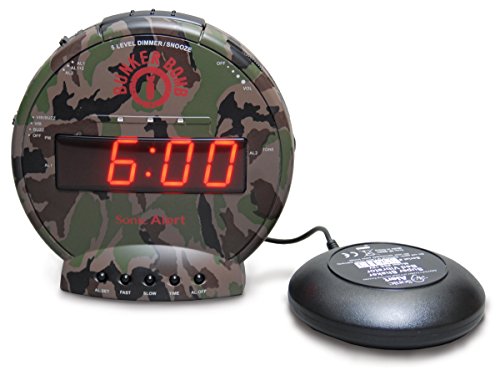 Sonic Bomb Camo Dual Alarm Clock with Bed Shaker |
9.1/10 | Buy |
| Best Budget |
 La Crosse Technology Buzz Vibrating Digital Alarm |
8.8/10 | Buy |
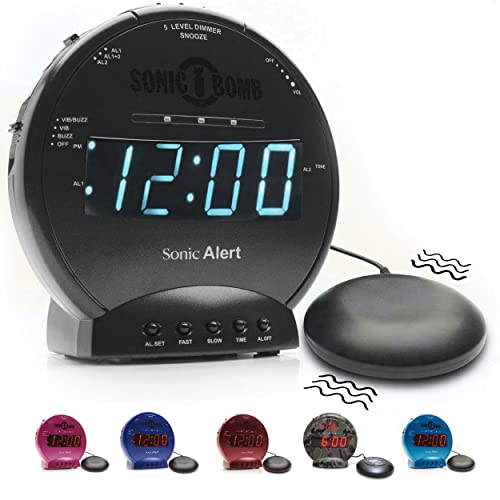 Sonic Alert Sonic Bomb Dual Alarm Clock with Bed |
8.0/10 | Buy |
Sonic Bomb Camo Dual Alarm Clock with Bed Shaker
Built specifically for profound sleepers and the hard of hearing, the Sonic Bomb Dual Alarm Clock pairs an intense 113dB siren with a powerful bed-shaking unit and pulsating red alert lights. It is a high-intensity, dependable wake-up solution for students, shift workers, and heavy sleepers who routinely sleep through standard smartphone alarms.
Pros
- Loud 113dB adjustable siren paired with an external bed shaker wakes even the heaviest sleepers
- Vibration-only mode allows deep sleepers to wake up without blaring noise disturbing roommates or partners
- Flexible customization options for both snooze intervals (1-30 mins) and alarm runtimes (1-59 mins)
- Flashing red LEDs deliver an extra sensory prompt for hard-of-hearing users and deep slumber
Cons
- Intense high-decibel buzzer and vigorous bed vibration may feel jarring for light-sensitive or gentle sleepers
- Lacks modern nightstand conveniences such as built-in USB charging ports or wireless phone pads
- Tethered cord connecting the bed shaker puck requires tidy cable routing to avoid nightstand tangles
La Crosse Technology Buzz Vibrating Digital Alarm
The La Crosse Technology Buzz 617-147 is an ultra-compact digital alarm clock featuring intense vibration alerts, audible beeps, and a dual-purpose protective cover that doubles as a sturdy silicone-based stand. It is a dependable choice for travelers, heavy sleepers, and minimalists looking for a portable, phone-free wake-up solution.
Pros
- Tactile vibration mode allows waking without loud audible noise or can combine with beeps for deep sleepers
- Protective cover prevents accidental button presses during transit and doubles as an angled desk stand
- Non-slip silicone base keeps the small timepiece anchored on nightstands and slick surfaces
- On-demand backlight automatically turns off quickly to preserve a completely dark sleeping environment
- Pocket-sized footprint takes up minimal nightstand space and adds virtually no weight to carry-on bags
Cons
- Compact display size is designed for close bedside viewing rather than reading from across a large room
- Backlight does not remain continuously lit for sleepers who prefer a constant nighttime clock display
- Lacks integrated phone-charging ports or FM radio capabilities found on larger stationary nightstand clocks
Sonic Alert Sonic Bomb Dual Alarm Clock with Bed
The Sonic Alert Sonic Bomb Dual Alarm Clock pairs a high-output 113 dB siren with a bed-shaking puck and flashing red lights to wake heavy sleepers. With dual alarms and customizable snooze intervals, it is a practical bedside solution for deep sleepers, students, and hard-of-hearing individuals.
Pros
- Reaches up to 113 dB with adjustable volume controls tailored for heavy sleepers and hard-of-hearing users
- Powerful bed shaker puck offers a tactile wake-up alternative without disturbing roommates when set to vibration-only
- Pulsing red alert lights provide unmistakable visual wake-up prompts in dark bedrooms
- Adjustable snooze time (1 to 30 minutes) and custom alarm duration (1 to 59 minutes)
- Dual alarm settings accommodate differing schedules for couples or varying morning routines
Cons
- Lacks integrated USB or wireless charging ports for bedside smartphones
- The intense 113 dB buzzer and flashing red lights can startle light-sleeping partners or pets in shared spaces
- Tethered bed shaker cable requires mindful cord routing between the nightstand and mattress

Strategies and Hardware Solutions for Heavy Sleepers
Solving the challenge of heavy sleeping requires understanding how the human nervous system transitions from restorative rest to alertness. When a sleeper enters deep slow-wave sleep, sensory gating dampens responsiveness to incoming auditory stimuli. Traditional alarm sounds fail because the brain filters out familiar repeating frequencies as background noise. Implementing a structured approach using multi-sensory alerting devices provides the physical and sensory disruption needed to overcome stubborn sleep inertia.
The Biology of Sleep Arousal and Morning Sleep Inertia
Sleep occurs in cycles comprising light sleep, deep slow-wave sleep, and rapid eye movement sleep. The arousal threshold is highest during stage three slow-wave sleep, which often dominates the early portions of the night and can linger into early morning hours for irregular sleepers. During this stage, brain wave activity slows down significantly, making auditory recognition far less sensitive. When an alarm triggers while someone is stuck in slow-wave sleep, awakening feels disorienting and physically exhausting.
Sleep inertia represents the temporary grogginess, cognitive impairment, and reduced motor dexterity experienced immediately after waking. For deep sleepers, this phase can last anywhere from several minutes to over an hour if not counteracted by effective waking stimuli. Mild tones from a smartphone screen do little to dissipate sleep inertia because they do not trigger a sufficient neural response. Rapid arousal requires targeting multiple sensory pathways simultaneously to engage the autonomic nervous system.
Understanding this biological baseline explains why simply turning up a phone volume slider rarely succeeds. The brain quickly adapts to familiar digital ringtones through sensory habituation. To consistently break deep sleep cycles, wake-up hardware must present unfamiliar, abrupt, and multi-modal sensory signals that the sensory cortex cannot passively ignore.
Multi-Sensory Alerting Systems
Relying on a single sensory channel creates a single point of failure for anyone with high wake-up thresholds. Multi-sensory alarm systems combine high-output acoustic alerts, physical mattress vibrations, and intense visual pulses to stimulate the senses simultaneously. This redundant approach ensures that if the brain tunes out loud audio, the physical movement of the bed will step in to break the sleep cycle. Devices that integrate these three modalities target hearing, touch, and sight in one coordinated event.
Hardware such as the Sonic Alert Sonic Bomb platform exemplifies this multi-layered approach by coupling an extra-loud siren with a mechanical shaker unit and flashing red LEDs. Sleepers can select distinct operating modes, including vibration only, audible buzz only, or a combined alert. Combining vibration with audio creates a sensory surprise that prevents the central nervous system from habituating to one stimulus. This flexibility is particularly helpful for shared bedrooms where loud sound may disturb family members while localized tactile vibration acts directly on the sleeper.
When selecting bedside equipment, evaluating general bedside digital alarm clocks against specialized heavy-sleeper units reveals clear hardware differences. Standard bedside clocks emphasize quiet nightstand utility and modest 60-decibel beeps. Heavy-sleeper units, in contrast, incorporate heavy-duty transducer coils, external vibration ports, and high-intensity alert circuits specifically built to cut through deep sleep.
Acoustic Decibel Dynamics and Auditory Penetration
Acoustic volume is measured logarithmically in decibels, meaning an increase of 10 decibels represents a tenfold increase in sound intensity. Standard bedroom clocks generally peak between 60 and 70 decibels, which approximates normal conversational speech. For a deep sleeper, this sound level is often incorporated into ongoing dreams rather than provoking an awakening response. Specialized alarm models push acoustic output substantially higher to breach stubborn sensory thresholds.
Units like the Sonic Bomb Dual Alarm Clock produce acoustic pressure up to 113 decibels, delivering an intense sonic shockwave that demands immediate attention. Sounds above 85 decibels carry potential risk for hearing fatigue with prolonged exposure, so users should position high-output clocks at a sensible distance across the nightstand rather than right against the ear. The Sonic Alert design allows users to dial in both volume and tone pitch to target frequencies that cut through personal hearing ranges. Adjusting tone frequency helps find the specific pitch that pierces mental fog without distortion.
Alarm duration also plays a critical role in auditory penetration. The Sonic Bomb allows owners to configure alarm duration from 1 to 59 minutes, preventing the clock from shutting off prematurely before the sleeper fully stands up. Cheaper digital clocks often time out after two or three minutes, leaving a groggy user to fall back into deep sleep. Extending the active alarm duration forces active engagement to manually disarm the system.
Tactile Awakening with Bed-Shaker Vibration Pucks
Tactile alerting bypasses the auditory system completely, making it ideal for deep sleepers and individuals with hearing challenges. A bed shaker consists of a motorized puck housing an unbalanced internal counterweight that spins rapidly to generate vigorous physical vibrations. Placed under a pillow, between mattress layers, or under a fitted sheet, the puck transmits rapid physical pulses directly to the sleeper body. This tactile motion stimulates mechanoreceptors in the skin and musculoskeletal system, triggering a direct arousal reflex.
The Sonic Alert Super Shaker connects via a dedicated wired auxiliary jack directly to the master alarm clock base. Because it receives direct electrical drive from the main housing, the vibration does not suffer from latency or wireless signal drops. Placing the puck beneath a dense mattress pad diffuses the shaking across the torso, while placing it under a pillow produces an immediate, sharp cranial vibration. Users can select vibration-only mode to awaken reliably without emitting room-filling noise that wakes up an entire household.
Compact alternatives like the La Crosse Technology 617-147 Buzz Digital Alarm incorporate portable vibration mechanisms into a streamlined travel profile. This unit features intense vibrations alongside beeping alerts and a combined mode, all supported by a durable casing and silicone base. The silicone stabilization prevents the clock from sliding across hard nightstands during intense vibration cycles. Portable tactile shakers ensure that deep sleepers maintain dependable waking routines whether at home or traveling for work.
Visual Cues and Red Flashing Strobe Alerts
Light stimulates the optic nerve and suppresses the nocturnal hormone melatonin even when eyelids remain closed during deep sleep. While gradual dawn simulation works well for general wakefulness, deep sleepers often need rapid, stroboscopic light to snap out of slow-wave sleep. Flashing visual alerts create sharp contrasts against dark bedroom walls, alerting the brain to an urgent environmental change. This visual stimulus acts as a third line of defense alongside sound and vibration.
Models such as the Sonic Alert Sonic Bomb integrate high-visibility red flashing alert lights directly into the front fascia of the clock. When the alarm triggers, these LEDs flash rhythmically in tandem with the siren and the bed shaker. Red light wavelengths penetrate through closed eyelids without causing the harsh retinal glare that cooler blue wavelengths produce. This provides a clear, unmistakable visual warning that illuminates the nightstand without disrupting daytime color perception.
For individuals who travel or maintain minimalist bedroom setups, having quick backlight access is equally valuable. The La Crosse Technology 617-147 Buzz features a one-touch backlight that illuminates long enough for a quick glance before shutting off automatically. This momentary illumination keeps the bedroom dark during the night while providing clear time visibility when touched, preventing unwanted ambient light pollution during restorative sleep cycles.
Interface Ergonomics and Foolproof Snooze Management
A primary trap for deep sleepers is the subconscious swat at the snooze button, which can disarm alarms before conscious awareness returns. Clocks with poor ergonomic layouts place small snooze buttons right beside permanent off switches, making accidental cancellations frequent. Heavy-sleeper hardware solves this with oversized, dedicated snooze controls that require deliberate action to manipulate. Intuitive layouts ensure that fumbling in the dark does not deactivate the morning alert schedule.
Customizable snooze timing is another critical safeguard against falling back into deep sleep. On both the camouflage and black editions of the Sonic Bomb Dual Alarm Clock, snooze duration can be calibrated anywhere between 1 and 30 minutes. Setting a tight snooze window of two or three minutes prevents the brain from slipping back into stage three slow-wave sleep. In contrast, standard nine-minute fixed snooze intervals often allow sleep inertia to reset, making the second awakening even harder than the first.
Physical controls also offer distinct tactile feedback compared to flat touchscreen smartphone displays. Mechanical rocker switches, rotary dials, and prominent push-buttons allow users to verify alarm arming by feel alone. Knowing that an alarm is armed without navigating phone menus or staring at bright screens supports healthy evening sleep habits. Modern setups that combine standalone timepieces with dedicated clocks with integrated charging pads keep communication devices off the nightstand, reducing digital notifications that fragment sleep.
Power Architecture and Outage Protection
Power cuts and voltage drops represent major hazards for anyone who cannot afford to oversleep on critical workdays. When residential electrical grids drop momentarily during storms, clocks without proper power management reset their internal clocks to midnight, completely wiping active alarms. Reliable wake-up hardware uses hybrid power architectures that isolate the internal quartz timekeeper from external line fluctuations. Ensuring constant power continuity is a core requirement for heavy-sleeper alarm systems.
Both Sonic Bomb models incorporate dedicated battery backup systems alongside primary alternating-current wall power. The auxiliary battery compartment maintains the clock time and saved alarm preferences when the main power cable is disconnected. While backup cells generally preserve memory rather than driving full-blast 113-decibel sirens indefinitely, they guarantee that the clock resumes normal operational schedules the instant mains power returns. Users should inspect and replace backup alkaline cells annually to prevent low-voltage memory loss.
Portable designs like the La Crosse Technology Buzz unit use primary battery power to ensure constant operational readiness anywhere. Because the device does not rely on a constant wall outlet, it remains unaffected by electrical grid fluctuations or awkward hotel socket placements. Simple setup and battery-driven portability make it a resilient secondary backup for high-stakes mornings where missing an alarm is not an option.
Dual-Alarm Routines and Progressive Wake-Up Escalation
Setting a single alarm point leaves no margin for error when dealing with intense morning sleep inertia. Dual-alarm functionality allows sleepers to establish a staggered awakening routine that progressively rouses the nervous system over a ten-to-fifteen-minute window. The first alarm can be configured to use gentle vibration or moderate volume to initiate the transition out of slow-wave sleep. The second alarm, scheduled shortly afterward, engages full siren volume and high-intensity shaking if the sleeper fails to get out of bed.
The dual-alarm architecture built into the Sonic Bomb platform lets users program two independent wake-up schedules with unique settings. This capability is equally beneficial for couples sharing a room on staggered morning schedules, allowing one person to wake via the bed shaker without triggering the loud siren. Independent controls for each alarm profile eliminate the hassle of reprogramming times every evening, reducing user error and ensuring consistent daily execution.
Coupling progressive alarm scheduling with dedicated hardware creates a failsafe structure. Sleepers can position the secondary alarm unit across the bedroom, requiring physical locomotion to turn off the alert. Standing up and walking across the floor engages major muscle groups and elevates heart rate, accelerating the clearance of adenosine and dispersing grogginess far faster than remaining in bed.
Nightstand Ergonomics and Practical Bedroom Adjustments
Even the most powerful hardware works best when supported by thoughtful nightstand placement and bedroom organization. Positioning a loud alarm clock immediately beside the pillow invites groggy arm flailing that knocks over water glasses or silences alerts prematurely. Placing the clock on a dresser or shelf across the room prevents unconscious shutoffs and forces the sleeper out of bed. Cord management is also essential when using external accessories like the Sonic Alert bed shaker puck.
Routing the shaker puck cable beneath the mattress prevents tangling during restless sleep while keeping the cord away from foot traffic. For clocks placed on smooth nightstands, rubberized feet or weighted silicone bases, such as the one found on the La Crosse Technology 617-147 Buzz, provide critical friction against vibrations. Without a non-slip base, aggressive internal vibration motors can cause lightweight clocks to wander across nightstand surfaces and fall to the floor.
Combining multi-sensory alerting hardware with consistent sleep timing, evening screen reductions, and morning daylight exposure provides a complete answer for how to awaken reliably. High-decibel audio, powerful mechanical bed shakers, and flashing visual indicators provide the sensory force necessary to break slow-wave sleep. Investing in durable, specialized timekeeping hardware ensures you take control of your mornings and eliminate the dread of oversleeping.
About the author
Jeremy Klein is an experienced sleep-product tester with a strong focus on testing methodology, data collection, and real-world product performance. His expertise includes evaluating sleep essentials and wake-up devices through structured testing and practical consumer-focused criteria.