
How to Set Elmo Alarm Clock: Step-by-Step Setup Guide for 2026
Learn how to set elmo alarm clock and kids sleep trainers with our October 2026 guide to time settings, visual wake cues, and child locks.
 By McKenzie Dillon
Updated October 6, 2026
By McKenzie Dillon
Updated October 6, 2026

Early morning wakeups from energetic toddlers can disrupt the entire household before dawn. Many parents introduce character-themed sleep trainers to provide young children with an intuitive visual cue that separates nighttime rest from acceptable morning rising times. Learning how to set elmo alarm clock models correctly ensures that programmed wake phrases, nightlights, and visual indicators align with your child’s sleep schedule rather than sounding unexpectedly in the middle of the night.
While these character devices offer friendly encouragement, their control interfaces often present unique challenges with hidden buttons and dual-purpose toggles. Taking time to map the rear control panel, set accurate twelve-hour time parameters, and test the wake sequence provides dependable morning routines. Parents seeking dedicated lighting and sound options often compare character models with modern kids ok to wake alarm clocks to find the right balance of durability, intuitive controls, and sleep training efficacy.
| Award | Product | ACR Score About ACR ScoreThe ACR Score is our own rating from 0 to 10, based on performance, design and build, ease of use, and value. It reflects independent research and is never influenced by manufacturers, retailers, or affiliate commissions. Learn more › | |
|---|---|---|---|
| Best Overall |
MooLarm Ok to Wake Sleep Trainer Toddler Alarm
|
8.9/10 | Buy |
| Best Budget |
 Plumeet Battery-Operated Digital Alarm Clock
|
8.4/10 | Buy |
| Best Premium |
 MOMILLA 2.8" Visual Timer Alarm Clock
|
8.3/10 | Buy |
 ANNNGUL Kids Ok to Wake Clock
|
8.1/10 | Buy | |
 LittleHippo Mella Kids Digital Alarm Clock
|
8.1/10 | Buy | |
| Best Value |
 ANALOI Kids Ok to Wake Clock
|
8.0/10 | Buy |
MooLarm Ok to Wake Sleep Trainer Toddler Alarm
The MooLarm Sleep Training Alarm Clock uses clear sun, moon, and color cues alongside an integrated 17-sound noise machine to help toddlers build healthy sleep schedules. It is a practical bedside tool for parents seeking an effective way to teach early-rising children when to stay in bed and when it is okay to wake up.
Pros
- Clear sun and moon visual indicators teach early risers when to stay in bed without needing to read time digits
- Versatile 17-sound audio library eliminates the clutter of having a separate nursery sound machine
- Convenient independent nap timer prevents accidental resets of the daily morning wake schedule
- Four-level dimming with automatic nighttime reduction helps prevent excess bedside glare during sleep
Cons
- Stepped 4-level dimmer does not offer continuous stepless 0 to 100 percent brightness tuning
- Visual coaching cues may require consistent parental reinforcement before young toddlers follow them reliably
- Lightweight 0.7-pound build can be easily tipped over or displaced by curious children if kept within arm's reach
Plumeet Battery-Operated Digital Alarm Clock
The Plumeet Battery-Operated Digital Alarm Clock features a clear 3-inch LCD screen, a shock-absorbing silicone sleeve, and an ascending crescendo beep. It provides an intuitive, cord-free bedside solution for kids, students, and travelers seeking dependable wake-ups without nightstand clutter.
Pros
- Cord-free battery power allows flexible placement anywhere without hunting for wall outlets
- Protective silicone cover adds durability against drops, making it well suited for kids and travel
- Clear LCD layout presents time, date, and alarm status on one readable screen
- Ascending 60-second alarm beep provides an effective wake-up sequence without an abrupt jolt
- Oversized top snooze button makes pausing the alarm easy during groggy mornings
Cons
- Requires 2 AA batteries that are not included in the package
- Does not include an AC wall adapter or USB power connection option
- Lacks advanced scheduling features such as dual alarms or weekday-only modes
MOMILLA 2.8" Visual Timer Alarm Clock
Designed for bedrooms and study spaces, this compact unit combines a four-alarm clock with a 99-minute visual countdown timer and a white noise machine. Its customizable 2.8-inch display also tracks indoor temperature, making it a practical time-management aid for kids.
Pros
- Features a visual countdown timer up to 99 minutes
- Supports up to four distinct programmable alarms
- Ten adjustable screen brightness levels
- Includes ten soothing sleep sounds and chimes
- Retains time settings during power disconnects
Cons
- Requires a continuous power cord connection to run
- Compact 2.8-inch display may be hard to read from across larger rooms
ANNNGUL Kids Ok to Wake Clock
The ANNNGUL Kids Alarm Clock is a compact bedside sleep trainer that uses clear red and green light indicators to teach toddlers when to stay in bed and when it is okay to get up. Featuring 10 night light colors, 5 brightness levels, and accessible front-facing buttons, it is well suited for parents seeking an intuitive morning routine helper.
Pros
- Red and green visual wake indicators help toddlers understand sleep boundaries before they can read numbers
- Front-mounted controls eliminate the frustration of navigating hidden buttons on the bottom of the clock
- 10 vibrant night light color options and 5 brightness settings allow customized bedtime lighting
- Comes complete with both the required power cable and AC wall adapter in the box
- Settings preservation prevents the need to reprogram routines after brief power disconnections
Cons
- Must remain plugged into an electrical outlet to function and cannot operate cordlessly on battery power alone
- Brightness adjustment uses 5 preset steps rather than a continuous 0-to-100 percent stepless dial
- Lacks separate weekday and weekend dual-alarm scheduling options
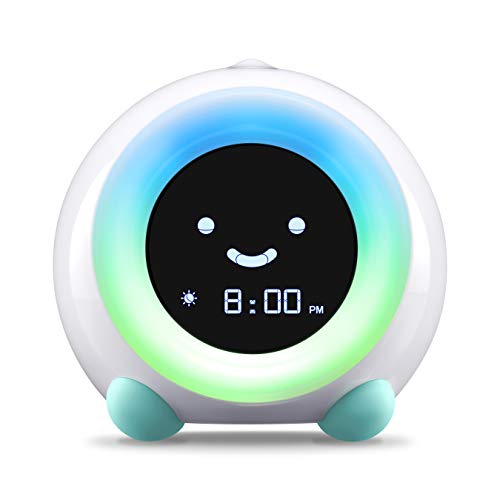
LittleHippo Mella Kids Digital Alarm Clock
The LittleHippo Mella is an all-in-one children's sleep trainer and bedside alarm clock that uses intuitive color cues and facial expressions to guide morning routines. Equipped with five night light colors, three sleep sounds, and a silent countdown timer, it is an excellent tool for parents and toddlers seeking better sleep habits.
Pros
- Clear visual color indicators make it simple for early risers to understand wake times before learning to read clocks
- All-in-one design replaces separate night lights, sound machines, and traditional morning alarms
- Durable construction utilizing child-safe ABS and silicone materials with extensive safety certifications
- Silent countdown timer option allows parents to manage screen time, reading sessions, or naps without abrupt noise
Cons
- Audio selection is limited to three built-in sleep sounds and three wake-up tones
- Lacks companion smartphone app connectivity, requiring all schedule adjustments to be configured directly on the device
- Toddlers may require consistent parental coaching before fully adopting the color-cue boundaries
ANALOI Kids Ok to Wake Clock
The ANALOI Kids Sleep Training Alarm Clock combines an intuitive red-and-green visual wake system with gradual ascending tones and dual alarm scheduling to build consistent morning routines. Wrapped in a drop-resistant silicone shell with an integrated sound machine and night light, it is a practical choice for parents transitioning toddlers into independent sleeping habits.
Pros
- Intuitive red-to-green light and facial expression cues help toddlers identify wake-up time without reading numbers
- Dual independent alarms provide separate scheduling for weekdays and weekends
- Shock-absorbing silicone build paired with hidden buttons and a child lock prevents accidental setting changes
- Built-in sound machine offers 7 soothing audio tracks and a flexible 15-to-60 minute sleep timer
Cons
- Display and night light brightness is limited to 3 preset levels rather than a continuous stepless dimming dial
- USB-powered design requires an available USB outlet or standard USB wall adapter
- Compact 4.4-inch display size is optimized for close bedside viewing rather than large rooms
Step-by-Step Programming and Optimization Guide for Children’s Alarm Clocks
Programming a children’s bedside clock requires attention to subtle interface details that differ significantly from standard digital timepieces. Character clocks like Elmo sleep trainers combine animated voice prompts, internal lighting effects, and scheduled waking sequences into a compact bedside footprint. Understanding how each programming mode interacts with visual cues and acoustic alerts allows parents to establish consistent sleep expectations. This comprehensive guide walks through the physical controls, programming sequences, and maintenance steps needed to keep your child’s sleep trainer functioning accurately every morning.
Locating the Control Interface and Battery Compartment
Most children’s novelty alarm clocks position their primary setup controls behind protective panels or beneath the base of the unit. This design prevents curious toddlers from adjusting programmed schedules or resetting clock digits during unsupervised moments in bed. On character units like Elmo talking clocks, you will typically find a small compartment secured with a phillips-head screw or a tight snap latch. Opening this compartment reveals discrete buttons labeled with functions such as Time Set, Alarm Set, Mode, and Up or Down adjustment arrows.
Inspecting this rear or bottom interface before attempting to program the clock saves time and prevents accidental mode resets. Some units combine multi-function buttons where holding a toggle down for three seconds enters setup mode, while a quick tap cycles through display brightness. In addition to primary programming keys, look for mechanical slide switches dedicated to volume control, demonstration mode, and alarm activation. Ensuring that the demonstration switch is moved to the active operational position is essential before proceeding with time programming.
Setting the Master Clock Time and 12-Hour AM/PM Configuration
Establishing the correct current time forms the foundation of all scheduled wake-up routines and visual sleep cues. Begin by pressing and holding the Time Set button until the hour digits begin blinking on the liquid crystal display. Use the Up or Down buttons to scroll to the current hour, paying close attention to the small PM indicator icon on the screen. Confusing morning and evening hours is the most common reason a child’s alarm sounds at dusk or fails to trigger at dawn.
Once the hour digits are correct, press the Mode or Time Set button once to shift the blinking cursor over to the minute values. Adjust the minutes using the directional arrows until the display matches your local time standard. Press the Time Set button a final time to lock in the clock memory and stop the flashing display. Clocks that feature twelve-hour and twenty-four-hour formats typically toggle between these display options with a single tap of an auxiliary button, so verify that the standard civilian format remains active.
Configuring Wake Times, Character Voice Prompts, and Sound Options
Setting the wake-up schedule requires entering the dedicated alarm configuration mode using the Alarm Set button. Hold this button down until the programmed alarm time flashes on the digital readout. Adjust the target rising hour and minute using the same directional buttons used for master time setup, making sure the morning AM indicator remains visible. If your clock includes character phrases, pressing the audio selector allows you to preview the cheerful greeting your child will hear when morning arrives.
Audio volume requires careful calibration to ensure it rouses your child without creating an abrupt startle reflex. Models such as the Plumeet digital alarm clock kids with snooze feature gradual crescendo beeping that ascends gently over sixty seconds. On character-based clocks, mechanical slide switches on the base usually govern low, medium, or high sound pressure outputs. Select a volume level that penetrates normal bedroom ambient noise while remaining comfortable from a typical nightstand listening distance.
Programming Visual Ok-to-Wake Color Sequences and Light Timers
Visual signaling serves as the primary mechanism for sleep training toddlers who have not yet learned to read numerical clock faces. In standard configurations, the clock illuminates with a calming bedtime color, such as red or soft amber, to indicate that the child should stay in bed. When the preprogrammed morning wake hour arrives, the internal light shifts to a vibrant green or displays a smiling sun symbol. This clear optical shift gives toddlers an unambiguous signal that getting out of bed is permitted.
Dedicated sleep trainers like the LittleHippo Mella kids alarm clock enhance this system by incorporating transitional yellow light sequences half an hour before wake time. This intermediate cue tells children that morning is approaching and that quiet play in bed is appropriate. To configure these light transitions, access the light timer menu and define both the bedtime illumination schedule and the morning activation trigger. Some units allow parents to keep the visual green light illuminated for thirty to sixty minutes after the wake alarm sounds to accommodate flexible rising habits.
Display brightness also plays an important physiological role in bedroom sleep hygiene. Excessively bright nightlights can disrupt natural melatonin production and make evening settle times difficult for toddlers. Clocks like the ANNNGUL kids alarm clock provide multiple adjustable dimmer settings so parents can dial down nighttime illumination while preserving daytime legibility. Position the clock across the bedroom or adjust the nightlight brightness so the display provides comfort without casting an intense glare across your child’s bed.
Establishing Nap Timers Without Altering Overnight Routines
Afternoon naps require a separate timing protocol so parents do not have to reprogram primary overnight alarm settings every day. Advanced children’s clocks often include a dedicated nap button that activates a fast countdown timer with presets ranging from thirty to one hundred twenty minutes. Units like the MooLarm sun moon alarm clock let caregivers trigger a ninety-minute nap countdown with a few quick button presses. When the countdown concludes, the clock executes its standard wake sequence without changing the next morning’s schedule.
If your Elmo clock lacks an independent nap timer feature, you must manually adjust the primary alarm time before the nap and reset it again before bedtime. To prevent missed morning alarms, many families use secondary bedside timers for daytime rest. Placing versatile bedside alarm clocks for bedrooms nearby can provide independent timers for daytime naps while leaving the primary character trainer untouched. This strategy prevents scheduling oversights and ensures that consistent bedtime cues remain reliable night after night.
Securing Settings with Physical and Digital Child Locks
Toddlers naturally explore buttons, knobs, and switches within reach of their mattress or nightstand surface. Without an effective lockout system, an inquisitive child can easily disable their morning alarm or shift the clock time by several hours. Many modern children’s timepieces, including the ANALOI alarm clock for kids, incorporate hidden buttons and dedicated child-lock toggles to prevent accidental changes. Engaging this lock disables front-panel responsiveness until a specific key combination or rear slide switch is released by an adult.
On Elmo clocks where a hardware lock switch is absent, physical placement becomes your most effective defense against tampering. Position the clock on a high dresser or wall shelf where the visual display remains clearly visible from the bed, but the rear control buttons remain out of reach. If cord routing allows, place the AC adapter behind heavy furniture so little hands cannot pull the power plug from the wall socket. Keeping control surfaces inaccessible preserves your programmed schedules and prevents frustrating early morning surprises.
Managing Power Delivery, Battery Backup, and Memory Protection
Power architecture directly influences whether your programmed alarm will sound reliably following a residential electrical interruption. Many novelty clocks operate on primary alkaline batteries, such as double-A or triple-A cells, while others rely on continuous mains electricity through an included wall adapter. Battery-powered models offer portable convenience and complete immunity from wall socket power cuts. For example, the Plumeet digital alarm clock runs on two double-A batteries for extended periods without requiring any bedside cords.
Clocks that plug into mains electrical outlets often feature a secondary backup battery compartment to protect internal memory. It is vital to understand that memory-retention batteries, like standard button cells, preserve your clock and alarm settings during an outage but rarely illuminate the screen or sound the speaker. If a storm causes a temporary power flicker, the internal quartz crystal continues counting seconds silently. When line voltage returns, the clock resumes standard operation without forcing you to repeat the entire programming sequence.
Diagnosing Common Setting Errors and Wake-Up Malfunctions
When a children’s alarm clock fails to activate as expected, the issue usually stems from one of several common configuration mistakes. The most frequent culprit is an incorrect AM or PM assignment on either the master clock or the alarm threshold. Check the digital screen carefully to ensure that the small PM indicator dot is extinguished for morning wake times. If the indicator is illuminated, the clock will remain silent at seven in the morning and trigger unexpectedly at seven in the evening.
A second common issue involves the physical alarm enable toggle or mode selector switch. Setting the alarm time in memory does not always mean the alert is active; many units require sliding a side switch to On or pressing a dedicated bell icon button. Verify that the alarm indicator symbol appears persistently on the main screen display. If your clock includes character voice clips that sound distorted or cut off prematurely, low battery voltage is almost always responsible. Replacing aging alkaline cells restores crisp audio output and consistent lighting effects.
Button unresponsiveness can also occur if the clock enters a software freeze after a static discharge or erratic battery connection. To resolve this condition, disconnect the AC power cord and remove all batteries from the housing for sixty seconds. Press several buttons while the power is disconnected to fully drain residual electrical charge from internal capacitors. Reinstall fresh batteries and reconfigure your time settings from scratch. This complete power cycle clears internal logic errors and returns the microprocessor to normal operational responsiveness.
Choosing Advanced Features for Transitioning Sleepers
As children grow older, their sleep training requirements often expand beyond basic novelty character phrases. Advanced sleep training clocks integrate customizable sound machines, multiple independent alarm schedules, and visual timers. The MOMILLA kids alarm clock, for instance, provides four programmable alarms alongside a visual countdown timer and soothing white noise sound options. These comprehensive features help older toddlers transition smoothly from play time to bedtime routines using structured audio and visual milestones.
Parents of school-aged children may also explore gradual light simulation to promote pleasant, natural awakenings on dark winter mornings. Incorporating gentle illumination that mimics dawn can support healthy morning hormone regulation and ease morning fatigue. Exploring specialized sunrise wake up clocks offers valuable insight into how light intensity curves assist deeper sleepers. Evaluating these progressive waking options helps families establish lasting healthy sleep hygiene habits that endure well beyond the toddler years.
Mastering the programming interface of your child’s alarm clock transforms a potentially frustrating bedside gadget into an effective sleep training tool. Taking time to verify twelve-hour markers, calibrate comfortable volume levels, and position the unit out of reach ensures dependable performance every morning. Whether using a beloved character like Elmo or an advanced multi-color sleep trainer, consistent routines and clear visual expectations help toddlers develop healthy circadian habits. Regularly inspecting battery levels and reviewing settings will keep your household mornings running smoothly and peacefully for years to come.
About the author
McKenzie Dillon is a Certified Sleep Science Coach and experienced sleep-product editor who has personally tested dozens of sleep products. Her expertise bridges sleep technology, product evaluation, and practical guidance for creating more comfortable sleep and wake-up routines.