
How to Set an Analog Alarm Clock: A Practical Guide for 2026
How To Set An Analog Alarm Clock with precision using our step-by-step bedside guide, updated for October 2026 to ensure reliable morning wakeups.
 By McKenzie Dillon
Updated October 6, 2026
By McKenzie Dillon
Updated October 6, 2026
Waking up to the sudden chime of a smartphone notification can instantly spike morning stress and disrupt restorative rest. Many sleepers choose to leave mobile screens outside the bedroom, returning to dedicated bedside timepieces for peaceful, distraction-free mornings. Understanding how to set an analog alarm clock gives you reliable control over your daily schedule without depending on touchscreens, unstable wall adapters, or unexpected operating system reboots. A classic mechanical dial offers simple physical controls, but setting it accurately requires knowing how the internal gears and alarm indicators interact. Exploring reliable bedroom alarm clocks reveals how tactile dials and silent sweep quartz movements eliminate annoying nighttime ticking while preserving pitch-black sleeping conditions.
Unlike digital interfaces with menu screens and touch sensors, traditional clocks rely on dedicated physical dials located on the rear casing. Setting these dials properly ensures the chime activates at the exact minute you intend rather than startling you hours ahead of schedule. Modern analog timepieces combine silent quartz movements with convenient features like ascending volume alarms and top-mounted snooze bars. Learning the simple mechanical principles behind dial rotation, gear slack, and the twelve-hour alarm cycle prevents common wake-up failures. With just a few basic adjustments, you can transform a simple battery-operated clock into an ultra-dependable morning companion that keeps your sleep sanctuary calm and focused.
| Award | Product | ACR Score About ACR ScoreThe ACR Score is our own rating from 0 to 10, based on performance, design and build, ease of use, and value. It reflects independent research and is never influenced by manufacturers, retailers, or affiliate commissions. Learn more › | |
|---|---|---|---|
| Best Overall |
Peakeep Silent Analog Alarm Clock
|
8.6/10 | Buy |
| Best Budget |
 Peakeep Loud Twin Bell Alarm Clock for Heavy
|
8.4/10 | Buy |
| Best Value |
 FAMICOZY 4.5-Inch Silent Analog Bedside Alarm
|
8.3/10 | Buy |
 FAMICOZY 4.5" Silent Analog Alarm Clock
|
8.1/10 | Buy | |
| Best Premium |
 Tinload 5.5" Silent Analog Bedside Alarm Clock
|
8.0/10 | Buy |
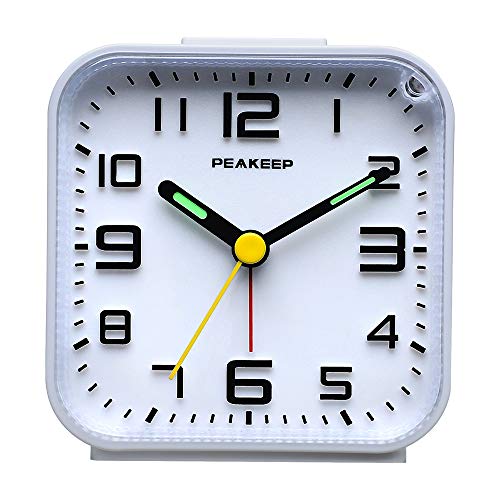
Peakeep Silent Analog Alarm Clock
The Peakeep Silent Analog Alarm Clock offers quiet quartz timekeeping with prominent 3D dial numbers, a gentle-to-hurried 4-stage ascending beep, and completely glow-free nights with on-demand lighting. Powered by a single AA battery, it is an ideal non-disruptive bedside companion for light-sensitive sleepers, bedroom minimalists, and travelers seeking phone-free mornings.
Pros
- Silent sweep quartz movement eliminates ticking noises that can disrupt quiet bedrooms
- Raised 3D numerals deliver sharp, distinct legibility across the analog dial face
- Four-stage ascending beep alarm ramps up smoothly rather than jarring sleepers abruptly
- Cordless 1 AA battery design ensures the alarm sounds reliably regardless of home power outages
- Large top button provides intuitive, half-asleep access to the 5-minute snooze and manual light
Cons
- Lacks continuous night illumination, requiring a manual press of the top button to check the time in darkness
- Analog 12-hour design lacks weekday-versus-weekend scheduling and must be switched on and off manually each day
- Time and alarm adjustments rely on manual rear rotary dials rather than digital exact-minute push-button precision
Peakeep Loud Twin Bell Alarm Clock for Heavy
Featuring an authentic twin-bell design with a physical striking hammer, this battery-operated Peakeep clock provides an extra-loud ring built to wake heavy sleepers without smartphone distractions. Its silent quartz sweep movement prevents distracting ticking noises, while a rear on-demand light button offers quick time checks without continuous bedroom glare.
Pros
- Physical twin-bell striking hammer delivers a very loud ring well suited for heavy sleepers and teenagers
- Quartz sweep movement operates completely silently without rhythmic ticking distractions
- On-demand backlight keeps the bedroom dark at night by lighting the face only when pressed
- Solid metal casing and front face provide durable craftsmanship and a distinctive jewel blue appearance
- Operates independently of wall outlets using a single AA battery for reliable bedside placement
Cons
- Lacks an electronic snooze button, requiring the user to flip the rear switch to silence the bell
- Analog fourth-hand alarm dial requires manual alignment rather than exact digital minute programming
- Requires one AA battery that is not included in the package
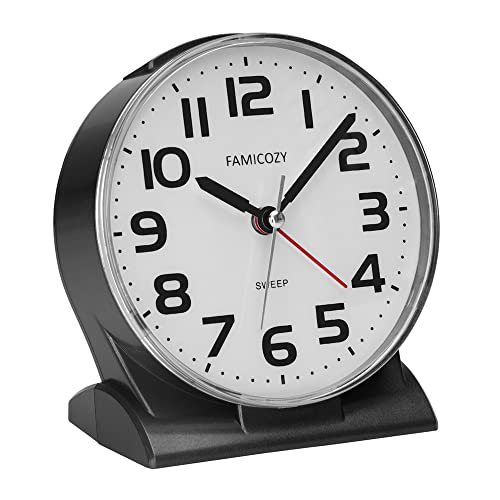
FAMICOZY 4.5-Inch Silent Analog Bedside Alarm
The FAMICOZY 4.5-inch analog bedside alarm clock features a silent sweep second hand, high-contrast bold numerals, and a gentle crescendo wake-up alarm powered by two AA batteries. It is an ideal, hassle-free bedside timepiece for seniors, light sleepers, and digital detoxers seeking simple knob-based controls without glowing screen glare or confusing menus.
Pros
- Silent sweep second hand eliminates repetitive ticking noises that disturb light-sensitive sleepers
- Large, high-contrast numerals and an angled face ensure clear visibility for seniors and visually impaired users
- Simple physical interface with rear adjustment knobs and a distinct side on-off toggle requires no digital programming
- Top-mounted dual snooze and soft backlight button activates an eye-friendly 5-second illumination in pitch darkness
- Cordless design runs on standard AA batteries, making nightstand placement clean and independent of wall outlets
Cons
- Requires manual time and alarm setting via rear knobs without automatic network or atomic synchronization
- Dial illumination is strictly on-demand for five seconds and does not provide continuous nighttime visibility
- Runs exclusively on two AA batteries that are not included in the package
FAMICOZY 4.5" Silent Analog Alarm Clock
The FAMICOZY 4.5-inch analog bedside clock provides silent quartz operation, an ascending crescendo alarm, and high-contrast sans-serif numbers. It is an ideal, cord-free choice for seniors, light sleepers sensitive to ticking, and anyone seeking a simple phone-free morning routine.
Pros
- Silent sweep second hand produces no distracting ticking noise in a quiet bedroom.
- Oversized black numbers on a white face provide high contrast for seniors and visually impaired individuals.
- Easy-to-use physical controls include two back knobs and a dedicated side on/off toggle.
- Crescendo alarm profile gradually increases in loudness for a gentler wake-up experience.
- Cord-free battery operation prevents wake-up failures during electrical power outages.
Cons
- Requires two AA batteries that are not included in the package.
- Backlight only illuminates for 5 seconds when pressed, offering no continuous nighttime dial illumination.
- Analog alarm set hands lack the exact minute-by-minute scheduling precision of digital clocks.
Tinload 5.5" Silent Analog Bedside Alarm Clock
The Tinload 5.5-inch analog alarm clock features a completely silent quartz sweep movement, an oversized high-contrast dial, and a gentle crescendo wake-up alarm. It is an ideal, cord-free bedside choice for seniors, light-sensitive sleepers, and anyone seeking dependable timekeeping without nighttime glare.
Pros
- Completely silent operation eliminates distracting tick-tock sounds in quiet bedrooms
- Large 5.5-inch dial with bold black numerals provides high-contrast legibility for seniors
- Ascending crescendo alarm wakes sleepers gradually instead of triggering an abrupt morning scare
- On-demand illumination keeps the bedroom dark until you actively press the top light button
- Cord-free AA battery operation ensures reliable timekeeping through overnight power outages
Cons
- Requires one standard AA battery that is not included in the package
- Dial backlight requires holding down the top button and does not stay illuminated continuously
- Analog 12-hour setting dial lacks weekday-only scheduling or dual independent alarm presets
Mastering the Mechanics and Dial Setup of Analog Alarm Clocks
Analog alarm clocks deliver reliable timekeeping that keeps screens and distracting blue light away from your bedside table. Learning how to set an analog alarm clock accurately allows you to enjoy dependable wake-up calls without dealing with software glitches, dead phone batteries, or confusing multi-button menus. While analog timepieces lack digital microprocessors, their internal gears and dial pins require deliberate handling to ensure the chime triggers at the exact minute intended.
Understanding the Dial Anatomy and Rear Control Layout
Setting an analog clock properly begins with recognizing the distinct hands positioned across the dial face. A standard quartz dial features a long minute hand, a shorter hour hand, and a continuous sweep second hand that glides silently without distracting clicks. Alongside these three hands sits the alarm indicator hand, which is often shorter, thinner, or finished in a distinct color to prevent confusion. Clocks like the Peakeep 3D Numbers No Tick-Tock Analog Alarm Clock and the FAMICOZY 4.5″ No Ticking Analog Alarm Clock,Silent use high-contrast dials with large Arabic numerals, making it easy to identify where the alarm hand points relative to the hour markers.
Inspecting the rear housing reveals dedicated tactile controls that manage these hands without requiring complex menu navigation. You will typically find two separate rotary knobs, a battery compartment, and an alarm toggle switch. One rotary knob controls the current time, while the other knob independently rotates the alarm indicator hand. Manufacturers stamp small icons directly into the casing, such as a clock face for the main time and a bell symbol for the wake-up alarm. Models like the Tinload 5.5″ Large No Ticking Analog Alarm place these knobs within easy reach, allowing quick tactile adjustments even in dim lighting.
Step-by-Step Method to Set Clock Time Accurately
Before adjusting the hands, install a fresh alkaline AA battery into the compartment according to the molded positive and negative polarity markings. Once the silent quartz movement begins running, locate the dedicated time-setting knob on the back casing. Turn this knob slowly in the direction indicated by the stamped directional arrow, which usually moves the minute and hour hands forward clockwise. Rotating the hands forward preserves the delicate friction sleeves and ensures gear teeth mesh smoothly without binding. Avoid forcing hands backward across multiple hours, as sudden reverse torque can loosen the center pinion over time.
To achieve precision, synchronize the clock with an accurate reference source such as a wall clock or wrist watch. Advance the minute hand clockwise until it aligns exactly over the corresponding dial tick mark for the current minute. Take note of the second hand as it completes its sweep around the dial face to confirm continuous movement. Once the primary hands match your local time, the internal quartz crystal will maintain steady pacing powered by constant direct-current battery voltage.
Calibrating and Aligning the Alarm Hand
Aligning the alarm hand requires a gentle touch because analog alarm mechanisms operate on mechanical cam triggers rather than digital microchips. Locate the rear alarm adjustment knob, which features an embossed bell icon, and rotate it in the direction indicated by its directional arrow. Most analog mechanisms require turning this knob counter-clockwise to advance the indicator hand around the dial. Watch the alarm hand closely as it glides toward your planned wake-up hour. If you want to wake up at six-thirty, position the alarm hand halfway between the six and seven numerals on the dial.
Analog dials display time in visual increments rather than digital digits, which introduces a small mechanical tolerance band. The physical contact switch inside a quartz movement typically triggers within a five to ten minute window of the designated marker. You can compensate for this mechanical tolerance by calibrating your clock during an initial setup test. Turn the alarm knob until the hand sits precisely over your desired waking point, then leave it steady without wiggling the shaft. Consistent alignment habits ensure your alarm sounds reliably within a predictable minute window every morning.
Managing the 12-Hour Cycle and Preventing Evening False Alarms
Understanding the twelve-hour mechanical cycle is essential for anyone transitioning from a digital clock or smartphone to an analog bedside timepiece. Standard analog movements complete two full revolutions each day and possess no internal knowledge of morning or evening. The mechanical trigger simply detects when the hour hand aligns with the alarm indicator hand, which occurs every twelve hours. Consequently, an alarm set for seven o’clock will trigger at both seven in the morning and seven in the evening if the arming switch remains engaged.
Preventing an accidental evening wake-up chime requires adopting a simple bedtime arming ritual. Leave the alarm toggle switch in the off position throughout the day while you work, relax, or dine. Flip the switch to the on position only after the target evening hour has passed, such as when you head to bed at night. For instance, if your wake-up time is six in the morning, wait until after six in the evening before engaging the arming switch. This straightforward habit ensures your bedside clock remains quiet during your evening hours and sounds only when morning arrives.
Testing and Verifying the Alarm Sound and Volume Curve
Conducting a dry-run test confirms that your alarm switch and internal contact pins function properly before you depend on them for an important workday. To perform a manual test, set the alarm hand to an arbitrary time, such as two o’clock, and slide the alarm switch to the on position. Next, turn the time-setting knob forward until the hour and minute hands reach two o’clock. As the hands align, you should hear the contact switch drop into place and the acoustic alert sound immediately. Turn off the switch, return the clock hands to the current time, and verify that the mechanism resets cleanly.
Different analog models produce distinct waking sounds tailored to specific sleeper sensitivities. The Peakeep Loud Alarm Clock for Heavy Sleepers utilizes traditional twin metal bells struck by a physical miniature hammer, creating an intense acoustic alert that easily rouses deep sleepers. In contrast, clocks such as the FAMICOZY and Tinload designs utilize progressive crescendo beepers. These electronic buzzers start with soft, widely spaced beeps before steadily ramping up in volume and urgency, protecting light sleepers from sudden morning fright. Sleepers seeking alternative gentle arousal methods often compare crescendo tones with sunrise wake-up alarms to encourage gradual morning wakefulness.
Testing your clock also familiarizes you with how long the alert will sound if left unattended. Many electronic quartz buzzers continue beeping for up to an hour, while mechanical twin-bell designs ring until spring or battery reserves dictate shutoff. Familiarizing yourself with these acoustic profiles ensures you select the waking intensity that matches your household. Heavy sleepers often benefit from the mechanical resonance of metal bells, while children and seniors often rest better knowing a gentle electronic chirp will wake them without panic.
Ergonomics of Snooze Bars, Side Switches, and Nighttime Viewing
Bedside ergonomics play a major role in preventing accidental disarming while you are still groggy. Many modern analog clocks feature a wide, top-mounted snooze button that remains physically distinct from the primary disarming switch. Pressing the top button temporarily suspends the alarm for five minutes, giving you a brief window of extra rest before the sound resumes. Models like the FAMICOZY incorporate a pronounced sliding switch on the side casing rather than a tiny toggle hidden behind the backplate. This physical separation prevents you from accidentally sliding the alarm completely off when you merely intended to tap snooze.
Illumination control is another crucial factor for maintaining high-quality sleep hygiene. Digital displays often emit constant ambient glow, which can illuminate a dark bedroom and disrupt restful sleep. Analog clocks solve this problem by incorporating on-demand backlights linked to the top snooze bar. Pressing the top bar illuminates the dial with a soft, warm light for several seconds, allowing you to check the time before fading back to complete darkness. Unlike complex multi-device hubs and all-in-one charging stations that maintain bright status LEDs and generate electronic heat, simple analog designs keep the sleeping environment dark and restful.
Checking the dial from an angle is equally effortless on thoughtfully designed casings. The FAMICOZY and Tinload clocks feature a slightly backward-angled chassis that points the dial upward toward your pillow. This slight incline eliminates glare and makes the oversized digits easily readable from mattress height without requiring you to crane your neck or pick up the clock. Simple mechanical design choices like these provide functional convenience while keeping technology uncomplicated.
Troubleshooting Inaccuracies, Mechanical Slack, and Drift
If your analog alarm sounds several minutes early or late, mechanical gear slack is the most frequent culprit. Because the rear adjustment knob drives the alarm hand through a small gear reduction train, subtle backlash exists between the gear teeth. You can correct this offset by observing exactly how many minutes ahead or behind the chime sounds during your morning routine. If the alarm consistently triggers five minutes early, simply adjust the indicator hand five minutes past your intended wake-up mark during your evening setup. Accounting for this consistent mechanical offset restores practical accuracy without requiring disassembly.
Another common issue involves a sticking second hand or intermittent quartz hesitation. If you notice the sweep hand pausing near the top of the dial, check whether the clock hands have become slightly bent and are making physical contact with each other. If the hands are clear, the issue almost always stems from declining battery voltage. As single AA batteries lose charge, their output voltage drops below the threshold required to drive the internal electromagnetic stepping motor. Replacing the depleted cell with a brand-new alkaline battery generally restores smooth movement and precise timekeeping immediately.
Long-Term Maintenance, Battery Care, and Failsafe Habits
Maintaining an analog quartz alarm clock requires minimal effort, but sensible battery management ensures years of reliable operation. High-drain rechargeable nickel-metal hydride batteries often operate at a lower nominal voltage of 1.2 volts compared to standard 1.5-volt alkaline cells. Quartz clock movements run more reliably and maintain proper torque when supplied with fresh alkaline batteries. Installing a brand-new, quality alkaline battery provides consistent power for eight months to well over a year under typical daily alarm use. Inspecting the battery compartment during semi-annual daylight saving time adjustments prevents unnoticed acid leakage from damaging internal electrical terminals.
Protecting the clock from physical shock and nightstand spills safeguards the internal gearing. Keep the timepiece several inches away from water carafes or bedside glasses to avoid moisture intrusion through the rear casing vents. When cleaning dust from the dial lens and rear adjustment knobs, wipe the exterior with a dry microfiber cloth rather than liquid chemical cleaners. Establishing a consistent evening habit of checking the alarm hand position and verifying the side switch status guarantees morning punctuality without unnecessary nightstand anxiety.
Building a Dependable Screen-Free Morning Routine
Mastering the physical controls of an analog clock brings a welcome sense of calm and self-reliance to your evening and morning routines. Once you understand how to align the alarm indicator hand, account for gear tolerance, and engage the arming switch after the evening cycle, your clock operates as an exceptionally reliable timekeeper. You no longer need to worry about drained phone batteries, midnight notification chimes, or unexpected power surges disrupting your sleep. Taking a few deliberate seconds each evening to set your bedside dial creates an uncluttered, peaceful environment that supports deeper rest and confident wakefulness.
About the author
McKenzie Dillon is a Certified Sleep Science Coach and experienced sleep-product editor who has personally tested dozens of sleep products. Her expertise bridges sleep technology, product evaluation, and practical guidance for creating more comfortable sleep and wake-up routines.