
How to Make Timer Play Through Headphones: Practical Guide for 2026
How To Make Timer Play Through Headphones solutions for study desks and quiet bedrooms in November 2026, exploring auxiliary audio jacks and silent visual countdown tools.
 By Daniel Noyed
Updated November 5, 2026
Working or resting in a quiet environment often creates a frustrating dilemma when an alert sounds unexpectedly across an entire room. When using wired earbuds or noise-canceling headphones to concentrate or fall asleep, discovering how to make timer play through headphones becomes essential for keeping alerts private without disturbing housemates or coworkers. Many users assume their audio gear automatically captures every chime, only to find that standard alerts still broadcast through external speakers. Comparing dedicated audio outputs with multipurpose timer alarm clocks helps identify hardware capable of managing personal timekeeping without creating unwanted room noise.
Achieving isolated audio alerts depends heavily on the interface design of your desktop hardware and bedside sleep electronics. While traditional digital clocks prioritize loud acoustic buzzers to wake deep sleepers, specialized study timers and modern bedside devices offer alternative notification methods such as auxiliary outputs, silent operation toggles, and high-visibility countdown discs. Exploring how hardware routing, volume attenuation, and visual time management interact allows you to maintain disciplined focus blocks or peaceful sleep routines without missing critical deadlines.
| Award | Product | ACR Score About ACR ScoreThe ACR Score is our own rating from 0 to 10, based on performance, design and build, ease of use, and value. It reflects independent research and is never influenced by manufacturers, retailers, or affiliate commissions. Learn more › | |
|---|---|---|---|
| Best Overall |
 TIME TIMER 12-Inch Visual Countdown Timer |
8.9/10 | Buy |
| Best Value |
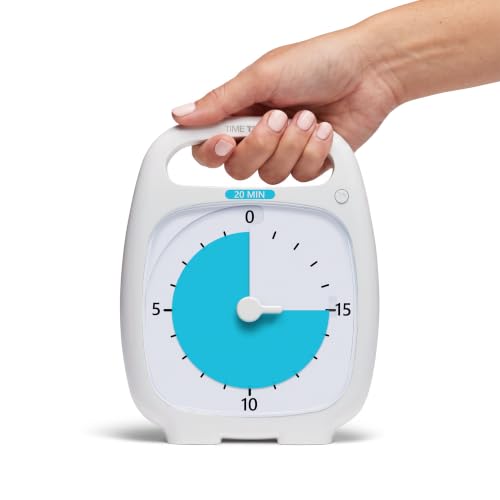 TIME TIMER Plus 20-Minute Visual Desk Countdown |
8.8/10 | Buy |
TIME TIMER 12-Inch Visual Countdown Timer
The TIME TIMER 12-inch visual timer provides effortless time management through a silent, disappearing red disk and an optional completion alert. It is an ideal choice for students, parents, and remote workers looking to structure study blocks, manage daily tasks, and eliminate loud ticking distractions.
Pros
- Oversized 12-inch display with vibrant red disk is easy to read from across large rooms
- Completely silent operation avoids irritating ticking sounds in quiet study or sleep areas
- Audio toggle allows instant switching between an audible alert and completely silent completion
- Flexible mounting options include built-in folding legs, magnetic backing, and a wall hole
- Slot-in dry-erase card provides immediate task context right above the countdown
Cons
- Designed specifically for 60-minute intervals rather than standard 12-hour or 24-hour bedside timekeeping
- Requires 2 AA batteries that must be purchased separately
- Large 12-inch frame requires ample desk or nightstand space compared to compact digital clocks
TIME TIMER Plus 20-Minute Visual Desk Countdown
The TIME TIMER Plus 20-Minute Visual Desk Timer provides a clear disappearing-disk countdown with silent operation and an optional audible alert. Powered by a single AA battery, it is an effective screen-free tool for students, desk workers, and anyone managing bedtime routines or focused study blocks.
Pros
- Silent countdown operation prevents distracting ticking noises in quiet rooms.
- High-contrast visual disk makes tracking remaining time effortless at a glance.
- Built-in handle and 0.47-pound weight offer effortless room-to-room portability.
- Pause button allows pausing and resuming timed tasks without resetting the dial.
- Cordless design runs on one AA battery, keeping surfaces free of messy wires.
Cons
- Fixed to a maximum duration of 20 minutes, requiring other models for longer tracking intervals.
- Requires one AA battery that is not included in the package.
- Lacks digital clock time-of-day display or overnight wake-up scheduling functions.

A Guide to Private Timer Alerts, Headphone Audio Routing, and Silent Visual Timekeeping
Routing alert sounds through private listening gear solves one of the most persistent challenges in modern shared spaces. Whether you study in a quiet library, work in an open office, or wake up next to a sleeping partner, an unprompted acoustic chime can break concentration or disrupt household rest. Achieving private alerts requires a clear understanding of hardware audio circuits, headphone jack architecture, and alternative visual or tactile countdown methods. By selecting the right hardware configuration, you can maintain precise time management without broadcasting sound across the room.
The Technical Reality of Headphone Audio Routing on Bedside and Desk Timers
Audio signals in standalone desktop electronics follow fixed physical paths determined by internal circuit design. When you connect headphones to a dedicated digital alarm clock, the 3.5mm female socket typically incorporates a physical mechanical switch. Inserting the male headphone plug breaks the circuit to the internal speaker cone, forcing the audio signal directly through the headphone drivers instead. This analog switching mechanism ensures that no external sound escapes into the room while the jack remains populated.
Problems arise when users expect general-purpose countdown timers or basic digital clocks to support headphones without dedicated output circuitry. Most standalone desktop timers utilize a piezo buzzer soldered directly to the circuit board, with no audio switching bus or digital-to-analog converter installed. On such units, redirecting sound into personal earbuds is physically impossible because no auxiliary audio path exists. Buyers seeking quiet alerts must specifically look for an AUX OUT or PHONES port on the housing rather than an AUX IN port, which only accepts incoming music from an external phone.
The Acoustic Architecture of Visual and Analog Countdown Timers
Standalone visual countdown tools take a fundamentally different engineering approach to noise management than traditional buzzer clocks. Dedicated productivity instruments such as the TIME TIMER 12 inch Visual Timer 60 Minute Kids and the TIME TIMER Plus 20 Minute Desk Visual Timer bypass headphone routing entirely by prioritizing silent operation paired with an optional alert chime. Their internal mechanisms utilize silent quartz movements that eliminate the steady, rhythmic ticking that often derails deep focus. This mechanical silence creates a peaceful environment for studying, reading, or sound-sensitive tasks.
The audible chime on specialized visual timers can be toggled on or off using a dedicated physical switch on the rear housing. When used in a silent classroom, therapy clinic, or communal home office, the acoustic alert is silenced completely, leaving the visual progress disc to communicate remaining time. Because these instruments run on standard primary batteries such as single AA or dual AA dry cells, omitting complex headphone amplifier chips helps prolong cell life over many months. For tasks where you cannot wear headphones comfortably, this silent visual mechanism provides reliable accountability without generating room noise.
Step-by-Step Procedure for Connecting Headphones to Compatible Clocks
Configuring private alerts on a digital clock equipped with an audio output requires careful verification before putting the headphones on. Begin by inspecting the connection labels on the back or side panel to ensure you are connecting to an output jack. Align the 3.5mm stereo plug squarely with the port and push it in firmly until you feel a tactile click, confirming that the internal speaker disconnects. A loose connection can cause the internal speaker to buzz simultaneously while delivering weak, distorted audio to your earbuds.
Always adjust the master alarm volume dial down to its lowest setting before placing earbuds into your ears. Bedside alarm clocks are frequently engineered with powerful transducers capable of sounding penetrating alarms across a master bedroom, which can cause severe discomfort if delivered directly into the ear canal. Trigger a test countdown or set a one-minute alarm while holding the headphones away from your head to verify the sound output level. Gradually adjust the volume dial upward until the chime is clear, distinct, and comfortable for extended listening.
Visual Timekeeping as an Alternative to Acoustic Headphone Chimes
Wearing headphones for continuous time management can quickly cause physical ear fatigue or isolate you too much from important ambient cues. High-visibility countdown clocks provide a practical alternative by converting elapsed duration into an intuitive physical dimension. For example, the TIME TIMER 12 inch Visual Timer 60 Minute Kids features an oversized disappearing red disk that can be monitored effortlessly across an entire room. This high-contrast visual display helps neurodivergent individuals, including those with ADHD or autism, transition between tasks smoothly without the jarring adrenaline spike caused by sudden acoustic sirens.
Compact versions like the TIME TIMER Plus 20 Minute Desk Visual Timer offer portable handles and center-set adjustment knobs, making them convenient companions for short productivity intervals. With the sound muted, the bold visual disc steadily contracts into the dial, giving you an immediate status update with a casual glance. Sleepers and parents who appreciate non-intrusive visual cues often compare these countdown tools with visual ok-to-wake alarm clocks, which use soft color shifts to convey waking schedules quietly. Adopting visual cues removes the need to maintain battery-powered headphone connections throughout the day.
Haptic and Tactile Modalities for Private Bedside Waking
Attempting to sleep while wearing wired or wireless headphones presents obvious mechanical hurdles, as earbuds easily slip out and headphone headbands shift uncomfortably during normal sleep movements. Tactile waking systems overcome this limitation by substituting acoustic earphone sound with strong physical vibrations. Specialized bedside clocks utilize dedicated bed-shaker pucks that slide underneath your pillow, mattress pad, or fitted sheet. When the alarm triggers, an internal motor rotates an eccentric mass to produce deep physical pulses that stimulate arousal through physical touch rather than air pressure.

Because the vibration puck operates on a dedicated electrical circuit connected to the bedside console, you can mute the audible chime entirely while keeping the haptic alert active. This configuration delivers an effective waking solution for deep sleepers, deaf individuals, and partners operating on alternating work shifts. The physical vibration awakens the sleeper quickly without filling the bedroom with loud noise. Confirming that your clock features separate physical controls for sound and vibration ensures you can wake up privately every morning.
Display Spectrum, Dimming Precision, and Sleep Hygiene
Controlling sensory disruption in a quiet bedroom requires addressing optical light bleed alongside acoustic noise. Standard bedside LED clocks often emit cool-white or blue-weighted light that activates melanopsin photopigments in the eyes, suppressing melatonin secretion and postponing natural sleep onset. Choosing a clock featuring narrow-band red or amber LED digits protects circadian rhythm stability by preserving melatonin production in dim settings. These warmer wavelengths provide readable contrast without illuminating the bedroom ceiling or keeping light-sensitive sleepers awake.
Dimming precision is equally vital when establishing an undisturbed rest environment. Stepped dimmers that only provide three or four preset levels often leave the display glowing too brightly in a pitch-black room. Clocks equipped with a stepless rotary potentiometer dial allow you to smoothly scale brightness from full daytime intensity down to absolute zero blackout. Readers seeking peaceful bedroom environments can consult our guide on top-rated bedside alarm clocks to find hardware that matches true blackout capabilities with reliable daily timekeeping.
Power Supply Architecture and Outage Backup Reliability
A dependable bedside timekeeping system must remain functional regardless of household power disruptions. Standalone digital clocks normally draw continuous electricity from a mains AC wall adapter to drive displays, internal processors, and auxiliary nightstand ports. However, sudden thunderstorm brownouts or tripping circuit breakers can reset volatile memory, causing clocks to flash 12:00 AM and miss scheduled alarms. Distinguishing between active operational battery backup and passive memory-only retention is essential for preventing missed wake-up calls.
Passive backup circuits rely on an internal CR2032 lithium coin cell to preserve internal quartz timekeeping while the display and speakers remain completely powered down during an outage. In contrast, active operational backup systems draw current from primary AA or AAA batteries to power the acoustic buzzer, tactile puck, and internal timing circuits even when line voltage drops to zero. Standalone battery-powered countdown timers operate entirely independent of wall outlets, providing total immunity against power grid failures. Inspecting battery compartments annually ensures backup cells remain free from chemical leakage.
Ergonomics, Tactile Controls, and Interface Design
The tactile arrangement of bedside buttons directly affects how smoothly you can operate a clock in dark or time-sensitive situations. Clustered rear-panel buttons with shared multi-function roles make adjusting an alarm confusing, often requiring users to consult an instruction sheet just to switch modes. Clocks that feature dedicated sliding toggles allow you to verify alarm status, audio mute, and vibration settings by feel alone. Physical feedback ensures that your intended silent or private alert profile is active before you close your eyes.
Snooze bar design also demands thoughtful separation from permanent disarm switches. A wide, textured snooze bar positioned on top of the console allows half-asleep users to silence an alert temporarily without inadvertently shutting the alarm off completely. Similarly, desktop countdown instruments benefit from tactile center knobs that let you dial in precise work intervals in seconds. The inclusion of a dedicated pause button on units like the TIME TIMER Plus enables flexible pacing during study breaks without resetting the entire countdown disc.
Auxiliary Nightstand Features and Electronic Noise Reduction
Consolidating bedroom electronics into a single bedside unit helps minimize cord tangles, but multi-function hardware requires careful shielding against electrical noise. Digital alarm clocks integrated with Qi wireless charging pads or multiple USB output ports house internal switching transformers and inductors. Poorly insulated inductive coils can emit high-frequency coil whine, producing a faint, high-pitched hum that irritates sensitive sleepers in quiet rooms. High-quality power regulation dampens electronic coil vibration, keeping your nightstand completely silent throughout the night.
Power output ratings on auxiliary charging ports also merit attention when managing bedside electronics. Standard 5V USB-A ports provide steady overnight trickle charging that minimizes thermal strain on mobile batteries. Higher-output USB-C ports with Power Delivery supply fast power to tablets and phones, but they generate internal heat that requires proper ventilation slits within the clock chassis. Choosing well-engineered multi-function hardware prevents thermal buildup while maintaining clean power delivery to your bedside devices.
Verification and Practical Testing for Quiet Alert Systems
Before relying on a quiet alert system for an important morning meeting or academic examination, always run a functional verification test. Configure your headphones, vibration puck, or visual countdown disc, and set a brief two-minute test countdown. Step back to observe the device in your normal working or resting position to confirm the alert triggers smoothly. Verify that no audible buzz or chassis vibration escapes into the room if your objective is complete privacy.
For battery-operated visual timers, inspect the motion of the visual disk to confirm it sweeps evenly without sticking against the protective lens. Clean battery terminal contacts with a dry cotton swab if you notice sluggish movement or intermittent chime performance. Replacing primary alkaline batteries once or twice a year keeps quartz timing accurate and prevents unexpected power loss during critical study sessions. Routine testing ensures your silent alerting setup delivers consistent, dependable performance whenever quiet precision is needed.
Mastering private and quiet timekeeping ultimately comes down to matching your sensory requirements with the right hardware design. Whether you plug headphones into a dedicated 3.5mm output jack, rely on tactile bed-shaker vibrations, or adopt silent visual countdown tools, you can establish an effective alerting system that respects shared quiet spaces. Selecting hardware with intuitive tactile controls, reliable battery power, and circadian-friendly displays ensures you stay on schedule without causing unwanted room disruption.
About the author
Daniel Noyed is a Certified Sleep Science Coach and experienced product editor with extensive knowledge of sleep health and sleep-related products. He has hands-on experience testing hundreds of products and translating technical features into practical guidance for everyday sleepers.