
How to Make a Mantel Clock: Practical Guide and Design Tips for 2026
Learn how to make a mantel clock with guidance on case design, quartz movements, and wood framing, updated for October 2026.
 By Jeremy Klein
Updated October 6, 2026
By Jeremy Klein
Updated October 6, 2026

Building a custom timepiece transforms a fireplace hearth or living room shelf into an eye-catching decorative focal point. Learning how to make a mantel clock requires balancing precise woodworking with dependable timekeeping components. A handmade clock housing offers total control over lumber choice, dial dimensions, and decorative molding. Whether you want to complement existing top rated alarm clocks for bedrooms with a grand living room accent or craft an heirloom gift, understanding the structural steps prevents frustrating alignment issues.
From selecting silent battery-powered quartz mechanisms to shaping traditional arches and fitting dial bezels, every assembly step demands patience. Wood movement, glass clearance, and acoustic resonance inside the hollow housing all impact the final result. Understanding the balance between DIY craftsmanship and ready-made mantel clocks helps woodworkers decide whether to build from raw timber or invest in pre-assembled ash wood designs. By following solid joinery practices, anyone can construct a reliable, beautiful clock that keeps accurate time for decades.
| Award | Product | ACR Score About ACR ScoreThe ACR Score is our own rating from 0 to 10, based on performance, design and build, ease of use, and value. It reflects independent research and is never influenced by manufacturers, retailers, or affiliate commissions. Learn more › | |
|---|---|---|---|
| Best Overall |
OCEST 13x7 Silent Vintage Farmhouse Mantel Clock
|
9.2/10 | Buy |
 AYRELY Wooden Mantel Clock with Westminster Chime
|
8.6/10 | Buy | |
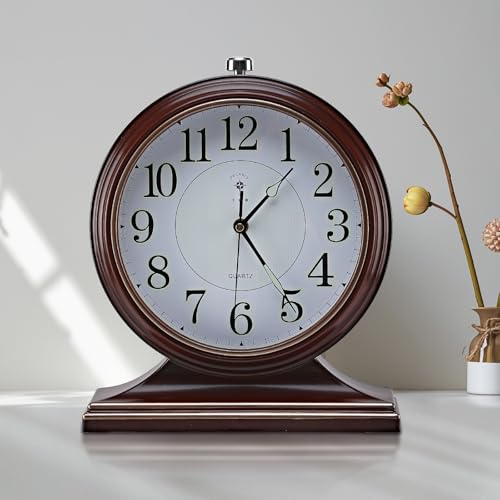 Vintage 10-Inch Silent Desk and Mantel Clock
|
8.4/10 | Buy |
OCEST 13x7 Silent Vintage Farmhouse Mantel Clock
The OCEST 13 x 7-inch Silent Vintage Farmhouse Mantel Clock delivers quiet, non-ticking quartz accuracy with clear analog numerals and a classic walnut brown casing. It is an appealing choice for bedrooms, mantels, and home offices where sleepers want dependable timekeeping without the annoyance of ticking sounds or glowing digital screens.
Pros
- Non-ticking silent sweep quartz movement creates a quiet, distraction-free atmosphere for sleep or study
- Easy-to-read dial layout with distinct numerals and protective high-grade glass cover
- Cord-free battery power requires only one standard AA battery, eliminating wall outlet dependency
- Classic vintage farmhouse styling with walnut brown finish and gilt detailing fits traditional and modern decor
Cons
- Does not feature an audible alarm buzzer, timer, or snooze function for morning wake-up needs
- Lacks illuminated numerals or a backlight, making it unreadable in a completely dark room
- AA battery is not included with the clock and requires separate purchase
AYRELY Wooden Mantel Clock with Westminster Chime
The AYRELY Wooden Mantel Clock combines sturdy ash wood craftsmanship with an electronic chime movement featuring Westminster melodies and an essential nighttime mute mode. It is a dependable, cordless timepiece suited for homeowners and digital detoxers who want elegant, glare-free timekeeping without midnight chime disruptions.
Pros
- Sturdy ash wood frame and hand-polished base beads deliver handsome, furniture-grade craftsmanship
- Nighttime mute function silences hourly chimes so light sleepers remain undisturbed throughout the night
- Bold black numbers on a high-contrast vintage face make daytime reading simple from across the room
- Cordless battery power eliminates the need for nearby electrical outlets or tangled bedside cords
- Customizable chime volume lets you easily adjust the sound output to suit your living space
Cons
- Wide 15.94-inch profile requires generous flat surface space and will not fit narrow or compact nightstands
- Traditional analog face lacks an illuminated backlight, meaning you cannot read the hands in total darkness without room lighting
- Operates exclusively on battery power, requiring periodic battery monitoring and replacement to avoid missed timekeeping
Vintage 10-Inch Silent Desk and Mantel Clock
This 10-inch vintage mantel desk clock combines a silent non-ticking quartz movement with a large, high-contrast analog dial for clear room-wide visibility. It is a solid choice for light sleepers, seniors, and digital detoxers seeking a classic, glare-free timepiece for a calm bedroom or living room shelf.
Pros
- Silent non-ticking quartz movement prevents rhythmic noise in quiet bedrooms
- Large 10-inch dial face is easy to read without reading glasses
- Fully cordless design powered by one AA battery eliminates nightstand cord clutter
- No LED backlights or glowing screens to disrupt light-sensitive sleepers
- Sturdy decorative Baroque-style base stays steady on flat surfaces
Cons
- Does not include an audible wake-up alarm or snooze mechanism
- Lacks backlighting or luminescent markers for reading the time in complete darkness
- Requires one AA battery that is not included in the package
Essential Steps and Techniques for Crafting a Custom Mantel Clock
Building a custom fireplace timepiece requires combining accurate cabinetmaking with dependable timekeeping components. A well-designed mantel clock anchors a living room shelf or hearth with warmth, visual balance, and timeless character. While mechanical gear movements were common in past eras, modern clockmakers rely on precision quartz mechanisms for hassle-free operation. Understanding the core construction phases ensures your completed project looks professional and runs reliably.
Planning Case Proportions, Footprint, and Architectural Style
Designing a mantel timepiece starts with understanding the space it will occupy on a shelf or fireplace surround. Traditional mantel clocks often feature architectural silhouettes, including stepped bases, arched pediments, and flanking pilasters. The depth of the case must comfortably house the movement mechanism while maintaining physical stability so it does not tip forward when wound or adjusted. A balanced footprint generally spans between ten and fourteen inches wide, ensuring sufficient visual presence without overcrowding surrounding decorative accents.
Proportions directly dictate how easy the dial will be to read across an open living room. A dial diameter between six and ten inches offers strong visibility while fitting neatly into standard cabinet profiles. If the casing is too shallow, standard battery movements with chiming speakers might press uncomfortably against the rear panel. Planning these internal clearances on paper before cutting your first board prevents costly woodworking errors.
Selecting the Internal Clock Movement: Silent Quartz vs. Chiming Modules
The movement serves as the beating heart of any mantel clock project. Modern builders frequently choose battery-operated quartz mechanisms over complex mechanical pendulums because quartz movements deliver superior accuracy with virtually zero upkeep. Silent sweep quartz units eliminate the rhythmic clicking sound, making them ideal for quiet living spaces or home offices. These movements rely on continuous micro-stepping motors that glide the second hand around the face rather than jumping once every second.
Chiming quartz movements offer an authentic vintage ambiance by reproducing classic Westminster melodies or hourly strikes. These electronic units house miniature sound boards, internal speakers, and volume potentiometers to adjust audio levels. High-grade chiming movements also incorporate night-silencing sensors or programmed mute schedules, silencing the chimes between late evening and early morning. Sourcing a movement with the proper threaded shaft length is crucial to ensure it reaches through both the case face and dial board without binding.
Choosing and Preparing Hardwood Lumber
Lumber selection determines both the visual character and long-term durability of the clock cabinet. Dense hardwoods such as ash, walnut, cherry, and white oak remain standard choices because they hold crisp router profiles and resist denting. Ash wood offers prominent grain patterns and notable structural stiffness, giving vintage-inspired clocks a rich, organic appearance. Exotic hardwoods can add striking color contrasts when used for decorative inlay strips or corner splines.
Milling your stock flat and square is essential before cutting case joints. Any twist, cup, or bow in the boards will misalign the face frame and create awkward gaps around the dial glass. Allow rough lumber to acclimate in your workshop for several days before milling it down to final thickness. Planing the stock to a uniform three-quarters of an inch provides sturdy sidewalls while leaving plenty of room for joinery grooves.
Joinery and Case Assembly Techniques
Strong joinery ensures the clock case withstands environmental humidity swings without pulling apart at the seams. Rabbet and dado joints provide substantial surface area for wood glue while making dry-fit alignment straightforward. For arched top designs, steam bending or laminating thin plies over a curved form creates a seamless crown that mimics classic grandfather clock silhouettes. Mitered corners reinforced with hidden biscuits or decorative splines provide clean exterior lines suitable for traditional and modern homes alike.
During glue-up, clamping pressure must remain evenly distributed to prevent racking the rectangular box out of square. Check the diagonal measurements across opposite corners with a steel tape rule to confirm perfect squareness before the adhesive sets. Wipe away any glue squeeze-out with a damp cloth immediately, as dried glue blocks wood stains from penetrating later. Allowing the cabinet assembly to cure for twenty-four hours guarantees a rigid, durable housing ready for machining.
Routing Dial Openings and Bezel Clearances
Cutting the dial opening requires precision, as the face serves as the visual centerpiece of the clock. A plunge router fitted with a circle-cutting jig yields perfectly round apertures without tear-out on the face board. Cut a shallow rabbet along the inside circumference of the circle to hold a circular protective glass lens or acrylic crystal. This recessed ledge keeps the glass flush with the front framing and shields the hands from dust.
Internal bezels and decorative brass retaining rings add a refined, authentic appearance to handmade clocks. When fitting embedded golden brass metal rings around the face opening, leave a fractional expansion gap to accommodate seasonal timber movement. Secure the glass and bezel using small brass turn-buttons or silicone dots rather than permanent adhesives. This removable retention method lets you replace cracked glass or clean dust off the dial face without dismantling the outer cabinet.
Dial Face Fabrication, Numerals, and Hand Sizing
The dial face can be crafted from enameled metal plates, printed composite board, or book-matched hardwood veneers. High-contrast designs featuring crisp black Roman or Arabic numerals against an ivory, parchment, or white background maximize legibility from across a large room. Builders can hand-apply adhesive brass numerals, screen-print custom artwork, or engrave the numbering directly into the wood face. Applying a subtle satin lacquer over printed dials protects the graphics from UV fading and humidity degradation.
Selecting clock hands with the correct weight, style, and length prevents strain on delicate quartz movements. Serpentine, spade, or pierced gilt finish metal hollow hands provide historical charm that suits vintage cases. The minute hand should reach precisely to the center of the minute track without dragging against the dial crystal or the hour hand. If hands are too heavy or unbalanced, quartz movements may lose time during upward rotation, requiring ultra-light aluminum components for larger dials.
Acoustic Resonance and Sound Dampening Inside Hollow Enclosures
The hollow interior of a wooden clock cabinet naturally functions as an acoustic resonance chamber. When using standard ticking movements, the sound waves bounce off interior hardwood panels, creating an amplified rhythmic pulse that some sleepers find distracting. Inserting thin adhesive felt or cork pads along the interior rear panel dampens high-frequency mechanical clicks without altering exterior looks. Unlike bedside electronics such as compact timer and alarm units, a wooden mantel clock relies on its physical cabinet volume for its sound character.
Conversely, electronic chiming clocks benefit from deliberate acoustic design to project rich, warm notes. Porting the rear panel with small decorative fretwork or speaker grilles allows melody frequencies to escape freely into the living space. Positioning internal speakers near the base of the clock directs sound forward through acoustic channels, mimicking the tone of mechanical grandfather chime rods. Builders can adjust internal padding density until the chimes ring cleanly without producing boxy or muffled distortion.
Installing Battery Compartment Access and Movement Hardware
A functional mantel clock must offer easy access for routine battery replacement and seasonal time adjustments. Building a hinged rear door fitted with magnetic catches or miniature brass latches provides smooth entry to the movement compartment. The door frame should fit snugly into a routed perimeter recess to keep airborne dust and pests away from the electronic components. Smooth brass butt hinges recessed into the side stile create a clean, flush appearance that looks finished from every angle.
Mounting the quartz movement requires slipping the threaded brass center shaft through the central dial bore. Tighten the central brass hex nut gently against a rubber friction washer to prevent turning during hand setting without cracking the dial plate. Press the hour hand onto the friction post first, followed by the minute hand, and finally secure the brass cap nut or second hand. Always rotate the hands a full twelve-hour cycle manually to verify that the hour and minute hands do not touch or snag at any point.
Sanding, Staining, and Protective Finishing
Finishing brings out the depth of the wood grain while protecting the cabinet from moisture and ambient sunlight. Sand all exposed surfaces progressively through 120, 180, and 220-grit abrasives to eliminate tooling marks and swirl patterns. Apply an oil-based stain or penetrating dye to enhance the grain contrast, particularly on open-grained species like ash or oak. Warm walnut and golden oak stains provide an authentic vintage aesthetic that matches traditional living room hearths.
Topcoating with multiple thin coats of satin polyurethane, shellac, or hand-rubbed Danish oil creates a resilient, smooth sheen. Satin finishes are generally preferred over high-gloss lacquers because they reduce harsh light glare from nearby lamps and windows. Buff the cured finish with fine steel wool and paste wax to give the wood a tactile, silky feel. Allow all finishes to cure fully for several days before installing the internal quartz movement to avoid trapping chemical vapors inside the cabinet.
Evaluating Handcrafted Builds Against Manufactured Mantel Clocks
Deciding whether to build a clock from scratch or choose a manufactured model comes down to workshop time and available tooling. Building a custom cabinet requires specialty woodworking tools, including routers, circle jigs, clamps, and finish sprayers. For those who lack extensive shop setups, factory-built options like the OCEST Silent Vintage Farmhouse Mantel Clock provide instant vintage styling with durable lightweight plastic frames and gilt finish metal hollow hands. These lightweight designs deliver silent quartz operation and easy placement on narrow fireplace ledges without extensive fabrication effort.
Woodworkers seeking classic grandfather elegance can also look to crafted pieces like the AYRELY Grandfather Mantel Clock with its ash wooden frame and electronic chimer. This design pairs traditional hand-polished decorative beads and musical Westminster chime modes with modern quartz accuracy. Similarly, vintage desk clocks with wide ten-inch dials offer Baroque-style stable bases that suit living room shelves seamlessly. When balancing living space decor with modern electronics like multipurpose charging clocks, choosing the right clock comes down to whether you prioritize handmade pride or ready-to-display convenience.
Long-Term Maintenance, Quartz Drift, and Battery Care
Maintaining a mantel clock involves minimal physical effort once the housing is assembled and running. High-grade quartz movements operate on a single AA alkaline battery for six to twelve months before requiring a fresh cell. Inspect the battery contacts annually to ensure there is no electrolyte leakage or terminal corrosion inside the movement compartment. Removing the battery before placing a clock into seasonal storage prevents accidental chemical damage to the rear movement housing and wiring.
Dust the exterior case and dial glass periodically using a dry microfiber cloth to prevent surface scratching. Avoid spraying aerosol cleaners or liquid waxes directly onto the dial opening, as excess moisture can seep past the glass gasket and damage the paper face. Quartz crystal time drift is typically negligible, varying by only a few seconds per month under normal room temperatures. By using quality movements, durable hardwoods, and sound joinery techniques, your custom mantel clock will provide dependable timekeeping and timeless decor for years to come.
About the author
Jeremy Klein is an experienced sleep-product tester with a strong focus on testing methodology, data collection, and real-world product performance. His expertise includes evaluating sleep essentials and wake-up devices through structured testing and practical consumer-focused criteria.