
Can an Alarm Clock Kill You? Health Risks, Shock, and Bedside Safety
Can an alarm clock kill you? Examine cardiovascular effects, sudden waking stress, decibel exposure, and safer alarm choices for October 2026.
 By McKenzie Dillon
Updated October 8, 2026
By McKenzie Dillon
Updated October 8, 2026

Jolting awake to a piercing siren can feel like an assault on the central nervous system. When your eyes snap open and your pulse pounds violently in your chest, it is natural to wonder: can an alarm clock kill you? While a modern bedside timepiece is not a lethal weapon in itself, the abrupt physiological shock of being ripped from deep slumber places genuine acute stress on the cardiovascular system. Many sensitive sleepers find that upgrading to reliable bedroom alarm clocks with progressive chimes or gentler sensory cues transforms a panicked morning into a controlled transition.
The human body experiences a sharp spike in cortisol and blood pressure whenever an unexpected noise shatters a slow-wave sleep cycle. For individuals with underlying cardiovascular vulnerabilities, that sudden surge in sympathetic activity is more than just unpleasant. Understanding how acoustic volume, tactile vibration, and display illumination influence morning stress is crucial for optimizing nightstand safety. By examining the biological and electrical realities of modern bedside electronics, sleepers can protect their long-term health while still waking up dependably every morning.
| Award | Product | ACR Score About ACR ScoreThe ACR Score is our own rating from 0 to 10, based on performance, design and build, ease of use, and value. It reflects independent research and is never influenced by manufacturers, retailers, or affiliate commissions. Learn more › | |
|---|---|---|---|
| Best Overall |
REACHER Super Loud Vibrating Alarm Clock
|
9.1/10 | Buy |
| Best Value |
 AuroraCalm Extra Loud Digital Alarm Clock
|
8.9/10 | Buy |
 EC VISION Target Alarm Clock with Laser Gun
|
8.6/10 | Buy | |
| Best Premium |
 ORKA Talking Large Display Day Clock with Voice
|
8.6/10 | Buy |
| Best Budget |
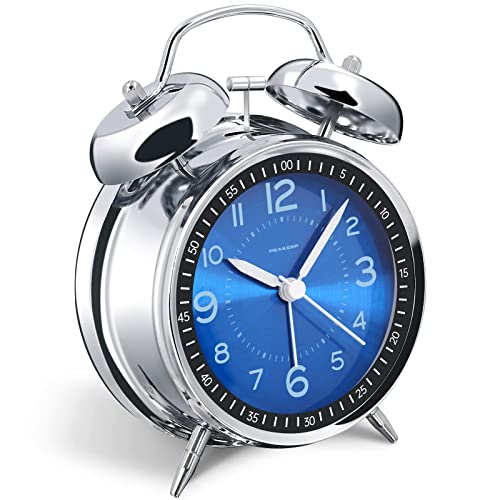 Peakeep Loud Twin Bell Alarm Clock for Heavy
|
8.4/10 | Buy |
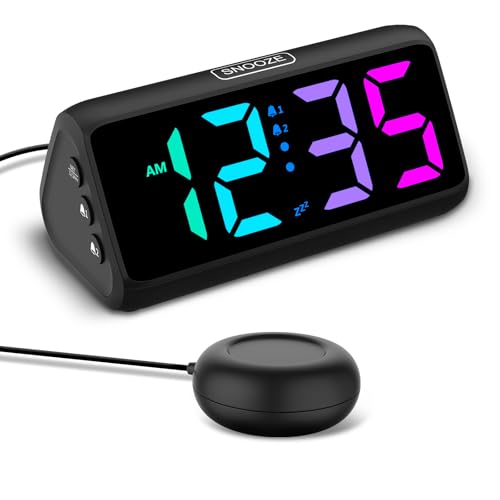 Netzu Loud Alarm Clock for Heavy Sleepers with Bed
|
8.1/10 | Buy |
REACHER Super Loud Vibrating Alarm Clock
The REACHER Super Loud Vibrating Alarm Clock combines a powerful 110 dB buzzer with a cordless under-pillow vibration motor and a magnetic charging base. It is a dependable wake-up solution for heavy sleepers, deep-sleeping teens, and hearing-impaired individuals seeking strong physical alerts without tangled bedside cords.
Pros
- Cordless design eliminates messy cables associated with traditional external bed-shaker pucks
- Vibration-only wake setting allows sleepers to wake up quietly without disturbing a sleeping partner
- Magnetic charging dock doubles as an angled display stand for convenient daytime viewing
- Raised tactile markers on key buttons help prevent fumbling and accidental shutoffs while half-asleep
Cons
- Checking the time while the clock is positioned under a pillow requires lifting the bedding
- AutoBrightness relies on ambient light detection rather than offering manual stepless dial adjustments
- Compact 3.2-inch square display may be harder to read from across large rooms compared to oversized bedside clocks
AuroraCalm Extra Loud Digital Alarm Clock
The AuroraCalm Extra Loud Alarm Clock delivers up to 115dB of adjustable wake-up volume paired with a flashing red alert light, dual alarm scheduling, and a fully dark-capable display. It offers a compact, dependable nightstand solution for heavy sleepers, teenagers, and shift workers who routinely sleep through standard mobile phone alarms.
Pros
- Maximum 115dB volume output with six adjustable volume tiers to accommodate different sleeping depths.
- Red flashing alert light adds a visual wake-up cue when audible tones alone are not enough.
- Alarm can still sound during household power outages using backup batteries while retaining clock memory.
- Screen can be dimmed completely off for light-sensitive individuals who require a pitch-black sleep environment.
- Compact 3.54 x 1.5 x 3.54-inch dimensions leave ample free space on smaller nightstands.
Cons
- Display turns completely off in battery backup mode during an outage to conserve emergency power.
- Aggressive 115dB sound profiles like the siren or jackhammer may startle light-sleeping partners or pets.
- Manufacturer specifications do not state the exact USB charging output wattage or power cord length.
EC VISION Target Alarm Clock with Laser Gun
The EC VISION Lock N' Load Target Alarm Clock turns morning wake-ups into an active target-shooting challenge with customizable voice or music ringtones. It is an engaging bedside option for deep-sleeping students, kids, and adults who struggle to wake up to standard static buzzers.
Pros
- Gamified wake-up mechanism forces mental engagement to curb morning oversleeping
- Custom voice recording feature lets you set personalized wake-up greetings or songs
- Includes interactive target shooting game modes for casual daytime fun
- Compact and lightweight design fits neatly on crowded desks and nightstands
Cons
- Batteries are not included in the package and must be purchased separately
- Lacks dedicated AC wall power for users who prefer continuous outlet-driven timekeeping
- May require practicing target aim to avoid morning frustration when groggy
ORKA Talking Large Display Day Clock with Voice
The ORKA Talking Clock is an AC-powered senior day clock featuring 1.93-inch digits, custom voice-recorded reminders, and up to 90 dB volume for heavy sleepers or the hearing impaired. It is an ideal bedside timepiece for seniors, individuals with low vision, or anyone needing structured medication alerts without confusing display abbreviations.
Pros
- Large 1.93-inch numerals and unabbreviated day readouts for easy viewing by seniors and visually impaired users
- Voice-recordable alarm function allows familiar personalized messages across up to 8 individual reminder slots
- Adjustable audio output reaching up to 90 dB assists users who are hard of hearing or deep sleepers
- Visual flashing display alerts accompany audible alarms for dual sensory notification
- Thoughtful packaging excludes words like dementia or memory loss, making it gift-friendly
Cons
- Requires continuous AC wall power, as internal battery backup only preserves time settings during an outage
- Initial setup of schedules and voice recordings may require assistance for users with cognitive or visual challenges
- Lacks stepless dimming or wireless charging pads found on general consumer bedside clocks
Peakeep Loud Twin Bell Alarm Clock for Heavy
Featuring an authentic twin-bell design with a physical striking hammer, this battery-operated Peakeep clock provides an extra-loud ring built to wake heavy sleepers without smartphone distractions. Its silent quartz sweep movement prevents distracting ticking noises, while a rear on-demand light button offers quick time checks without continuous bedroom glare.
Pros
- Physical twin-bell striking hammer delivers a very loud ring well suited for heavy sleepers and teenagers
- Quartz sweep movement operates completely silently without rhythmic ticking distractions
- On-demand backlight keeps the bedroom dark at night by lighting the face only when pressed
- Solid metal casing and front face provide durable craftsmanship and a distinctive jewel blue appearance
- Operates independently of wall outlets using a single AA battery for reliable bedside placement
Cons
- Lacks an electronic snooze button, requiring the user to flip the rear switch to silence the bell
- Analog fourth-hand alarm dial requires manual alignment rather than exact digital minute programming
- Requires one AA battery that is not included in the package
Netzu Loud Alarm Clock for Heavy Sleepers with Bed
The Netzu Loud Alarm Clock delivers a powerful wake-up solution featuring an included bed-shaking vibrator and an audible alert reaching up to 115 decibels. With an RGB customizable color display, five dimming levels including display-off, and dual alarms, it is a practical bedside choice for heavy sleepers, hearing-impaired users, and couples.
Pros
- Three versatile wake modes provide audible, physical tactile, or combined alert options.
- Listed 115 dB volume capability provides robust sound pressure for very heavy sleepers.
- Display can be turned completely off to eliminate nightstand glow in dark bedrooms.
- RGB customizable screen lets you change digit colors to match your personal preference.
- Dual alarm programming supports two distinct wake-up schedules simultaneously.
Cons
- Uses five fixed brightness steps rather than a continuous 0-100% stepless dimming dial.
- Maximum 115 dB alarm output can be quite jarring if placed immediately next to ear level on a compact nightstand.
- Product specifications do not list backup battery details or integrated USB phone charging ports.
The Physiological and Electrical Realities of Morning Alarm Shocks
In direct terms, an ordinary consumer digital alarm clock will not kill a healthy human being under standard operating conditions. Modern low-voltage electronics and certified power adapters eliminate virtually any threat of fatal electrical shock when used as intended. However, the question of whether an alarm can be lethal becomes far more nuanced when evaluating human physiology, cardiovascular vulnerability, and sleep architecture. The acute stress response triggered by an aggressive acoustic alert interacts directly with morning hormonal fluctuations and cardiovascular rhythms in ways that deserve serious attention.
The Sympathetic Fight-or-Flight Surge and Cardiovascular Strain
During deep slow-wave sleep and rapid eye movement phases, the human body maintains a lowered resting heart rate and depressed blood pressure. When a sudden, blaring buzzer interrupts this restorative state, the brain interprets the abrupt sonic intrusion as an immediate physical threat. This triggers an instantaneous sympathetic nervous system response, flooding the bloodstream with adrenaline and cortisol while prompting rapid tachycardia. Arterial blood vessels constrict almost instantly, forcing the heart to work significantly harder within seconds of waking.
Cardiologists and medical researchers have long observed that cardiovascular events, including myocardial infarctions and ischemic strokes, occur with greater frequency during the early morning hours. This natural vulnerability coincides with the circadian morning blood pressure surge and increased platelet aggregability. When a severe auditory startle is superimposed onto this physiological window, the mechanical workload on the myocardium increases dramatically. For individuals living with severe hypertension, advanced coronary artery disease, or cardiac arrhythmias, this acute hemodynamic spike represents a documented clinical stressor.
Selecting devices with progressive volume ramps can significantly mitigate this sudden cardiac workload. Instead of blasting maximum volume at the first second, a progressive alarm gradually elevates acoustic pressure over thirty to sixty seconds. This gradual ramp allows heart rate and systemic blood pressure to adjust incrementally, dissipating the violent startle reflex. Sleepers concerned about cardiovascular stress should prioritize alarms that provide ascending acoustic curves rather than instantaneous, fixed-volume buzzers.
Severe Sleep Inertia and the Hazards of Abrupt Awakening
The physical danger of an alarm clock extends beyond direct cardiovascular strain into the cognitive aftermath of waking. Ripping someone out of deep delta-wave sleep produces a state known as sleep inertia, characterized by severe grogginess, slowed motor reflexes, and impaired executive decision-making. In severe cases, often described as sleep drunkenness, an individual may experience profound disorientation lasting anywhere from fifteen minutes to over an hour. If a person must immediately operate a motor vehicle or handle complex machinery, this cognitive deficit can lead to catastrophic accidents.
Gradual sensory awakening strategies help clear sleep inertia far more effectively than sudden acoustic shocks. Sleep hygiene research indicates that light-based awakening stimulates retinal photoreceptors, signaling the brain to suppress melatonin and gently initiate cortisol production before the audible alarm sounds. Implementing sunrise wake-up light options alongside a gentle acoustic backup helps disperse residual adenosine gradually. This staged awakening ensures that individuals reach baseline alertness much faster, drastically reducing the real-world hazards of drowsy driving and morning accidents.
Acoustic Exposure and Safe Bedside Decibel Thresholds
Modern digital clocks designed for deep sleepers frequently market extreme sound levels reaching 110 to 115 decibels. Models such as the AuroraCalm Extra Loud Alarm Clock and the Netzu Loud Alarm Clock boast acoustic outputs capable of waking virtually anyone. However, acoustic pressure measured at 115 decibels is comparable to a rock concert or an emergency vehicle siren at close range. Prolonged exposure to sound pressure levels exceeding 85 decibels carries a documented risk of noise-induced hearing loss, acoustic trauma, and chronic tinnitus.
Distance plays a crucial role in mitigating auditory risks because sound intensity follows the inverse-square law. A clock generating 110 decibels directly adjacent to a sleeper’s ear on a nightstand delivers far more acoustic energy than the same unit positioned across the bedroom. Placing high-output alarm clocks at least six to eight feet away from the mattress protects delicate inner ear hair cells while preventing sudden eardrum pain. Furthermore, positioning the clock across the room forces the sleeper to physically get out of bed to disarm it, eliminating groggy snooze cycles naturally.
Classic mechanical twin-bell units, such as the Peakeep Loud Alarm Clock, rely on physical metal hammers striking dual resonant bells for extended periods. Because mechanical bells produce sharp, high-frequency transients without digital volume caps, they can easily startle sensitive sleepers or young children. If you require a high-decibel acoustic alert, ensure that the unit provides adjustable volume levels so you can set the minimum sound necessary for arousal. Protecting your auditory health is just as critical as waking up on time for work or school.
Tactile Bed-Shaker Pucks for Low-Stress Arousal
Tactile vibration presents a proven solution for individuals who need a dependable wake-up call without auditory panic. Dedicated bed-shaker clocks bypass the auditory cortex entirely by stimulating the somatosensory and vestibular systems through physical motion. The REACHER Super Loud Vibrating Alarm Clock features a cordless under-pillow shaker motor that delivers five adjustable vibration levels directly through bedding. This physical pulsing awakens even the deepest sleepers or individuals with profound hearing loss without blasting earsplitting siren tones throughout the household.
Vibration-only modes drastically reduce the acute cardiovascular surge associated with blaring buzzers. Because physical vibration provides a localized tactile stimulus rather than an ambient sonic shockwave, the autonomic nervous system processes the awakening signal more naturally. Sleepers with cardiac concerns or sensory sensitivities can awaken reliably without provoking an immediate adrenaline rush. Additionally, under-pillow shakers prevent waking partners or roommates who share the same living space, preserving household harmony.
Cordless bed-shakers offer distinct safety and convenience advantages over legacy wired pucks. Older wired vibrators required routing power cords under mattresses and across nightstands, creating tangling risks and placement restrictions. Modern cordless designs utilize magnetic charging docks, allowing the user to place the vibrating puck directly beneath a pillow or mattress pad without trailing wires. When selecting a vibrating clock, look for multiple vibration intensities to ensure the pulse is strong enough to pierce deep sleep without feeling uncomfortably aggressive.
Bedside Electrical Hazards and Nightstand Fire Safety
While the internal low-voltage components of an alarm clock pose negligible shock risks, the external power delivery chain requires standard household caution. Bedside tables are frequently cluttered with water glasses, tangled charging cables, and soft bedding materials that can create fire or shock hazards if neglected. Plugging uncertified, damaged power adapters into overloaded wall sockets can lead to electrical arcing or component overheating. Ensuring that your alarm clock utilizes certified AC transformers with proper insulation is a fundamental step in home safety.
Many modern bedside hubs now combine digital timekeeping with high-wattage charging pads for smartphones and smartwatches. When selecting integrated bedside charging stations, thermal management becomes an essential safety consideration. Inductive Qi charging coils generate ambient heat as a natural byproduct of electromagnetic energy transfer, particularly when phone cases are excessively thick or misaligned. Poorly ventilated charging stations placed against pillows or blankets can overheat smartphone lithium-ion batteries, degrading battery lifespan and presenting unnecessary fire risks.
Proper nightstand cord management prevents accidental falls and mechanical damage to electronic ports. Cords draped loosely across bedroom walkways create tripping hazards in the dark, potentially dragging heavy electronics off tables and damaging wall outlets. Fasten power cables along the rear legs of furniture and maintain adequate clearance between electrical transformers and combustible bedding fabrics. Regularly inspect power cords for frayed insulation, bent pins, or loose barrel connectors to maintain a safe, dependable bedside environment.
Display Spectrum Physics and Nocturnal Circadian Health
Sleep disruption caused by bedside electronics represents an indirect, long-term health risk that is often overlooked. Standard digital clocks featuring bright, unshielded blue or cool-white LED displays emit optical wavelengths that directly activate intrinsically photosensitive retinal ganglion cells. These specialized ocular photoreceptors signal the suprachiasmatic nucleus to suppress nocturnal melatonin secretion, disrupting the natural circadian timing system. Chronic melatonin suppression and fragmented sleep contribute over time to impaired immune function, metabolic dysregulation, and elevated cardiovascular disease risk.
Achieving a completely dark bedroom environment requires clocks with extensive dimming capabilities. The Netzu Loud Alarm Clock and AuroraCalm both feature multi-level dimming or full display-off options that extinguish screen glare entirely during nighttime hours. Furthermore, clocks offering warm amber, deep red, or soft orange digital readouts preserve melatonin production far better than harsh blue displays. If you prefer keeping the time visible throughout the night, choosing a model with continuous rotary dimming down to near-zero lux allows you to read the digits without illuminating the bedroom.
Automatic ambient brightness sensors provide another layer of sleep protection by adapting the display to room lighting conditions. During daytime hours, the screen boosts illumination for effortless legibility across the room, but it automatically dials down to a faint glow once bedside lamps are extinguished. This hands-off dimming eliminates the annoyance of manually toggling buttons before falling asleep. Sleepers who are especially sensitive to light pollution should seek out clocks with auto-dimming photodiodes to safeguard their nocturnal recovery.
Power Architecture: Memory Retention Versus Active Alarm Backup
Overnight power outages and transient electrical brownouts create immense stress for working adults, shift workers, and frequent travelers. Waking up in a panic because a thunderstorm reset the bedside clock to a flashing midnight readout is a universal frustration. However, many consumers misunderstand the difference between passive memory-retention backup and active operational battery backup. Knowing how your specific clock behaves during a residential power cut is essential for avoiding catastrophic missed morning commitments.
Most standard AC-powered digital clocks use small coin-cell batteries or a pair of AAA cells purely for memory retention. Under this architecture, the backup battery keeps the internal quartz crystal oscillating and retains programmed alarm times, but the display remains completely blank and the speaker cannot sound while wall power is lost. Once municipal electricity returns, the clock resumes showing the correct time without needing manual reprogramming. If an outage occurs precisely when your alarm is scheduled to ring, a memory-only clock will remain completely silent.
In contrast, models engineered with true operational backup capability can actively trigger the acoustic sounder even during total power grid failure. The AuroraCalm alarm clock highlights a dedicated battery backup memory system where the alarm can still sound during power interruptions, preventing missed work or school mornings. Similarly, fully battery-operated quartz clocks like the Peakeep analog twin-bell run entirely on an independent AA cell for months without relying on mains electricity. For critical wake-ups where missing an appointment is not an option, verifying that your alarm can audibly sound during blackouts provides invaluable peace of mind.
Voice Prompts and Engaging Arousal Mechanisms
Replacing jarring electronic buzzers with personalized audio prompts represents an effective way to eliminate morning panic. The ORKA Talking Clock provides voice-recordable messaging and a large high-contrast display designed for seniors, visually impaired individuals, and people managing cognitive challenges such as dementia. By delivering timed reminders in a familiar, comforting voice rather than a blaring siren, the device provides reliable temporal structure without elevating stress hormones. Gentle musical chimes and spoken-word announcements guide the sleeper into wakefulness smoothly and respectfully.
Gamified wake-up mechanics offer another alternative to pure acoustic volume by forcing active cognitive engagement. The EC VISION Lock N’ Load Gun Alarm Clock features an interactive target system requiring the sleeper to aim and shoot down a target to silence the alert. This playful interaction stimulates the prefrontal cortex and demands physical coordination, effectively dispersing morning sleep inertia without relying on terrifying decibel spikes. Personalized recording options also allow users to wake up to favorite songs or encouraging spoken reminders, setting a constructive morning tone.
Rotating alarm tones periodically prevents sensory habituation, allowing you to wake up at lower decibel levels. When the brain hears the identical buzzer tone every morning for months, it gradually learns to filter out the sound during deep sleep phases, tempting users to increase volume to dangerous levels. Switching between nature soundscapes, rooster calls, chime sequences, or radio broadcasts refreshes acoustic novelty. This simple adjustment ensures dependable wakefulness while keeping auditory exposure and cardiovascular stress well within safe parameters.
Physical Interface Ergonomics and Foolproof Nightstand Setup
Accidentally turning off an alarm when intending to hit the snooze button can derail an entire day and trigger intense panic. Clustered rear-panel buttons that share multiple functions are notoriously difficult to navigate while half-asleep in the dark. Modern bedside clocks address this ergonomic hurdle by incorporating oversized top-mounted snooze bars that are physically separated from permanent disarm switches. Raised tactile indicators, such as those found on the REACHER vibrating clock, allow users to find critical controls instantly by touch alone.
Couples with mismatched work schedules benefit immensely from dual-alarm configurations that operate independently. Setting dedicated alarm times for weekdays and weekends prevents the common error of forgetting to reactivate the clock after Sunday night. Front-facing speakers, such as the direct-projection driver on the AuroraCalm, direct sound energy toward the intended sleeper rather than scattering noise indiscriminately across the room. Simple, intuitive interfaces reduce morning frustration and ensure that both partners enjoy uninterrupted rest according to their personal routines.
Ultimately, an alarm clock will not kill you, but treating morning arousal as a delicate physiological transition pays substantial health dividends. Minimizing bedroom light pollution, selecting gradual volume ramps or tactile bed-shakers, and maintaining safe electrical connections transform your nightstand into a supportive sleep sanctuary. By respecting the natural rhythms of the cardiovascular system and eliminating sudden acoustic terror, you can awaken reliably, peacefully, and safely every morning.
About the author
McKenzie Dillon is a Certified Sleep Science Coach and experienced sleep-product editor who has personally tested dozens of sleep products. Her expertise bridges sleep technology, product evaluation, and practical guidance for creating more comfortable sleep and wake-up routines.