Is the Hatch Alarm Clock Hsa Eligible? What You Need to Know in 2026
Is The Hatch Alarm Clock Hsa Eligible details, HSA and FSA qualification rules, and required medical documentation for October 2026 to fund your bedside sleep device.
 By McKenzie Dillon
Updated October 19, 2026
Restful sleep often feels elusive when harsh smartphone alarms disrupt morning routines and bedside screen glare interferes with natural melatonin production. Many sleepers look toward dedicated bedside electronics like dawn simulators and sound machines to rebuild healthy sleep hygiene without the temptation of late-night notifications. As wellness devices become more technologically advanced, an increasing number of buyers wonder is the hatch alarm clock hsa eligible through pre-tax health funds. Health Savings Accounts and Flexible Spending Accounts offer a tax-advantaged path to finance health-related purchases, but determining whether sleep aids meet federal eligibility standards requires understanding specific regulatory guidelines. Investing in quality bedside electronics, such as top-rated alarm clocks for bedrooms, can transform daily sleep habits when paired with the right purchase strategy.
Navigating healthcare spending accounts requires knowing the boundary between everyday consumer electronics and eligible medical equipment. Sunrise wake-up lights and dedicated audio machines aim to support natural circadian rhythms, yet benefit administrators treat general comfort products differently from targeted therapeutic treatments. Understanding how to properly document medical necessity can mean the difference between an approved expense and an out-of-pocket bill. By examining qualification criteria, documentation workflows, and device hardware capabilities, you can determine how to utilize your health savings balance effectively for better rest.
| Award | Product | ACR Score About ACR ScoreThe ACR Score is our own rating from 0 to 10, based on performance, design and build, ease of use, and value. It reflects independent research and is never influenced by manufacturers, retailers, or affiliate commissions. Learn more › | |
|---|---|---|---|
| Best Overall |
 Hatch Restore 3 Sunrise Alarm Clock and Bedside |
8.9/10 | Buy |
| Best Budget |
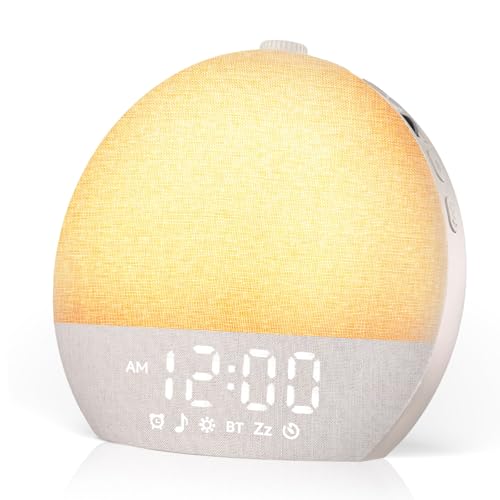 Geuuap Sunrise Alarm Clock & Sound Machine |
8.6/10 | Buy |
| Best Value |
 ANJANK Loud Alarm Clock with Bed Shaker |
8.6/10 | Buy |
| Best Premium |
 VURENIVA Sunrise Alarm Clock with Sound Machine |
8.4/10 | Buy |
 HOUSBAY Sunrise Alarm Clock and Sound Machine |
8.3/10 | Buy | |
 Dekala Sunrise Alarm Clock Wake-Up Light |
7.8/10 | Buy |
Hatch Restore 3 Sunrise Alarm Clock and Bedside
The Hatch Restore 3 combines a gentle sunrise wake-up light with science-backed sleep audio and a dimmable display for a screen-free bedroom. It is an ideal nightstand companion for light-sensitive sleepers and digital detoxers wanting a calmer morning routine.
Pros
- Gradual sunrise light progression helps sleepers wake up naturally without sudden, startling buzzers
- Integrated sound library offers 10+ sleep sounds to help quiet the mind and drown out external noise
- Dimmable clock face prevents intrusive nightstand glow in dark bedrooms
- Encourages a phone-free nightstand environment to support healthier nighttime routines
- Compact 1.5-inch depth fits neatly on narrow bedside tables without crowding
Cons
- Access to the complete library of meditations and specialized content requires an ongoing Hatch+ subscription after the trial period
- Relies on companion app pairing for deep routine customization rather than standalone physical dials
- Product data does not specify backup battery operation or integrated device charging ports
Geuuap Sunrise Alarm Clock & Sound Machine
Combining an adjustable 10-to-60-minute sunrise simulation with 30 sleep sounds, 17 light options, and Bluetooth streaming, this app-free bedside clock offers versatile nightstand utility. It is well-suited for light-sensitive sleepers and digital detoxers who want a gentle morning routine without smartphone clutter.
Pros
- Gradual 10-to-60-minute sunrise light simulation eases morning wake-ups without jarring buzzer shocks
- Wide audio customization with 10 wake-up sounds, 32 volume levels, and unlimited snooze intervals
- Multi-functional nightstand design packs 30 sleep tracks, 17 nightlight modes, and a Bluetooth 5.3 speaker into one compact footprint
- App-free and Wi-Fi-free physical controls keep bedroom setup straightforward and preserve evening screen-free habits
- Internal memory backup saves your settings automatically so you do not have to reprogram after sudden power glitches
Cons
- Backup battery maintains internal settings only; the audible alarm and sunrise lamp will not operate during a complete power blackout
- White noise sound playback shuts off automatically once the sunrise simulation sequence begins
- Does not support weekday-only or weekend-only alarm schedules, requiring manual toggling for sleeping in
ANJANK Loud Alarm Clock with Bed Shaker
Built for heavy sleepers and the hearing impaired, this dual alarm combines an extra-loud 112dB speaker, a gradual wake-up light, and a wireless bed shaker. Customizable display dimming and a built-in USB-C port add practical bedside utility.
Pros
- Wireless bed shaker reaches up to 32.8 feet
- Extra-loud 112dB alert with 10 volume settings
- Dual alarm system supports separate daily schedules
- Fully adjustable 0 to 100 percent display brightness
Cons
- Bed shaker battery requires periodic recharging
- Relatively large bedside footprint at nearly seven inches wide
VURENIVA Sunrise Alarm Clock with Sound Machine
The VURENIVA Sunrise Alarm Clock combines an adjustable 10-to-60-minute dawn simulation with 36 soothing sleep sounds, dual alarms, and a display-off dark-room mode. It is a capable nightstand centerpiece for light-sensitive sleepers, couples on offset schedules, and anyone seeking app-free bedside controls.
Pros
- Adjustable sunrise progression from 10 to 60 minutes provides a customizable wake-up light experience
- Silent alarm option allows a light-only wake-up that will not disturb a sleeping partner
- Display-off mode enables pitch-black sleeping conditions without deactivating morning alarms
- Includes a 3-zone remote control and labeled chassis buttons for full control without requiring a phone app
- Dual alarm programming accommodates varying schedules for couples, shift workers, or weekends
Cons
- Bluetooth connectivity is designed solely for audio streaming rather than app-based alarm scheduling
- Top-tap snooze feature is restricted to a maximum of 5 cycles per alarm session
- Slim 1.5-inch chassis depth benefits from deliberate placement to prevent shifting during groggy morning taps
HOUSBAY Sunrise Alarm Clock and Sound Machine
Designed for screen-free bedrooms, this compact bedside unit combines a gradual sunrise light simulator with twenty ambient sleep tracks. Physical push buttons control all settings, making it practical for sleepers wanting gentle wake-ups without phone distractions.
Pros
- Gradual light simulation eases natural morning waking
- Twenty sound profiles offer variety for night relaxation
- Physical button controls eliminate phone dependency at bedside
- Compact footprint fits neatly on small bedside tables
Cons
- Lacks smartphone app or smart home connectivity
- Wake-up audio limited to five nature sound presets
Dekala Sunrise Alarm Clock Wake-Up Light
The Dekala Sunrise Alarm Clock combines gradual light simulation with dual alarms, 8 sleep sounds, and an FM radio to support gentler mornings and restful evenings. It is a practical bedside upgrade for heavy sleepers, shift workers, and families seeking an illuminated wake-up routine without relying on a smartphone.
Pros
- Sunrise and sunset lighting simulations provide smooth transitions for waking and falling asleep.
- Independent dual alarm programming accommodates varied weekday schedules and couples.
- Versatile sound library with 7 alarm sounds, 8 sleep tracks, and an integrated FM radio.
- Adjustable 4-level display brightness and night mode help manage bedside glow in dark bedrooms.
Cons
- Sunrise progression begins at 10% brightness rather than starting from complete pitch black.
- Setting adjustments across multiple light and sound modes may require consulting instructions during initial setup.
- Does not include physical bed-shaking vibration for sleepers who do not respond to light or audio cues alone.

Understanding Hatch Alarm Clock HSA and FSA Eligibility Requirements
The short answer to whether the Hatch alarm clock is HSA eligible is yes, but only when specific medical conditions and administrative requirements are met. Under Internal Revenue Service guidelines, sleep devices and sound machines are classified as dual-purpose products rather than automatic medical necessities. This classification means you cannot simply swipe an HSA or FSA debit card at standard retail checkouts without supporting paperwork. Securing reimbursement typically requires obtaining a formal Letter of Medical Necessity from a licensed healthcare provider who diagnoses a qualifying sleep or health condition.
Benefit administrators evaluate claims based on federal tax codes, meaning individual account rules may introduce slight procedural variations. While Health Savings Accounts allow account holders to roll over funds indefinitely, Flexible Spending Accounts often enforce strict annual deadlines that heighten the urgency of approval. Learning how medical documentation bridges the gap between general consumer electronics and qualified medical expenses ensures you do not waste valuable pre-tax dollars. The following sections explore IRS standards, doctor documentation protocols, eligible hardware distinctions, and alternative bedside solutions.
IRS Guidelines on Sleep Devices and Dual-Purpose Health Equipment
Federal tax law governs qualified medical expenses under Internal Revenue Code Section 213(d), defining them as amounts paid for the diagnosis, cure, mitigation, treatment, or prevention of disease. Standard consumer goods that promote general well-being, such as standard alarm clocks or decorative nightlights, do not qualify under this definition because their primary function serves everyday convenience. However, therapeutic devices that directly address diagnosed medical conditions can cross the threshold into eligibility. Understanding this legal distinction is the first step in assessing whether a high-end bedside sleep device qualifies for pre-tax reimbursement.
The IRS categorizes products like dawn simulators, white noise sound machines, and light therapy lamps as dual-purpose items. Because these devices can be used by healthy individuals purely for lifestyle comfort or aesthetic appeal, plan administrators cannot assume a medical purpose automatically. To satisfy tax regulations, the claimant must prove that the product was purchased specifically to treat or alleviate a medical condition diagnosed by a physician. Without this documented clinical justification, administrators must reject the expense to protect the tax-exempt status of the plan.
Using HSA funds on non-qualified expenses carries significant financial consequences that every account holder should avoid. If the IRS audits an account and determines that an expense lacked proper medical substantiation, the taxpayer faces ordinary income tax on the disbursed amount plus a twenty percent penalty. With an FSA, administrators will typically freeze the account debit card or demand repayment to the employer plan if a receipt lacks qualifying proof. Following formal reimbursement procedures safeguards your savings and keeps your tax filings entirely compliant.
Qualifying Medical Conditions and the Letter of Medical Necessity
A Letter of Medical Necessity acts as formal documentation from a licensed healthcare professional explaining why a specific item is required to treat a patient. This document must explicitly state the patient’s diagnosed medical condition, describe the therapeutic mechanism of the prescribed item, and clarify that the device serves as part of an active treatment plan. General notes or vague recommendations on prescription pads are rarely sufficient for stringent plan administrators. The letter bridges the clinical rationale with the administrative requirements of federal tax compliance.
Physicians frequently issue medical necessity letters for sleep-related devices when patients present with chronic insomnia or delayed sleep phase syndrome. Circadian rhythm sleep-wake disorders represent another primary diagnosis where scheduled light exposure directly aids physiological management. Patients suffering from seasonal affective disorder often require calibrated morning light therapy to stabilize mood and energy levels during darker winter months. Furthermore, healthcare providers may recommend sound-masking devices for individuals dealing with severe tinnitus, sensory processing difficulties, or anxiety-induced sleep disruption.
Most benefit administrators stipulate that a Letter of Medical Necessity remains valid for exactly twelve months from the date of issuance. If your treatment plan extends beyond a single calendar year, your physician must issue an updated letter to cover subsequent purchases or ongoing care. You should always obtain a digital copy and a physical hard copy of the signed letter before purchasing your device. Retaining these medical records alongside your purchase receipt ensures you can resolve any administrator inquiries without unexpected delays.
Navigating Direct Checkout Partnerships vs. Manual Reimbursement
Modern wellness brands frequently partner with specialized telehealth platforms to simplify the process of using health funds at checkout. Services like Truemed embed medical evaluation questionnaires directly into the digital shopping cart, allowing a licensed practitioner to review your symptoms asynchronously. If the reviewing clinician determines that you meet clinical criteria for sleep disturbance or insomnia, they generate an electronic Letter of Medical Necessity immediately. This streamlined pathway often enables customers to pay directly using an HSA or FSA debit card without paying out-of-pocket first.
When purchasing through standard retail channels or when direct telehealth integration is unavailable, buyers must follow the traditional reimbursement route. This method involves paying for the sleep device using personal funds and subsequently submitting an itemized claim to the plan administrator. The claim package must include the merchant receipt detailing the date, item name, and purchase amount, paired directly with the signed medical necessity letter. Administrators review the paperwork against IRS benchmarks before issuing a direct deposit or paper check reimbursement.
Administrative claim denials occasionally occur when automated review systems misclassify the device as a standard digital clock. If your reimbursement request is rejected, review the explanation of benefits carefully to identify whether the issue involves missing documentation or diagnostic coding. In most cases, contacting your administrator and providing a more detailed letter from your doctor describing the therapeutic light or sound features will overturn the initial rejection. Staying organized and maintaining clear communication with your benefits provider prevents minor clerical hiccups from stalling your claim.
Hardware Coverage vs. Digital Subscriptions: Understanding What Qualifies
The physical device itself, which houses the optical lighting array, internal acoustic speaker cone, and digital control circuitry, constitutes the primary reimbursable asset. As long as the accompanying medical letter specifies light therapy or sound conditioning, the base unit meets typical qualification thresholds. Models like the Hatch Restore 3 | Science-Backed Sleep Audio incorporate dedicated sleep sounds, circadian light curves, and dimmable displays that function as tangible therapeutic equipment. Because the physical hardware delivers the clinical intervention directly on the bedside table, plan reviewers generally accept it under approved guidelines.

Ongoing software subscriptions present a much more complicated challenge for health spending accounts. Many modern smart sleep clocks offer companion memberships, such as Hatch+, which deliver specialized audio tracks, guided meditations, and expert sleep content on a recurring basis. Plan administrators routinely categorize recurring software content as educational entertainment or general wellness memberships rather than direct medical treatment. Unless a physician explicitly prescribes the digital audio content library by name as essential therapeutic intervention, paying subscription fees with pre-tax dollars risks immediate audit rejection.
To prevent account audits, prudent consumers typically charge hardware purchases to their HSA or FSA while paying companion subscriptions with standard personal credit cards. This clean separation prevents mixed receipts from confusing account reviewers and triggering account freezes. Many devices maintain functional core features, such as baseline sound masking and standard dawn simulation routines, without requiring an active paid subscription tier. Evaluating which features function offline or free of charge allows you to maximize your health dollars without incurring recurring out-of-pocket overhead.
Hardware Features Supporting Clinical Sleep Hygiene
Dawn-simulating bedside clocks work by gradually transitioning from deep red and amber tones to bright warm-white light prior to your scheduled alarm time. This gradual optical escalation stimulates photoreceptors in the retina, signaling the brain to suppress nocturnal melatonin synthesis and initiate cortisol awakening curves. For individuals with delayed sleep phase disorder, this gentle biological cue reduces morning grogginess far more smoothly than abrupt acoustic alerts. Exploring dedicated sunrise alarm clocks for heavy sleepers illustrates how calibrated light progression assists those who struggle with deep-sleep inertia.
Bedside lighting spectrums play an equally critical role during the evening transition into sleep. Exposure to short-wavelength blue light from smartphones and standard cool-white room bulbs suppresses natural melatonin release, delaying sleep onset and disrupting sleep architecture. Quality sleep clocks utilize warm red and amber color spectrums that minimize retinal stimulation, allowing the brain to relax naturally. Integrating dimmable, narrow-band illumination into an evening routine provides an environmental signal that prepares the nervous system for uninterrupted rest.
Auditory disruption remains a leading trigger for nocturnal awakenings, especially for light sleepers residing in noisy urban environments. Built-in sound machines utilize continuous audio profiles, including white noise, pink noise, and soothing nature recordings, to raise the ambient sound floor. This masking effect softens the acoustic contrast of sudden environmental noises like traffic, sirens, or household movement. By smoothing out sudden auditory peaks, continuous bedside sound conditioning prevents micro-arousals and promotes deeper, more restorative sleep stages.
Standalone Clocks vs. App-Driven Smart Sleep Systems
One of the strongest arguments for using dedicated bedside hardware is the complete removal of mobile phones from the immediate sleep environment. When smartphones double as morning alarms, nighttime notifications and blue-light exposure frequently delay sleep onset and induce bedtime anxiety. Transitioning to a standalone digital clock creates a physical boundary that reinforces evening relaxation habits. Units that function without mandatory smartphone interaction allow users to adjust settings, activate alarms, and control lighting purely through tactile bedside buttons.
Conversely, smart bedside clocks leverage mobile applications to provide granular control over multi-step sleep and wake routines. Users can program precise light durations, fine-tune volume ramp curves, and select customized audio pairings that match their physiological needs. However, app dependence introduces potential failure points, such as software updates, wireless network drops, or background synchronization issues. Deciding between a connected smart clock and a self-contained device depends on whether you prioritize programmable customization or distraction-free simplicity.
Nightstand clutter often creates visual chaos that detracts from a calm, restful bedroom atmosphere. Modern multi-functional digital alarm clocks frequently integrate secondary conveniences, such as nightlights, FM radios, and auxiliary charging ports. For instance, selecting bedside alarm clocks with integrated wireless charging helps consolidate power cords while keeping daytime essentials powered. Balancing therapeutic capabilities with clean cable management ensures that your bedside table remains an organized sanctuary dedicated to quality rest.
Non-Hatch Alternatives and How They Compare
While Hatch products receive significant attention for their aesthetic design and curated audio routines, numerous alternative devices provide comparable therapeutic functions. Models such as the HOUSBAY Sunrise Alarm Clock with White Noise Sound and the Geuuap Sunrise Alarm Clock White Noise Machine combine gradual light simulation with extensive sound libraries. These alternatives typically operate without app requirements, allowing immediate plug-and-play operation through top-mounted physical controls. For budget-conscious buyers seeking clinical benefits without recurring costs, standalone alternatives deliver robust performance.
Certain sleep conditions demand physical waking stimuli that extend beyond gentle sunrise illumination and soft chimes. Deep sleepers or individuals with hearing impairments often require multi-sensory alerting systems, such as the ANJANK Loud Alarm Clock with Wireless Bed Shaker. This device pairs high-decibel auditory alarms with a rechargeable vibrating puck placed beneath a pillow or mattress, delivering tactile arousal. When a physician documents profound sleep inertia or hearing loss, even high-output vibrating clocks can qualify under medical necessity provisions.
Versatile bedside devices like the Sunrise Alarm Clock with Sound Machine and the Sunrise Alarm Clock for Heavy Sleepers expand usability with remote controls, Bluetooth speakers, and sunset simulation modes. Sunset dimming features gently lower illumination levels over extended periods, helping restless sleepers ease into darkness naturally. The wide availability of these features across different price points means you do not have to rely solely on high-cost brands to achieve therapeutic sleep conditioning. Exploring diverse hardware configurations ensures you select the exact physical device that satisfies your physician’s clinical recommendations.
Account Management Strategies to Maximize Health Funds
Maximizing your pre-tax benefits requires strategic timing, especially if your employer provides a Flexible Spending Account with strict use-it-or-lose-it deadlines. FSA funds generally expire at the end of the plan year or after a designated grace period, meaning unspent balances forfeit back to your employer. If you find yourself approaching year-end with remaining FSA capital, securing a Letter of Medical Necessity for a qualified sleep device is an excellent way to allocate expiring funds. In contrast, HSA balances roll over indefinitely, allowing you to plan purchases without artificial calendar pressure.
Thorough recordkeeping is essential whenever you use tax-advantaged funds for dual-purpose wellness equipment. Always create an organized digital folder containing your itemized merchant receipt, credit card transaction record, and signed medical necessity letter. Tax authorities can request substantiation years after a tax return is filed, making prompt documentation critical. Keeping clear records ensures that you can verify the medical justification of your sleep hardware instantly if your tax filings ever undergo review.
Confirming your benefits coverage before completing a purchase remains the most dependable way to avoid financial surprises. Contact your plan administrator directly to inquire whether their internal underwriting requires specific diagnostic phrasing or custom claim forms. Taking the time to coordinate with your healthcare provider and verify reimbursement workflows ensures a smooth, stress-free transaction. With the appropriate clinical documentation in hand, upgrading your bedside sleep environment becomes a financially sound investment in long-term wellness.
About the author
McKenzie Dillon is a Certified Sleep Science Coach and experienced sleep-product editor who has personally tested dozens of sleep products. Her expertise bridges sleep technology, product evaluation, and practical guidance for creating more comfortable sleep and wake-up routines.