
How People Wake up to Different Alarms: Practical Bedside Guide for 2026
Explore how people wake up to different alarms and discover how sensory wake-up methods suit different sleepers in November 2026.
 By Daniel Noyed
Updated November 1, 2026
Waking up should feel like a smooth transition from restorative rest to alert focus, yet many mornings begin with sudden adrenaline shocks. When an abrasive buzzer blares across a dark bedroom, the brain jolts into survival mode rather than easing out of deep sleep cycles. Exploring how people wake up to different alarms reveals that individuals respond uniquely to auditory, tactile, and visual stimuli. Finding the right morning signal often starts with reliable bedroom alarm clocks with adjustable settings that accommodate diverse sleeping patterns.
Every sleeper experiences different arousal thresholds based on sleep depth, personal hearing acuity, and daily schedule constraints. While one person might stir at a gentle birdsong chime, a heavy sleeper might sleep straight through moderate tones without flinching. Incorporating varied sensory triggers like strong physical vibration, gradual room illumination, or tactile wrist pulses changes the dynamic of waking up entirely. Tailoring these waking modalities helps reduce morning grogginess, prevents disturbing sleeping partners, and builds a sustainable bedside routine.
| Award | Product | ACR Score About ACR ScoreThe ACR Score is our own rating from 0 to 10, based on performance, design and build, ease of use, and value. It reflects independent research and is never influenced by manufacturers, retailers, or affiliate commissions. Learn more › | |
|---|---|---|---|
| Best Overall |
 Pavlok Shock Clock 2 Silent Wearable Alarm Clock |
8.9/10 | Buy |
| Best Value |
 ANJANK Super Loud Alarm Clock with Wireless Bed |
8.8/10 | Buy |
| Best Premium |
 REACHER Vibrating Alarm Clock Watch |
8.6/10 | Buy |
| Best Budget |
 REACHER Travel Vibrating Alarm Clock |
8.4/10 | Buy |
 Tech Tools Shake N Wake Silent Vibrating Alarm |
7.8/10 | Buy |
Pavlok Shock Clock 2 Silent Wearable Alarm Clock
The Pavlok Shock Clock 2 is a wearable wrist alarm that pairs silent vibrations, audible beeps, and adjustable electric zaps to wake heavy sleepers without disturbing a partner. Controlled via Android and iOS, it is a practical wake-up option for deep sleepers and students who regularly sleep through standard bedside alarms.
Pros
- Multi-stage wake sequence utilizes silent vibrations, beeps, or customizable electric zaps
- Interactive alarm shut-off tasks like jumping jacks, puzzles, or QR code scans prevent falling back asleep
- Wearable wrist design allows silent wake-ups that leave sleeping partners completely undisturbed
- Companion mobile app for Android and iOS allows personalized regulation of zap intensity
- Backed by a 1-year replacement warranty and 24/7 live customer support
Cons
- Requires wearing a wristband to bed rather than viewing a traditional nightstand tabletop display
- Electric zap stimulus and physical motion tasks may feel too intense for sensitive sleepers
- Relies entirely on pairing with a smartphone app on Android or iOS to configure alarm settings
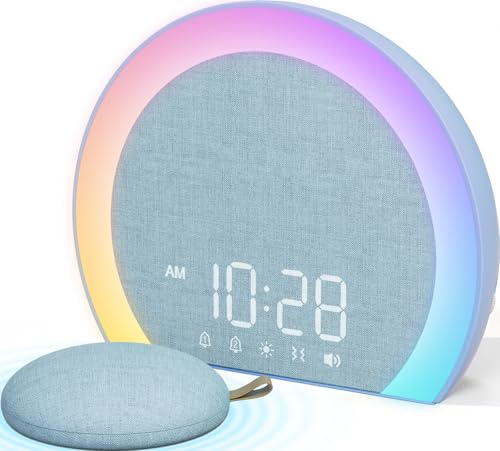
ANJANK Super Loud Alarm Clock with Wireless Bed
The ANJANK Super Loud Alarm Clock combines a powerful 112dB front speaker, an orange wake-up light, and a rechargeable wireless bed shaker to reliably wake heavy sleepers and hearing-impaired individuals. With dual alarms, a full 0-100% display dimmer, and USB-C device charging, it delivers serious waking power for bedrooms with reliable AC outlet access.
Pros
- Cordless bed shaker eliminates tangled cables between your nightstand and mattress while vibrating through pillows.
- Reaches a maximum volume of 112dB across 10 precise levels for exceptionally heavy sleepers and hard-of-hearing users.
- True 0-100% dimmer allows light-sensitive sleepers to completely black out the time display at night.
- Versatile dual alarm scheduling accommodates couples, shift workers, and variable weekday-weekend wake times.
- Shaker puck houses a 1500mAh rechargeable battery, avoiding the recurring cost of disposable alkaline batteries.
Cons
- Main clock unit contains no battery backup and must remain plugged into AC wall power to maintain time and alarm functions.
- The 112dB top volume level is intensely loud and may easily wake other household members in nearby rooms.
- Wireless shaker puck requires periodic recharging every few weeks to prevent unexpected battery depletion.
REACHER Vibrating Alarm Clock Watch
The REACHER Vibrating Alarm Clock Watch provides a silent, personal wake-up via progressive wrist vibrations, making it an excellent choice for couples, dorm residents, and hearing-impaired users. With its phone-free setup, auto-off display, and comfortable woven strap, it delivers reliable morning alerts without disturbing anyone else in the room.
Pros
- Progressive vibration wakes you without blasting noise across a shared bedroom
- Completely standalone operation requires no smartphone pairing, apps, or Wi-Fi
- Auto-off screen keeps the bedroom dark by preventing continuous light emission
- Rechargeable battery lasts up to 7 days with quick magnetic cable attachment
- Lightweight zinc and fabric housing with an adjustable hook-and-loop strap fits 140 mm to 210 mm wrists
Cons
- Supports only one active alarm at a time, requiring daily resets for varying schedules
- Lacks audible sound options, which may not suit sleepers who prefer audio alerts
- Requires wearing a device on the wrist overnight, which some sleepers may find unfamiliar
REACHER Travel Vibrating Alarm Clock
The REACHER Travel Vibrating Alarm Clock is a compact, silent wake-up device that replaces audio chimes with an escalating under-pillow vibration pattern and provides up to seven days of cordless battery life. It is an ideal solution for heavy sleepers, shift workers, and frequent travelers who need reliable waking without disturbing a sleeping partner.
Pros
- Vibration-only operation provides dependable waking without disturbing light-sleeping partners or roommates.
- Rechargeable battery delivers up to seven days of continuous cordless travel and bedside performance.
- Smart ambient light sensor automatically lowers nighttime glare to support a dark, restful sleeping environment.
- Tactile raised-dot snooze button simplifies groggy morning navigation without fumbling for small switches.
Cons
- Completely lacks an audible speaker or chime mode, making it unsuitable for users who need sound-based alerts.
- Requires periodic weekly recharging via USB-C if operated away from a permanent bedside power source.
- Auto-dimming feature adjusts according to ambient room lighting rather than via a manual stepless rotary dial.
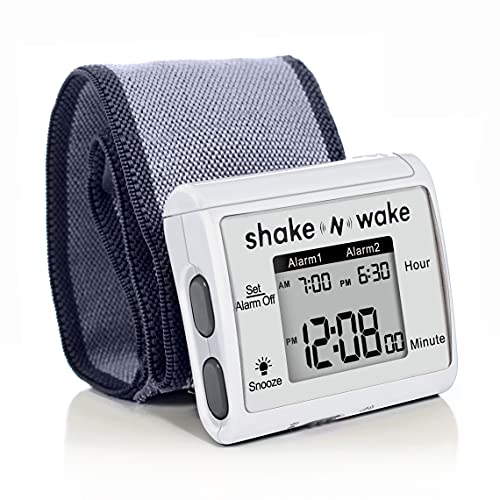
Tech Tools Shake N Wake Silent Vibrating Alarm
The Tech Tools Shake N Wake is a wearable, silent vibrating alarm clock crafted to wake you gently without disturbing a sleeping partner. With dual alarm settings visible on screen, an audible beep toggle, and a backlit display, it is well-suited for shift workers, couples, and hearing-impaired sleepers.
Pros
- Silent vibration wakes the sleeper directly without disturbing a partner sharing the bed
- Both alarm settings appear simultaneously on the primary screen for quick verification
- Can be worn on the wrist or placed beneath a pillow to suit individual sleep habits
- Offers a choice between tactile vibration and standard audible beeping alerts
- Lightweight 0.22-pound form factor provides excellent travel portability without nightstand clutter
Cons
- Vibration strength is designed for standard sleepers and may not provide enough force for heavy sleepers
- Requires one AAA battery that is not included in the package
- Lacks continuous ambient nightstand display illumination found on standard plug-in LED clocks

The Sensory Science and Mechanics of Waking Up to Bedside Alarms
Human arousal from sleep involves a coordinated physiological shift governed by sensory reception, hormonal signaling, and neural state transitions. When examining how people wake up to different alarms, the core distinction lies in which sensory channel engages the brain first. Auditory signals stimulate the auditory cortex, tactile vibrations activate somatosensory mechanoreceptors, and optical changes interact directly with the circadian timing system. Recognizing how these distinct pathways operate enables sleepers to choose devices that match their personal arousal thresholds without creating unnecessary morning fatigue.
Acoustic Awakenings: Sound Pressure Levels, Frequencies, and Volume Ramps
Auditory alarms represent the most common method of waking, yet sound pressure levels drastically alter the waking experience. Standard digital clocks typically emit frequencies between 60 and 75 decibels, which easily rouses light sleepers in quiet residential settings. Deep sleepers, however, frequently sleep through moderate volumes because their central nervous system filters out ambient auditory input during slow-wave sleep stages. High-output bedside units capable of reaching over 100 decibels, with some models climbing up to 112 decibels, overcome this neural gating by delivering acoustic intensity that cannot be ignored.
The escalation curve of an audible alert significantly influences autonomic nervous system activity during waking. Sudden, flatline buzzer bursts instantly trigger a sympathetic nervous response, causing rapid heart rate increases and spikes in morning cortisol. Clocks featuring progressive volume ramps allow the sleeper to awaken during the lower initial decibel threshold before the chime hits peak volume. This gradual ascending structure eases the transition out of sleep, providing reliable awakening while minimizing the jarring panic associated with traditional mechanical buzzers.
Tone variation also impacts how effectively the brain processes a morning alarm. Sharp square-wave frequencies and electronic buzzers cut through bedroom silence quickly, but they often leave the sleeper feeling irritable. Many modern digital clocks offer varied sound profiles, including rain, flowing streams, birdsong, chimes, and piano melodies alongside traditional sirens. Sleepers who awaken to natural acoustic profiles often report lower initial sleep inertia, provided the volume reaches an adequate threshold to achieve conscious arousal.
Tactile Stimulation: Bed Shakers, Under-Pillow Pucks, and Haptic Wristbands
Tactile waking modalities bypass the auditory system entirely, relying instead on physical kinetic energy transmitted directly to the body. Mechanoreceptors located within the skin and deep tissue respond rapidly to rhythmic vibration. Because these somatic pathways remain receptive even when auditory processing is suppressed during deep sleep cycles, physical vibration offers exceptional reliability. This makes tactile arousal an effective primary wake-up method for heavy sleepers, hard-of-hearing individuals, and anyone seeking a silent morning alert.
Hardware designs for tactile alarms fall primarily into two formats: mattress bed shakers and compact under-pillow pucks. Powerful bed shakers, such as wireless units paired with bedside consoles, can be placed between the mattress and box spring or tucked beneath a pillow to shake the entire sleep surface. Wireless models with rechargeable batteries and strong transmission ranges eliminate dangerous bedside cord tangles while delivering multi-level vibration intensities. Under-pillow travel pucks provide similar kinetic alerts in portable formats, using gradual vibration patterns that build in strength to shake the head gently without emitting acoustic noise.
Wearable wristband clocks offer a personal tactile alternative that isolates the waking signal to a single individual. Devices like vibrating watch straps and fabric-covered bands deliver concentrated pulses directly to the wrist, stirring the wearer while allowing a bed partner to sleep undisturbed. Many sleepers choose to pair these personal wearable alarms with an alarm clock and charging station combinations on the nightstand to keep all devices powered overnight. Wrist-based vibration provides reliable morning awareness without the room-filling chaos of loud speakers.
Photobiological Cues: Light Spectrum, Melatonin Suppression, and Dawn Simulation
Visual wake-up systems operate on biological mechanisms deeply intertwined with natural human circadian rhythms. Specialized photoreceptive retinal ganglion cells detect environmental light shifts through closed eyelids, sending neural signals directly to the brain. As light exposure increases, the body naturally downregulates melatonin production while initiating the cortisol awakening response. Waking up to light aligns closely with evolutionary biology, preparing metabolic and cognitive systems for wakefulness minutes before conscious awareness occurs.
The spectral composition and intensity of bedside illumination play a significant role in both sleep preservation and morning alertness. Warm amber and orange tones mimic the early stages of dawn, providing non-jarring illumination that helps the brain stir from sleep without photophobia. Nightstand clocks with multi-color nightlights allow sleepers to choose calming hues that create a soothing bedtime ambiance while remaining dimmable down to zero light. Conversely, exposure to bright yellow and white light upon waking provides the rapid alertness needed to dispel lingering grogginess.
Combining gradual light transitions with traditional alarms creates a layered wake-up strategy that supports smooth morning transitions. Readers interested in gentle optical awakening can consult our sunrise alarm clock options for deep sleepers to explore how light ramps assist heavy sleepers. When light steadily fills the bedroom before an audible chime or vibration engages, the body often transitions from deep sleep to lighter sleep stages naturally. As a result, when the final alert sounds, the sleeper wakes up refreshed rather than startled.
Habituation and Cognitive Interventions: Breaking the Chronic Snooze Habit
Auditory habituation occurs when the brain becomes accustomed to a predictable sound pattern and begins filtering it out as non-threatening background noise. Chronic snoozers often find that their brains seamlessly incorporate familiar smartphone chimes or repetitive beeps into ongoing dreams. This sensory adaptation leads to oversleeping and intensifies sleep inertia, as repeated interruptions fragment the final stages of sleep. Breaking habituation requires introducing novelty, unpredictable stimuli, or active cognitive engagement into the morning routine.

Conditioning-based wake-up devices address habituation by pairing conventional alerts with physical deterrents. The Pavlok Shock Clock 2, for instance, trains the brain by utilizing a customizable sequence of beeps, vibrations, and mild electric zaps. The brain quickly learns to associate the preliminary audio chime or haptic vibration with the impending electric stimulus, prompting immediate conscious awakening to avoid the zap. Over time, this conditioning reshapes the neurological response to waking, turning habitual oversleepers into prompt risers.
Physical and cognitive disarming tasks further dismantle the automated habit of mindlessly slapping the snooze button. Some advanced alarm systems will not silence until the user completes jumping jacks, solves mental riddles, or walks into another room to scan a QR code. Forcing the prefrontal cortex to process complex information immediately ends the twilight state of sleep inertia. Once the sleeper stands upright and engages in purposeful physical motion, the physiological drive to crawl back under the covers decreases dramatically.
Bedside Display Engineering and Nighttime Melatonin Protection
A bedside clock must support sound sleep throughout the night just as effectively as it initiates wakefulness in the morning. Excessive display glare is a frequent complaint among sleepers, as unshielded LED panels can illuminate an entire bedroom and suppress melatonin synthesis. Digital clocks equipped with continuous stepless dimming dials ranging from zero to one hundred percent allow users to dial down backlighting completely. Achieving total display blackout creates an ideal darkroom environment for light-sensitive individuals while keeping the alarm operational.
Display technologies vary considerably across modern digital timepieces, influencing contrast, legibility, and bedroom ambiance. High-contrast segmented displays with RGB color selection allow users to pick night-friendly hues such as deep red, amber, or soft green. Some modern units integrate ambient light photodiodes that automatically lower display brightness when bedroom lights are switched off. This intelligent dimming prevents off-axis glare from disturbing sleep while ensuring the digits remain readable when daytime ambient light returns.
Digit dimensions and viewing angles are equally critical considerations for bedrooms of all sizes. Oversized digits measuring over one inch allow sleepers to glance at the time without squinting or putting on corrective glasses. However, wide-angle legibility should never come at the expense of excessive light bleed into the room. Choosing a display with sharp contrast against a dark background ensures that nighttime time checks remain effortless without compromising dark sleep hygiene.
Physical Interface Ergonomics: Button Layout and Snooze Separation
Operating an alarm clock while half-asleep requires intuitive, fool-proof physical ergonomics. Poorly designed clocks cluster small, identical buttons along the top or rear housing, making it easy to hit the wrong toggle in the dark. Accidentally turning off an alarm entirely when attempting to activate snooze is a frequent cause of morning oversleeping. High-quality bedside units prevent this by offering wide physical separation between the primary snooze control and the alarm disarm switch.
Tactile button identification allows groggy users to navigate controls strictly by touch without turning on overhead room lights. Raised-dot tactile buttons, such as those found on dedicated travel vibrating clocks, provide instant finger-tip feedback even in pitch darkness. Oversized top-mounted snooze bars give users an expansive, forgiving target that can be pressed with a simple palm tap. When controls are physically distinct, managing alarms during sleepy moments becomes second nature.
Dedicated mechanical hardware switches for dual-alarm scheduling eliminate the need to navigate complex digital software menus. Clocks that feature separate physical sliders for alarm one and alarm two make confirming wake-up status straightforward before turning in for the night. Independent scheduling is particularly valuable for shift workers and couples managing alternating schedules throughout the week. Straightforward physical controls eliminate programming errors and provide clear visual confirmation of active alarm routines.
Power Delivery, Battery Architecture, and Fail-Safe Wake-Up Reliability
Power architecture directly dictates where and how an alarm clock operates within the bedroom environment. Mains-powered bedside units with dedicated AC adapters provide steady, continuous power for high-output speakers, multi-color nightlights, and integrated device charging ports. Modern bedside clocks frequently include USB-A and USB-C output ports, consolidating nightstand wiring and charging smartphones directly from the clock base. However, wall-tethered designs require an accessible electrical outlet and remain vulnerable to residential grid fluctuations if proper backup systems are absent.
Understanding the distinction between active operational battery backup and passive memory retention is vital for avoiding missed alarms. Many plug-in clocks feature a backup battery compartment, but these cells often only preserve internal quartz timekeeping during a blackout while disabling the display and speaker. Conversely, true operational backup systems allow the alarm to sound and drive physical vibration pucks even when wall power cuts out unexpectedly. Sleepers living in areas prone to seasonal thunderstorms or brownouts must verify whether their clock maintains active waking alerts during outages.
Rechargeable battery-powered and standalone primary cell clocks offer complete freedom from wall outlets. Compact vibrating wristbands and travel clocks equipped with internal lithium-ion batteries typically provide up to a full week of operation on a single charge. Magnetic snap-on charging cables and standard USB-C inputs make recharging these portable devices straightforward at home or on the road. For ultra-lightweight travel or emergency kits, compact clocks running on standard AAA cells provide dependable waking performance without needing access to a power grid.
Practical Sleep Profiles: Aligning Wake-Up Modalities with Daily Needs
Selecting the most effective wake-up modality depends entirely on individual sleep physiology, living arrangements, and morning responsibilities. Heavy sleepers and hard-of-hearing users gain the greatest reliability by combining high-decibel acoustic sirens with powerful bed-shaking vibration pucks. Roommates, couples on mismatched work shifts, and light sleepers benefit most from silent wristbands or under-pillow tactile alerts that wake only the intended individual. Meanwhile, chronic snoozers who struggle with morning grogginess can overcome sleep inertia through progressive light ramps and active cognitive disarming tasks.
Ultimately, building a dependable morning routine is about choosing sensory cues that work with the body rather than fighting against it. By evaluating auditory volume curves, tactile vibration strengths, visual dawn transitions, and reliable power architectures, any sleeper can establish an intentional wake-up system. Moving away from abrasive, unpredictable smartphone alerts and investing in a dedicated bedside alarm restores order to the bedroom. With the right sensory triggers in place, waking up transforms from a daily struggle into a smooth, predictable start to the day.
About the author
Daniel Noyed is a Certified Sleep Science Coach and experienced product editor with extensive knowledge of sleep health and sleep-related products. He has hands-on experience testing hundreds of products and translating technical features into practical guidance for everyday sleepers.