
Do Natural Light Alarm Clocks Work: Practical Guide for 2026
Do Natural Light Alarm Clocks Work? Learn how dawn simulation, lux curves, and bedside audio alter your morning routine in this November 2026 guide.
 By Daniel Noyed
Updated October 22, 2026
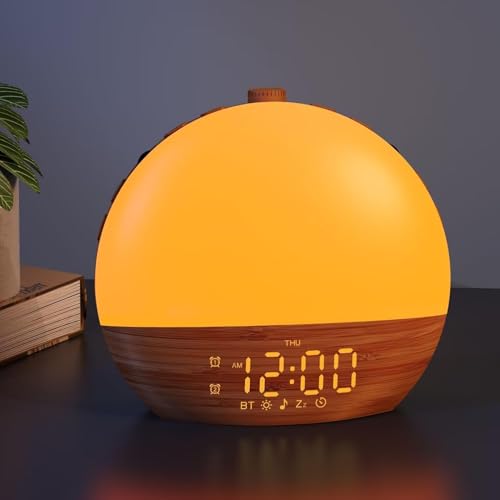
Waking up to a sudden, piercing buzzer triggers an immediate burst of stress and morning grogginess. Traditional alarm clocks jolt the central nervous system out of deep sleep without giving the body time to adjust its internal chemistry. Sleepers tired of harsh awakenings frequently ask, do natural light alarm clocks work, or if morning illumination is merely an aesthetic gimmick. Sunrise simulation clocks address this morning friction by using calibrated artificial light that gradually fills the bedroom before any audio chime sounds.
These bedside devices mimic a natural outdoor dawn by shifting from a dim amber glow to crisp morning light over several minutes. Research into bedside sleep hygiene and top-rated alarm clocks for bedrooms shows that optical cues stimulate alertness much more smoothly than sudden noise alone. Standalone wake-up lights also eliminate the need to keep blue-light-emitting smartphones right next to the bed. Evaluating light output, timing curves, and backup power architecture reveals how these clocks perform in daily living spaces.
| Award | Product | ACR Score About ACR ScoreThe ACR Score is our own rating from 0 to 10, based on performance, design and build, ease of use, and value. It reflects independent research and is never influenced by manufacturers, retailers, or affiliate commissions. Learn more › | |
|---|---|---|---|
| Best Overall |
Thybro Sunrise Alarm Clock with Sound Machine
|
9.2/10 | Buy |
| Best Premium |
 Odokee Sunrise Alarm Clock and Sound Machine |
9.1/10 | Buy |
 Philips SmartSleep HF3520/60 Wake-Up Light Alarm |
8.6/10 | Buy | |
| Best Value |
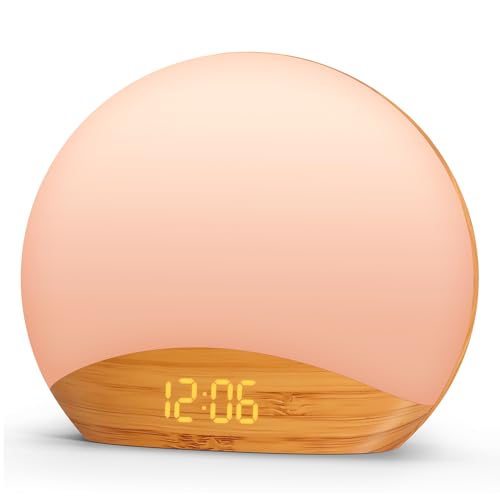 REACHER Wood Grain Sunrise Alarm Clock with 26 |
8.4/10 | Buy |
| Best Budget |
 Wkzay Sunrise Alarm Clock with Sound Machine |
8.1/10 | Buy |
 JALL Full-Screen Sunrise Alarm Clock with Wake-Up |
8.1/10 | Buy |
Thybro Sunrise Alarm Clock with Sound Machine
The Thybro Sunrise Alarm Clock combines a gradual 0.5 to 300 lumen dawn simulation light with a 30-sound sleep machine and independent dual alarms. It features physical knobs and top-mounted buttons for simple, app-free nightstand adjustments, making it a practical choice for sleepers seeking gentle morning lighting and evening relaxation.
Pros
- Gradual sunrise simulation transitioning from 0.5 to 300 lumens provides gentle visual wake-up lighting
- Physical control knobs and large top-mounted buttons make daily adjustments straightforward without confusing app setup
- Dual independent alarms support separate weekday and weekend wake schedules
- Extensive audio selection features 30 distinct nature sounds paired with 30 volume adjustment steps
- Evening sunset fade mode pairs warm amber light dimming with continuous looping sleep audio
Cons
- Product specifications do not list battery backup details for maintaining time or sounding alarms during AC electrical outages
- Primary digital clock display dimensions and numeral heights are not specified in the manufacturer data
- Measuring approximately 7.5 inches wide, the casing footprint requires ample surface room on smaller nightstands
Odokee Sunrise Alarm Clock and Sound Machine
The Odokee Sunrise Alarm Clock combines a gradual 5-to-60-minute wake-up light with a 25-sound sleep machine, full-range 0-100% display dimmer, and app-free physical controls. It is a practical bedside upgrade for sleepers seeking a gentler morning routine without smartphone clutter on the nightstand.
Pros
- Stepless 0-100% display dimming allows users to lower nightstand illumination to comfortable levels for light-sensitive sleepers
- Wide selection of 25 sleep sounds across four distinct noise colors provides tailored acoustic masking for street noise or snoring
- No smartphone application or wireless account setup required, ensuring complete offline nightstand functionality
- Customizable sunrise duration between 5 and 60 minutes adapts easily to fast risers or sleepers who need an extended dawn progression
- Silent wake-up mode with sunrise light alone enables early risers to wake without jarring a sleeping partner
Cons
- Product specifications do not list a battery backup feature to preserve timekeeping during electrical power interruptions
- The 7-inch by 7-inch circular housing requires a moderate amount of dedicated surface area on compact nightstands
- Lacks Wi-Fi synchronization or mobile app integration for users who prefer smartphone-managed alarm schedules
Philips SmartSleep HF3520/60 Wake-Up Light Alarm
The Philips SmartSleep HF3520/60 combines colored sunrise simulation with natural wake-up sounds, an automatic dimmable display, and a 20-setting reading lamp. It is a dependable choice for light-sensitive sleepers and morning commuters seeking a gentler bedside routine.
Pros
- Dual-function design serves as both a gradual dawn simulator and a multi-level bedside reading lamp
- Automatic display dimming helps prevent unwanted ambient light glow during pitch-black sleep hours
- Choice between five natural sound profiles and FM radio wake-up audio caters to varied preferences
- Tap snooze feature makes silencing the morning chime straightforward without fumbling for small switches
- Substantial circular base and 2.45-pound weight keep the unit firmly anchored on the nightstand
Cons
- Generous 5.7 x 7.8 x 7.5 inch round footprint occupies significant space on smaller bedside tables
- Does not include integrated USB charging ports or wireless charging surfaces for mobile devices
- Light-based waking cues may be less effective for individuals who wear sleep masks or turn completely away
REACHER Wood Grain Sunrise Alarm Clock with 26
Combining an adjustable 5-60 minute sunrise simulation with 26 ambient sleep sounds, this REACHER alarm clock provides a gentle wake-up routine and nightstand sound masking. Its full-range 0-100% display dimmer and settings backup battery make it a practical choice for light-sensitive sleepers.
Pros
- Customizable 5 to 60 minute dawn simulation for a gradual wake-up experience
- Stepless 0 to 100% display dimmer eliminates harsh nighttime light bleed
- Generous 26-track sound library with a versatile 5 to 180 minute shutoff timer
- Internal memory battery safeguards alarm and lighting preferences during blackouts
- Wood grain exterior offers an attractive alternative to standard plastic clocks
Cons
- Internal battery is intended for settings preservation rather than fully cordless lamp operation
- Does not include an FM radio tuner for sleepers who prefer wake-up broadcasts
- Consolidates lighting and audio controls on a compact frame, requiring brief initial familiarity
Wkzay Sunrise Alarm Clock with Sound Machine
Combining an adjustable 10 to 60-minute sunrise simulation with an integrated 30-track sound machine, this Wkzay bedside wake-up light offers tactile backlit controls without requiring Wi-Fi or smartphone apps. It is a practical choice for dark winter mornings, light-sensitive sleepers, and anyone seeking a screen-free bedroom routine.
Pros
- App-free and Wi-Fi-free design supports healthy sleep hygiene and bedroom digital detoxing
- Customizable 10 to 60-minute dawn progression lets sleepers tailor light ramp duration and peak intensity
- Extensive 30-sound audio library paired with a broad 10 to 480-minute sleep auto-off timer
- Compact 3.74 x 3.74 x 7.08-inch vertical footprint with an attractive wood grain finish
- Internal memory saves alarm, sound, and light preferences during unexpected power interruptions
Cons
- Internal memory preserves settings during power loss but requires continuous USB power to illuminate and sound
- Fixed 9-minute snooze duration cannot be adjusted to custom intervals
- Brightness uses 13 stepped levels rather than a continuous stepless dial
JALL Full-Screen Sunrise Alarm Clock with Wake-Up
The JALL Full-Screen Sunrise Alarm Clock pairs gradual dawn simulation with dual alarms, 25 relaxing sleep sounds, and an L0 blackout display mode for low-glare sleep. It is a capable bedside light and sound machine for heavy sleepers and structured households.
Pros
- Broad front full-screen panel offers expansive sunrise simulation lighting across the nightstand
- L0 display blackout setting provides complete dark-room comfort without background halo glow
- Dual alarm scheduling includes dedicated Everyday, Weekday, and Weekend routine options
- Bluetooth time synchronization eliminates tedious manual hour and minute adjustments
- Offers 25 natural sounds, white noise tracks, and FM radio station alarm tones
Cons
- Sunrise light simulation is most effective when sleeping facing toward the clock face
- The 7.2-inch circular front panel occupies more vertical nightstand space than basic travel clocks
- Requires initial Bluetooth pairing to complete automatic time synchronization
The Science and Bedroom Reality of Natural Light Alarm Clocks
Natural light alarm clocks do work effectively for many sleepers, but their success relies heavily on room placement, light intensity, and consistent sleep habits. Rather than startling the brain with sudden high-decibel noise, dawn simulators use gradual illumination to prompt biological wake-up signals. Sleepers often report reduced grogginess and a smoother transition into alertness on dark winter mornings or in windowless rooms. Understanding the mechanical and physiological factors behind these bedside lamps helps you determine whether dawn simulation suits your morning routine.
How Dawn Simulation Interacts With Human Circadian Biology
Human eyes contain specialized photoreceptor cells that detect changes in ambient room illumination even through closed eyelids. When a bedside clock initiates a simulated dawn, these retinal sensors register the shift from darkness to soft light and transmit signals directly to the brain. This exposure helps trigger the natural suppression of melatonin, which is the primary hormone responsible for promoting deep sleep. At the same time, the body initiates the cortisol awakening response, gently preparing muscles and cognitive systems for daytime activity.
Traditional audio alarms bypass this gradual endocrine transition entirely by forcing an immediate state change from restorative sleep to panic. This abrupt disturbance often exacerbates sleep inertia, leaving people feeling heavy, disoriented, and lethargic for hours after climbing out of bed. Gradual dawn illumination allows the brain to transition naturally through lighter sleep stages before the final wake-up time arrives. While a simulated sunrise cannot compensate for severe sleep deprivation, it helps align morning arousal with natural circadian biology.
It is also helpful to distinguish dawn simulation from bright light therapy boxes used for seasonal mood challenges. Light therapy devices typically produce ten thousand lux and require thirty minutes of direct, open-eyed daytime exposure. Sunrise alarm clocks, in contrast, provide lower illuminance levels engineered specifically to ease the sleeping brain across the threshold of wakefulness. This distinction makes wake-up lights an accessible everyday bedroom tool rather than a specialized daytime medical treatment.
Illuminance Output and the Inverse Square Law of Light
The physical effectiveness of a natural wake-up light depends largely on its luminous output and its proximity to your pillow. Light intensity follows the inverse square law, meaning the illuminance reaching your eyes decreases rapidly as the lamp moves farther away. A clock that produces several hundred lumens on its face may provide sufficient lux when placed on a nearby nightstand, but its effect weakens significantly across a large master bedroom. Models like the Thybro sunrise clock feature adjustable output ranging from a subtle 0.5 lumens up to 300 lumens to accommodate different room layouts.
Positioning the clock within two to three feet of your head ensures that the light reaches your eyelids at an effective angle. If the lamp sits behind a tall headboard or too low beside a thick mattress, the visual simulation may fail to stimulate retinal photoreceptors properly. Clocks such as the Philips SmartSleep provide twenty distinct brightness settings, allowing users to dial in the appropriate bedside reading and waking intensity. Testing different nightstand angles helps balance effective optical stimulation with comfortable bedside reach.
Panel design also plays an important role in how evenly illumination spreads across your sleeping area. Clocks with compact, concentrated lenses can create harsh directional glare that feels uncomfortable if you turn toward the nightstand. In contrast, designs like the JALL sunrise clock utilize a broad front full-screen panel to distribute light softly across a wider viewing field. A broad luminous surface creates a more realistic dawn effect that fills the immediate sleeping zone without creating harsh pinpoint shadows.
Sunrise Duration Curves and Transition Programming
A natural dawn does not appear instantly, and simulated morning light must ramp up slowly to avoid startling the sleeper. Many modern sunrise clocks permit customizable simulation intervals ranging from five minutes up to a full sixty minutes. For example, the REACHER wood grain clock and the Odokee white noise alarm let users set sunrise durations between 5 and 60 minutes. Shorter intervals of ten or fifteen minutes can feel too rushed for deep sleepers, while sixty-minute spans may illuminate the bedroom earlier than desired.
Most sleepers achieve the most consistent results with a gradual twenty- to thirty-minute ramp curve. During this window, the lamp gently shifts from a dim, non-intrusive glow to full ambient daylight, allowing sleep stages to lighten smoothly. Units like the Wkzay sunrise clock offer adjustable 10 to 60 minute intervals with thirteen brightness levels to prevent sudden visual steps. Starting at an ultra-low baseline threshold of one percent brightness prevents an abrupt burst of glare from disturbing early morning rest.
Spectral progression is equally critical during the dawn simulation ramp. High-quality wake-up lights begin with long-wavelength warm red and deep amber tones that carry minimal energy. As the programmed interval progresses, internal light-emitting diodes shift through soft orange into crisp, warm yellow daylight. This gradual color temperature progression mimics the natural optical spectrum of the morning sun, preparing the eyes comfortably before full brightness is reached.
Audio Reinforcement and Multi-Sensory Wake Routines
Light alone may not always arouse someone who sleeps facing away from the lamp, buries their head beneath pillows, or experiences profound sleep inertia. For these sleepers, our sunrise alarm clock guide for deep sleepers highlights why pairing dawn simulation with acoustic reinforcement is essential. A dependable wake-up system utilizes light as the primary gradual prompt and finishes with an audible alarm tone at the scheduled wake time. This multi-sensory approach ensures that even deep sleepers wake up on time without relying entirely on sight.
Modern sunrise alarm designs replace harsh, electronic buzzer squeals with high-fidelity nature soundscapes, FM radio, or gentle acoustic melodies. The Thybro unit includes a speaker with low harmonic distortion that plays chirping birds, ocean waves, and forest streams at adjustable volumes. Similarly, the Odokee clock incorporates a five-watt stereo speaker capable of streaming music or soothing wake sounds to greet the morning pleasantly. Providing twenty to thirty volume steps ensures that the final audio alert remains gentle for light sleepers yet audible for deeper rests.
Bedtime Sunset Simulation and White Noise Integration
The optical technology that awakens the body in the morning can also promote relaxation and melatonin release at night. Many advanced bedside models incorporate a sunset simulation mode that reverses the morning process over fifteen to sixty minutes. As the lamp fades from warm amber hues into complete darkness, it signals the pineal gland that the sleep window has arrived. Clocks like the Philips SmartSleep and Thybro make evening wind-down routines consistent by pairing fading light with ambient sound.
Masking unexpected environmental disruptions is another critical factor in maintaining healthy overnight sleep continuity. Bedside units like the Odokee, REACHER, and JALL clocks integrate dedicated sound machines featuring twenty-five or more distinct audio profiles. These options include white noise, pink noise, brown noise, falling rain, and rhythmic ocean swells designed to muffle household traffic or snoring. Built-in sleep timers running from ten to 480 minutes automatically shut off sounds and nightlights after you drift off, preventing unnecessary overnight power consumption.
Nightstand Display Dimming and Zero-Lux Sleep Environments
A wake-up light becomes counterproductive if its glowing time display illuminates the bedroom throughout the night. Sleep researchers emphasize that keeping the sleep space as dark as possible prevents nighttime awakenings and preserves natural melatonin production. Cheaper digital clocks often feature stepped dimmers that remain stubbornly glaring even on their lowest setting. In contrast, clocks with continuous zero to one hundred percent stepless dimming allow you to dial display brightness down to an imperceptible glow.
Some models, such as the JALL full-screen wake-up clock, provide a dedicated blackout mode that shuts the front display off completely. Other models use amber or soft red numerals that emit less melatonin-disrupting blue wavelength energy into the room. Reviewing options like bedside alarm clocks with integrated charging shows how modern nightstand devices balance practical timekeeping with low-glare visibility. Ensuring the clock display can disappear into the dark protects sensitive sleepers from nocturnal screen distractions.
Auto-dimming sensors represent another practical display feature on premium wake-up lights. Built-in photodiodes constantly monitor ambient bedroom lighting, automatically reducing clock numeral brightness when bedroom lights are extinguished. When morning arrives or room lights turn on, the display automatically increases its contrast so the time remains readable from across the room. This automated adjustment eliminates the need to fiddle with dimmer knobs every evening before closing your eyes.
Power Architecture and Electrical Outage Resilience
Bedside electronics must provide reliable performance even when municipal power grids experience sudden voltage dips or overnight storm outages. Buyers must distinguish between active operational battery backup systems and passive memory-retention circuits. A memory-only backup relies on a small coin cell or internal capacitor to retain the current time and programmed alarm schedules during an outage. However, it will not illuminate the light panel or drive the audio speaker while mains alternating current is disconnected.
Clocks like the REACHER model integrate internal backup batteries that protect settings from vanishing during unexpected power interruptions. Other units, such as the Wkzay and Thybro models, utilize internal non-volatile memory chips that save volume, brightness, and dual-alarm configurations across reboots. When mains electricity is restored, these clocks automatically resume standard operation without requiring a manual reset. Checking whether a unit uses a standard USB power adapter or proprietary wall transformer ensures easy cable replacement if the original plug is damaged.
Timekeeping accuracy is another crucial element of power and hardware architecture. Standard digital alarm clocks rely on quartz crystals that can drift by several seconds or minutes over months of operation. Advanced wake-up lights, such as the JALL model, incorporate automatic time synchronization via Bluetooth connection to maintain precision timekeeping. This synchronization ensures that scheduled morning alarms trigger at the exact expected minute without requiring periodic manual clock adjustments.
Physical Control Layout and Interface Ergonomics
Operating a bedside clock should remain intuitive and effortless, especially when adjusting settings in a pitch-black bedroom. Clocks with top-mounted physical knobs, dedicated rotary dials, and clearly tactile buttons minimize morning frustration. Designs from Thybro and Odokee prioritize physical dials over finicky touchscreens, allowing users to alter brightness and volume in seconds. Dedicated sliding toggles for alarm activation prevent sleepy users from accidentally canceling a morning schedule instead of engaging snooze.
Snooze ergonomics also represent a critical consideration for daily convenience and sleep hygiene. The Philips SmartSleep features a responsive tap-to-snooze function, while the Wkzay clock includes an illuminated nine-minute snooze button. The JALL model allows customizable snooze durations ranging from five to twenty minutes to accommodate individual waking preferences. Separate weekday and weekend alarm schedules, featured on models like the Thybro and JALL clocks, ensure family members maintain consistent routines without daily reprogramming.
Evaluating Practical Limitations and Individual Suitability
Natural light alarm clocks deliver substantial benefits, but they are not an absolute solution for every sleeping challenge. Individuals who sleep facing strictly away from their bedside table or pull thick duvets over their eyes may miss the visual cue entirely. Similarly, shift workers who sleep during bright daytime hours may find simulated dawn less impactful against natural window glare. In these scenarios, combining the visual sunrise with a dependable audio alarm or room-darkening blackout curtains produces the most reliable results.
For the majority of indoor sleepers, dawn simulation provides a noticeable improvement in morning mood, alertness, and energy. Replacing harsh smartphone chimes with progressive light and nature sounds fosters a gentler, more predictable start to the day. Standalone clocks from brands like Philips, REACHER, Odokee, JALL, and Thybro offer versatile solutions tailored to varied bedroom aesthetics and budgets. Selecting a model with customizable sunrise timing, reliable display dimming, and tactile physical controls creates a comfortable and dependable wake-up environment.
About the author
Daniel Noyed is a Certified Sleep Science Coach and experienced product editor with extensive knowledge of sleep health and sleep-related products. He has hands-on experience testing hundreds of products and translating technical features into practical guidance for everyday sleepers.