
Does Voip Work With Alarm Systems: Practical Guide for 2026
Review how Does Voip Work With Alarm Systems in October 2026, covering adapter limits, power outage risks, and modern wireless alerting hardware.
 By Jeremy Klein
Updated October 6, 2026
By Jeremy Klein
Updated October 6, 2026
Many property owners question whether digital telephone lines can reliably transmit critical notifications when upgrading their communication setup. Transitioning from traditional copper landlines to digital internet telephony frequently introduces unexpected compatibility hurdles for security panels, facility bells, and property alert sounders. When homeowners and facility managers ask whether does voip work with alarm systems, the answer involves important technical trade-offs between analog signaling, digital packet conversion, and line stability. While modern internet-connected alert hardware functions seamlessly over local networks, legacy dialers often struggle when transmitting frequency tones across compressed digital voice channels. Ensuring that alert notifications reach your monitoring center or bedside alarm clocks requires understanding how internet phone adapters handle data packets.
Analog dialers were engineered around continuous electrical line voltage supplied directly by central telephone utility offices. Voice over IP services, by contrast, depend on local power outlets, broadband modems, and analog telephone adapters that convert tones into digital voice packets. If an electrical storm knocks out local utility power, standard internet routers shut down immediately unless protected by dedicated auxiliary battery backup hardware. In addition, aggressive audio compression codecs can scramble the exact dual-tone multi-frequency signals that monitoring stations require to identify security events. Exploring these underlying communication mechanisms helps you choose the right hardware configuration and avoid silent transmission failures.
| Award | Product | ACR Score About ACR ScoreThe ACR Score is our own rating from 0 to 10, based on performance, design and build, ease of use, and value. It reflects independent research and is never influenced by manufacturers, retailers, or affiliate commissions. Learn more › | |
|---|---|---|---|
| Best Value |
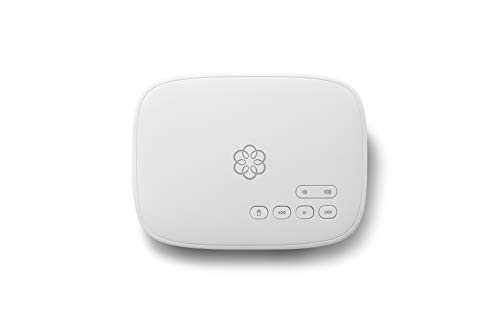
Ooma Telo VoIP Home Phone Service Base Station
|
7.8/10 | Buy |
| Best Premium |
 Dakota Alert DCRH-4K Plus Wireless Driveway Alarm
|
8.8/10 | Buy |
 Dakota Alert DCMA-4K Plus Wireless Driveway Alarm
|
7.8/10 | Buy | |
| Best Overall |
 Netbell Industrial Break Time Alarm & Paging
|
9.2/10 | Buy |
| Best Budget |
 AmzDeals 2-Pack 10-Foot RJ12 6P6C Straight Cable
|
8.8/10 | Buy |
|
AmzDeals 2-Pack 12ft RJ12 6P6C Straight Cable
|
8.1/10 | Buy |
Ooma Telo VoIP Home Phone Service Base Station
The Ooma Telo VoIP base station provides crystal-clear nationwide calling and 911 alerts over high-speed internet with low monthly fees. It is an ideal home communication hub for seniors, families, and digital detoxers looking to keep distracting smartphones out of the bedroom.
Pros
- Enables phone-free sleep environments by keeping emergency contact lines open without bedside mobile phone notifications
- Clear PureVoice HD audio transmission ensures intelligible conversations across household rooms
- Compact 7.8 x 1.7 x 5.9 inch footprint fits neatly on a desk, nightstand, or entryway table
- Includes essential security and utility features like 911 emergency alerts and sensor integration
- Backed by 24/7 customer support and a 1-year manufacturer warranty
Cons
- Requires an active high-speed internet connection and payment of applicable monthly taxes and fees
- Functions as a VoIP communications hub rather than a standalone clock, lacking an integrated digital time display or alarm buzzer
- Requires connection to a separate telephone handset to place and receive bedside calls
Dakota Alert DCRH-4K Plus Wireless Driveway Alarm
The Dakota Alert DCRH-4K Plus is a long-range vehicle detection system pairing an outdoor 25-foot rubber hose sensor with an indoor receiver featuring 16 selectable tunes. With up to a one-mile wireless transmission range, it provides dependable auditory notification for rural homeowners, shift workers, and property managers seeking reliable vehicle detection.
Pros
- Up to one-mile wireless communication range reaches deep inside large homes, workshops, or outbuildings
- 16 selectable receiver tunes allow clear auditory identification of incoming driveway activity
- Rubber hose sensor triggers specifically on vehicle weight to reduce false animal or weather alerts
- Transmitter operates for a year or more on a standard 9-volt battery without solar panel dependency
- Flexible pairing supports up to 16 transmitters per receiver and unlimited receivers across a property
Cons
- Requires laying an exposed 25-foot rubber hose across the driveway which requires care during snowplowing
- Does not include the required 9-volt battery for the outdoor transmitter
- Designed strictly for vehicle pressure detection and does not alert to pedestrian foot traffic
Dakota Alert DCMA-4K Plus Wireless Driveway Alarm
The Dakota Alert DCMA-4K Plus is a long-range wireless motion alert kit featuring a 1-mile signal reach and four adjustable volume settings to notify you of perimeter movement right from your bedroom or living space. It is an ideal security alert solution for rural homeowners, shift workers, and sleepers who need reliable boundary awareness without screen glare.
Pros
- Exceptional 1-mile wireless range easily covers acreage, rural driveways, and obstructed residential properties.
- Four selectable volume settings let you adjust alert sound levels to match sleeping habits or room acoustics.
- Effortless code-learning setup eliminates complicated wiring or network configurations.
- Sensor runs for a year or more on a standard 9V battery for minimal maintenance.
- Scalable ecosystem supports up to 16 sensors per receiver and unlimited receivers across the home.
Cons
- Does not include an illuminated digital clock display, backlit time readout, or traditional wake-up timekeeper functions.
- Lacks bedside amenities such as integrated USB charging ports, Qi wireless pads, or snooze controls.
- Receiver dimensions of 9.1 x 9.1 x 9.1 inches require a sizable footprint on smaller nightstands.
Netbell Industrial Break Time Alarm & Paging
The Netbell Break Time Paging System is an industrial-grade scheduled alarm solution featuring dual 122dB horn speakers, VoIP phone integration, and web-based scheduling for up to 500 daily shift and break events. It is designed specifically for facility managers, warehouses, and commercial operations needing automated, high-output audible schedule alerts rather than a bedside alarm clock.
Pros
- Delivers powerful 122dB audio output through dual horn speakers designed for high-noise environments.
- Web-based scheduler supports up to 500 distinct daily shift, lunch, and break notifications.
- Integrates directly with existing VoIP desk phone systems for immediate facility-wide paging.
- Supports pre-recorded emergency broadcast messages and multiple activation points.
- Scalable zone setup allows targeted alerts across specific warehouse departments.
Cons
- Strictly designed for industrial facilities and large commercial workshops, making it completely unsuitable for residential bedrooms.
- Requires network configuration and VoIP infrastructure rather than standard plug-and-play bedside setup.
- Does not feature a traditional visual time display, snooze button, or bedside charging ports.
AmzDeals 2-Pack 10-Foot RJ12 6P6C Straight Cable
This AmzDeals two-pack delivers heavy-duty 10-foot straight-wired RJ12 6P6C modular cables built with 26AWG pure copper and 50-micron gold-plated contacts. It provides dependable signal connectivity for motorized adjustable bed bases, bedroom alarm systems, and modular communication hardware.
Pros
- Solid 100% pure copper 26AWG conductors maintain dependable signal conductivity
- 50-micron gold-plated contact pins resist oxidation and preserve clean electrical contact
- Generous 10-foot length provides flexible routing around bed bases and nightstand furniture
- Comes in a convenient two-pack backed by domestic USA manufacturing and a lifetime warranty
Cons
- Straight-through wiring pinout is not compatible with reverse-wired standard telephone handset cords
- Uses 6P6C RJ12 modular plugs that will not fit larger RJ45 network jacks or smaller 4P4C handset ports
- Ten-foot length may create excess cord slack that requires bundling in compact bedside setups
AmzDeals 2-Pack 12ft RJ12 6P6C Straight Cable
The AmzDeals 2-Pack 12-Foot RJ12 6P6C Straight Wired Cable provides a reliable pure copper link for motorized adjustable bed bases, home alarm consoles, and bedside communications. It is an ideal pick for anyone needing dependable, interference-free cord replacement for motorized bedroom furniture or wired alarm hardware.
Pros
- Built with 26AWG pure copper core wires for reliable electrical conductivity
- 50-micron gold plating on modular pins resists oxidation in humid home environments
- Generous 12-foot span enables flexible cable routing behind heavy bedroom furniture
- Direct straight-wired pinout matches motorized bed bases and alarm system terminals
- Made in the USA and backed by a comprehensive lifetime warranty
Cons
- Straight-through wiring is not compatible with reverse-pinned voice telephone equipment
- Passive accessory cable that does not provide standalone clock, display, or alarm functions
- 12-foot length may create excess slack in compact bedside setups without cable ties
Technical Realities of VoIP and Alarm System Integration
Connecting a security or alert panel to an internet telephone connection is technically feasible, but it requires addressing fundamental differences in signal transmission. Traditional communicators rely on analog frequency tones that were designed for continuous copper circuits, whereas internet voice platforms divide sound into digitized data packets. When evaluating whether does voip work with alarm systems, users must recognize that successful communication depends heavily on how the digital voice adapter handles compression and jitter. Modern native IP systems and smart internet hubs process alerts without difficulty, but retrofitting older dialers onto digital lines introduces vulnerabilities that demand careful hardware selection.
How Analog Alarm Communicators Interact with Digital Voice Networks
Standard alarm control panels utilize Dual-Tone Multi-Frequency signaling or specialized reporting formats like Contact ID and SIA to transmit account numbers and event codes. On an analog copper line, these tones travel as uncompressed electrical waveforms with minimal delay and virtually zero packet degradation. When an analog signal enters a digital telephone adapter, the device samples the audio stream, compresses the waveform into data packets, and sends it across the internet. If packet loss, jitter, or network latency occurs during transmission, the receiving station cannot decode the handshake tones, resulting in a communication failure.
Audio compression algorithms represent the most common cause of failed data transfers between alarm dialers and digital telephone networks. Many consumer internet voice providers configure their networks to use high-compression codecs such as G.729 to conserve bandwidth during standard voice calls. While human speech remains easily intelligible under G.729 compression, the algorithm strips out subtle harmonic frequencies and distorts the precise pitch of alarm tones. Alarm transmission requires an uncompressed codec such as G.711, which transmits audio without discarding essential waveform details. Even with G.711 enabled, echo cancellation and silence suppression features within digital adapters can inadvertently clip transmission signals before the monitoring receiver confirms the alert.
The Role of Analog Telephone Adapters and Physical Cabling
Connecting an analog security terminal to a broadband network requires an Analog Telephone Adapter, commonly referred to as an ATA. Hardware like the Ooma Telo VoIP Free Internet Home Phone Service connects directly to a residential broadband router and provides a standard modular telephone jack for legacy hardware. The internal processing engine converts outgoing analog signals into digital packets using proprietary voice optimization technologies like PureVoice HD. While these digital voice platforms support residential phone service, fax machines, and integrated home security sensors, direct connection of third-party legacy dialers requires precise configuration to prevent signal clipping.
Physical interconnect cables also play a decisive role in maintaining reliable signaling between alarm modules, telephone adapters, and distribution blocks. Using quality wiring like the AmzDeals 2-Pack 10 Feet Black RJ12 6P6C Straight Wired Cable or the longer AmzDeals 2-Pack 12 Feet Black RJ12 6P6C Straight Wired Cable helps eliminate physical signal degradation. These cables feature heavy-duty 26AWG 100 percent pure copper core wires that minimize electrical resistance across the run. Furthermore, the 50-micron gold-plated contacts on the RJ12 modular connectors resist corrosion and maintain solid contact pressure inside the adapter jacks, which is vital when transmitting sensitive data tones.
Pinout configurations require close inspection when selecting telephone cords for specialized alert communicators. Standard residential telephone cords utilize 6P2C or 6P4C RJ11 connectors with reversed wiring designed strictly for voice handsets. Industrial alarm communicators, data modems, and modular expansion ports often specify RJ12 6P6C straight-wired cables, where pin one connects directly to pin one across the entire span. Installing a reversed voice cord into a terminal expecting straight-through wiring can invert the polarity or disconnect auxiliary signaling pins entirely. Verifying both conductor gauge and connector pinout ensures that physical cabling does not introduce unnecessary resistance or line faults into the communication path.
Electrical Power Vulnerabilities and Grid Outage Risks
Power reliability highlights a major structural difference between traditional copper telephone wiring and internet-based telephone systems. Legacy landlines receive independent low-voltage direct current power directly from telephone company central offices, allowing wired phones to operate during severe neighborhood blackouts. A digital voice adapter, cable modem, and wireless router all require continuous alternating current power from residential wall outlets to function. When severe weather downs power lines, internet-based phone communication ceases instantly unless every networking component is connected to an uninterruptible power supply.
While alarm control panels normally include internal rechargeable lead-acid or gel-cell backup batteries to operate during power interruptions, those batteries only keep the panel energized. If the broadband modem or digital voice terminal on the wall drops offline due to a lack of power, the security panel cannot transmit its emergency outbound report. Property owners relying on internet lines must install dedicated battery backup units for their network hardware and calculate sufficient runtime to outlast regional power cuts. Similarly, homeowners who monitor perimeter alerts from their nightstands often pair their monitoring devices alongside alarm clocks with integrated charging to consolidate bedside power while maintaining active awareness of residential power status.
Standby power drain must be accounted for across all interconnected network appliances during extended grid outages. Consumer uninterruptible power supplies designed for desktop computers typically provide thirty to sixty minutes of runtime under network loads, which may prove inadequate during overnight power failures. When planning an alert setup that relies on internet transmission, investing in high-capacity auxiliary batteries for the router and voice gateway is essential. Without a dedicated power continuity plan for the internet infrastructure, even the most sophisticated dialer remains completely isolated from the outside world the moment local wall power fails.
VoIP-Native Emergency and Facility Alert Systems
Rather than adapting older analog dialers to digital lines, commercial and industrial environments increasingly deploy native IP-based paging and alerting hardware. Solutions such as the Netbell Warehouse & Factory Break Time Paging system demonstrate how modern network protocols eliminate traditional telephone line bottlenecks entirely. This complete break time alarm and emergency alert solution integrates directly with existing business telephone infrastructure, enabling administrators to initiate facility-wide announcements from any desk phone. By using direct network integration instead of converted analog tones, voice commands and alert signals transmit with crystal-clear audio fidelity across local networks.
Centralized scheduling hardware streamlines daily routines while maintaining rapid emergency notification capabilities across noisy workspaces. The built-in Netbell-NTG-B controller provides web-based scheduling for up to 500 daily events, including shift changes, lunch periods, break bells, and routine announcements. In emergency scenarios, multiple activation points trigger instant facility-wide notifications and pre-recorded safety messages for evacuations, lockdowns, or severe weather warnings. The system features high-output 122dB horn speakers engineered to project sound cleanly through intense ambient machinery noise, ensuring that alerts reach workers across vast warehouse floors.
Scalability serves as another decisive advantage of native network alert architectures over traditional telephone links. Facilities can expand notification coverage into new production zones or remote storage annexes simply by adding VoIP gateways, with each gateway supporting an independent zone. This architectural layout allows administrators to target announcements to specific warehouse departments without disrupting adjacent operational areas. Because the system utilizes local area network infrastructure rather than public telephone switching networks, it bypasses third-party dialer subscription fees, codec mismatch issues, and outbound calling congestion entirely.
Bypassing Telephone Networks with Long-Range Wireless Alert Hardware
Property owners who need perimeter protection or entry notifications without dealing with internet configurations often turn to dedicated wireless systems. The Dakota Alert Wireless Driveway Alarm DCMA-4K provides a robust standalone monitoring solution that operates completely independently of telephone lines, broadband modems, and network adapters. Featuring a one-mile wireless transmission range, this motion sensor kit sends radio signals directly from outdoor perimeter zones to an indoor base receiver. The radio link cuts through physical landscape obstructions and distance barriers that would otherwise require complicated underground wiring or network repeaters.
Physical detection technology can also be customized to match specific environmental conditions and avoid false triggers. For properties with heavy vehicle traffic or outdoor pets, the Dakota Alert DCRH-4K Plus 1-Mile Wireless Driveway system uses a heavy-duty 25-foot rubber hose laid directly across the driveway. When a vehicle drives over the hose, the resulting air pressure pulse activates the DCHT-4000 transmitter, which broadcasts a signal up to one mile back to the indoor chime receiver. This pneumatic approach eliminates false alarms triggered by blowing leaves, deer, or outdoor domestic animals that might activate optical motion sensors.
Operational reliability in these standalone perimeter systems is reinforced by dedicated battery architecture and flexible receiver pairings. Both the rubber hose transmitter and the motion sensor operate on a single standard 9-volt battery that typically lasts a year or more before replacement is necessary. The indoor base station offers customizable alert volume levels and up to 16 distinct chime tunes, allowing users to identify which perimeter zone was breached. System flexibility allows pairing up to 16 sensors with one receiver or distributing unlimited receivers throughout a home or workshop, ensuring that property alerts are heard in living areas, basements, or bedside nightstands without internet dependency.
Diagnostic Checks and Verification Testing for VoIP Alert Links
Verifying communication integrity between an alarm panel and a digital voice adapter requires systematic end-to-end testing. Before conducting any live tests, always contact the central monitoring facility to place the account on temporary test mode to prevent accidental emergency dispatches. Once test status is confirmed, trigger a manual test transmission from the panel keypad and listen to the telephone line using a butt set or parallel handset. A clean transmission should produce distinct, continuous handshake tones followed by a rapid data screech and a steady kiss-off acknowledgment tone from the receiver.
If the alarm panel repeatedly displays communication failure errors or redials continuously, inspect the adapter configuration settings. Access the administrative dashboard of your telephone adapter and verify that the line is forced to use the G.711u or G.711a audio codec instead of bandwidth-saving compressed formats. Disable advanced voice processing algorithms including echo cancellation, silence suppression, and comfortable noise generation, as these features frequently clip high-frequency data bursts. If the panel still struggles to complete the handshake, reduce the reporting baud rate within the alarm programming menu or switch the reporting format from high-speed digital reporting to standard slow pulse reporting.
Simulating a grid power failure is another critical testing step to ensure that your alert network performs during real emergencies. Disconnect the alternating current power adapter of your internet modem and telephone adapter while leaving the alarm panel on its internal battery. Attempt to send a test alert to determine whether your secondary uninterruptible power supply keeps the broadband link active long enough for data transmission. If the communication fails during the power cutoff test, you must either expand your network battery backup capacity or transition the security system to a dedicated cellular radio communicator.
Selecting Between VoIP Adapters, Native IP Panels, and Wireless Systems
Choosing the right alerting architecture depends on facility size, existing wiring, and required transmission reliability. Residential users who already subscribe to services like the Ooma Telo VoIP Free Internet Home Phone Service can take advantage of integrated wireless security sensors that communicate natively through cloud services and mobile applications. These modern smart sensors bypass analog dialers entirely, delivering text alerts and automated phone calls directly to smartphones when door contacts or motion detectors register activity. For existing hardwired security panels, however, relying solely on an analog telephone adapter involves inherent transmission compromises that require rigorous testing.
Industrial facilities and commercial buildings benefit most from purpose-built network appliances like the Netbell Warehouse & Factory Break Time Paging system, which leverage standard local networks for synchronized shift bells and safety alerts. For large acreage, rural properties, or standalone entry monitoring, long-range wireless equipment like the Dakota Alert 4000 series offers maximum dependability by eliminating internet lines and telephone service entirely. Evaluating whether your primary goal is central station burglary monitoring, industrial shift signaling, or perimeter vehicle detection will clarify whether a digital voice adapter, a native network broadcaster, or a wireless radio chime best satisfies your alerting requirements.
Ultimately, while it is possible to make an analog alarm communicator function over an internet phone line, doing so requires precise codec configuration, heavy-duty physical cabling, and comprehensive power outage planning. For critical life safety and property security, modern cellular communicators, native IP network gateways, and independent wireless sensors provide vastly superior reliability compared to retrofitted voice adapters. Taking the time to evaluate signal compression, electrical backup capacity, and hardware compatibility ensures that your alert setup will perform reliably when every second counts.
About the author
Jeremy Klein is an experienced sleep-product tester with a strong focus on testing methodology, data collection, and real-world product performance. His expertise includes evaluating sleep essentials and wake-up devices through structured testing and practical consumer-focused criteria.