
What Is a Smart Alarm Clock: Practical Guide and Bedside Features for 2026
Learn what is a smart alarm clock, how network routines work, and which bedside features fit your sleep schedule in October 2026.
 By Daniel Noyed
Updated October 6, 2026
By Daniel Noyed
Updated October 6, 2026
Reaching for a smartphone to check the morning alarm often exposes tired eyes to harsh blue light, lingering notifications, and midnight work emails that disrupt healthy rest. Many sleepers look for a cleaner break from mobile screens by questioning what is a smart alarm clock and how it can modernize nightstand routines without introducing unnecessary digital clutter. Unlike traditional quartz buzzers that only emit a shrill electronic tone, modern smart bedside devices combine automated time synchronization, ambient wake-up lighting, and voice or application controls. Exploring bedside alarm clocks for bedrooms shows how dedicated nightstand hardware can establish consistent sleep hygiene while keeping intrusive phone distractions out of the sleeping quarters.
These modern bedside units range from voice-enabled smart displays with customizable visual clock faces to app-connected dawn simulators and self-setting radio clocks. They bridge the gap between basic standalone digital clocks and complex smart home hubs by prioritizing sleep-friendly utilities such as gradual audio ramps, scheduled dimming, and hands-free morning routines. Understanding the underlying technology, backup power behavior, and interface options helps buyers select a dedicated device tailored to their personal waking habits.
| Award | Product | ACR Score About ACR ScoreThe ACR Score is our own rating from 0 to 10, based on performance, design and build, ease of use, and value. It reflects independent research and is never influenced by manufacturers, retailers, or affiliate commissions. Learn more › | |
|---|---|---|---|
| Best Overall |
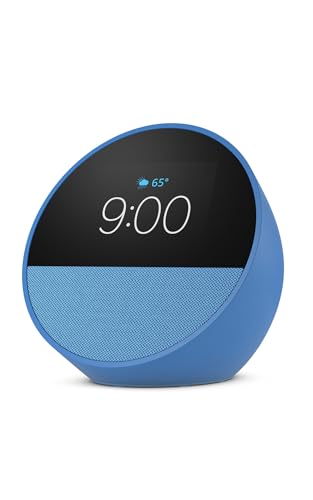
Amazon Echo Spot Smart Alarm Clock with Alexa
|
9.1/10 | Buy |
| Best Value |
 Amazon Echo Spot Smart Alarm Clock with Alexa
|
8.4/10 | Buy |
 Amazon Echo Spot Smart Bedside Alarm Clock
|
8.3/10 | Buy | |
| Best Budget |
 Emerson SmartSet Dual Alarm Clock Radio
|
8.1/10 | Buy |
 Amazon Basics Small Digital Oval Bedside Alarm
|
8.0/10 | Buy | |
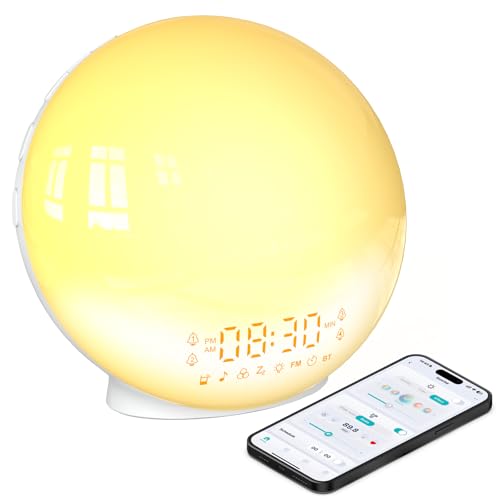 BIB_WJ Smart Sunrise Alarm Clock with Wake-Up
|
7.8/10 | Buy |
Amazon Echo Spot Smart Alarm Clock with Alexa
The Amazon Echo Spot is a compact smart alarm clock featuring a vibrant customizable display, rich bedside audio, and hands-free Alexa routine integration. It is an excellent choice for sleepers looking to streamline their nightstand with automated wake-up routines, glanceable weather updates, and smart home controls.
Pros
- Customizable clock faces and vibrant display themes blend easily into bedroom decor
- Alexa routine automation supports progressive music and lighting schedules for waking up
- Doubles as an eero mesh Wi-Fi extender to strengthen home network signals
- Hardware microphone mute switch provides straightforward bedside privacy
- Compact hemispherical design leaves ample room on the nightstand
Cons
- Requires continuous AC power and active Wi-Fi, lacking an internal battery backup for power outages
- Lacks passthrough USB charging ports for powering secondary nightstand electronics
- Touch and voice interface may not suit sleepers who prefer a traditional mechanical snooze bar
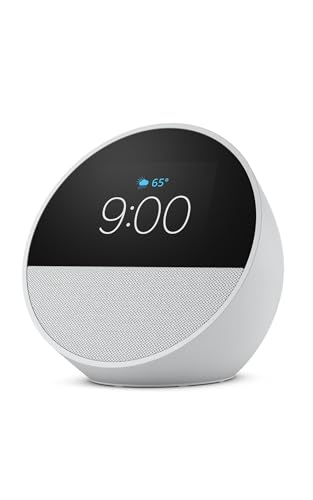
Amazon Echo Spot Smart Alarm Clock with Alexa
The Amazon Echo Spot is a compact smart alarm clock featuring a vibrant customizable display, rich audio, and seamless Alexa routine integration. It is an excellent nightstand companion for commuters and smart home users wanting hands-free morning wake-up routines and glanceable info.
Pros
- Compact 4.1-inch profile fits neatly on nightstands without taking up excessive tabletop room
- Customizable visual clock faces and vibrant display show essential morning details like time and weather at a glance
- Versatile wake-up options through Alexa routines, allowing music alarms and gradual lighting sequences
- Bonus utility as an eero Wi-Fi mesh extender covering up to 1,000 square feet on compatible home networks
- Physical microphone mute button provides straightforward bedside privacy protection
Cons
- Requires a constant AC power connection and Wi-Fi network, offering no battery-powered backup during power outages
- Lacks built-in USB charging ports or wireless phone charging pads to consolidate nightstand cables
- Touchscreen display and smart features may not appeal to strict minimalists seeking an entirely screen-free bedroom
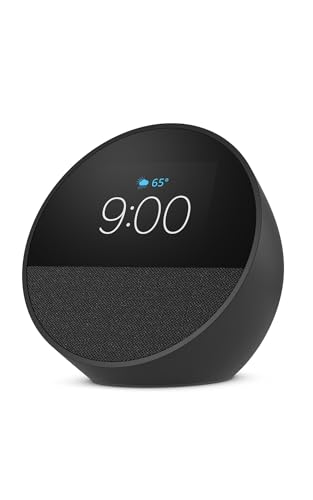
Amazon Echo Spot Smart Bedside Alarm Clock
The Amazon Echo Spot is a compact smart alarm clock pairing customizable display faces and gradual-light wake routines with rich, vibrant sound. It is an ideal bedside companion for smart home enthusiasts and bedroom minimalists seeking voice-controlled alarms without a sleep-disrupting camera.
Pros
- Camera-free form factor offers peace of mind on bedroom nightstands.
- Customizable color clock faces and glanceable information display.
- Gentle wake-up routines combining music and progressive screen lighting.
- Doubles as a 1,000 sq. ft. Wi-Fi extender for existing eero home networks.
- Hands-free voice control makes setting alarms or timers effortless.
Cons
- Requires continuous AC power and active Wi-Fi connection for core smart features.
- Lacks dedicated USB charging pass-through ports for external devices.
- No internal battery backup to keep display illuminated during overnight power failures.
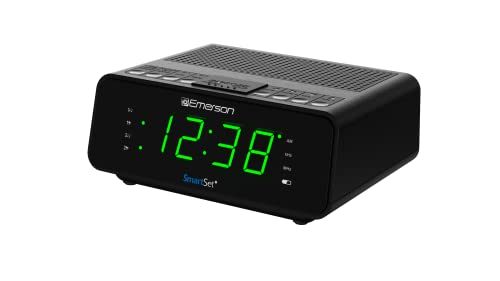
Emerson SmartSet Dual Alarm Clock Radio
The Emerson SmartSet CKS1900 is an easy-to-use bedside clock radio featuring automated time setting, dual alarms, digital AM/FM radio, and a dimmable 0.9-inch jade green LED screen. It is an ideal pick for seniors, students, and minimalists looking for a dependable nightstand clock that eliminates setup headaches.
Pros
- SmartSet system sets the time and calendar automatically as soon as it is plugged in
- Jade green LED display is easy on the eyes and features four selectable brightness levels
- Dual independent alarms accommodate different wake times for couples or weekday routines
- Digital PLL tuning with 20 memory presets prevents station drifting compared to analog dials
- Included backup battery preserves internal clock settings during temporary power loss
Cons
- Backup battery maintains internal time and settings but does not power the display during blackouts
- Uses four stepped brightness settings rather than a continuous 0-100% stepless dimming dial
- Does not include integrated USB charging ports for mobile devices
Amazon Basics Small Digital Oval Bedside Alarm
This compact oval alarm clock from Amazon Basics features a 0.7-inch green LED display, a gentle built-in nightlight, and a repeating snooze function. It is a straightforward, budget-friendly option for students, guest bedrooms, and minimalists who want dependable AC-powered timekeeping without smartphone distractions.
Pros
- Small 4.5-inch oval chassis takes up minimal space on nightstands and bedside tables
- Green 0.7-inch LED display provides clear numerals for at-a-glance nighttime viewing
- Built-in soft nightlight offers convenient ambient illumination in dark rooms
- Dedicated battery backup preserves programmed time and alarms for up to 8 hours during power drops
- Straightforward, dedicated controls make daily alarm operation simple without confusing menus
Cons
- Backup batteries preserve memory only and do not keep the display lit or guarantee alarm sounding during outages
- Lacks USB device charging ports, Qi wireless charging, and FM radio features found on larger bedside hubs
- Compact 0.7-inch digit size may be less visible from across large master bedrooms for individuals with low vision
BIB_WJ Smart Sunrise Alarm Clock with Wake-Up
The BIB_WJ Smart Sunrise Alarm Clock combines gradual dawn simulation, 11 ambient light colors, 7 soothing sounds, and FM radio in a compact bedside unit. With account-free app management and flexible multi-alarm scheduling, it suits sleepers seeking a gentler morning routine without complicated smart-home setups.
Pros
- One-click app pairing auto-synchronizes time and display brightness without requiring personal account registration
- Customizable 10-60 minute dawn simulation helps reduce morning startle compared to standard abrasive buzzers
- Offers 7 preloaded nature sounds, FM radio wake-up, and wireless phone streaming across 20 volume steps
- Vibrant 11-color lighting operates independently as a reading lamp, night light, or ambient room light
- Compact 6.5-inch profile fits easily on small nightstands, student dorm desks, and narrow bedside tables
Cons
- Direct physical controls only support setting 2 alarms, requiring the mobile app to access all 4 alarm profiles
- Wireless speaker streaming requires establishing a separate wireless pairing connection from the lighting control app
- Requires a continuous connection to an external power adapter to remain operational
Understanding Smart Alarm Clocks: Technology, Features, and Bedside Integration
At its core, a smart alarm clock is a modern bedside device that combines digital connectivity, automated scheduling, and multi-sensory features to improve daily sleep routines. Unlike traditional quartz clocks that rely on manual plastic knobs and harsh buzzers, a smart clock uses microprocessors, wireless connections, or automated internal calendar chips to streamline timekeeping. These devices can synchronize with external time standards, automate gradual dawn lighting, stream audio, and integrate with smart home accessories. Examining how these systems function reveals how specialized bedside technology can replace jarring morning alerts with smooth, reliable waking routines.
How Smart Clocks Differ from Traditional Bedside Digital Clocks
Traditional bedside clocks have served bedrooms for decades with simple segmented LED or LCD panels powered by household alternating current. These legacy devices require manual adjustments whenever daylight saving time arrives, power flickers, or a shift worker needs a new wake-up schedule. A smart alarm clock changes this static experience by incorporating microprocessors, internal network radios, or automated time-setting algorithms. As a result, the device maintains synchronization with external time standards without requiring constant physical button adjustments in the dark.
Interaction methods also change dramatically when transitioning to a connected bedside device. Instead of fumbling with tiny sliders or holding down recessed toggle switches, sleepers can often speak natural voice commands, adjust schedules through smartphone apps, or rely on preset weekly routines. Devices like the Amazon Echo Spot highlight this transition by combining touchscreen controls, voice intelligence, and dynamic visual displays into a compact nightstand footprint. This evolution allows sleepers to maintain a dedicated bedside timepiece while enjoying the convenience of hands-free interaction.
Network Connectivity, Companion Applications, and Voice Control
Wireless networking forms the backbone of modern smart bedside clocks, enabling them to communicate with local home networks and cloud services. Through Wi-Fi or Bluetooth protocols, these devices access accurate network time protocol servers to ensure alarms sound precisely on the second. Devices equipped with voice assistants allow users to set recurring alarms, request weather forecasts, or play audiobooks simply by speaking across the bedroom. This hands-free operation proves especially helpful when tucking into bed in the dark or waking up without immediate access to reading glasses.
Other smart clocks leverage streamlined mobile companion applications to bypass the need for voice interaction or complicated registration accounts. For instance, the BIB_WJ smart sunrise clock utilizes a dedicated application that pairs directly with the phone to synchronize time, manage up to four distinct alarms, and adjust lighting modes without requiring online account creation. This approach appeals to users who desire flexible software scheduling and rich lighting controls without adding an active listening microphone to their private bedroom environment. Companion apps also simplify setting complex schedules, such as alternating alarm times between weekdays and weekends, which often proves tedious on traditional multi-button clocks.
Automated Timekeeping and Power Failure Recovery Architectures
One of the most frustrating vulnerabilities of older digital alarm clocks is the dreaded flashing display that appears following a brief electrical storm or power surge. Smart bedside clocks address this reliability problem through diverse electrical architectures designed to preserve accurate timekeeping. Advanced models with network connectivity automatically retrieve the correct hour and minute as soon as internet access resumes after an outage. Other devices, such as the Emerson SmartSet dual alarm clock radio, feature internal pre-programmed calendar memory that automatically restores the exact year, month, date, and time the instant line power returns.
Power backup systems in bedside electronics generally fall into two distinct engineering categories: full operational backup and memory-only retention. Entry-level units like the Amazon Basics small digital oval alarm clock utilize primary backup batteries specifically to preserve internal clock memory and active alarms for several hours during an outage. However, budget backup circuits often disable the LED display and acoustic speaker until household electricity is restored, preventing excessive battery drain. Understanding whether a clock provides active audible alarm capability or silent internal memory during a blackout is essential for professionals who cannot afford a missed wake-up call.
Circadian Lighting and Sunrise Simulation Capabilities
Light serves as the primary environmental cue for human circadian rhythms, directly signaling the brain when to suppress melatonin and begin morning cortisol production. Many smart alarm clocks capitalize on this biological mechanism by incorporating programmable multi-spectrum LED lamps that simulate natural dawn transitions. Instead of shocking the sleeper out of deep slumber with an instantaneous loud chime, a wake-up light clock gradually ramps brightness from a soft, warm hue to a vibrant daytime illumination over a designated window of ten to sixty minutes. Those interested in light-based awakening strategies can review dedicated sunrise alarm clocks for deep sleepers to understand how lux curves assist difficult morning transitions.
Advanced smart sunrise models also support reverse sunset simulations designed to assist with evening wind-down routines. In these modes, the internal light engine gradually dims warm amber or red hues while playing relaxing ambient audio, gently encouraging the onset of natural sleepiness. Color versatility extends beyond wake-up routines, as models like the BIB_WJ clock provide multi-color ambient lighting for reading, nocturnal navigation, or cozy bedroom atmospheres. By combining optical stimulation with acoustic alerts, smart lighting clocks offer a gentler, more physiological approach to daily waking than pure auditory alarms.
Versatile Sound Profiles, Acoustic Ramps, and Audio Streaming
Acoustic performance represents another major divergence between smart clocks and legacy digital alarm units. Traditional alarms typically rely on high-pitched piezo buzzers that produce harsh square-wave beeps capable of triggering abrupt adrenaline spikes. Smart alarm clocks, by contrast, feature dynamic audio speakers capable of delivering rich acoustic profiles, ascending volume curves, and diverse audio formats. Users can wake up to nature soundscapes like ocean waves or birdsong, FM radio broadcasts with stored memory presets, or custom music playlists streamed directly from their favorite online audio services.
Progressive volume escalation is an indispensable feature for sleep hygiene, gently nudging the sleeper through lighter sleep stages before reaching peak volume. Smart voice-enabled clocks like the Amazon Echo Spot deliver vibrant sound with clear vocal clarity and balanced bass, making them equally useful as nightstand audio players for audiobooks and podcasts. Furthermore, many models function as standalone white noise machines or wireless speakers, enabling users to mask disruptive ambient sounds without cluttering their bedside tables with multiple dedicated audio devices. Having granular control over sound levels and audio sources ensures that awakening remains consistent without causing morning anxiety.
Bedside Ergonomics, Optical Spectrum, and Display Dimming Controls
Excessive light pollution in the bedroom can severely disrupt sleep architecture, making display quality and dimming range critical considerations for bedside clocks. Standard bright blue and stark white LED displays emit high-energy visible wavelengths that can suppress natural melatonin production when viewed in a dark room. Consequently, thoughtfully designed smart and digital clocks employ warmer color spectrums, such as the jade green display found on Emerson models or customizable warm-toned screen faces on modern smart displays. These softer wavelengths provide clear legibility across the room while minimizing nocturnal retinal glare.
Stepless dimming or multi-level brightness adjustment allows sleepers to tailor the clock face to their specific sensitivity levels. Many smart clocks feature automated ambient light sensors that dynamically lower panel intensity when the bedroom lights go out, ensuring digits remain readable without illuminating the ceiling. For individuals who demand absolute darkness to fall asleep, certain smart models permit full display blackout until a touch or voice prompt reactivates the screen. Thoughtful physical ergonomics, including prominent top snooze buttons and clear visual indicators for active alarms, further enhance nightstand usability when operating controls in a half-awake state.
Smart Home Automation, Multi-Device Routines, and Nightstand Consolidation
A defining advantage of network-connected smart alarm clocks is their capacity to integrate seamlessly into broader smart home ecosystems. Through platforms like Alexa, a morning alarm can trigger a comprehensive waking routine that adjusts smart thermostats, raises connected window blinds, and gradually turns on hallway lighting. Some smart clocks even incorporate motion detection sensors to trigger evening relaxation sequences or turn down temperatures when occupants leave the room. These coordinated actions streamline daily habits, converting the nightstand clock into an active central controller for household comfort.
Bedside table real estate is often limited, making nightstand consolidation a major factor when evaluating bedroom electronics. Many sleepers choose multifunctional units and alarm clocks with charging features to eliminate tangled cords and bulky power strips beside the bed. Certain smart alarm clocks even integrate specialized networking technology, such as the eero mesh Wi-Fi extensions built into recent Echo Spot hardware, which can extend home wireless coverage by up to one thousand square feet. Combining timekeeping, audio playback, light control, and network utility into a single compact housing creates an organized, calming sleep sanctuary.
Privacy Architecture, Physical Controls, and Sleep Sanctuary Boundaries
Introducing connected electronics into the master bedroom naturally raises valid questions regarding digital privacy, personal data security, and nighttime peace of mind. Because bedrooms represent private retreats, manufacturers of voice-enabled smart clocks implement dedicated hardware controls to give users full command over their privacy. Devices like the Amazon Echo Spot feature physical microphone-disconnect buttons that electronically cut power to the acoustic listening array, accompanied by clear visual status indicators. Companion apps also provide granular settings to review voice recordings, adjust permissions, and silence unsolicited notifications during sleeping hours.
For sleepers who prefer to avoid internet-connected microphones altogether, app-controlled offline models or self-setting radio clocks provide a compelling alternative. Units that communicate strictly via local Bluetooth connections or pre-programmed internal calendar chips offer automated convenience without transmitting ambient bedroom data to cloud servers. Choosing between a fully integrated voice assistant clock, an offline app-paired sunrise light, and a self-setting digital radio ultimately depends on how comfortable each user is with bedroom connectivity. Establishing clear boundaries around bedside electronics ensures that smart features enhance morning wakefulness without compromising personal privacy.
Selecting the Right Smart Alarm Clock for Your Daily Sleep Routine
Determining which smart alarm clock suits your bedroom requires balancing your waking difficulties against your technical preferences and nightstand space. Heavy sleepers often benefit most from multi-sensory awakening combinations that pair ascending acoustic alarms with gradual sunrise light simulations. Shift workers and couples managing alternating schedules will appreciate models offering independent dual or quad alarm setups that can be programmed quickly via mobile applications. Meanwhile, sleepers focused on strict digital detoxing might prioritize standalone units with self-setting clocks and physical dimmer switches that eliminate the temptation of keeping a smartphone beside the mattress.
Ultimately, a well-chosen smart alarm clock does far more than sound an alert at a predetermined hour; it establishes a supportive framework for both falling asleep and waking up refreshed. By replacing abrasive buzzer frequencies with soothing soundscapes, replacing smartphone notification glare with gentle dawn transitions, and automating daily schedules, these devices provide a structured start to the day. Assessing display legibility, backup power capabilities, sound versatility, and interface ergonomics will guide you toward a dependable nightstand companion that enhances your overall sleep hygiene.
About the author
Daniel Noyed is a Certified Sleep Science Coach and experienced product editor with extensive knowledge of sleep health and sleep-related products. He has hands-on experience testing hundreds of products and translating technical features into practical guidance for everyday sleepers.