
What Is a Mechanical Chime: Mechanics, Sound, and Hardware Guide for 2026
What Is A Mechanical Chime explains how physical tone bars and plungers create natural acoustic alerts across home spaces, updated for November 2026.
 By McKenzie Dillon
Updated November 20, 2026

Sudden digital alarms and harsh synthetic beeps often create unnecessary auditory stress throughout a quiet household. When an alert sounds across living areas or adjacent bedrooms, the physical quality of that acoustic signal dictates whether you experience an abrupt adrenaline surge or a clean, identifiable notification. In residential and commercial spaces, understanding what is a mechanical chime helps clarify why physical strike mechanisms remain widely preferred over electronic speakers. A mechanical chime relies on direct physical impact between a striker and a tuned resonant surface to create an authentic acoustic frequency.
Unlike digital sound generators that play compressed audio files through micro-speakers, mechanical systems produce authentic resonance that carries naturally across hallways and rooms. Many homeowners appreciate how natural acoustic sound penetrates ambient household noise without requiring the piercing high-frequency screech typical of cheap piezo transducers found on basic electronic hardware. Whether comparing home alerts with top rated alarm clocks for bedrooms or evaluating entry alerts, physical acoustic hardware provides unmatched reliability and longevity. Exploring the internal solenoids, tone bars, and spring assemblies reveals how these durable systems deliver dependable auditory signaling day after day.
| Award | Product | ACR Score About ACR ScoreThe ACR Score is our own rating from 0 to 10, based on performance, design and build, ease of use, and value. It reflects independent research and is never influenced by manufacturers, retailers, or affiliate commissions. Learn more › | |
|---|---|---|---|
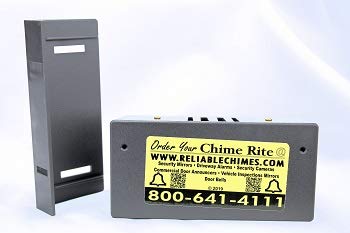 Reliable Chimes Chime Rite Mechanical Door Chime |
8.8/10 | Buy | |
| Best Overall |
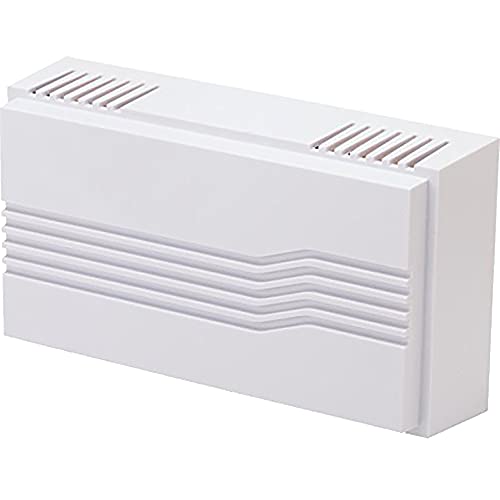 Newhouse Hardware CHM1 Wired 2-Note Door Chime |
9.2/10 | Buy |
| Best Value |
 Woodstock Chimes Zenergy 7.7-Inch Hand Chime |
8.6/10 | Buy |
 Newhouse Hardware 2-Note Mechanical Door Bell |
7.8/10 | Buy | |
| Best Premium |
 Safeguard Supply EZCHIME Door Entry Chime |
9.1/10 | Buy |
| Best Budget |
 Heath Zenith Wired Mechanical Doorbell Chime |
8.4/10 | Buy |
Reliable Chimes Chime Rite Mechanical Door Chime
The Reliable Chimes Chime Rite is a purely mechanical door chime delivering an 88 dB audible alert without requiring batteries or electrical wiring. It serves households and sleepers seeking a dependable, zero-power physical chime alert for inswing entry doors.
Pros
- Operates 100% mechanically with no need for batteries, AC power, or electrical wiring
- Listed 88 dB sound rating provides a distinct audible chime even during complete power failures
- Simple mechanical setup designed for inswing doors without complicated programming or electrical work
- Backed by an extensive 5-year manufacturer warranty
- Compact 4 x 4 x 5-inch dark brown footprint mounts neatly without taking up outlet space
Cons
- Functions strictly as an entry chime activated by inswing door movement, not a programmable clock with time displays
- Fixed mechanical sound level lacks volume adjustment dials or gentle ascending chime settings
- Designed specifically for inswing doors and does not support outswing door configurations
Newhouse Hardware CHM1 Wired 2-Note Door Chime
The Newhouse Hardware CHM1 is a hardwired 2-note mechanical chime engineered for clear 85dB acoustic home alerting without glowing screens or digital clutter. It suits homeowners and light-sensitive households seeking dependable, audible dual-entrance notifications powered by a standard 16V transformer.
Pros
- Audible 85dB mechanical chime provides clear sound projection across hallways and bedrooms
- Dual-door support distinguishes front entrance visitors from side or rear door visitors
- Zero display light pollution makes it ideal for sleep-conscious, dark-hallway environments
- Wired transformer operation eliminates dead battery concerns and recurring cell replacements
- Compact 7.2 x 4 x 2-inch low-profile footprint mounts cleanly on residential walls
Cons
- Requires a compatible 16V/10VA or 16V/30VA transformer, push button, and bell wire which are sold separately
- Lacks volume adjustment controls, operating solely at a fixed 85dB acoustic level
- Does not provide visual flashing alerts or tactile vibration for severe hearing impairment
Woodstock Chimes Zenergy 7.7-Inch Hand Chime
The Woodstock Chimes Zenergy 7.7-inch Hand Chime delivers sustained, musically tuned acoustic resonance from a cherry-finish ash wood base and solid aluminum rod with an included mallet. It serves as an elegant, cord-free acoustic tool for teachers, yoga practitioners, and mindfulness seekers wanting gentle sound signaling without electronic displays or digital clutter.
Pros
- Rich, sustained acoustic resonance that provides a soothing sound for redirecting attention or signaling quiet time
- Solid build quality pairing durable cherry-finish ash wood with polished aluminum rod construction
- Fully mechanical design requiring no batteries, charging cables, or electrical power outlets
- Compact 7.7-inch profile is easy to carry between rooms, studios, or classrooms
Cons
- Purely manual acoustic instrument that lacks automated timer, scheduling, or recurring alarm capabilities
- Does not include a digital clock face, display screen, or nightstand time readout
- Requires keeping track of the separate handheld mallet for operation
Newhouse Hardware 2-Note Mechanical Door Bell
The Newhouse Hardware 2-Note Mechanical Door Bell Chime provides a battery-free, non-electric entry alert paired with an integrated 180-degree one-way privacy viewer. It is an ideal maintenance-free solution for households and renters with wooden doors seeking dependable visitor notifications without wiring or power outages.
Pros
- Zero electrical wiring or batteries required for continuous everyday operation
- Built-in 180-degree one-way optical lens includes a spring-loaded privacy slider
- Comes with dedicated mounting screws designed specifically for wood door installation
- Sturdy silver metal exterior faceplate provides a clean, low-profile appearance
Cons
- Included hardware and mechanical actuator are engineered strictly for wood doors, not metal doors
- Non-electronic design provides a fixed mechanical chime volume with no sound level adjustment or mute toggle
- Mounting template requires printing at exact actual size to avoid misaligned drill holes
Safeguard Supply EZCHIME Door Entry Chime
The Safeguard Supply EZCHIME is a completely mechanical door entry chime that sounds a clear ding without batteries or electrical wiring. It is an ideal, zero-maintenance alert solution for small businesses, offices, and entryways needing dependable traffic awareness.
Pros
- 100% mechanical design requires no batteries, wiring, or AC electrical outlets
- True fail-safe operation that functions normally during power outages
- Includes dedicated L-bracket and hardware for mounting on in-swinging doors
- Low-maintenance construction provides dependable service in high-traffic doorways
Cons
- Designed specifically for in-swinging doors and is not compatible with sliding doors without custom brackets
- Fixed mechanical sound output with no electronic volume adjustment or alternative tone profiles
- Lacks a digital clock display, timekeeping face, or programmable alert schedule
Heath Zenith Wired Mechanical Doorbell Chime
The Heath Zenith Wired Mechanical Doorbell Chime produces an authentic 85dB mechanical ding-dong and single-ding tone, providing dependable household audio notifications compatible with leading smart video doorbells. It is a practical upgrade for homeowners seeking an audible, multi-door alert chime without screen glare or digital complexity.
Pros
- Audible 85dB mechanical strike carries clearly through household living areas and bedrooms
- Front and back door terminals distinguish entry points with two-note and single-note tones
- Compatible with leading wired smart video doorbell systems like Ring, Nest, and Blink
- Low-profile white housing mounts either horizontally or vertically
- Removable faceplate makes terminal wiring and maintenance straightforward
Cons
- Requires a 16VAC-10VA low-voltage transformer, wiring, and pushbuttons that are not included in the box
- Lacks visual time display, clock readout, or integrated lighting features
- Direct replacement on older walls may expose unpainted areas requiring wall touch-up

A Complete Guide to Mechanical Chimes and Acoustic Alert Mechanics
The question of what is a mechanical chime begins with understanding how physical objects produce natural sound. At its most fundamental level, a mechanical chime is an acoustic signaling device that produces audible tones through physical kinetic impact rather than electronic sound synthesis. When an activation trigger occurs, mechanical energy drives a weighted striker or plunger directly against a tuned metallic resonator, such as an aluminum bar, brass plate, or hollow tube. The resulting sound wave radiates directly through the surrounding air, creating an authentic ringing tone characterized by natural acoustic decay.
The Core Distinction Between Mechanical and Electronic Chimes
Understanding the distinction between mechanical sound generation and digital audio reproduction clarifies why many property owners still favor mechanical hardware. Electronic doorbells and alert buzzers rely on digital microchips, recorded sound files, and miniature audio speakers to project artificial chimes. While electronic sounders can store dozens of novelty tunes, their audio output often suffers from synthetic clipping, tinny treble spikes, and limited acoustic resonance. Mechanical chimes, by contrast, rely on real percussion physics where metal strikes metal to generate natural acoustic sound.
The difference in tonal richness becomes immediately noticeable across a home or workplace setting. A physical chime produces a rich fundamental frequency accompanied by harmonic overtones that resonate smoothly through walls and open corridors. This natural acoustic bloom carries effectively without demanding the jarring, high-frequency sound pressure required by small digital buzzers. Unlike digital speaker cones that can degrade or distort at high output levels, properly tuned metallic chime bars maintain their pitch and clarity over decades of daily operation.
Internal Electromechanical Architecture: Solenoids, Plungers, and Springs
Standard wired mechanical chimes rely on an electromechanical assembly centered around one or two magnetic solenoid coils. Inside the chime housing, a low-voltage copper coil surrounds a cylindrical bore housing a movable steel plunger tipped with durable rubber or plastic strikers. When someone presses the external doorbell button, the completed circuit energizes the solenoid coil, generating a strong magnetic field. This electromagnetic flux pulls the spring-loaded plunger rapidly upward or sideways against its return spring, driving the striker hard into the primary tone bar.
The striking action against the first tone bar produces the iconic, high-pitched ding note that initiates the alert cycle. As long as the button remains depressed, the electromagnetic force holds the plunger in place or keeps the coil energized. The moment the visitor releases the doorbell button, the electrical current ceases and the magnetic field collapses instantly. A coiled return spring immediately propels the plunger in the opposite direction, causing the secondary striker tip to hit the second, lower-tuned tone bar to create the familiar dong note.
This elegant sequence explains how traditional two-note chimes operate without needing a circuit board or timing chip. Front-door circuits route power through the full solenoid travel path, triggering the complete two-note sequence to signal principal entry. Back-door terminals typically limit the plunger travel or engage a secondary single-stroke solenoid that strikes only one tone bar, producing a distinct single ding note. This mechanical differentiation allows occupants to distinguish between front and rear visitors instantly without glancing at a display screen.
Acoustic Dynamics: Harmonics, Decibel Penetration, and Tone Decay
Acoustic performance in a mechanical chime depends heavily on physical resonance and soundboard dynamics. Quality mechanical chimes, such as traditional two-melody wall units, typically register an output rating of approximately 85 decibels at standard testing distances. This sound pressure level provides sufficient acoustic power to alert occupants throughout a typical single-family home without inflicting painful auditory shock. The physical sound wave disperses evenly through sheetrock, wood framing, and open living spaces because real metal bars emit low-distortion acoustic waves.
The decay rate of a physical chime bar plays an equally critical role in how the human ear perceives the alert. When a metal bar is struck, its crystalline structure vibrates at precise resonant frequencies before slowly dissipating energy into the mounting base. This gradual natural decay sounds gentle and pleasant, contrasting sharply with the sudden, harsh cut-offs common to digital audio loops. For sleepers in nearby bedrooms, a smooth acoustic decay alerts consciousness without triggering the acute startle reflex associated with aggressive electronic buzzers.
In sleep hygiene, sudden acoustic shock can spike heart rate and induce morning anxiety, which is why many sleepers prefer gentle alert dynamics. Just as individuals transitioning away from jarring alarms often seek gradual sunrise alarm clocks for deep sleepers to wake smoothly, households benefit when ambient alerts maintain balanced acoustic dynamics. The organic tone of a physical chime cuts through background household noise like television audio, kitchen appliances, or running water while remaining pleasant to the ear.
Low-Voltage Power Requirements: Transformers and Circuit Stability
Wired mechanical chimes do not operate directly on standard 120-volt household alternating current. Instead, they require a step-down doorbell transformer to convert standard line voltage down to safe, low-voltage levels, typically 16 volts alternating current. Manufacturers like Heath Zenith and Newhouse Hardware specify either a 16-volt, 10-volt-ampere or a 16-volt, 30-volt-ampere transformer depending on overall circuit demands. Using an undersized transformer often results in weak magnetic pull, producing an anemic, muffled chime strike that fails to resonate fully.
The electrical circuit itself consists of standard two-strand bell wire connecting the transformer, the push-button switch, and the chime terminal block. Inside the chime unit, distinct terminal screws labeled Trans, Front, and Rear allow homeowners to establish independent alerting zones. Because mechanical solenoids only draw current during the brief moment the push button is held down, standby power consumption remains practically zero. This minimal energy demand makes wired mechanical chimes exceptionally efficient fixtures over years of continuous household readiness.
Proper physical mounting also influences electrical and mechanical performance. Many wired chime units feature flexible mounting holes that accommodate either horizontal or vertical wall installation, though vertical alignment remains most common to facilitate clean gravity-assisted plunger movement. If a chime cabinet is mounted crooked or tilted, internal plunger friction increases against the coil sleeve, which can cause intermittent striking or annoying mechanical buzzing. Ensuring clean wiring connections and level mounting guarantees prompt, robust plunger strikes on every cycle.
Kinetic and Non-Electric Mechanical Entry Chimes
Not every mechanical chime relies on electrical solenoids, transformers, or wall wiring. A dedicated category of non-electric mechanical chimes relies entirely on physical kinetics to monitor doors in retail shops, commercial offices, and residential entryways. Products like the Safeguard Supply EZCHIME and the Chime Rite entry chime illustrate how mechanical engineering provides continuous monitoring without batteries or electrical grid dependence. These units attach directly to the door frame and use the physical swing of the door to trigger an acoustic strike.
The operational mechanism of a kinetic entry chime typically involves an L-shaped trip bracket mounted to the top edge of an in-swinging door. As the door swings inward, the bracket depresses a spring-loaded strike lever on the chime housing mounted to the frame. Once the door clears the trip point, the tensioned spring releases the striker, firing a hardened hammer against an internal resonant chime bar or bell. The resulting single ding sounds cleanly at an impressive 88 decibels, alerting store clerks or homeowners instantly.

Eliminating electrical wiring and battery cells delivers substantial long-term operational advantages. Commercial store managers never need to worry about dead batteries silencing customer entry alerts during busy business hours, nor do they encounter dead wireless signals caused by metal framing. For residential owners seeking reliable, zero-maintenance perimeter awareness, a mechanical door-contact chime operates perpetually through power outages and seasonal temperature shifts. These rugged devices prove that well-designed kinetic mechanics can outperform complex electronics in demanding, high-traffic applications.
Through-Door Mechanical Push Chimes with Optical Viewers
Another practical variation of the non-electric mechanical chime is the through-door mechanical push unit. Designed primarily for apartment buildings, condominium units, and solid wood residential entry doors, this hardware combines an exterior mechanical button with an interior sound box. Models such as the Newhouse Hardware two-note mechanical door chime with viewer require no electrical connections, relying instead on a physical push rod that extends directly through a drilled hole in the door slab.
When an outside visitor presses the exterior metal faceplate button, the manual stroke pushes an internal spring-loaded slider mechanism. This physical movement drives mechanical plungers against dual tuned tone bars housed inside the interior decorative cover, creating an authentic two-note acoustic alert. The entire operation is completely maintenance-free, unaffected by grid failures or depleted batteries. The absence of electrical conduits also simplifies installation on exterior doors where running concealed low-voltage wire would be structurally difficult or costly.
Many through-door mechanical chimes integrate a one-way optical peep sight directly into the exterior escutcheon plate. Featuring a wide 180-degree viewing lens with an internal spring-activated privacy shutter, this configuration allows occupants to verify visitor identity before opening the door. By integrating physical optical security with mechanical chime hardware, this compact design consolidates multiple entryway functions into one unified, non-electric assembly. Homeowners gain dependable security and pleasant acoustic notification in a single, durable installation.
Smart Video Doorbell Compatibility and Bypass Hardware
The widespread adoption of smart video doorbells, including Ring, Nest, Skybell, Wyze, and Blink, has created new considerations for traditional mechanical chimes. Modern video doorbells require continuous low-voltage electrical power to operate their onboard video cameras, Wi-Fi radios, and motion detection sensors. Because these video units pull continuous trickle current through the existing two-wire doorbell circuit, that ongoing power draw can inadvertently bleed through the mechanical chime solenoid.
Without proper circuit configuration, this continuous trickle current can cause traditional mechanical solenoids to hum, buzz, vibrate, or even stick partially in the engaged position. To prevent electrical hum and ensure reliable plunger movement, smart doorbell manufacturers supply power kits or bypass modules that wire directly across the mechanical chime terminals. These compact bypass modules redirect continuous operating current around the solenoid coil while allowing the full switching surge to strike the chime bars when the button is pressed.
Upgrading to a robust 16-volt, 30-volt-ampere transformer is often recommended when pairing a mechanical chime with a video doorbell. The increased volt-ampere rating ensures the transformer supplies sufficient current for the video camera processor while maintaining ample reserve power to actuate the mechanical plunger cleanly. Homeowners who appreciate the physical sound of authentic chime bars can thus enjoy modern video surveillance without giving up the rich, uncompressed acoustic chime that rings throughout their living space.
Resonant Hand-Percussion Bar Chimes and Acoustic Mindfulness
Beyond architectural doorbells, the term mechanical chime also encompasses precision hand-percussion instruments used in classrooms, yoga studios, and mindfulness environments. The Woodstock Wind Chimes Zenergy hand chime represents a classic example of acoustic percussion engineering. Rather than relying on electromagnetic coils or door trip brackets, these instruments consist of solid, musically tuned aluminum rods mounted on resonant cherry-finished ash wood bases, sounded by manual mallet strikes.
When a user taps the solid aluminum rod with the supplied mallet, the chime emits a singular, crystal-clear tone that rings with exceptional harmonic sustain. The physical resonance of the aluminum bar produces a sustained tone decay that can ring clearly for tens of seconds in a quiet room. Classroom teachers, yoga instructors, and meditation practitioners frequently use these resonant percussion chimes to refocus attention, calm anxious environments, and mark transitional moments during daily routines.
In busy domestic spaces, natural acoustic tones offer a grounding alternative to the frantic electronic beeps of microwave buzzers or digital timers. Just as home cooks rely on dedicated kitchen timer alarm clocks to track daily household schedules without checking smartphone screens, mindfulness practitioners appreciate the focused tactile simplicity of a manual hand chime. The purity of a physical acoustic strike provides an immediate acoustic anchor that calms the senses and restores mental clarity.
Common Mechanical Chime Malfunctions, Diagnostic Checks, and Maintenance
Although mechanical chimes are renowned for their mechanical durability, occasional operational faults can occur over years of service. One of the most frequent mechanical issues is a sticky or sluggish plunger that fails to strike the tone bars with sufficient force. Over time, household dust, airborne pet dander, and cooking grease can settle inside the open solenoid sleeve, creating friction that slows the plunger stroke. If a chime emits a dull thud instead of a bright ding, physical friction inside the coil sleeve is the primary suspect.
A common homeowner mistake is spraying penetrating oil or silicone lubricant directly into the solenoid coil assembly. Liquid lubricants attract airborne grime, rapidly transforming into a gummy paste that permanently binds the moving plunger. Proper maintenance requires disconnecting power, carefully removing the chime cover, and wiping the plunger and coil sleeve with a dry cotton swab or clean rag. Keeping the internal bore completely dry and free of particulate buildup allows the return spring and magnetic field to operate with minimal mechanical resistance.
Another frequent symptom is an audible 60-cycle electrical hum emanating from the chime box when no one is pressing the doorbell button. This continuous hum typically indicates that an exterior push button has partially stuck, creating continuous partial contact, or that a smart doorbell is leaking excess current through the solenoid. Inspecting the exterior button for physical binding, verifying transformer voltage output with a multimeter, and confirming power kit module connections will quickly resolve the underlying electrical issue.
Selecting the Right Acoustic Alert System for Your Living Space
Choosing the optimal mechanical chime setup depends on existing home wiring, entry door construction, and desired acoustic output. For homes with intact low-voltage wiring, a classic two-note wired chime from Heath Zenith or Newhouse Hardware provides an authentic ding-dong tone that easily reaches 85 decibels across multiple rooms. These units offer timeless visual appeal, simple wall installation, and broad compatibility with modern video doorbells when powered by an appropriately rated 16-volt transformer.
For commercial store entrances, detached workshops, or historic homes where running low-voltage bell wire is impractical, a non-electric kinetic chime like the Safeguard Supply EZCHIME or Chime Rite represents the most reliable alternative. Operating without batteries or line electricity, these units deliver an 88-decibel acoustic alert triggered entirely by the physical motion of an opening door. Their zero-maintenance design ensures uninterrupted operational readiness regardless of power outages, severe weather, or dead battery cells.
Whether you choose a wired electromagnetic wall unit, a kinetic door-swing alert, or a through-door mechanical push chime, physical acoustic alerts provide an organic auditory quality that digital speakers cannot replicate. By converting kinetic or electromagnetic energy into genuine acoustic resonance, a mechanical chime delivers dependable, pleasant notifications that endure for decades. Investing in quality tone bars, clean mechanical strike paths, and proper power delivery guarantees that every arrival at your threshold is announced with clarity and warmth.
About the author
McKenzie Dillon is a Certified Sleep Science Coach and experienced sleep-product editor who has personally tested dozens of sleep products. Her expertise bridges sleep technology, product evaluation, and practical guidance for creating more comfortable sleep and wake-up routines.