
How Do Automatic Clocks Work? Practical Guide for 2026
Understand how do automatic clocks work and discover how radio-controlled timepieces sync with atomic broadcasts for precise home timekeeping in October 2026.
 By Dan Caffrey
Updated October 6, 2026
By Dan Caffrey
Updated October 6, 2026
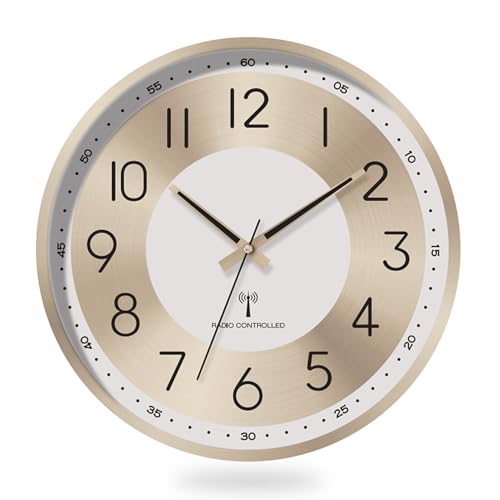
Morning routines often suffer from cumulative minutes lost to inaccurate quartz clocks that gradually drift over months of operation. When household schedules depend on prompt departures, adjusting every clock by hand after a seasonal daylight saving time shift or a battery change becomes an irritating chore. Exploring how do automatic clocks work reveals a dependable engineering solution that pairs standard quartz oscillation with longwave radio broadcasts. Rather than forcing you to align hands or displays manually, these self-correcting units capture reference timing signals broadcast directly across North America.
Modern living spaces benefit from timepieces that manage their own calibration without continuous smartphone pairing or local network configuration. While many sleepers rely on top rated alarm clocks for bedrooms to maintain daily morning wakeups, an automatic clock provides zero-maintenance temporal accuracy across living rooms, offices, and kitchens. Understanding the underlying technology behind these radio-controlled instruments helps you position them for optimal reception, configure internal time zones properly, and maintain reliable operation throughout the entire year.
| Award | Product | ACR Score About ACR ScoreThe ACR Score is our own rating from 0 to 10, based on performance, design and build, ease of use, and value. It reflects independent research and is never influenced by manufacturers, retailers, or affiliate commissions. Learn more › | |
|---|---|---|---|
| Best Overall |
Aurowit 14-Inch Atomic Wall Clock
|
8.6/10 | Buy |
Aurowit 14-Inch Atomic Wall Clock
The Aurowit 14-Inch Atomic Wall Clock provides effortless precision by synchronizing daily with Colorado WWVB radio signals, featuring an aluminum frame and large numerals. It is a dependable choice for seniors, home offices, and light-sensitive sleepers seeking a zero-glare, screen-free timepiece.
Pros
- Radio-controlled WWVB reception automatically maintains exact time and handles DST adjustments
- Large 14-inch face with bold numerals and HD glass provides clear legibility from across the room
- Solid aluminum frame and rose gold finish deliver durable, modern construction
- Completely cordless battery operation eliminates unsightly nightstand or wall cords
- Emits zero electronic screen glow, making it suitable for pitch-black sleep environments
Cons
- Requires one AA battery that is not included in the package
- Analog dial has no luminous glow or backlighting for checking time in pitch-black rooms
- WWVB radio signal reception and initial synchronization can take up to six hours depending on location
Inside Automatic Timekeeping and Radio-Controlled Synchronization
Automatic clocks deliver split-second precision by combining an onboard quartz movement with a specialized radio frequency receiver. Instead of generating time in complete isolation, these devices listen for official national time standards and adjust their gear trains or digital displays to match. Demystifying this process requires examining how radio signals travel across continents, how internal decoders translate binary time codes, and why proper physical placement determines long-term success.
The Fundamental Mechanism: From Atomic Standards to WWVB Broadcasts
Every automatic clock operating in North America relies on an external reference standard maintained by the National Institute of Standards and Technology. In Boulder, Colorado, primary cesium fountain atomic clocks measure the resonance frequency of cesium atoms to calculate the precise length of a second. This atomic measurement achieves an accuracy within one second over millions of years, creating the foundation for Coordinated Universal Time.
From the NIST radio station WWVB located near Fort Collins, Colorado, high-powered transmitters broadcast this reference standard across the continental United States. The station operates continuously on an extremely low carrier frequency of 60 kilohertz. Because longwave signals hug the curvature of the earth rather than traveling solely in line of sight, the 60 kilohertz transmission penetrates residential walls and spans thousands of miles.
Inside an automatic clock housing, a compact ferrite bar antenna wound with fine copper wire captures these subtle atmospheric electromagnetic waves. The internal antenna converts the oscillating radio wave into a faint electrical current that flows directly into the clock’s micro-receiver circuit. This tiny receiving component filters out extraneous ambient radio noise to isolate the underlying timing pulses.
Decoding the Signal: How the Internal Microprocessor Translates Radio Pulses
The WWVB station does not broadcast an audible voice or standard audio tone; instead, it transmits structured data through amplitude modulation. The transmitter reduces its carrier signal power by ten decibels at precise intervals, creating binary pulses that represent zeroes, ones, and framing markers. A full data packet takes exactly sixty seconds to broadcast, sending one information bit per second.
This sixty-second data frame encodes comprehensive temporal information, including the current minute, hour, day of the year, and last two digits of the calendar year. It also carries critical status indicators for leap seconds and upcoming daylight saving time shifts. The clock’s embedded microprocessor samples the incoming carrier wave once per second to reconstruct this binary sequence.
To prevent corrupted data from causing false time adjustments, the processor performs strict parity checks across received data frames. Most internal decoders require two consecutive minutes of perfectly matching data packets before verifying the broadcast as genuine. If lightning strikes or electrical noise distorts even a single bit during transmission, the microprocessor discards the entire packet and restarts the listening sequence.
Motorized Movement and Optical Alignment in Analog Clocks
Digital atomic clocks update their liquid crystal displays instantly through internal logic circuits, but analog models must physically position mechanical hands. In clocks like the Aurowit 14 Inch Atomic Wall Clock, a specialized radio-controlled movement incorporates micro-stepper motors connected to the gear train. The movement uses internal optical sensors or physical contact pins to establish a baseline home reference.
During initial setup or full resets, tiny infrared photodiodes track the exact position of reflective holes in the internal gears. The clock runs the hands forward until every hand crosses the twelve o’clock position, where the sensors detect alignment and halt motor rotation. Once the microprocessor knows the hands sit precisely at midnight, it can calculate the exact gear rotations needed to match decoded radio time.
When valid radio time data confirms, the stepper motors advance rapidly, spinning the minute and second hands clockwise around the dial face. This high-speed tracking continues until the hands reach the exact current hour and minute. After reaching correct alignment, the mechanism shifts back to standard gear stepping, advancing once per second with normal ticking cadence.
Nighttime Synchronization Cycles and Atmospheric Ionospheric Propagation
Owners often notice that automatic clocks attempt their primary synchronization routines in the middle of the night, usually between 1:00 AM and 5:00 AM. This deliberate schedule takes advantage of natural changes within the earth’s ionosphere that dramatically improve longwave radio propagation. During daylight hours, solar ultraviolet radiation ionizes the lower D-layer of the atmosphere, which absorbs 60 kilohertz radio waves and weakens the signal.
After sunset, the absorbing D-layer dissipates, allowing longwave radio transmissions to reflect off the higher E and F atmospheric layers. This reflective bouncing effect, known as skywave propagation, allows the WWVB carrier wave to travel across mountain ranges and urban valleys with minimal attenuation. The nighttime signal arriving at your home can be many times stronger than the same broadcast during midday.
Limiting receiver operation to scheduled nocturnal listening windows also protects battery longevity. Continuous radio reception would deplete standard alkaline cells in a matter of weeks due to the energy demands of internal signal amplification. By powering down the sensitive radio tuner during daytime hours, the clock conserves power while maintaining pinpoint accuracy through its secondary internal circuits.
Time Zone Offsets and Daylight Saving Time Automation
Because the WWVB signal originates from a single broadcast station, it transmits time referenced strictly to Universal Coordinated Time. An automatic clock cannot detect its geographic location independently, so it relies on hardware switches to calculate regional time. The Aurowit 14 Inch Atomic Wall Clock provides dedicated selector options for Pacific, Mountain, Central, and Eastern time zones.
Selecting your regional time zone directs the internal microprocessor to apply a fixed mathematical offset to the incoming UTC data. For example, selecting Eastern Time instructs the chip to subtract five hours from standard UTC, while Pacific Time requires an eight-hour deduction. The clock executes this calculation automatically, keeping the display aligned with your local municipal schedule without altering the incoming reference data.
Handling daylight saving shifts requires similar algorithmic logic. The WWVB broadcast stream contains specific data bits that signal when daylight saving time is active or pending across North America. When the clock’s hardware daylight saving switch is set to the active position, the processor advances or retards the displayed time by one hour on scheduled changeover dates. Users in regions that do not observe daylight shifts can simply toggle this feature off to preserve standard time.
Household Interference and Nightstand Placement Rules
Household electronics represent the most common barrier to successful automatic clock synchronization. Devices such as switching power supplies, Wi-Fi routers, television displays, and fluorescent ballasts emit high-frequency electromagnetic noise that overpowers the delicate 60 kilohertz carrier signal. When setting up timepieces on tables alongside modern accessories like bedside clocks with integrated wireless chargers, keep the automatic clock positioned at least three to six feet away from inductive charging coils and AC transformers.
Building architecture also influences radio reception strength. Structural elements such as steel studs, aluminum siding, foil-backed thermal insulation, and wire-reinforced stucco can act as partial Faraday shields that attenuate incoming radio waves. If an automatic clock is mounted on an interior wall surrounded by metallic ductwork, its ferrite antenna may struggle to register the NIST broadcast.
To improve signal capture, position the clock on or near an exterior wall with a window oriented toward Fort Collins, Colorado. Ferrite core antennas receive signals most effectively when positioned perpendicular to the transmitter’s bearing. Rotating the clock slightly or moving it to an adjacent wall often resolves chronic synchronization failures without requiring any mechanical disassembly.
Quartz Movement Independence Between Signal Receptions
A common misconception is that an automatic clock stops working or loses track of seconds if atmospheric radio reception drops out. In reality, the radio receiver acts purely as a corrective calibration tool rather than an active continuous engine. Between scheduled nightly radio receptions, the timepiece functions as a standard autonomous quartz clock.
An internal tuning fork quartz crystal oscillates at a standard frequency of 32,768 hertz under battery power. Microscopic logic gates divide this frequency down to generate precisely timed single-second electrical impulses that drive the gear train or advance the digital readout. Modern quartz crystals maintain remarkable stability, typically drifting by less than one second over several weeks of independent operation.
If severe electrical storms or temporary atmospheric disturbances block the WWVB broadcast for several consecutive nights, the clock continues running seamlessly on quartz power alone. Once atmospheric conditions normalize and nighttime radio reception returns, the internal receiver captures a clean data packet and quietly corrects the few fractions of a second that accumulated during the outage.
Step-by-Step Calibration and Manual Reset Procedures
Understanding the manual control interface allows owners to resolve hand desynchronization quickly after battery replacements or household relocations. The rear housing of radio-controlled models typically provides three tactile buttons: RESET, M.SET, and REC. The Aurowit 14 Inch Atomic Wall Clock utilizes this exact architecture to provide full manual override and diagnostic calibration.
When you press the RESET button, the internal processor drives all mechanical hands forward until they stop at the twelve o’clock baseline position. If the hands stop slightly off-center due to mechanical jostling during shipping, using the M.SET button advances the minute hand in deliberate one-minute increments. This manual stepping activates the second hand and confirms the internal gear teeth are properly seated and ticking.
To initiate an immediate radio frequency search rather than waiting for the scheduled midnight cycle, press and hold the REC button for three seconds. The second hand usually halts at twelve o’clock while the internal receiver amplifies incoming 60 kilohertz broadcasts. The clock attempts synchronization over an extended window, frequently taking up to six hours to finalize data capture and align its hands to local time.
Power Supply Architecture and Battery Voltage Requirements
Radio-controlled wall clocks rely on primary battery cells to power both their mechanical gear trains and their internal radio tuners. The Aurowit 14 Inch Atomic Wall Clock operates on a single 1.5-volt AA alkaline battery. Installing the cell with correct positive and negative polarity alignment is essential, as reverse installation can damage sensitive internal microchips.
A frequent diagnostic puzzle occurs when an automatic clock continues ticking smoothly but fails to update its time during daylight saving transitions. This issue stems from the differing voltage thresholds required by the mechanical stepper motor versus the radio receiver. Driving the mechanical gear train requires minimal electrical current, allowing the hands to move even when battery voltage drops below 1.2 volts.
In contrast, the high-gain internal radio amplifier requires consistent voltage to isolate faint 60 kilohertz carrier waves from background atmospheric static. As an alkaline battery ages, its internal resistance climbs and terminal voltage sags under radio tuning load. Replacing the AA battery once every twelve months guarantees the radio receiver receives adequate operating voltage to capture daily broadcast updates.
Radio-Controlled Clocks Versus Modern Bedside Alternatives
Evaluating automatic timekeeping against network-connected smart devices highlights distinct operational philosophies. Smart alarm clocks and mobile phones synchronize their internal clocks via Wi-Fi network time protocol servers or cellular network towers. While network connectivity provides instantaneous updates, it demands continuous wireless router access, password configuration, and exposure to residential internet outages.
Radio-controlled clocks operate completely off-grid without requiring account credentials, software updates, or home network bandwidth. In bedrooms optimized for sound sleep and gentle waking, products like sunrise alarm clocks for deep sleep emphasize circadian lighting and sleep hygiene. Standalone radio clocks serve as dedicated, zero-distraction timekeepers that remain impervious to local broadband disruptions.
For large living spaces, conference rooms, and home offices, a dedicated radio-controlled clock provides visible readability across broad distances. The aluminum face, brushed gold frame, and high-definition glass of models like the Aurowit 14 Inch Atomic Wall Clock blend aesthetic appeal with industrial-grade timekeeping. You gain the temporal reliability of federal atomic standards without introducing intrusive screen glare or wireless networking complexity.
Practical Verification and Long-Term Ownership Takeaways
Setting up an automatic clock successfully requires patience during the initial power-up cycle. After inserting a fresh AA alkaline battery, verify that the time zone selector matches your geographic region and confirm your daylight saving preference. Resist the urge to adjust hands manually if the clock stops at twelve o’clock during its initial calibration phase.
Allow the timepiece at least twenty-four to forty-eight hours to complete its overnight synchronization routine before making placement adjustments. Because atmospheric propagation peaks in the early morning hours, the clock will often lock onto the WWVB signal while the household sleeps. Once the initial synchronization succeeds, the mechanism maintains continuous precision with virtually zero physical maintenance required.
Radio-controlled clocks represent a triumph of practical consumer engineering, pairing century-old radio broadcast principles with sophisticated microelectronics. By understanding how these instruments capture longwave signals, navigate household interference, and calibrate mechanical hands, you can enjoy seamless, split-second accuracy across every room in your home.
About the author
Dan Caffrey is a Certified Sleep Science Coach and Certified Stress Management Coach with editorial experience covering sleep health and sleep products. He combines consumer-focused research with sleep science to explain product benefits, limitations, and suitability in clear, approachable language.