
How to Set a Mantel Clock: Practical Guide for 2026
Learn how to set a mantel clock with simple steps for quartz movements, battery installation, and care in October 2026.
 By Daniel Noyed
Updated October 6, 2026
By Daniel Noyed
Updated October 6, 2026

Placing a traditional timepiece above a fireplace or on a bedroom console brings warmth to a living space, but setting the dial correctly often raises questions for new owners. Learning how to set a mantel clock requires understanding the specific movement inside the housing, especially since modern battery-powered quartz designs function quite differently from traditional mechanical gear trains. While many households rely on top-rated alarm clocks for bedrooms to handle early wake-up routines, a mantel clock serves as a prominent visual focal point that demands dependable accuracy. Getting the hands aligned properly ensures the piece remains both a decorative centerpiece and a reliable reference throughout the day.
Modern tabletop and fireplace clocks typically utilize energy-efficient quartz movements that eliminate the winding keys and pendulum balancing required by antique heirlooms. Adjusting these movements involves accessing the rear control module, orienting primary alkaline batteries correctly, and rotating the setting wheel in the proper direction to protect internal gearing. Taking a few deliberate precautions during initial placement protects delicate hands, prevents premature battery drain, and maintains whisper-quiet operation across your living room or bedside table.
| Award | Product | ACR Score About ACR ScoreThe ACR Score is our own rating from 0 to 10, based on performance, design and build, ease of use, and value. It reflects independent research and is never influenced by manufacturers, retailers, or affiliate commissions. Learn more › | |
|---|---|---|---|
| Best Overall |
OCEST 13x7 Silent Vintage Farmhouse Mantel Clock
|
9.2/10 | Buy |
| Best Budget |
 Infinity Instruments Miniature Grandfather Clock
|
8.9/10 | Buy |
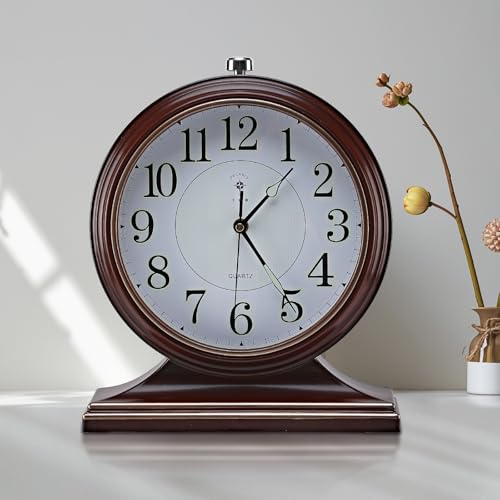 Vintage 10-Inch Silent Desk and Mantel Clock
|
8.4/10 | Buy |
OCEST 13x7 Silent Vintage Farmhouse Mantel Clock
The OCEST 13 x 7-inch Silent Vintage Farmhouse Mantel Clock delivers quiet, non-ticking quartz accuracy with clear analog numerals and a classic walnut brown casing. It is an appealing choice for bedrooms, mantels, and home offices where sleepers want dependable timekeeping without the annoyance of ticking sounds or glowing digital screens.
Pros
- Non-ticking silent sweep quartz movement creates a quiet, distraction-free atmosphere for sleep or study
- Easy-to-read dial layout with distinct numerals and protective high-grade glass cover
- Cord-free battery power requires only one standard AA battery, eliminating wall outlet dependency
- Classic vintage farmhouse styling with walnut brown finish and gilt detailing fits traditional and modern decor
Cons
- Does not feature an audible alarm buzzer, timer, or snooze function for morning wake-up needs
- Lacks illuminated numerals or a backlight, making it unreadable in a completely dark room
- AA battery is not included with the clock and requires separate purchase
Infinity Instruments Miniature Grandfather Clock
The Infinity Instruments Miniature Grandfather Clock delivers vintage tabletop styling and reliable quartz timekeeping in a lightweight plastic resin frame. It serves as an attractive phone-free accent clock for desks, mantles, and nightstands, though buyers requiring an audible morning alarm will need a separate wake-up device.
Pros
- Distinguished antique grandfather clock styling at an accessible desktop size
- Dependable quartz movement ensures reliable and steady timekeeping
- Zero electronic display glow, preserving a completely dark bedroom environment for light-sensitive sleepers
- Lightweight, durable plastic resin construction weighs under one pound for effortless repositioning
- Includes a 1-year limited manufacturer warranty from Infinity Instruments
Cons
- Lacks an integrated audible alarm or snooze feature, so it cannot serve as a primary morning wake-up device
- Unlit analog dial cannot be read in total darkness without an ambient bedside lamp
- Molded plastic resin housing does not offer the heavy feel or grain of authentic solid timber
Vintage 10-Inch Silent Desk and Mantel Clock
This 10-inch vintage mantel desk clock combines a silent non-ticking quartz movement with a large, high-contrast analog dial for clear room-wide visibility. It is a solid choice for light sleepers, seniors, and digital detoxers seeking a classic, glare-free timepiece for a calm bedroom or living room shelf.
Pros
- Silent non-ticking quartz movement prevents rhythmic noise in quiet bedrooms
- Large 10-inch dial face is easy to read without reading glasses
- Fully cordless design powered by one AA battery eliminates nightstand cord clutter
- No LED backlights or glowing screens to disrupt light-sensitive sleepers
- Sturdy decorative Baroque-style base stays steady on flat surfaces
Cons
- Does not include an audible wake-up alarm or snooze mechanism
- Lacks backlighting or luminescent markers for reading the time in complete darkness
- Requires one AA battery that is not included in the package
Essential Steps for Setting and Maintaining a Mantel Clock
Setting a mantel clock accurately requires identifying whether the timepiece relies on a traditional mechanical gear train or a contemporary quartz module. Modern mantel designs prioritize low-maintenance timekeeping and silent operation while capturing the ornate aesthetic of historical timepieces. By following a clear setup procedure, you can establish precise timekeeping without placing unnecessary mechanical stress on internal components. Proper configuration also protects delicate hands and ensures consistent operation across every season.
Identifying Your Mantel Clock Movement Type
Before attempting to adjust any dial, you need to verify the specific movement operating behind the clock face. Traditional antique mantel clocks feature mechanical movements driven by coiled springs or hanging weights that require regular winding with a key. In contrast, modern decorative timepieces utilize electronic quartz movements powered by standard disposable batteries. Knowing this distinction is vital because mechanical clocks often feature complex striking trains that can jam if the hands are turned backward carelessly.
Modern pieces like the OCEST Silent Vintage Farmhouse Mantel Clock and the Infinity Instruments Miniature Grandfather Clock use self-contained quartz oscillators that do not rely on chiming gears. These quartz movements regulate time through a tiny vibrating synthetic crystal driven by a microchip circuit. Because quartz modules lack sensitive chime trip levers, they are significantly more forgiving during daily adjustments. However, forcing the physical hands from the front can still loosen the friction-fit collet on the central arbor.
Step-by-Step Procedure for Setting a Quartz Mantel Clock
Begin by preparing a stable, flat work surface before lifting the timepiece from its display position. Mantel clocks often feature decorative finials or broad pedestal bases that can become unstable if tilted carelessly on an uneven surface. Carefully turn the clock around to expose the rear access panel or open movement cavity. If the unit features a protective back cover or hinged door, gently open it to reveal the battery compartment and circular setting wheel.
Locate the small knurled thumbwheel positioned on the rear housing of the quartz movement canister. This rotary dial connects directly to the motion work gears that drive the hour and minute hands on the front dial. Rotate this thumbwheel smoothly in a clockwise direction to advance the minute hand toward the current time. Always use this rear control rather than pushing the hands with your fingers across the front dial glass, as direct pressure can bend delicate metal hands or cause them to bind against each other.
Advance the time until the minute hand aligns precisely with your selected target minute against an accurate digital time source. If you accidentally advance past the intended minute, gently continue rotating forward through the next hour rather than forcing the wheel backward against resistance. While many basic quartz movements tolerate minor counterclockwise corrections, advancing forward preserves optimal gear tooth engagement. Once the hands reach the correct mark, confirm that the second hand or sweep mechanism starts moving smoothly once power is connected.
Proper Battery Installation and Power Management
Battery installation should always be performed after or during the initial time-setting process to avoid fighting an active movement. Most contemporary mantel clocks, such as the 10-inch Vintage Mantel Desk Clock, operate on a single standard AA battery that delivers stable direct current. Examine the battery compartment markings carefully to confirm the positive and negative terminal orientations before inserting the cell. Insert the positive contact end first against the spring terminal, then press the negative base flat into position to prevent scraping the protective battery wrap.
Standard alkaline or carbon-zinc batteries are generally recommended for standard quartz movements due to their steady voltage discharge profile. High-capacity rechargeable nickel-metal hydride batteries often output a lower nominal voltage, which can cause subtle timing drift or premature stoppage in sensitive quartz circuits. Fresh quality batteries typically provide between six and twelve months of dependable operation before requiring replacement. Removing depleted batteries promptly protects the brass contacts from corrosive electrolyte leaks that can destroy delicate electronic traces.
Managing Delicate Gilt and Hollow Metal Clock Hands
The ornamental hands found on vintage-inspired clocks frequently feature detailed cutouts and gilt finishes that require gentle handling. Hollow metal hands, such as those featured on the OCEST farmhouse clock, add period elegance but possess minimal lateral stiffness. If the hands are accidentally pressed inward during cleaning or setup, they may snag against each other as they cross at the top of the hour. A hand collision will immediately stall the quartz motor, leading to sudden time loss while the battery continues to drain.
Inspect the dial from a side angle to ensure adequate parallel clearance between the hour hand, minute hand, and front protective glass lens. If you notice any downward bend, carefully pry the offending hand outward by applying gentle, balanced pressure near its central mounting hub. Never pull on the ornate tip of the hand, which can bend or snap the thin stamped metal. Ensuring that each hand rotates in its own parallel plane guarantees unobstructed movement across the entire twelve-hour rotation.
Silent Sweep vs. Stepping Quartz Movements in Living and Sleep Areas
When positioning a mantel clock in a quiet bedroom or home study, the acoustic behavior of the movement becomes a significant comfort factor. Traditional quartz movements feature a stepping motor that produces an audible tick once every second as the gear advances. In contrast, modern silent sweep movements utilize high-frequency pulse motors that glide the second hand continuously without acoustic pulsing. Both the OCEST and Generic mantel clocks emphasize this silent operation, eliminating the distracting background clicks that bother light sleepers.
While silent mantel clocks excel as ambient decorative pieces in living rooms and master suites, active sleepers often supplement them with dedicated bedside electronics. Sleepers who need dependable wake-up schedules frequently pair decorative fireplace clocks with alarm clocks with integrated charging on their nightstands to keep mobile devices powered overnight. This combination allows the decorative mantel clock to anchor the aesthetic of the room while functional bedside consoles manage morning wake-up alarms and phone charging needs. Maintaining this functional separation keeps master bedrooms restful and visually uncluttered.
Placement, Stability, and Thermal Protection on Fireplace Mantels
Fireplace mantels present unique environmental factors that can influence both the longevity and accuracy of a tabletop clock. While mantels offer an ideal elevated vantage point, heat rising from active gas, wood, or electric hearths can elevate local temperatures substantially. Excessive heat exposure can dry out internal gear lubricants, degrade plastic casing materials, and cause quartz crystals to oscillate outside their calibrated frequency. Always ensure that the fireplace mantel features an adequate thermal barrier or deflector before placing an heirloom or decorative clock above an active fire.
Physical stability is another essential consideration when positioning substantial decorative clocks on narrow fireplace ledges or floating shelves. Models like the Infinity Instruments Miniature Grandfather Clock incorporate durable plastic resin frames with weighted pedestal bases to resist minor shelf tremors. Ensure that all supporting feet rest securely on a flat surface away from high-traffic edges where footsteps might cause gradual shifting. Adding discreet rubber bumper pads under the base provides additional traction while protecting fine mantel woodwork from scratches.
Dial Legibility, Viewing Angles, and Room Aesthetics
A mantel clock must provide effortless readability across the room to function effectively as a daily household timekeeper. Large display dials, such as the 10-inch Vintage Mantel Desk Clock, feature bold Roman or Arabic numerals that remain legible from across an entire living area. High-contrast color combinations, like gold-plated accents set against dark black or rich brown dial faces, enhance visual distinction in low ambient lighting. Consider the primary seating distance in your living room when selecting between a compact tabletop model and an expansive broad-dial centerpiece.
Glass crystal bezels protect the underlying clock face from household dust while influencing optical clarity under direct indoor lighting. Anti-reflective convex or flat glass covers reduce harsh glare from overhead chandeliers, wall sconces, or nearby windows. For individuals managing severe visual limitations or waking in pitch-black rooms, decorative mantel clocks can be supplemented with specialized bedroom equipment. Those who struggle with morning darkness often explore sunrise alarm clocks for heavy sleepers to assist with circadian alignment while keeping the mantel clock for daytime room decor.
Troubleshooting Common Mantel Clock Inaccuracies and Time Drift
If your mantel clock begins losing several minutes each week, the primary culprit is almost always declining battery voltage. As alkaline cells discharge, their internal resistance increases, causing intermittent voltage drops that fail to trigger every quartz stepper pulse. This voltage drop frequently causes the clock to lose time erratically rather than stopping dead in an obvious fashion. Replacing the AA battery with a fresh, brand-name cell should immediately restore standard quartz timing accuracy within a few seconds per month.
Another frequent cause of sudden stopping involves physical friction along the hands or central drive arbor. If dust accumulates inside an unsealed movement cavity, or if the minute hand rubs lightly against the hour hand at twelve o’clock, the motor will stall. To diagnose this issue, listen closely or observe whether the sweep hand stops consistently at the exact same point on the dial. Gently clearing the obstruction or realigning the hand clearance will instantly resolve mechanical binding issues without requiring specialized tools.
Routine Maintenance and Long-Term Movement Care
Maintaining a decorative mantel clock requires minimal effort but preserves the lustrous finish and internal components over many years of service. Dust the outer housing regularly using a clean, dry microfiber cloth to prevent grit from settling into decorative crevices. Avoid spraying liquid glass cleaners or chemical furniture polishes directly onto the clock housing, as mist can seep past bezel seams into the quartz module. Instead, spray a small amount of mild cleaner onto a microfiber rag to gently polish the glass lens and gilded accents.
Establish a routine battery replacement schedule to prevent destructive acid leakage inside the rear battery compartment. Replacing the primary AA cell once every six to twelve months ensures dependable operation and safeguards the delicate electrical contacts. If you plan to store the clock or leave your home unoccupied for extended seasons, always remove the battery beforehand. Keeping the housing clean and the power supply fresh ensures your mantel clock remains an attractive and dependable household fixture for years to come.
Setting a modern mantel clock is a simple task that requires only a steady hand, proper rear thumbwheel rotation, and a fresh battery. By avoiding excessive force on front dial hands and protecting the unit from fireplace heat, you ensure smooth, quiet operation across its entire lifespan. Whether serving as an ornate visual centerpiece in a formal living room or offering silent timekeeping on a bedroom console, a well-set clock delivers timeless charm to your home. Take a few moments to verify hand alignment and battery seating today to enjoy flawless, worry-free performance.
About the author
Daniel Noyed is a Certified Sleep Science Coach and experienced product editor with extensive knowledge of sleep health and sleep-related products. He has hands-on experience testing hundreds of products and translating technical features into practical guidance for everyday sleepers.