
How to Introduce Ok to Wake Clock: Practical Guide for 2026
Learn how to introduce ok to wake clock routines for toddlers in October 2026 with practical schedule tips, visual cues, and gentle bedroom dimming adjustments.
 By McKenzie Dillon
Updated October 6, 2026
By McKenzie Dillon
Updated October 6, 2026

Early morning footsteps padding down the hallway before dawn are familiar to parents navigating the toddler years. When a child wakes up at five in the morning ready to play, their developing brain genuinely cannot tell whether it is time to start the day or stay in bed. Understanding how to introduce ok to wake clock systems provides young children with a concrete visual cue that replaces confusing numbers with clear colors and friendly facial graphics. By transforming abstract time into intuitive color signals, parents can gently guide their children toward better sleep habits and restore peaceful mornings for the entire household.
Successful sleep training depends on pairing consistent behavioral expectations with reliable bedside hardware that children can interpret without adult assistance. Many families find that pairing structured morning routines with dedicated kids ok to wake alarm clocks eliminates pre-dawn negotiations and bedtime confusion. Devices equipped with visual status indicators, customizable nightlights, and soothing sound machines create a comforting nighttime environment while clearly signaling when morning has officially arrived. Taking the time to introduce these visual tools deliberately ensures that toddlers embrace the clock as a helpful bedtime companion rather than a strict rulebook.
| Award | Product | ACR Score About ACR ScoreThe ACR Score is our own rating from 0 to 10, based on performance, design and build, ease of use, and value. It reflects independent research and is never influenced by manufacturers, retailers, or affiliate commissions. Learn more › | |
|---|---|---|---|
| Best Overall |
MooLarm Ok to Wake Sleep Trainer Toddler Alarm
|
8.9/10 | Buy |
| Best Budget |
 I-CODE Toddler Ok to Wake Clock
|
8.6/10 | Buy |
| Best Premium |
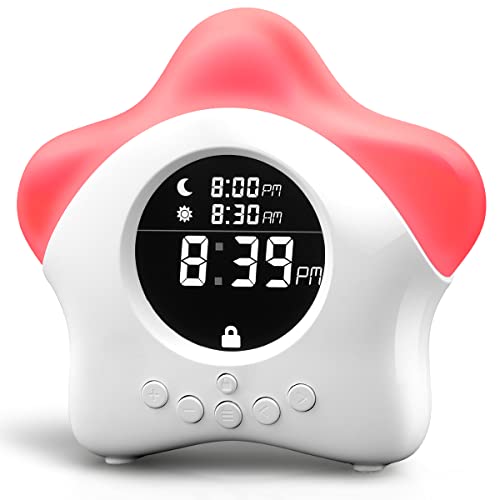 Learn & Climb Toddler Sleep Training Clock
|
8.4/10 | Buy |
 ANNNGUL Kids Ok to Wake Clock
|
8.1/10 | Buy | |
| Best Value |
 ANALOI Kids Ok to Wake Clock
|
8.0/10 | Buy |
MooLarm Ok to Wake Sleep Trainer Toddler Alarm
The MooLarm Sleep Training Alarm Clock uses clear sun, moon, and color cues alongside an integrated 17-sound noise machine to help toddlers build healthy sleep schedules. It is a practical bedside tool for parents seeking an effective way to teach early-rising children when to stay in bed and when it is okay to wake up.
Pros
- Clear sun and moon visual indicators teach early risers when to stay in bed without needing to read time digits
- Versatile 17-sound audio library eliminates the clutter of having a separate nursery sound machine
- Convenient independent nap timer prevents accidental resets of the daily morning wake schedule
- Four-level dimming with automatic nighttime reduction helps prevent excess bedside glare during sleep
Cons
- Stepped 4-level dimmer does not offer continuous stepless 0 to 100 percent brightness tuning
- Visual coaching cues may require consistent parental reinforcement before young toddlers follow them reliably
- Lightweight 0.7-pound build can be easily tipped over or displaced by curious children if kept within arm's reach
I-CODE Toddler Ok to Wake Clock
The I-CODE Ok to Wake Alarm Clock is a compact bedside sleep trainer that pairs clear red and green visual cues with friendly facial emojis to teach young children healthy morning boundaries. Equipped with an adjustable night light, flexible nap timer, and toddler-proof lock, it is an effective tool for parents helping kids establish independent sleep routines.
Pros
- Intuitive color-coded lighting and facial expressions help toddlers understand wake boundaries before they can read numbers
- Child safety lock prevents curious toddlers from resetting the clock or changing alarm times
- Versatile nap timer allows parents to set quick rest countdowns without altering regular morning wake schedules
- Small footprint and lightweight 0.65-pound ABS frame fit conveniently on any bedside surface
Cons
- Relies primarily on visual learning cues, which may require an initial adjustment period and parental coaching for younger toddlers
- Compact 4-inch square chassis houses multiple configuration buttons that require careful setup using the included directions
- Manufacturer specifications do not detail internal battery backup or prolonged cordless operating capabilities
Learn & Climb Toddler Sleep Training Clock
The Learn & Climb Stay-in-Bed Clock is an electronic toddler sleep trainer featuring a clear LCD display and a color-coded light system to help kids know when to stay in bed and when to wake up. It is an ideal bedside tool for parents seeking consistent morning routines and better sleep habits for toddlers and young children.
Pros
- Color-coded visual cues help non-time-reading toddlers easily understand when it is acceptable to leave bed
- Supplied with a sturdy DC power adapter and USB cord for immediate out-of-the-box operation
- Battery backup preserves essential alarm and time settings if wall power drops or cords are bumped
- Includes comprehensive sleep training materials like an eight-week reward chart and bedtime storybook
- Dedicated nap countdown mode simplifies daytime rest routines without overriding primary alarm times
Cons
- Backup batteries are not included and only preserve memory settings rather than powering active lights or audio
- Speaker volume is limited to two preset levels rather than a continuous variable adjustment slider
- Requires continuous connection to AC wall power to keep the nightlight and digital display active
ANNNGUL Kids Ok to Wake Clock
The ANNNGUL Kids Alarm Clock is a compact bedside sleep trainer that uses clear red and green light indicators to teach toddlers when to stay in bed and when it is okay to get up. Featuring 10 night light colors, 5 brightness levels, and accessible front-facing buttons, it is well suited for parents seeking an intuitive morning routine helper.
Pros
- Red and green visual wake indicators help toddlers understand sleep boundaries before they can read numbers
- Front-mounted controls eliminate the frustration of navigating hidden buttons on the bottom of the clock
- 10 vibrant night light color options and 5 brightness settings allow customized bedtime lighting
- Comes complete with both the required power cable and AC wall adapter in the box
- Settings preservation prevents the need to reprogram routines after brief power disconnections
Cons
- Must remain plugged into an electrical outlet to function and cannot operate cordlessly on battery power alone
- Brightness adjustment uses 5 preset steps rather than a continuous 0-to-100 percent stepless dial
- Lacks separate weekday and weekend dual-alarm scheduling options
ANALOI Kids Ok to Wake Clock
The ANALOI Kids Sleep Training Alarm Clock combines an intuitive red-and-green visual wake system with gradual ascending tones and dual alarm scheduling to build consistent morning routines. Wrapped in a drop-resistant silicone shell with an integrated sound machine and night light, it is a practical choice for parents transitioning toddlers into independent sleeping habits.
Pros
- Intuitive red-to-green light and facial expression cues help toddlers identify wake-up time without reading numbers
- Dual independent alarms provide separate scheduling for weekdays and weekends
- Shock-absorbing silicone build paired with hidden buttons and a child lock prevents accidental setting changes
- Built-in sound machine offers 7 soothing audio tracks and a flexible 15-to-60 minute sleep timer
Cons
- Display and night light brightness is limited to 3 preset levels rather than a continuous stepless dimming dial
- USB-powered design requires an available USB outlet or standard USB wall adapter
- Compact 4.4-inch display size is optimized for close bedside viewing rather than large rooms
The Practical Guide to Introducing an Ok to Wake Clock
Young children experience time through physical sensation and environmental cues rather than abstract numbers. When parents introduce a visual sleep trainer clock, the goal is to bridge this developmental gap by replacing digital digits with distinct colors, sun and moon symbols, and friendly facial expressions. Success requires more than simply plugging the device into an outlet and expecting instant morning cooperation. A structured rollout that combines gradual schedule shifts, daytime rehearsals, and clear boundaries ensures that your toddler embraces the clock as a comforting bedtime guide.
Assessing Developmental Readiness and Introduction Timing
Most children develop the cognitive ability to connect visual indicators with behavioral boundaries between two and three years of age. Introducing a visual sleep clock before eighteen months often causes frustration because younger toddlers cannot yet grasp cause-and-effect rules. Signs of readiness include recognizing primary colors, following simple two-step directions, and showing awareness of morning routines. If your toddler already understands that red means stop and green means go, they possess the mental foundation required for visual sleep cues.
Timing the introduction also requires a stable domestic environment free from immediate upheaval. Avoid presenting a new sleep training clock during major transitions such as moving to a new home, welcoming a newborn sibling, or weaning from a pacifier. Similarly, if your toddler is actively moving from a crib to a toddler bed, introduce the clock either several weeks before the switch or after the new bed feels secure. A calm household allows your child to focus on the new visual routine without feeling overwhelmed by concurrent changes.
Unboxing and Creating Daytime Familiarity
Introducing an alarm clock at bedtime when a child is already exhausted is a common misstep that invites resistance. Instead, open the package together during bright daytime hours when your toddler is cheerful and playful. Let your child touch the casing, inspect the friendly face or sun and moon icons, and name the device like a bedside companion. Building positive emotional familiarity early reduces the apprehension toddlers often feel toward new bedroom objects.
Turn the initial setup into an interactive roleplay game across the afternoon. Plug the clock into a living room outlet and manually cycle through the light colors to demonstrate how the cues operate. Have your child pretend to sleep when the light turns red, and encourage them to jump up and cheer when the display switches to green. Clocks like the Stay-in-Bed Clock for Kids even include illustrated storybooks and reward charts that reinforce these concepts through shared daytime reading.
Setting Realistic Initial Wake Times and Shifting Schedules
A frequent mistake parents make is setting the target wake-up light for an ideal adult schedule, such as seven in the morning, when the child naturally wakes at five fifteen. Expecting an early-rising toddler to stay quietly in bed for nearly two hours sets the child up for distress and failure. For the first three to five mornings, program the green wake light to illuminate approximately five minutes after your toddler naturally stirs. When they wake up and see the green light appear almost immediately, praise them enthusiastically for waiting for the signal.
Once the child reliably connects the green light with permission to get up, begin advancing the timer forward in small, manageable increments. Shift the wake time by ten to fifteen minutes every three or four days, closely monitoring your toddler’s mood and nap quality. If you encounter resistance or middle-of-the-night distress, hold the current time steady for several days before advancing again. Devices like the ANALOI Alarm Clock for Kids offer dual alarm settings that allow parents to preserve weekday schedules while adjusting weekend mornings separately.
Establishing Visual Rules With Red, Yellow, and Green Spectrums
Visual sleep clocks rely heavily on chromatic contrast to communicate boundaries without spoken words. In standard configurations, a warm red or amber light signals that the household is sleeping and the child must remain in bed. Red light is uniquely suited for overnight illumination because its long wavelengths do not suppress the body’s natural production of melatonin. Blue or stark white nightlights, by contrast, can stimulate alertness and disrupt nighttime sleep cycles by signaling daytime to the brain.
Green light serves as the universally recognized visual release that communicates morning has officially arrived. Clocks like the ANNNGUL Kids Alarm Clock and the I·CODE Ok to Wake Alarm Clock for Toddlers utilize vivid green LEDs to indicate that quiet time is over. Some devices, such as the Stay-in-Bed Clock for Kids, add a transitional yellow phase that acts as a gentle thirty-minute countdown. Teach your child a simple, memorable rhyme such as “red in bed, green is seen” to reinforce the rule during the bedtime routine.
Calibrating Screen Brightness and Nightlight Dimming
Display brightness plays a critical role in whether a sleep training clock supports or disrupts restorative rest. A display that remains excessively bright in a dark room can illuminate the entire bedroom, casting harsh shadows that make falling asleep difficult. Sensitive toddlers may become fixated on the glow or feel agitated by ambient nightstand glare. Modern sleep trainers address this by providing multi-level dimmers or automatic night dimming capabilities.
Clocks like the MooLarm Ok to Wake Sleep Training Kids Sun Moon Alarm feature four adjustable brightness dimmer settings alongside an automatic nighttime dimming mode. This ensures that the clock face remains clearly visible during daytime play while dimming down to a subtle, non-intrusive glow once bedtime arrives. The ANNNGUL clock offers five levels of display dimming, while the I·CODE model includes an automated nightlight timer spanning fifteen to one hundred twenty minutes. Testing the clock in a completely dark room prior to the first night ensures the glow will not inadvertently keep your child awake.
Integrating Ambient Sound Machines and Gentle Wake Tones
Audio features provide an additional layer of sleep support by masking disruptive household noises that trigger early awakenings. Morning footsteps in the hallway, plumbing noises, or neighborhood traffic frequently wake light-sleeping toddlers before their target alarm time. Integrated sound machines present in units like the MooLarm clock provide seventeen soothing audio profiles, including continuous white noise, gentle nature sounds, and calming lullabies. Consistent background sound creates a steady acoustic blanket that helps toddlers link sleep cycles smoothly.
When morning arrives, parents must decide whether to pair the visual green cue with an audible alarm. If your primary goal is teaching an early riser to stay in bed, setting a silent visual wakeup is generally the best approach. For parents managing general household timekeeping alongside children’s rooms, consulting guides on reliable alarm clocks for bedrooms can help establish quiet, coordinated morning schedules throughout the home. If an audible alert is required for preschool routines, clocks like the ANALOI model offer progressive volume escalation across gentle melodies to prevent abrupt morning startle responses.
Engaging Child Locks and Tamper-Proofing Controls
Toddlers possess an innate curiosity that drives them to press accessible buttons, flip switches, and explore unfamiliar gadgets. An unsecured clock on a child’s nightstand will inevitably have its alarm times shifted, volume altered, or display inverted by enthusiastic little fingers. Accidental reprogramming leads to missed wakeups or premature green lights that completely derail sleep training consistency. Built-in child lockout mechanisms are therefore an indispensable protective feature for any toddler bedside device.
Different manufacturers implement child locks through hidden physical controls or multi-button hold sequences. On the I·CODE sleep trainer, parents activate or deactivate the lock by pressing and holding the SLEEP button and the TIME button simultaneously for three seconds. The ANALOI model uses concealed buttons paired with an integrated lock mode, housed inside a resilient drop-resistant silicone shell. Position the clock on a stable dresser or high shelf where your child can clearly view the glowing colors from bed while keeping cords neatly out of reach.
Adapting Visual Timers for Daytime Naps and Rest Intervals
Visual sleep training principles apply just as effectively to afternoon naps and quiet rest intervals as they do to overnight sleep. Toddlers dropping their daily nap often struggle to spend an hour quietly in their room without repeatedly seeking parental attention. Repurposing the ok to wake system provides a clear end-point for afternoon rest, reducing restlessness and helping children practice independent play. Dedicated nap timer functions make this adaptation straightforward without disturbing stored overnight alarm times.
Clocks like the MooLarm and I·CODE include independent nap countdown timers offering intervals such as fifteen, thirty, sixty, ninety, or one hundred twenty minutes. Activating the nap timer illuminates the red sleep indicator for the selected duration, switching to green once the countdown concludes. Many parents who appreciate gradual visual prompts in their own routines utilize sunrise wake up alarm clocks to wake naturally, and children benefit from similar visual predictability during afternoon rest breaks. Remind your child that resting their body quietly with picture books is just as valuable as sleeping until the green light appears.
Managing Boundary Testing and Early Morning Exits
Even the most thorough introduction will encounter occasional resistance and boundary testing from strong-willed toddlers. Your child will inevitably wake up while the clock is glowing red, slip out of bed, and walk into your room to see how you respond. How parents handle these early morning appearances determines how quickly the sleep training routine becomes established. Inconsistent responses, such as allowing the child into your bed on some mornings while sending them back on others, invites prolonged testing.
When your toddler emerges before the green light shines, respond with calm, minimal, and neutral interaction. Take your child gently by the hand, walk them back to their bedroom, and point to the illuminated clock face without scolding or engaging in conversation. Whisper a simple reminder such as, “The light is red; it is still time to rest in bed,” tuck them in, and leave the room promptly. When your child waits patiently for the green light, celebrate their success using praise or tangible trackers like the eight-week reward chart included with the Stay-in-Bed Clock.
Verifying Power Outage Resilience and Settings Retention
A brief electrical outage or an accidentally kicked wall plug can silently wipe out programmed sleep schedules if the clock lacks proper power architecture. Waking up to a blinking midnight display or a completely darkened screen confuses young children and undermines days of hard-won routine. Understanding how your chosen clock handles power delivery ensures that unexpected grid drops do not derail your morning routine. Reliable power retention maintains both parental peace of mind and toddler schedule stability.
Most modern children’s sleep training clocks operate primarily through a dedicated DC power adapter or USB power cord connected to standard wall power. Models like the ANNNGUL clock require continuous mains power and include the necessary adapter and cable in the package. Other units, including the Learn & Climb Stay-in-Bed Clock and the ANALOI model, incorporate dedicated battery backup systems designed to preserve internal time and alarm configurations during momentary brownouts. Always perform a quick manual power simulation by unplugging the clock for two minutes to verify that stored settings remain intact before relying on the device overnight.
Maintaining Long-Term Consistency for Independent Mornings
Successfully introducing an ok to wake clock is ultimately an investment in long-term family sleep hygiene and childhood self-regulation. As your toddler matures into preschool and early elementary years, the clock transitions from a behavioral training device into an everyday bedroom timekeeper. Many children continue using the nightlight and digital clock display well after they have outgrown the basic red and green visual cues. The confidence gained from mastering morning boundaries lays the groundwork for independent morning routines as school schedules begin.
Review the settings periodically as seasons change, particularly during Daylight Saving Time shifts when morning sunlight may conflict with the clock’s schedule. Adjust blackout curtains to prevent early sunrise light from confusing your toddler while they are learning to rely on the clock’s visual signals. By combining a predictable bedtime ritual, patient daytime coaching, and dependable bedside hardware, you create an environment where children feel secure and parents get the rest they need. Consistency across months ensures that healthy wake-up habits remain firmly anchored as your child grows.
Introducing a visual sleep trainer clock requires patience, consistent parental responses, and thoughtful hardware calibration. By meeting your toddler at their current developmental level, setting realistic baseline wake times, and treating the clock as a positive morning companion, you can turn chaotic pre-dawn awakenings into calm, predictable mornings. Stay committed to the routine, celebrate small milestones, and let the visual cues provide structure for your household.
About the author
McKenzie Dillon is a Certified Sleep Science Coach and experienced sleep-product editor who has personally tested dozens of sleep products. Her expertise bridges sleep technology, product evaluation, and practical guidance for creating more comfortable sleep and wake-up routines.