
What Is the Best Color for Digital Clock in Bedroom: Practical Bedroom Guide for 2026
Evaluating what is the best color for digital clock in bedroom reveals how red and amber displays protect deep sleep and reduce glare in November 2026.
 By McKenzie Dillon
Updated October 22, 2026
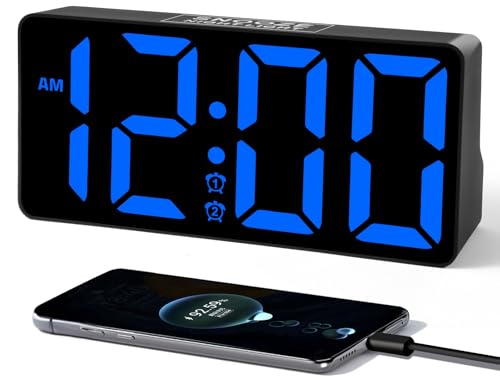
Bedside lighting plays a powerful role in regulating nocturnal hormone production and maintaining healthy sleep cycles. Many sleepers struggle with harsh blue or stark white numbers that illuminate the ceiling and disrupt natural circadian rhythms throughout the night. If you find yourself waking up groggy or constantly squinting against nightstand glare, understanding what is the best color for digital clock in bedroom environments can transform your resting space. Selecting the right wavelength allows you to check the hour during brief awakenings without triggering full neurological alertness or suppressing essential sleep hormones. You can explore our guide to reliable bedside alarm clocks to see how modern designs manage light output.
Optical science shows that narrow-band red and warm amber wavelengths offer the least circadian disruption because they avoid activating photosensitive retinal ganglion cells. Cool tones like electric blue, bright cyan, and vivid green emit high-energy visible wavelengths that trick the internal biological clock into anticipating daylight. Pairing a sleep-friendly hue with a stepless rotary dimmer ensures that your nightstand remains completely dark until the morning alert sounds. For sleepers who also want natural illumination at wake time, pairing a low-glare display with sunrise alarm clocks for heavy sleepers can smooth the transition out of deep sleep cycles. Prioritizing spectral quality alongside smooth brightness controls creates a truly restorative sleep sanctuary.
| Award | Product | ACR Score About ACR ScoreThe ACR Score is our own rating from 0 to 10, based on performance, design and build, ease of use, and value. It reflects independent research and is never influenced by manufacturers, retailers, or affiliate commissions. Learn more › | |
|---|---|---|---|
| Best Overall |
PPLEE 7-Inch Loud Digital Alarm Clock with Dual
|
9.2/10 | Buy |
| Best Premium |
 JALL Digital Alarm Clock with FM Radio |
9.1/10 | Buy |
| Best Value |
 EVILTO RGB Digital Bedside Alarm Clock with 15 |
8.9/10 | Buy |
 DreamSky Wooden Digital Alarm Clock with Large |
8.8/10 | Buy | |
 Netzu Compact RGB Digital Alarm Clock |
8.4/10 | Buy | |
| Best Budget |
 RUENVUE Digital Bedside Alarm Clock with Mirrored |
7.8/10 | Buy |
PPLEE 7-Inch Loud Digital Alarm Clock with Dual
The PPLEE 7-Inch Digital Alarm Clock combines an ultra-loud 120 dB buzzer with a full-range dimmer, dual charging ports, and dual alarm scheduling. It is an ideal, budget-friendly nightstand upgrade for heavy sleepers, seniors, and anyone wanting a reliable phone-free wake-up routine.
Pros
- Wide 7-step volume range reaches an impressive 120 dB to assist heavy sleepers
- Equipped with both USB-A and USB-C output ports for charging phones and smartwatches at bedside
- Full-range dimmer dial allows the display to be turned down to near-total darkness
- Alarm buzzer remains functional on AAA battery backup power during unexpected blackouts
- Generous 18-month warranty and 12-month replacement policy offer long-term purchase confidence
Cons
- LED display turns blank during an AC power outage to conserve backup battery life
- Does not include an auxiliary bed shaker vibration puck (audio buzzer only)
- AAA backup batteries required for outage protection are not included in the package
JALL Digital Alarm Clock with FM Radio
The JALL Digital Clock Radio combines dual weekday and weekend alarms, an eight-track sleep sound machine, an eight-color night light, and dual USB charging ports into a compact bedside footprint. With a five-level dimmable LED screen that can be turned completely off, it offers dependable wake-up versatility for heavy sleepers, shift workers, and light-sensitive bedrooms.
Pros
- Dual alarm system supports dedicated weekday-only, weekend-only, or daily wake-up profiles
- Clock screen can be adjusted down to L0 for complete darkness without ambient nightstand glow
- Features both digital FM radio tuning and an eight-sound white noise machine in one unit
- Two integrated USB ports provide convenient overnight charging for phones and tablets
- Comes complete with an AC wall adapter and USB power cord in the box
Cons
- Internal battery backup retains time memory only and does not illuminate the screen or sound alarms during a blackout
- Primary clock display dims in five fixed steps rather than a continuous stepless rotary dial
- Requires continuous connection to an AC wall outlet for normal daily operation
EVILTO RGB Digital Bedside Alarm Clock with 15
The EVILTO RGB Digital Alarm Clock combines customizable 15-color illumination with a practical display of time, date, weekday, and indoor temperature. With dual alarms and four scheduling modes, it is a versatile choice for bedrooms, home offices, and gaming setups.
Pros
- Expansive color personalization with 15 digit color options and 10 ambient backlight modes.
- Flexible dual-alarm scheduling supports daily use, separate weekday schedules, and weekend wake-ups.
- Comprehensive face layout displays time, date, day of the week, and room temperature simultaneously.
- Dedicated manual DST button simplifies seasonal one-hour spring-forward and fall-back adjustments.
- Single-function button controls make daily setting adjustments intuitive without repeated reference to the manual.
Cons
- Requires continuous connection to a power source to operate and does not function cordlessly.
- Uses five preset brightness steps rather than a fully stepless 0-100% rotary dimmer dial.
- Manufacturer does not specify alarm sound types or exact decibel output ratings.
DreamSky Wooden Digital Alarm Clock with Large
This DreamSky wooden digital alarm clock pairs a clear readout of time, date, day of week, and room temperature with a 0-100% dimmable display and an adjustable 30-90 dB alarm volume dial. It is a dependable, aesthetically pleasing nightstand companion for light-sensitive sleepers and bedroom minimalists looking to replace their smartphones.
Pros
- Full-range 0 to 100% stepless dimming allows the display to be turned totally dark for light-sensitive sleepers
- Wide 30 to 90 dB volume adjustment accommodates both light sleepers and deeper sleepers
- Comprehensive display includes date, day of week, and ambient room temperature at a glance
- Dedicated USB port enables straightforward bedside device charging
- Includes standard AC wall adapter and features hassle-free automatic Daylight Saving Time
Cons
- AAA backup batteries preserve time settings only and do not light the screen or sound the alarm during an AC power outage
- Requires 2 AAA batteries for memory backup that are not included in the package
- USB charging port output wattage is not specified in the product data
Netzu Compact RGB Digital Alarm Clock
Designed to fit neatly under modern televisions or on crowded nightstands, this low-profile clock pairs a dynamic color-cycling display with ambient temperature tracking. Four brightness steps and adjustable alarm volumes make it well-suited for bedrooms and living rooms alike.
Pros
- Dynamic RGB ambient color-changing display modes
- Compact height fits underneath living room television screens
- Integrated indoor room temperature gauge
- Four brightness presets plus complete display-off setting
- Customizable alarm volume with convenient snooze function
Cons
- Two AAA backup batteries are not included
- Requires constant outlet power to illuminate display
- Offers only a single programmable alarm
RUENVUE Digital Bedside Alarm Clock with Mirrored
The RUENVUE digital alarm clock combines a reflective mirrored LED screen with versatile dual-alarm scheduling and an analog dimmer dial. It is a practical, budget-friendly nightstand timepiece suited for couples, students, and commuters managing varied weekday and weekend wake-up times.
Pros
- Comprehensive dual-alarm scheduling with dedicated weekday, weekend, daily, and one-time modes
- Dual dimming options featuring an analog manual dial and an automated 12-hour night dimming schedule
- Convenient side USB charging port for nightstand cable management
- Pre-included backup batteries prevent lost time settings following an electrical blackout
- Prominent top snooze button and raised tactile controls help prevent setting mispresses in the dark
Cons
- Corded USB power is required for daily operation; backup batteries retain internal memory only and will not illuminate the display or trigger audio during an outage
- Requires a power adapter rated at 5W or below for stable operation, precluding the use of higher-wattage fast-charging wall bricks
- Reflective mirrored faceplate can attract visible fingerprint smudges and ambient room glare during daytime use
The Bedroom Display Spectrum: Why Clock Color and Luminance Dictate Sleep Quality
The short answer to what is the best color for digital clock in bedroom use is red, closely followed by deep amber. Long-wavelength red light has minimal impact on melatonin production, which means glancing at your clock in the middle of the night will not derail your sleep rhythm. However, color alone cannot save your sleep if the display shines with excessive luminance. A properly calibrated bedside clock must combine a sleep-friendly hue with advanced dimming controls that can lower brightness near zero lux.
Circadian Photobiology and the Melanopsin Wavelength Response
Human eyes contain specialized non-image-forming photoreceptors known as intrinsically photosensitive retinal ganglion cells, or ipRGCs. These cells express a photopigment called melanopsin, which is uniquely sensitive to short-wavelength visible light peaking around 460 to 480 nanometers. When melanopsin absorbs blue or cool-white photons, it sends direct electrical signals through the retinohypothalamic tract to the suprachiasmatic nucleus in the brain. This biological master clock immediately halts pineal gland melatonin secretion and stimulates daytime alertness.
Red light sits on the opposite end of the visible spectrum, operating at wavelengths between roughly 620 and 750 nanometers. Melanopsin exhibits virtually no sensitivity to these long wavelengths, allowing your brain to maintain continuous nighttime melatonin synthesis. Glancing at a dim red digital display lets you confirm the time without triggering daytime physiological responses. Amber light, which occupies the 590 to 620 nanometer range, provides a close second choice with minimal retinal stimulation while offering slightly sharper visual clarity.
Sleep inertia and midnight micro-awakenings worsen significantly when nighttime lighting shocks the nervous system. Sudden exposure to high-energy wavelengths causes immediate pupil constriction and spikes autonomic arousal, making falling back to sleep frustrating. By choosing display wavelengths that match your biological architecture, you remove a major source of subconscious nocturnal stress. Understanding this biological mechanism makes it clear why modern sleep-conscious digital clocks emphasize warm tones.
Analyzing Display Colors: Red, Amber, Green, Blue, and White
Red LED displays remain the clinical standard for pitch-black sleep environments. Because red light avoids melanopsin activation, it protects your dark adaptation and allows your pupils to remain relaxed. Some sleepers find deep red digits slightly harder to resolve from across a spacious room without corrective lenses, but its sleep-preserving qualities remain unmatched. If your primary goal is maximizing uninterrupted melatonin synthesis, red is the most protective choice available.
Amber and warm orange displays represent the ideal balance between biological safety and visual legibility. Amber wavelengths produce minimal circadian disturbance while offering noticeably higher optical contrast than pure red. Many sleepers find amber digits easier on strained eyes during middle-of-the-night awakenings because the human fovea focuses amber wavelengths with less chromatic aberration. Clocks featuring soft amber tones maintain bedroom tranquility without sacrificing legibility.
Green LED displays occupy an interesting middle ground in nocturnal lighting. The human eye is exceptionally sensitive to green light around 555 nanometers, which means green digits can be read clearly at remarkably low power levels. However, green wavelengths still cause measurable melatonin suppression if the display is not kept at an extremely low brightness setting. A dim green clock can work for light-tolerant sleepers, but it lacks the natural protective benefits of amber or red.
Blue displays are universally recognized as the least suitable option for nightstand timekeeping. Blue light directly targets melanopsin receptors with maximum efficiency, tricking your brain into treating midnight awakenings like morning sunrise. Even at low settings, blue light scatters easily within the vitreous humor of the eye, creating an uncomfortable visual haze or halo in dark bedrooms. Eliminating blue LEDs from your sleeping area is one of the quickest ways to improve evening relaxation.
Cool white displays present similar risks because white light contains a broad spectral distribution with heavy concentrations of short blue wavelengths. While white digits look modern and crisp during broad daylight, they frequently illuminate bedroom walls like small flashlights at night. If you prefer a neutral look, look for clocks with warm white or customizable color channels that can be shifted away from cool blue spectrums before bedtime.
Luminance Versus Hue: Why Dimming Range Matters Most
Display color represents only half of the nighttime equation, because excessive luminance of any wavelength can disturb sleep. A blazing red display at maximum brightness will still cast shadows and disturb light-sensitive sleepers. True bedroom harmony requires hardware with expansive dimming capabilities that allow you to adjust display output to match ambient darkness. Clocks that feature continuous stepless rotary dimmers, such as dials adjusting smoothly from zero to one hundred percent, give you total control over nighttime output.
Models like the DreamSky Wooden Digital Alarm Clock offer 0-100% dial dimming, allowing the numbers to be faded from sharp daytime clarity down to completely dark. Similarly, the PPLEE 7-inch Digital Clock incorporates a full-range dimmer that lets digits sink to nearly invisible levels to protect sensitive eyes. Without fine-grained control, preset factory steps often leave the lowest level uncomfortably bright for pitch-black rooms. A continuous potentiometer dial eliminates this frustration by providing infinite intermediate brightness stops.
Certain designs, including the JALL Digital Alarm Clock, feature dedicated pitch-dark modes like an L0 setting that shuts off screen illumination entirely until a button is pressed. Complete blackout capability is ideal for sleepers who cannot tolerate any stray photons on their nightstand. Incorporating gentle room lighting for children requires a different approach, and parents often consult guides on kids ok to wake alarm clocks with night lights to find color-shifting displays that signal morning wake times without interrupting nocturnal rest. Complete darkness during sleep hours remains the most dependable baseline for restorative rest.
Multi-Color RGB Displays and Bedroom Ambient Lighting
Multi-function clocks with dynamic RGB displays have surged in popularity for modern bedroom decor. Units such as the EVILTO Digital Alarm Clock feature fifteen display color choices, spanning dynamic RGB gradients, solid hues, and ambient mood backlights. Similarly, the Netzu 2-in-1 Clock delivers flowing rainbow gradients designed to complement desks and entertainment consoles. While dynamic color cycling looks striking during daytime work hours, moving spectrums can be mentally stimulating when you are trying to wind down for sleep.
Using an RGB clock effectively in the bedroom requires establishing clear operational rules between day and night. During daylight hours, vibrant cool tones, dynamic rainbow shifts, or high-contrast cyan help you check the time instantly across a sunlit room. When preparing for bed, you should switch the display to a static warm amber, deep red, or turn the active lighting off. Leaving active color cycles or high-energy gradients running all night creates subconscious cognitive engagement that prevents the brain from shifting into deep slow-wave sleep.
Rear ambient backlights and base mood lights can serve a practical bedroom role if used thoughtfully. The PPLEE clock features a subtle rear night light activated by a top touch switch, casting soft indirect illumination rather than shining directly into your eyes. Indirect ambient light allows you to navigate the bedroom safely without turning on harsh overhead ceiling lights. When selecting an RGB or multi-light clock, always ensure the unit allows you to dim or disable ambient lighting completely when closing your eyes.
Visual Acuity, Senior Vision, and Nighttime Readability
Sleep hygiene advice must be balanced against real-world usability, especially for seniors or individuals with significant visual impairments. Deep red numbers, while biologically ideal, can be difficult to resolve for aging eyes due to reduced retinal illumination and common conditions like cataracts or presbyopia. When visual acuity is compromised, an overly dim red digit can force you to squint or lean forward, raising your heart rate and awakening you further. In these situations, amber or warm yellow digits provide a superior practical solution.
Digit size plays an enormous role in maintaining nighttime legibility without requiring excessive light output. The PPLEE clock uses oversized seven-inch display proportions with bold numbers that remain visible from across the room even without glasses. Large physical digit segments allow you to reduce the overall brightness significantly while maintaining readability, because your eyes rely on size rather than luminous intensity. Tiny digits, conversely, tempt users to increase brightness, inadvertently flooding the bedroom with unwanted glare.
High-contrast displays that present crisp digits against a deep matte black background maximize clarity without scattering excess light. Reflective or mirrored displays, such as the RUENVUE Digital Clock, double as stylish room decor but can bounce ambient room light if not positioned carefully. For low-vision sleepers, choosing a high-contrast matte screen with tall digits and warm amber illumination delivers optimal usability. This approach preserves nighttime safety and peace of mind without triggering circadian disruption.
Night Mode Scheduling and Interface Usability
Adjusting brightness manually every evening and morning can quickly become a tedious chore that many users abandon. Clocks with automated night mode schedules simplify bedroom lighting management by dimming the display on a consistent routine. The RUENVUE alarm clock features an automatic Night Mode that dims the display from 6 PM to 6 AM, ensuring low-glare performance during standard sleeping hours. Automation eliminates the risk of forgetting to dial down the brightness before drifting off to sleep.
Physical interface ergonomics determine whether a clock is pleasant to live with or an exercise in nighttime frustration. Clocks with dedicated physical sliders or rotary dials are far easier to adjust in the dark than models requiring complex multi-button menu sequences. When you wake up at 2 AM, you should be able to reach out and lower the display or tap a top snooze bar without deciphering rear labels. A top-mounted touch snooze button, like that found on the PPLEE and JALL models, allows groggy operation without knocking the clock off the nightstand.
Setting dual schedules is another essential feature for modern households with differing morning routines. The EVILTO, JALL, and RUENVUE clocks all provide independent dual alarms supporting weekday and weekend configurations. These customizable modes prevent accidental wake-ups on days off, allowing you to sleep undisturbed without manually reconfiguring settings every Friday night. Look for intuitive controls with clear visual indicators so you can verify alarm readiness at a glance without activating bright screens.
Power Architecture, Backup Systems, and Nightstand Placement
The electrical architecture of your bedside clock directly impacts its illumination stability and long-term reliability. Most full-featured digital clocks, including the EVILTO, PPLEE, and DreamSky models, run on continuous AC power or USB adapters to maintain their vibrant LED screens and charging ports. While AC power provides steady illumination without eating through disposable batteries, it leaves clocks vulnerable to sudden grid outages. Understanding how your clock handles power interruptions is critical for both timekeeping and light control.
A vital distinction exists between true operational battery backup and passive time-memory retention. Most modern plug-in clocks use backup AAA batteries or internal button cells strictly to preserve time, alarm, and calendar settings during a power cut. When disconnected from wall power, their LED displays shut off completely to conserve battery voltage, meaning the screen will not illuminate until AC power returns. If you also use your nightstand clock as a multi-device charging hub, checking guides on alarm clocks with integrated wireless chargers can help you evaluate quiet power delivery and device safety.
Physical placement on the nightstand also influences how display color and brightness affect your sleep quality. Positioning the clock slightly angled away from direct eye line prevents any remaining display glow from landing directly on your eyelids. Keeping the clock at arm’s length ensures you can reach the controls comfortably while minimizing exposure to electromagnetic fields and charging heat. Secure cord management and rubberized anti-slip feet prevent the clock from shifting when you press buttons in the dark.
Practical Bedside Guidelines for Optimal Sleep Hygiene
Crafting the perfect sleep environment requires aligning display color, dimming capability, and placement with your individual nocturnal sensitivities. If you are exceptionally sensitive to ambient light, choose a clock with an amber or red display paired with a continuous stepless dimmer or an absolute blackout mode. If you need enhanced readability due to uncorrected vision, opt for extra-large bold digits illuminated in soft amber rather than increasing the brightness of small numbers.
Avoid blue, cyan, and stark white displays on your bedside table whenever possible, as their high-energy wavelengths actively combat restful sleep. Reserve dynamic RGB gradients and bright multi-color cycling for home offices or daytime leisure spaces. By selecting a dedicated bedside clock engineered with warm wavelengths and precise brightness control, you can check the time effortlessly while keeping your bedroom dark, serene, and deeply restorative.
About the author
McKenzie Dillon is a Certified Sleep Science Coach and experienced sleep-product editor who has personally tested dozens of sleep products. Her expertise bridges sleep technology, product evaluation, and practical guidance for creating more comfortable sleep and wake-up routines.