
What Color Light Is Best for Alarm Clock: A Practical Bedroom Lighting Guide for 2026
Learn what color light is best for alarm clock setups to protect your sleep in October 2026. Explore red digits, sunrise lamps, and dimming options.
 By Dan Caffrey
Updated October 13, 2026
By Dan Caffrey
Updated October 13, 2026

Bedside tables often glow with harsh illumination that disturbs nocturnal rest. Many sleepers struggle with screen glare that makes drifting back to sleep difficult after waking in the dark. Understanding what color light is best for alarm clock displays helps protect your natural rest cycles while keeping time legible. The ideal bedtime illumination preserves your visual accommodation without triggering alertness pathways in your brain.
Display hue influences nighttime hormone production and morning alertness in distinct ways. Exploring modern choices among top-rated alarm clocks for bedrooms reveals a noticeable shift away from piercing blue numbers. Clocks engineered for healthy sleep hygiene utilize warm, long-wavelength tones during the night and dynamic daylight simulation for waking up. Selecting the proper bedside spectrum transforms how quickly you fall asleep and how refreshed you feel each morning.
| Award | Product | ACR Score About ACR ScoreThe ACR Score is our own rating from 0 to 10, based on performance, design and build, ease of use, and value. It reflects independent research and is never influenced by manufacturers, retailers, or affiliate commissions. Learn more › | |
|---|---|---|---|
| Best Overall |
JALL Digital Alarm Clock with FM Radio
|
9.1/10 | Buy |
| Best Premium |
 Odokee Sunrise Alarm Clock and Sound Machine
|
9.1/10 | Buy |
| Best Budget |
 Topski RGB Digital Bedside Alarm Clock with 7-Inch
|
8.8/10 | Buy |
| Best Value |
 Cadmos Loud Dual Alarm Clock with 100dB Buzzer
|
8.8/10 | Buy |
 JALL Full-Screen Sunrise Alarm Clock with Wake-Up
|
8.1/10 | Buy | |
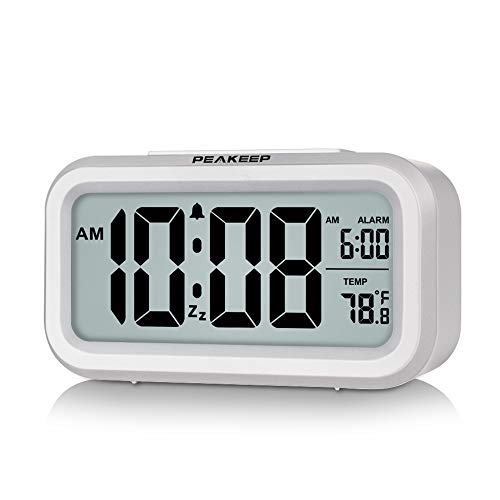 Peakeep Battery Operated Digital Alarm Clock
|
7.8/10 | Buy |
JALL Digital Alarm Clock with FM Radio
The JALL Digital Clock Radio combines dual weekday and weekend alarms, an eight-track sleep sound machine, an eight-color night light, and dual USB charging ports into a compact bedside footprint. With a five-level dimmable LED screen that can be turned completely off, it offers dependable wake-up versatility for heavy sleepers, shift workers, and light-sensitive bedrooms.
Pros
- Dual alarm system supports dedicated weekday-only, weekend-only, or daily wake-up profiles
- Clock screen can be adjusted down to L0 for complete darkness without ambient nightstand glow
- Features both digital FM radio tuning and an eight-sound white noise machine in one unit
- Two integrated USB ports provide convenient overnight charging for phones and tablets
- Comes complete with an AC wall adapter and USB power cord in the box
Cons
- Internal battery backup retains time memory only and does not illuminate the screen or sound alarms during a blackout
- Primary clock display dims in five fixed steps rather than a continuous stepless rotary dial
- Requires continuous connection to an AC wall outlet for normal daily operation
Odokee Sunrise Alarm Clock and Sound Machine
The Odokee Sunrise Alarm Clock combines a gradual 5-to-60-minute wake-up light with a 25-sound sleep machine, full-range 0-100% display dimmer, and app-free physical controls. It is a practical bedside upgrade for sleepers seeking a gentler morning routine without smartphone clutter on the nightstand.
Pros
- Stepless 0-100% display dimming allows users to lower nightstand illumination to comfortable levels for light-sensitive sleepers
- Wide selection of 25 sleep sounds across four distinct noise colors provides tailored acoustic masking for street noise or snoring
- No smartphone application or wireless account setup required, ensuring complete offline nightstand functionality
- Customizable sunrise duration between 5 and 60 minutes adapts easily to fast risers or sleepers who need an extended dawn progression
- Silent wake-up mode with sunrise light alone enables early risers to wake without jarring a sleeping partner
Cons
- Product specifications do not list a battery backup feature to preserve timekeeping during electrical power interruptions
- The 7-inch by 7-inch circular housing requires a moderate amount of dedicated surface area on compact nightstands
- Lacks Wi-Fi synchronization or mobile app integration for users who prefer smartphone-managed alarm schedules
Topski RGB Digital Bedside Alarm Clock with 7-Inch
The Topski Digital Bedside Clock features a vibrant 7-inch LED display with 2.36-inch numerals, customizable RGB colors, and an integrated 9-effect night light. Offering dual alarms, three volume levels, and full display shut-off, it suits heavy sleepers, seniors, and light-sensitive sleepers.
Pros
- Vibrant 7-inch display with 2.36-inch digits is exceptionally easy to read without glasses
- Display numbers and night light can both be turned completely off for light-sensitive sleepers
- Dual alarm function with three volume settings accommodates couples and deep sleepers alike
- Integrated 9-color night light provides adjustable ambient glow with simple tap controls
- Convenient 12/24-hour military time toggle button located on the rear panel
Cons
- Battery backup requires 2 AAA batteries that are not included in the package
- Backup batteries only save settings and do not illuminate the screen or sound alarms during a blackout
- Lacks automated 5-day weekday or weekend-only scheduling modes, requiring manual alarm toggling
Cadmos Loud Dual Alarm Clock with 100dB Buzzer
The Cadmos Digital Alarm Clock combines a high-output 100dB buzzer with dynamic RGB lighting and independent dual rotary dimmers. It offers reliable weekday wake schedules and convenient bedside USB charging for heavy sleepers, students, and family bedrooms.
Pros
- Loud buzzer output up to 100dB provides substantial volume for deep sleepers who sleep through standard alarms.
- Dedicated Monday-to-Friday and Monday-to-Sunday alarm schedule toggles eliminate the need to reset alarms for the weekend.
- Dual stepless rotary dials allow fine-tuned 10% to 100% brightness adjustments for the screen and night light independently.
- Built-in 5V/1A USB port allows easy bedside charging without occupying a second wall outlet.
- Compact 5.7-inch footprint fits neatly onto crowded nightstands, dorm desks, or small bedroom shelves.
Cons
- Stepless dimming stops at a minimum of 10% rather than a true 0% blackout, which may produce faint light for sensitive sleepers.
- Internal battery backup retains time memory only and will not illuminate the display or sound the alarm during an AC power failure.
- Integrated USB charging port is rated at 5V/1A, which charges devices at standard speeds rather than high-wattage fast-charging rates.
JALL Full-Screen Sunrise Alarm Clock with Wake-Up
The JALL Full-Screen Sunrise Alarm Clock pairs gradual dawn simulation with dual alarms, 25 relaxing sleep sounds, and an L0 blackout display mode for low-glare sleep. It is a capable bedside light and sound machine for heavy sleepers and structured households.
Pros
- Broad front full-screen panel offers expansive sunrise simulation lighting across the nightstand
- L0 display blackout setting provides complete dark-room comfort without background halo glow
- Dual alarm scheduling includes dedicated Everyday, Weekday, and Weekend routine options
- Bluetooth time synchronization eliminates tedious manual hour and minute adjustments
- Offers 25 natural sounds, white noise tracks, and FM radio station alarm tones
Cons
- Sunrise light simulation is most effective when sleeping facing toward the clock face
- The 7.2-inch circular front panel occupies more vertical nightstand space than basic travel clocks
- Requires initial Bluetooth pairing to complete automatic time synchronization
Peakeep Battery Operated Digital Alarm Clock
The Peakeep Battery Operated Digital Alarm Clock delivers clutter-free bedside timekeeping with an HD LCD screen, ambient light-sensing nightlight, and ascending beeper. It is an ideal, cord-free solution for nightstands, kids' rooms, and travel.
Pros
- Completely cordless design frees up electrical outlets and functions seamlessly during home power outages
- Ambient sensor provides automatic, hands-free low-level illumination when the bedroom goes dark
- Gradual ascending beep prevents abrupt morning adrenaline spikes by accelerating over 90 seconds
- Integrated temperature gauge helps monitor bedroom comfort for better sleep hygiene
- Simple, tactile layout supports both 12-hour and 24-hour time format preferences
Cons
- Requires 3 AAA batteries that must be purchased separately
- Does not include an AC wall adapter option for those who prefer outlet power
- Features fixed three-step lighting toggles rather than continuous stepless dial dimming
The Complete Guide to Alarm Clock Lighting and Sleep Hygiene
Choosing the right illumination for your nightstand requires balancing overnight sleep preservation with morning wakefulness. The short answer is straightforward: long-wavelength red or soft amber light is best for an overnight alarm clock display, while bright, warm white and golden yellow light is best for waking up. Selecting an inappropriate display color can trick your body into thinking daylight has arrived, interrupting deep sleep cycles. Examining circadian science, display engineering, and practical bedside features explains why this dual-phase lighting approach works so well.
The Circadian Science of Bedside Light Wavelengths
Human circadian rhythms rely on ambient lighting cues to govern the release of sleep hormones. Specialized photoreceptors in the eyes, called intrinsically photosensitive retinal ganglion cells, react directly to the light spectrum entering the bedroom. These cells contain melanopsin, a photopigment that exhibits extreme sensitivity to short-wavelength visible light between 460 and 480 nanometers. When blue or cool-white light strikes these receptors, neural pathways signal the suprachiasmatic nucleus to halt melatonin synthesis.
Suppressing melatonin late in the evening delays sleep onset and degrades overall sleep architecture. Even low levels of cool illumination can prolong sleep latency and reduce restorative slow-wave sleep. Conversely, longer wavelengths above 600 nanometers fail to stimulate melanopsin pathways in a meaningful way. Red and amber frequencies allow the pineal gland to secrete melatonin unhindered, creating ideal biochemical conditions for sound rest.
The timing of light exposure matters just as much as the wavelength itself. Light that proves harmful at midnight becomes beneficial and energizing at seven in the morning. The human biological clock anticipates darkness during overnight hours and expects bright, full-spectrum daylight upon waking. Bedside clocks that align with these biological requirements eliminate unnecessary bedtime arousal.
Nighttime Display Colors: Why Red and Amber Dominate Sleep Hygiene
Red light stands out as the least disruptive color for overnight time displays. Because red occupies the longest wavelength portion of the visible light spectrum, it does not trick your neurological system into daytime alertness. Checking the time at two in the morning on a soft red LED screen prevents the sudden sensory shock caused by other hues. Sleep hygiene advocates widely recommend red digits for anyone who wakes frequently during the night.
Amber and warm orange serve as excellent alternatives for sleepers who find pure red aesthetics overly harsh. Amber strikes a pleasant balance by offering high contrast and legibility while maintaining a wavelength profile safe for melatonin. Soft peach and warm golden tones also preserve night-adapted rhodopsin in the retinas. This means your eyes do not struggle with visual bleaching when glancing at your nightstand in pitch darkness.
Conventional blue, pure green, and cool-white LED numbers represent poor choices for nighttime timekeeping. Early digital clocks popularized bright blue and green vacuum fluorescent displays because they offered sharp clarity during daylight. Unfortunately, those short wavelengths penetrate bedroom darkness aggressively and scatter light across the ceiling. Eliminating short-wavelength backlights from your sleeping space removes a frequent root cause of overnight restlessness.
Morning Wake-Up Lighting: Why Dynamic Sunrise Progression Works
Waking up requires the exact opposite lighting approach compared to falling asleep. A sudden, blaring acoustic buzzer triggers an adrenaline spike and raises morning blood pressure unnecessarily. Gradual dawn simulation uses an evolving spectrum of light to prepare your brain for conscious arousal. As light filters through closed eyelids, it triggers the cortisol awakening response and gently disperses morning sleep inertia.
Effective wake-up light systems transition through realistic dawn color progressions. The sequence typically starts with a faint, warm red glow thirty minutes before the designated alarm time. As time elapses, the lamp smoothly intensifies into warm orange and finally into vibrant daylight yellow or full-spectrum white. Products like the Odokee Sunrise Alarm Clock White Noise Machine and the JALL Full-Screen Wake Up Light Sunrise Alarm use wide front-panel diffusers to replicate this natural sunrise progression.
Sunrise alarm clocks also support customizable duration settings to match personal sleep depths. Pairing progressive lighting curves with calming nature sounds creates a relaxed transition into morning activities. If you want more details on wake-up lights designed for heavy sleepers, our sunrise alarm clock guide covers gradual illumination in greater detail. This dual-phase approach ensures you rest in melatonin-safe darkness and wake up to invigorating simulated sunshine.
Display Dimming Controls and the Necessity of Zero-Lux Blackout
Light wavelength alone cannot protect your sleep if the physical brightness level remains too intense. An excessively bright red LED display can still emit enough photons to disturb sleep-sensitive individuals. Many budget digital clocks feature rigid, three-step dimmers that remain noticeably bright even on their lowest setting. Look for digital clocks equipped with continuous stepless dial potentiometers or wide-range dimming controls.
Full blackout capabilities allow light-sensitive sleepers to eliminate ambient light completely. Models like the JALL Digital Alarm Clock with FM Radio offer an L0 setting that shuts off the display entirely for pitch-black sleep. Similarly, clocks such as the Cadmos Loud Alarm Clock for Bedrooms with Dynamic RGB Night Light feature independent stepless rotary dials for both digits and backlights. Having independent controls lets you keep the clock digits dimmed to a faint whisper while leaving ambient room glows completely deactivated.
Integrated ambient photodiode sensors offer another convenient way to manage nighttime illumination. The Peakeep Night Light Digital Alarm Clock Battery uses an ambient optical sensor that detects room darkness and adjusts backlighting automatically. This automated shift ensures digits stay visible when the bedroom lights are on without glaring across the mattress once lights go out. Testing your clock in absolute darkness helps confirm whether the lowest brightness setting matches your personal comfort threshold.
Multi-Color RGB Displays: Ambiance Versus Restful Sleep
Modern bedside electronics frequently incorporate multi-color RGB lighting elements into their chassis. Devices like the Topski Loud Alarm Clocks for Bedrooms Heavy Sleepers provide multiple color choices and dynamic illumination modes. While cycling dynamic rainbows look appealing during the daytime, active color shifting disrupts nighttime rest. The visual motion of shifting colors captures attention and stimulates neurological alertness instead of relaxation.
If you own an RGB bedside clock, configure it to a static monochrome palette before heading to sleep. Selecting a steady red, warm amber, or soft orange profile keeps the aesthetic pleasant without jeopardizing circadian health. Clocks with dynamic RGB functions often include dedicated buttons or toggle dials to freeze lighting on a single restful shade. Utilizing these controls prevents erratic color strobing from catching your peripheral vision while you try to fall asleep.
RGB night lights can also serve as gentle wayfinding markers for midnight bathroom visits. Setting a secondary night light ring to dim red illuminates the floor just enough to avoid obstacles. This subtle glow prevents the need to flip on harsh overhead bathroom fixtures that instantly wake your brain. Keeping auxiliary lighting strictly within the long-wavelength spectrum protects your sleepiness throughout brief nighttime awakenings.
Visual Acuity, Digit Height, and Contrast for Sleepers and Seniors
Finding the right display light also involves balancing optical safety with readability. A red display that is dimmed too aggressively can be unreadable for users without corrective eyewear. Jumbo digit heights ranging from two to three inches solve this readability challenge without increasing overall light output. Large segmented digits offer clear contrast against a matte black background even at very low brightness levels.
High-contrast display panels prevent visual blooming and halos around the illuminated numbers. Vertical alignment LCD panels and recessed LED matrices confine light strictly to the digit segments. This contrast containment prevents unlit portions of the display glass from glowing gray in a dark room. Seniors and visually impaired individuals benefit significantly from crisp amber digits that deliver legibility without stinging the eyes.
Squinting or straining to read blurry digits across a dark bedroom increases mental frustration and cognitive wakefulness. Choosing an alarm clock with clear geometry and proper color saturation allows you to check the time in a fraction of a second. You register the hour effortlessly and close your eyes immediately without breaking your sleep state. Efficient legibility combined with melatonin-safe wavelengths creates an effortless bedside experience.
Bedside Hardware Integration, Outage Reliability, and Placement
Nightstand geometry and clock positioning influence how display light enters your visual field. Positioning the clock slightly angled away from your direct pillow line prevents straight-on optical exposure. Keeping the nightstand surface clean also minimizes light reflections off water glasses or polished wood finishes. Consolidating bedside cords with multifunction devices, such as an alarm clock and wireless charger options setup, creates a clean sleep environment.
Power supply architecture represents another crucial factor when choosing dependable bedside electronics. Standalone digital clocks generally rely on an AC wall adapter while including a secondary battery compartment. Buyers should distinguish between operational battery power and memory-retention backup circuits. While some battery-operated models maintain full sound and display functions, many outlet-powered units use backup batteries strictly to save internal time data during electrical interruptions.
Verifying your clock backup behavior prevents unexpected morning wake-up failures after residential storm brownouts. Replacing auxiliary backup batteries annually ensures internal quartz clocks never reset to midnight during an outage. Routine inspection of the power adapter cord also prevents loose barrel connections that cause annoying display flickering. A steady, well-managed power supply guarantees that your chosen display hue stays consistent all night long.
Practical Bedside Scenarios: Matching Display Light to Sleeper Profiles
Different sleeper profiles benefit from specific lighting strategies tailored to their unique bedroom habits. Light-sensitive sleepers and digital detoxers should prioritize clocks with zero-lux blackout toggles or ultra-low red dimming. These users rest best when the bedroom remains completely dark until the morning wake sequence initiates. Eliminating lingering standby lights and screen halos allows deep sleep stages to proceed without interruption.
Shift workers and heavy sleepers often require robust waking support paired with dark daytime sleeping conditions. For someone sleeping during daylight hours, a clock with strong blackout contrast helps counter room ambient light. When waking up for an evening or early morning shift, simulated sunrise illumination delivers the mental jumpstart normally provided by natural dawn. Coupling dynamic sunrise ramps with high-decibel alarm tones ensures reliable arousal even from profound sleep states.
Parents managing young children can utilize color-coded lighting as intuitive behavioral cues. Setting a bedside clock to glow warm red during sleeping hours signals that it remains bedtime. Programming the display or night light ring to switch to soft green or golden yellow indicates that it is acceptable to get out of bed. These clear visual indicators teach children healthy sleep habits without requiring them to decipher traditional numeric digits.
Evaluating what color light is best for alarm clock setups ultimately comes down to honoring human circadian physiology. Opting for red or amber illumination during the night protects vital melatonin production and keeps your sleep environment restful. Switching to bright, full-spectrum sunrise lighting in the morning naturally clears sleep inertia and energizes your routine. Investing in a digital alarm clock that offers continuous dimming, soothing long-wavelength numbers, and reliable sunrise features creates the foundation for better sleep and more peaceful mornings.
About the author
Dan Caffrey is a Certified Sleep Science Coach and Certified Stress Management Coach with editorial experience covering sleep health and sleep products. He combines consumer-focused research with sleep science to explain product benefits, limitations, and suitability in clear, approachable language.